De Panne, pure genot | De Panne, pure pleasure
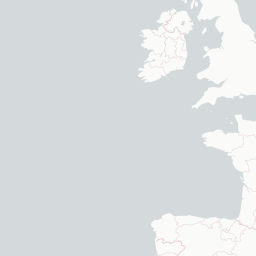
De Panne is a town and a municipality located on the North Sea coast of the Belgian province of West Flanders. There it borders France, making it the westernmost town in Belgium. It is one of the most popular resort town destinations within Belgium. The municipality includes the village of Adinkerke. On 1 January 2011, De Panne had a total population of 10,748 on a total area of 23.90 km2, which gives a population density of 449.7 inhabitants per km2.
Wikipedia →Summary excerpted from the Wikipedia article De Panne, licensed under CC BY-SA 4.0. Text may be clipped or paraphrased to fit this page.
Visit De Panne for landscape, water, gardens, and nearby routes. The value of De Panne is clearest when museums, streets, religious buildings, markets, food, and nearby landscape are read together. A good itinerary should stay selective. The strongest plan in De Panne usually starts with one main stop and treats the surrounding streets as part of the visit. That gives De Panne room to show itself without turning the day into unrelated stops. For De Panne, nearby landscapes and day trips should explain the city, not turn the itinerary into transit work.
Do not assume De Panne can be handled as a simple cluster of adjacent stops. Use De Panne with a local route rather than a constantly expanding one. In De Panne, it is usually better to choose a nearby church, market, cafe, gallery, or walk than to cross town for a secondary stop. This keeps the day flexible when transport, weather, or opening hours change.
For De Panne, June through August usually require the most attention to heat, light, and weather. This season in De Panne usually works for walking if the plan stays flexible. For De Panne, a compact route and enough water matter more than adding distant outdoor stops. For De Panne, let museums, churches, cafes, galleries, or evening events carry some of the day.
December through February are the cooler or wetter period in De Panne. Use De Panne in winter for indoor culture, with outdoor sections kept short. Think of this period in De Panne as a planning question: what can still be walked, entered, and reached comfortably? Use this period in De Panne for close looking indoors, then add outdoor sections when weather and daylight cooperate. Use taxis or rideshares in De Panne when the practical gain is clear, especially after dark or in weather that makes waiting for transit unpleasant.
7-day forecast from Open-Meteo. UV badges flag days when sun protection matters (3 and above is moderate; 8 and above is risk territory for unprotected fair skin within 30 minutes).
Monthly highs, lows, and rainfall (long-term averages, NASA POWER).
2 commercial airports within 100 km. Closest is Ostend-Bruges International Airport (OST) at 23 km.
Public-transit operators within 8 km of the city center. Click through to each operator’s site for routes, fares, and tickets.
Operators and modes aggregated by TransitLand from individual transit-agency GTFS feeds. Route classifications (subway / tram / rail / bus / etc) come from each feed’s GTFS route_type codes.
This page blends public reference data, climate/elevation services, and personal notes. Travel requirements can change, so visa and entry details should be checked again before booking.
Summary, canonical article, and some image fallbacks.
Population, area, image, coordinates, and linked identifiers where available.
Monthly temperature and rainfall climatology.
1991-2020 temperature and precipitation cross-check for compact climate fields.
Coordinate-based elevation backfill.
Coordinate-based IANA timezone lookup.
Public domain, unknown, SVG = own.
Global source notes, map tiles, flags, licenses, and attribution policy.
Upcoming public holidays in Belgium. On these dates, expect banks, post offices, and government services to close. Many shops and museums close or run shortened hours; transit typically still runs.
Public holidays sourced from date.nager.at.