


Visit Lusaka for markets, streets, food, and public squares. For Lusaka, focus on what you can actually see and do: museums, streets, religious buildings, markets, performance spaces, food, and nearby landscapes. A good itinerary should stay selective. The strongest plan in Lusaka usually starts with one main stop and treats the surrounding streets as part of the visit. That restraint helps Lusaka feel like a place rather than a sequence of obligations. For Lusaka, nearby landscapes and day trips should explain the city, not turn the itinerary into transit work.
Do not visit Lusaka expecting every worthwhile stop to be close together or easy to improvise. Do the practical reading of Lusaka first: hours, routes, weather, crowds, and how far the neighborhoods really sit from one another. In Lusaka, it is better to build a tight route than to rely on long transfers between secondary stops. If the main interest is one nearby site, it may be better to treat Lusaka as a base rather than the whole destination.
Current conditions and the practical reference material that helps turn the saved places into a trip.
7-day forecast from Open-Meteo. UV badges flag days when sun protection matters (3 and above is moderate; 8 and above is risk territory for unprotected fair skin within 30 minutes).
About 94% of the year's rain falls in these months. Typical highs around 28°C, lows around 18°C.
About 6mm of rain a month, against 147mm in the wet season.
Public holidays from Nager.Date.
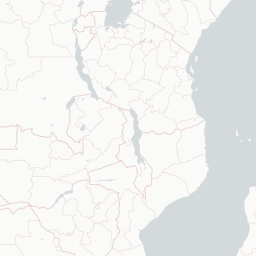
Lusaka is the capital and largest city of Zambia. It is one of the fastest-developing cities in southern Africa. Lusaka is in the southern part of the central plateau at an elevation of about 1,279 metres (4,196 ft). As of 2019, the city's population was about 3.3 million, while the urban population is estimated at 2.5 million in 2018. Lusaka is the centre of both commerce and government in Zambia and connects to the country's four main highways heading north, south, east, and west. English is the official language of the city administration, while Bemba, Tonga and Nyanja are the commonly spoken street languages.
The links below support the changing or licensed reference material on this page. Personal notes and ordinary geographic facts are not footnoted individually.
Monthly highs, lows, rainfall — long-term averages, NASA POWER.
Maps, image licenses, and the full dataset registry are listed in site credits.