


Lungsod ng Makati | City of Makati
Visit Makati for museums, galleries, and collections, markets, streets, food, and public squares. In Makati, the strongest material is where museums, streets, religious buildings, markets, performance spaces, food, or nearby landscapes explain the surrounding region. A good itinerary should stay selective. A good route in Makati begins with one serious site and adds smaller stops only when they clarify the same area. That gives Makati room to show itself without turning the day into unrelated stops. Use the surroundings of Makati deliberately: they should clarify the place, not simply add movement.
Do not visit Makati expecting every worthwhile stop to be close together or easy to improvise. Do the practical reading of Makati first: hours, routes, weather, crowds, and how far the neighborhoods really sit from one another. A safer and clearer day in Makati usually comes from grouping nearby sites and avoiding unnecessary late or awkward transfers. If the main interest is one nearby site, it may be better to treat Makati as a base rather than the whole destination.
Current conditions and the practical reference material that helps turn the saved places into a trip.
7-day forecast from Open-Meteo. UV badges flag days when sun protection matters (3 and above is moderate; 8 and above is risk territory for unprotected fair skin within 30 minutes).
About 76% of the year's rain falls in these months. Typical highs around 28°C, lows around 23°C.
About 137mm of rain a month, against 318mm in the wet season.
Public holidays from Nager.Date.
Public-transit operators within 8 km of the city center. Click through to each operator’s site for routes, fares, and tickets.
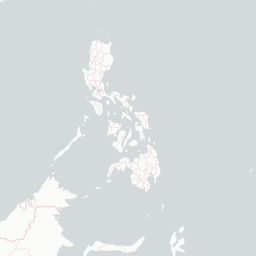
Makati, officially the City of Makati, is one of the highly urbanized cities that make up Metro Manila, the capital region of the Philippines. Makati is a center for finance, commerce, culture, the arts and fashion, academics, and as the home to numerous diplomatic missions and embassies, is the center for the country's international diplomacy. With 432 high-rises and skyscrapers, Makati has the largest skyline in the Philippines, 138 of which exceed 100 m (328 ft). According to the 2024 census, it has a population of 309,770 people.
The links below support the changing or licensed reference material on this page. Personal notes and ordinary geographic facts are not footnoted individually.
Monthly highs, lows, rainfall — long-term averages, NASA POWER.
Operators and modes are aggregated from individual transit-agency GTFS feeds. Route classifications come from each feed’s route type codes.
Maps, image licenses, and the full dataset registry are listed in site credits.