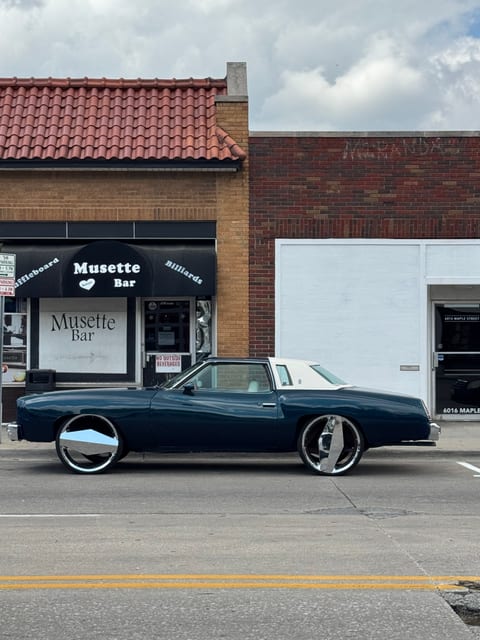
📷 Tony Webster from Minneapolis, Minnesota, United States· CC BY 2.0We Don't Coast
Omaha is the most populous city in the U.S. state of Nebraska. It is located in the Midwestern United States along the Missouri River, about 10 mi (15 km) north of the mouth of the Platte River. Omaha had a population of 486,051 at the 2020 census, making it the 41st-most populous U.S. city. The eight-county Omaha–Council Bluffs metropolitan area extending into Iowa has approximately 1 million residents, the 55th-largest metropolitan area in the U.S. It is the county seat of Douglas County.
Wikipedia →Summary excerpted from the Wikipedia article Omaha, licensed under CC BY-SA 4.0. Text may be clipped or paraphrased to fit this page.
Visit Omaha for landscape, water, gardens, and nearby routes. For Omaha, the useful material is practical and visible: museums, streets, religious buildings, markets, performance spaces, food, and nearby landscapes. A good itinerary should stay selective. Use one main anchor in Omaha, then build outward only to places that sit naturally nearby. The result is a day in Omaha that can be followed, remembered, and adjusted. If the strongest material around Omaha sits outside the center, give it its own time rather than forcing it into the same day.
Do not visit Omaha expecting every useful stop to be close together or easy to improvise. The map of Omaha is only half the problem; hours, heat, rain, crowds, and transport decide what is realistic. In Omaha, distance, heat, parking, car dependence, and uneven transit can matter more than the list of sights. Use Omaha with honest transport planning rather than assuming every link will be easy.
In Omaha, the warm season usually means June through August. Use long days in Omaha carefully when heat, storms, or visitor pressure are part of the season. In Omaha, alternate outdoor observation with interiors, especially where streets have little shade. Use the edges of the day in Omaha for longer walks, then make the middle hours slower and more interior.
December through February are the cooler or wetter period in Omaha. Use Omaha in winter with cultural interiors carrying most of the day. In Omaha, rain, wind, cold, snow, daylight, and service reductions can matter more than the average high. The season suits Omaha best when museums, churches, cafes, galleries, and short neighborhood walks form the structure of the day. Keep Omaha compact in this season: fewer outdoor sections, better hour checks, and practical rides when conditions make transit awkward.
7-day forecast from Open-Meteo. UV badges flag days when sun protection matters (3 and above is moderate; 8 and above is risk territory for unprotected fair skin within 30 minutes).
Monthly highs, lows, and rainfall (long-term averages, NASA POWER).
2 commercial airports within 100 km. Closest is Eppley Airfield (OMA) at 6 km.
Public-transit operators within 8 km of the city center. Click through to each operator’s site for routes, fares, and tickets.
Operators and modes aggregated by TransitLand from individual transit-agency GTFS feeds. Route classifications (subway / tram / rail / bus / etc) come from each feed’s GTFS route_type codes.
This page blends public reference data, climate/elevation services, and personal notes. Travel requirements can change, so visa and entry details should be checked again before booking.
Summary, canonical article, and some image fallbacks.
Population, area, image, coordinates, and linked identifiers where available.
Monthly temperature and rainfall climatology.
1991-2020 temperature and precipitation cross-check for compact climate fields.
Coordinate-based elevation backfill.
Coordinate-based IANA timezone lookup.
Public domain, Vectorization: Auguel.
Global source notes, map tiles, flags, licenses, and attribution policy.
Upcoming public holidays in United States of America. On these dates, expect banks, post offices, and government services to close. Many shops and museums close or run shortened hours; transit typically still runs.
Public holidays sourced from date.nager.at.