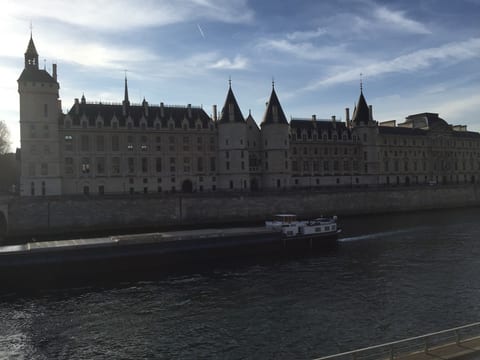
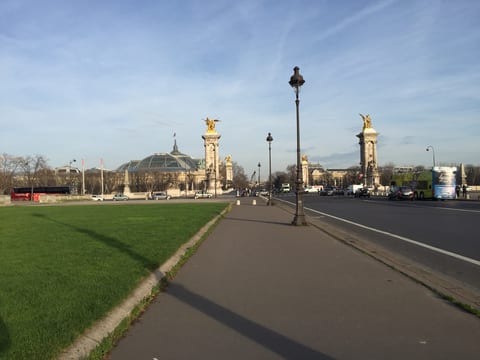
📷 Yann Caradec from Paris, France· CC BY-SA 2.0Fluctuat nec mergitur | Tossed by the waves, she does not sink
Paris is the capital and largest city of France, with an estimated city population of 2.04 million in an area of 105.4 km2 (40.7 sq mi), and a metropolitan population of 13.2 million as of January 2026. Located on the river Seine in the centre of the Île-de-France region, it is the largest metropolitan area and fourth-most populous city in the European Union (EU). Nicknamed the "City of Light", partly because of its role in the Age of Enlightenment, Paris has been one of the world's major centres of finance, diplomacy, commerce, culture, fashion, and gastronomy since the 17th century.
Wikipedia →Summary excerpted from the Wikipedia article Paris, licensed under CC BY-SA 4.0. Text may be clipped or paraphrased to fit this page.
Visit Paris for the density of museums, churches, theaters, libraries, bookshops, and urban history rather than for a list of monuments alone. The Louvre, Musée d'Orsay, Sainte-Chapelle, Notre-Dame, the Opéra Garnier, the Bibliothèque nationale de France, and the cemetery landscapes of Père Lachaise and Montparnasse each explain a different part of the city. A good first itinerary should combine one major museum, one historic church or architectural sequence, one bookshop or literary walk, and enough time in ordinary streets to see how the city works beyond postcard views.
Paris is frustrating when the plan depends on moving quickly between famous sights. Queues, security lines, strikes, restaurant reservations, school holidays, and August closures can shape the trip as much as the map. Book the essential museums and performances early, then group the rest by neighborhood. The city is also expensive, crowded, and unevenly friendly to spontaneous travel. Pickpocketing is a real concern around transport hubs and major sights. If you dislike crowds, keep the first trip away from late December, major holidays, and peak summer weekends.
In Paris, the warm season usually means June through August. For Paris, the warm season often means humid afternoons and a need for shaded or indoor pauses. Use interiors in Paris as part of the route, not just as a fallback from the weather. Plan Paris so the hardest walking does not fall in the least comfortable part of the day.
The cooler or wetter season in Paris generally falls in December through February. For Paris, the cooler season is useful for interiors, but the walking plan still needs weather flexibility. In Paris, indoor cultural work often carries the season better than a wide outdoor route. Outdoor time in Paris works best when it can be shortened or moved.
7-day forecast from Open-Meteo. UV badges flag days when sun protection matters (3 and above is moderate; 8 and above is risk territory for unprotected fair skin within 30 minutes).
Monthly highs, lows, and rainfall (long-term averages, NASA POWER).
4 commercial airports within 100 km. Closest is Paris-Le Bourget International Airport (LBG) at 13 km.
Public-transit operators within 8 km of the city center. Click through to each operator’s site for routes, fares, and tickets.
Operators and modes aggregated by TransitLand from individual transit-agency GTFS feeds. Route classifications (subway / tram / rail / bus / etc) come from each feed’s GTFS route_type codes.
This page blends public reference data, climate/elevation services, and personal notes. Travel requirements can change, so visa and entry details should be checked again before booking.
Summary, canonical article, and some image fallbacks.
Population, area, image, coordinates, and linked identifiers where available.
Monthly temperature and rainfall climatology.
1991-2020 temperature and precipitation cross-check for compact climate fields.
Coordinate-based elevation backfill.
Coordinate-based IANA timezone lookup.
CC BY 4.0, RaphaëlMignon.
Global source notes, map tiles, flags, licenses, and attribution policy.
Upcoming public holidays in France. On these dates, expect banks, post offices, and government services to close. Many shops and museums close or run shortened hours; transit typically still runs.
Public holidays sourced from date.nager.at.