Photos from Rio de Janeiro
 +23
+23Jardim Botânico do Rio de Janeiropark
+23Current conditions and the practical reference material that helps turn the saved places into a trip.
7-day forecast from Open-Meteo. UV badges flag days when sun protection matters (3 and above is moderate; 8 and above is risk territory for unprotected fair skin within 30 minutes).
About 67% of the year's rain falls in these months. Typical highs around 28°C, lows around 22°C.
About 69mm of rain a month, against 197mm in the wet season.
Public holidays from Nager.Date.
Public-transit operators within 8 km of the city center. Click through to each operator’s site for routes, fares, and tickets.
Operators and modes are aggregated from individual transit-agency GTFS feeds. Route classifications come from each feed’s route type codes.
Rio de Janeiro, also known simply as Rio, is the capital of the state of Rio de Janeiro. It is the second-most-populous city in Brazil after São Paulo and the sixth-most-populous city in the Americas.
The links below support the changing or licensed reference material on this page. Personal notes and ordinary geographic facts are not footnoted individually.
Monthly highs, lows, rainfall — long-term averages, NASA POWER.
Maps, image licenses, and the full dataset registry are listed in site credits.

My Rio de Janeiro travel guide. Carnival logistics, Réveillon at Copacabana, where to stay in Ipanema, the beaches, and getting in from GIG.
Rio de Janeiro is the Brazilian city where the geography is the whole point, the Atlantic on one side, granite peaks on the other, the beaches and the lagoon between. Most people stay around Ipanema and Copacabana. Plan by beach district, mountain route, and coastal excursion.
Rio de Janeiro Galeão / Antonio Carlos Jobim International (GIG) sits about 20 km north of the city center and 35 km from Ipanema. The Premium airport bus and rideshare are the practical options.
| Mode | Time | Cost | When to use |
|---|---|---|---|
| BRT Real / Premium airport bus | 60 to 90 min | BRL 25 to 35 | The cleanest public option. Direct service to Copacabana, Ipanema, Leblon, Barra |
| Uber / 99 | 40 to 80 min | BRL 80 to 150 to Ipanema | The default with luggage. 99 is the local rideshare. Uber works equivalently |
| Pre-booked transfer | 40 to 80 min | BRL 150 to 250 | Late arrival. Driver waits with a name board |
| Taxi from the rank | 40 to 80 min | BRL 120 to 200 | Look for the official Coopertramo or Easy Taxi rank. Agree the meter before pulling away |
For city days, the Rio de Janeiro Metro is the practical rail spine between the South Zone, Centro, and the north-side connections. VLT Carioca is the Centro and port-area tram layer, good for downtown museum and waterfront hops rather than beach days.
Rio's calendar has two expensive peaks: Carnival and New Year's Eve on Copacabana. Outside those windows, the city is easier to book and cheaper to use.
| Event | When | What it changes |
|---|---|---|
| Carnaval | Five days before Ash Wednesday | Sambódromo parades, free blocos, hotel minimums, and prices several times normal. Book six to eight months ahead |
| Réveillon | December 31 | Copacabana fireworks and white-clad crowds. Beachfront hotels sell packages far ahead |
| Festas Juninas | Most of June | Neighborhood parties, music, and northeastern food. Less hotel impact than Carnival |
| Rock in Rio | Even-numbered years, September | Barra and Centro-Lapa hotels fill. Check the year before assuming it runs |
| Lapa nights | Friday and Saturday year-round | Live samba around the aqueduct arches. Stay in Lapa or Santa Teresa if this is the night plan |
For a normal Rio trip, October to early December and March after Carnival are the easier windows.
Most first Rio trips should stay in Ipanema, Leblon, or Copacabana. Barra da Tijuca is a different trip: calmer, newer, more resort-like, and much farther from the South Zone restaurants and nightlife. Pick Barra when the point is the beach-resort week, not the classic walk-out-the-door Rio city stay.
| Property | Best for | Watch out for |
|---|---|---|
| Hotel Emiliano - Restaurante Emile | Ipanema / Copacabana beach-side splurge | Expensive, but the location is the classic first-Rio move |
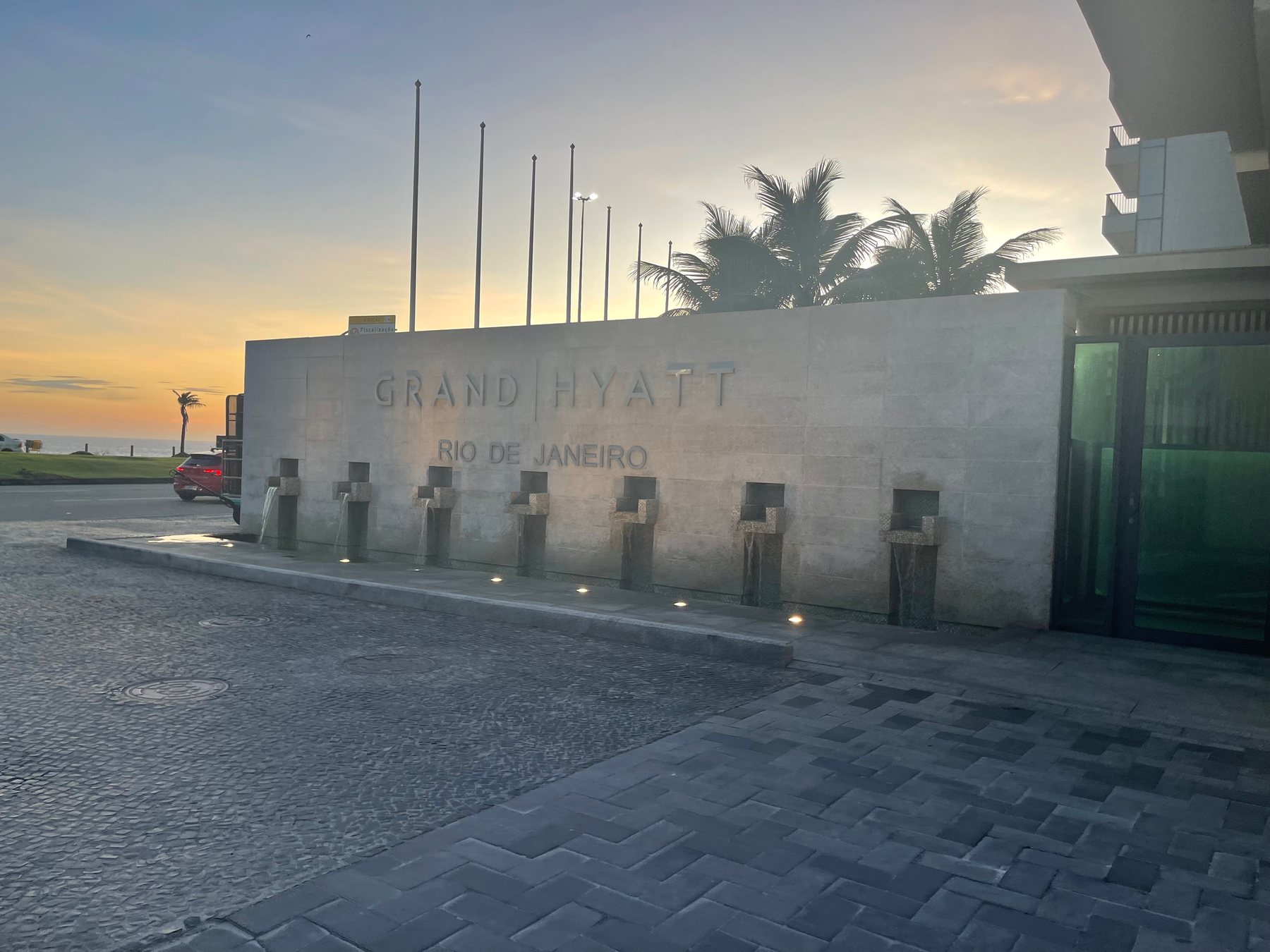
| Grand Hyatt Rio de Janeiro | Barra resort stay: modern rooms, balconies, beach across the street, pool days | Far from Ipanema and most of the city. Book it when you want to stay put, not commute back and forth |
Rio food runs from beach kiosk to dressed-up Italian, with the Brazilian default (rice, beans, grilled meat, açaí, the bakery cafezinho) underneath it all. The picks below mix the Ipanema/Leblon sit-down with the casual cafe and the kiosk side.
| Spot | Rating |
|---|---|
| The Box Sushi - Ipanema | 5/5 |
| Alloro al Miramar | Pinned |
| Café 18 do Forte | Pinned |
| Casa Camolese | Pinned |
| Costa Brava Clube | Pinned |
| Joaquina | Pinned |
Companion pages on places and themes that overlap with this list.
