
📷 A.Savin· FALСанкт-Петербург - окно в Европу | Saint Petersburg - The window to Europe
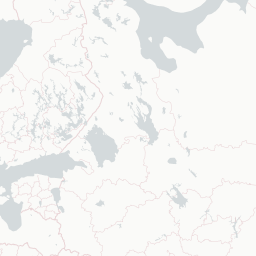
Saint Petersburg, formerly known as Petrograd (Петроград) and later Leningrad (Ленинград), is the second-largest city in Russia, after Moscow, the nation's capital. It is situated on the River Neva, at the head of the Gulf of Finland on the Baltic Sea. With an area of 1,439 square kilometers, Saint Petersburg is the smallest administrative division of Russia by area. The city had a population of 5,601,911 residents as of 2021, with more than 6.4 million people living in the metropolitan area. Saint Petersburg is the fourth-most populous city in Europe, the most populous city on the Baltic Sea, and the world's northernmost city of more than 1 million residents. As the former capital of the Russian Empire, and a historically strategic port, it is governed as a federal city.
Wikipedia →Summary excerpted from the Wikipedia article St. Petersburg, licensed under CC BY-SA 4.0. Text may be clipped or paraphrased to fit this page.
Visit St. Petersburg for museums, galleries, and collections, religious and civic architecture, markets, streets, food, and public squares. Use St. Petersburg to connect cultural institutions with streets, food, public space, and nearby landscape rather than treating each stop separately. A good itinerary should stay selective. For St. Petersburg, choose the anchor first; the cafe, market, church, gallery, or evening event should follow from that location. For St. Petersburg, this usually reveals more than adding one more distant sight. If St. Petersburg has useful day trips or nearby landscape, use them to widen the context rather than to overload the schedule.
The least practical period for a visit to St. Petersburg, Russia for a trip is during the winter months of December to February. The city experiences extremely cold temperatures, with snow and ice making travel difficult and uncomfortable for visitors. Sightseeing and outdoor activities are limited due to the difficult weather, and many attractions may have reduced hours or be closed altogether. Travelers should consider visiting St. Petersburg during the summer months for a more enjoyable and pleasant experience.
June through August are the period when heat, daylight, crowds, or humidity most affect a visit to St. Petersburg. Summer has long days and active cultural calendars, but heat can still build. For St. Petersburg, save the exposed parts of the day for morning or evening and let museums, churches, cafes, libraries, or performances cover midday. This period suits St. Petersburg when the trip depends on daylight, festivals, water, gardens, hills, or nearby countryside. The calendar matters in St. Petersburg, especially when festivals, holidays, and reduced performance seasons overlap.
December through February are the cooler or wetter period in St. Petersburg. Winter in St. Petersburg works best when museums, concerts, cafes, and short walks form the structure. In St. Petersburg, comfort depends less on temperature alone than on rain, wind, snow, daylight, and whether services are reduced. For St. Petersburg, the season often favors interiors and shorter local routes: museums, churches, galleries, theaters, bookshops, cafes, and nearby streets. A cold or wet day in St. Petersburg works best with shorter walks, confirmed hours, and a clear way back to lodging.
7-day forecast from Open-Meteo. UV badges flag days when sun protection matters (3 and above is moderate; 8 and above is risk territory for unprotected fair skin within 30 minutes).
Monthly highs, lows, and rainfall (long-term averages, NASA POWER).
1 commercial airport within 100 km. Closest is Pulkovo Airport (LED) at 16 km.
Public-transit operators within 8 km of the city center. Click through to each operator’s site for routes, fares, and tickets.
Operators and modes aggregated by TransitLand from individual transit-agency GTFS feeds. Route classifications (subway / tram / rail / bus / etc) come from each feed’s GTFS route_type codes.
This page blends public reference data, climate/elevation services, and personal notes. Travel requirements can change, so visa and entry details should be checked again before booking.
Summary, canonical article, and some image fallbacks.
Population, area, image, coordinates, and linked identifiers where available.
Monthly temperature and rainfall climatology.
1991-2020 temperature and precipitation cross-check for compact climate fields.
Coordinate-based elevation backfill.
Coordinate-based IANA timezone lookup.
CC BY-SA 4.0, Vichycombo.
Global source notes, map tiles, flags, licenses, and attribution policy.
Upcoming public holidays in Russia. On these dates, expect banks, post offices, and government services to close. Many shops and museums close or run shortened hours; transit typically still runs.
Public holidays sourced from date.nager.at.