Cabo Verde, the Atlantic islands most people never consider
My short Cabo Verde guide. Picking your island between Sal, São Vicente, Santo Antão, and Fogo, the volcanic crater village, Mindelo's music, and inter-island travel.
- Updated
- May 15, 2026
- Saved places
- 15
- Free
- 11
- UNESCO
- 1
On this page
Cabo Verde is the archipelago travelers can't quite place: ten volcanic islands in the Atlantic off West Africa, Portuguese and Kriolu speaking, trade winds year-round. The whole trip is really one decision, which island. Here's how I'd choose between Sal, São Vicente, Santo Antão, and Fogo.
Planning brief
Planning Cabo Verde
Cabo Verde is the archipelago off West Africa many travelers have heard of but cannot place. Ten volcanic islands, Portuguese-and-Kriolu speaking, year-round trade winds, and the slow Morna ballads (the form Cesária Évora made internationally known) paired with the faster Funaná dance music in the bars. The trip is mostly about choosing the right island. Sal for beaches and resorts, São Vicente for culture, Fogo for the volcano, Santo Antão for hiking.
Pick the island first
Sal for white-sand beach resorts. São Vicente (Mindelo) for music, art, and a real working port town. Fogo for the volcanic crater village and the high hike. Santo Antão for the dramatic hiking and lush valleys.
Inter-island is by plane or ferry
Cabo Verde Airlines and TACV run regional flights between the islands. Ferries also exist but are weather-dependent and irregular. Book the flight unless you have flexibility. Connect Sal or Praia for most onward routes.
November to June is the window
Tropical climate with a short wet season from August to October. November to June is dry, sunny, and reliable. The trade winds keep the heat manageable. Bring layers for the hike islands (Fogo, Santo Antão get cool at altitude).
Don't skip Mindelo
The cultural capital of the country. The Morna and Funaná music traditions are alive in the bars, especially during the Baía das Gatas festival in August. Mindelo is the cultural base rather than the beach-resort option.
Places on this list
Match the trip to the island
| If you want | Start with | Add if you have time |
|---|---|---|
| A beach-resort trip with little planning | Sal | Boa Vista for quieter sand |
| Culture, music, and a real town | São Vicente, based in Mindelo | Santo Antão by ferry for mountain scenery |
| A distinctive natural site | Fogo | Santiago for Cidade Velha and Praia |
| Walking and landscapes | Santo Antão | São Vicente before or after, since the ferry runs from Mindelo |
| A first trip with two islands | Sal and São Vicente | Keep the transfer simple and avoid trying to see the whole country |
When to go
| Window | Months | What to expect |
|---|---|---|
| Best | November to June | Dry, sunny, trade winds keep the heat moderate. Sea temperatures around 22 to 25°C |
| Hot and humid | July | Pre-rainy season. Temperatures climb |
| Wet (short) | August to October | Brief tropical showers, mainly in evening. Hotel rates drop. Hiking islands (Santo Antão, Fogo) can be muddy |
| Best for music | August | The Baía das Gatas festival on São Vicente is the calendar's musical anchor |
The trade winds mean the islands rarely get hot in the way the latitude (around 15° N) suggests. Mid-range temperatures hold 22 to 28°C most of the year.
Festivals and big annual events
Cabo Verde's calendar centers on August music, February Carnival, and island saint's-day festas.
| Event | When | What it changes |
|---|---|---|
| Baía das Gatas Festival | August full moon | Beach music festival on São Vicente. Mindelo hotels book early |
| Carnaval de Mindelo | Before Lent | Parades, costumes, and music on São Vicente. Mindelo fills |
| Carnaval de São Nicolau | Before Lent | Smaller, more traditional island Carnival |
| Festival da Bandeira | August 30 to 31 | São Nicolau festival with music, food, and traditional dance |
| Tabanka | Around June | Afro-Cabo Verdean ceremonial festival, strongest on Santiago |
| Independence Day | July 5 | Civic ceremonies and parades |
| São João Baptista | June 24 | Santo Antão festival with bonfires, music, and food |
| Santa Cruz Festival | May 3 | Patron-saint festival on Santiago |
| Bo Maritimo Carnival | Before Lent | Sal's smaller, resort-facing Carnival |
| Christmas and New Year | December 24 to January 6 | Peak domestic-travel window, especially on Sal and Boa Vista |
Getting in and inter-island travel
Two main international airports:
- Amílcar Cabral International (SID) on Sal. Most package tourism and seasonal European routes (Lisbon, Manchester, Paris, Munich). Direct TAP flights from Lisbon are the most reliable connection.
- Nelson Mandela International (RAI) in Praia, Santiago Island. Political and inter-island hub. Some European service.
From North America, the cleanest play is Lisbon (TAP) or Providence, RI (TACV / Cabo Verde Airlines launched nonstop PVD service in 2024. The old Boston route was discontinued), then onward. From the UK, charter and scheduled service runs to Sal weekly.
Inter-island travel is by plane or ferry:
- Plane. Cabo Verde Airlines and BestFly run the most flights. Sal–Mindelo, Sal–Fogo, Praia–most islands. Flights are short (20 to 40 minutes) and reasonably reliable. Book ahead of time, prices climb as the date nears.
- Ferry. Cabo Verde Fast Ferry operates Praia to Fogo and Brava. Smaller operators serve other routes. Schedules are weather-dependent and frequently disrupted. Do not plan a tight onward flight after a ferry.
For most trips, fly between the islands. The cost is not much higher than the ferry once you factor reliability.
Pick the island
Cabo Verde is a country, not a city. Choosing the wrong island for the trip is the most common mistake. Start here:
| Island | What it is | Best for |
|---|---|---|
| Sal | The beach-and-resort island. White sand at Santa Maria, watersport infrastructure, all-inclusive hotels | Beach resorts with little planning |
| Boa Vista | Sal's sandier, quieter neighbor. Wide dune-and-beach landscape running into the desert interior | Beach resorts with less infrastructure |
| São Vicente (Mindelo) | The cultural capital. Music, art, port-town life. Compact and walkable | Culture, music, food, slow afternoons |
| Santo Antão | Dramatic hiking, lush volcanic valleys, the most photogenic of the islands | Active travel, hiking, nature |
| Fogo | The volcano island. Climb Pico do Fogo (2,829 m), sleep in the crater village | One distinctive experience |
| Santiago (Praia + Cidade Velha) | The political capital island. UNESCO-listed Cidade Velha (first European colonial settlement in the tropics) | History and city days |
| Maio | The quietest island. Empty beaches, slow pace | A real off-the-grid week |
Most travelers combine two islands: Sal and Mindelo for beach plus culture, or Fogo and Santo Antão for the adventure pairing. Inter-island flight and ferry schedules determine which combinations work.
Mindelo and the music
São Vicente's port town is the country's cultural anchor. Cesária Évora, the most famous Cabo Verdean musician, was from here. The Morna and Funaná traditions still live in the bars after dark. The city itself is walkable, with colonial-era buildings around the main square (Praça Nova), the working port, a covered fish market, and a strong cafe-and-bar scene compared to anywhere else in the country.
The central Mindelo stops:
- Walk Praça Nova and the surrounding streets in the morning. Stop at any cafe that catches you.
- Eat at one of the small restaurants on Rua de Lisboa for lunch (cachupa is the national dish, a slow stew of corn, beans, and meat).
- In the late afternoon, walk down to Laginha Beach on the south edge of town for the sunset.
- In the evening, work the bar circuit: Bar B.Leza, Café Mindelo, the smaller venues near Praça Nova. Live Morna most nights. Ask the hotel for the current schedule.
For markets, the Mindelo Fish Market runs early-morning auctions and the Mercado Municipal is the produce-and-cheap-food market.
If you can time the trip for August, the Baía das Gatas festival is the country's headline music event. International and Cabo Verdean artists across three days on a beach 20 km outside Mindelo. The city fills, hotels book out months ahead.
Pico do Fogo and the crater village
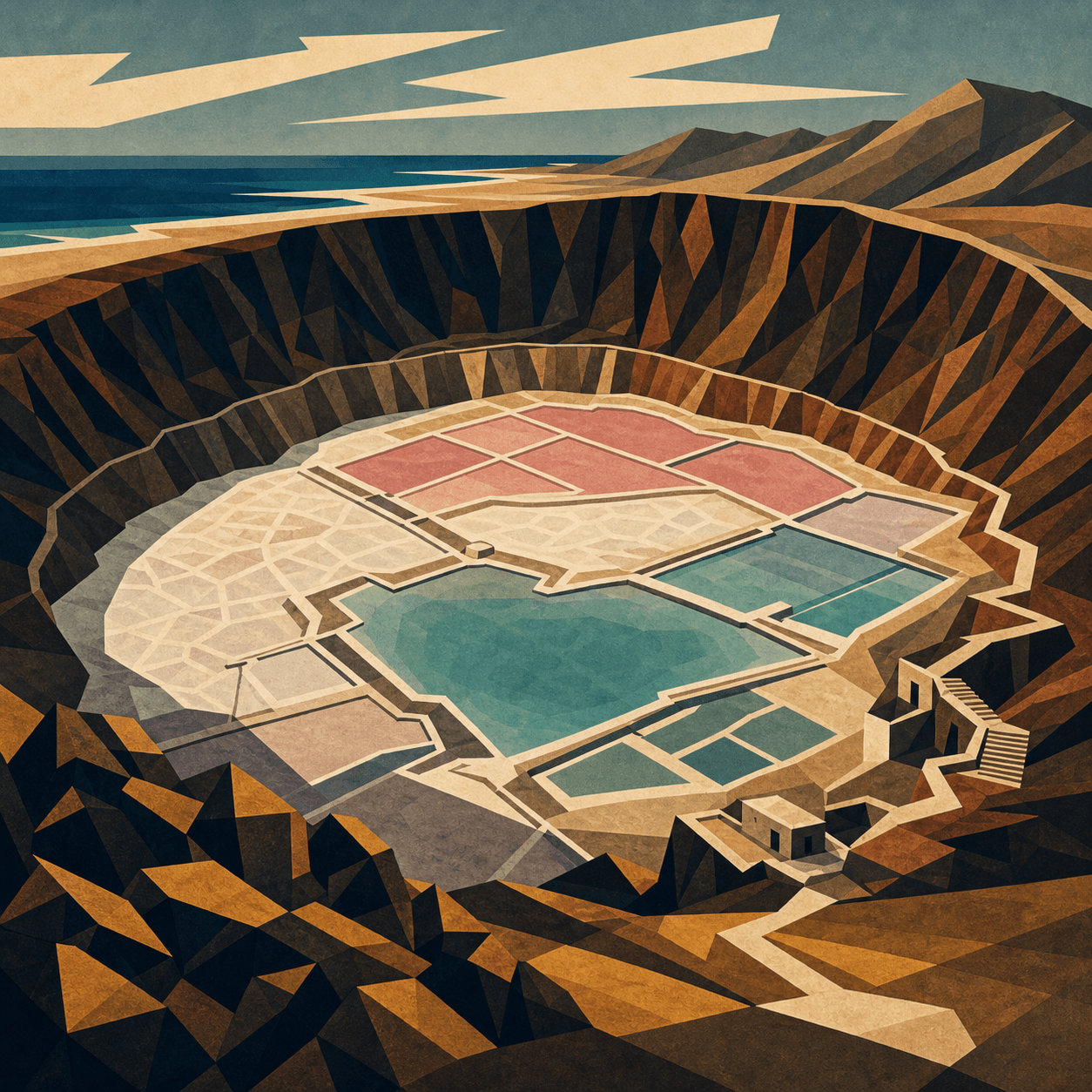
Fogo is the volcano island. The island is dominated by Pico do Fogo (2,829 m), an active volcano that last erupted in 2014 to 2015. Inside the older outer caldera (Chã das Caldeiras) sits a small village of roughly 700 to 1,000 people across two hamlets (Portela and Bangaeira) who farm the volcanic soil and produce a distinctive island wine. The 2014 eruption displaced about 1,500 residents from the wider crater area. The village itself is smaller.
What the trip looks like:
- Fly in to Fogo's small airport (FGS). About 40 minutes from Sal or Praia.
- Hire a 4WD or driver to reach Chã das Caldeiras. The road climbs and the final stretch is rough.
- Sleep in the crater village at one of the small guesthouses (Pensão Pedra Brabo, Casa Pia). Basic but real. The dinner is whatever was cooked that morning.
- Climb the volcano the next morning. The trek to the summit is 6 to 8 hours round trip. Rated moderately strenuous. Requires a local guide (the village runs the guiding cooperative). Start at sunrise.
The Fogo wine is the local discovery. Produced from grapes grown on the lava slopes, distinctively mineral, sold in unlabelled bottles at the village. Bring one back.
Cidade Velha
Cidade Velha, 15 km west of Praia on Santiago island, is a UNESCO World Heritage Site and the first European colonial settlement in the tropics (Portuguese, founded 1462). The historic core is small but dense:
- Forte Real de São Filipe. The 16th-century fort on the hill above the town. Free or near-free entry. Panoramic views.
- Rua Banana. The oldest street in the country. The colonial-era stone-built houses still stand.
- Pelourinho (Pillory) in the main square. The mid-16th-century pillory marks where enslaved Africans were held and sold in the early Atlantic slave trade. Confronting.
Cidade Velha pairs naturally with Praia's National Library and the Plateau district on a Santiago route.
Watersports and what else
The trade winds make Cabo Verde one of the best windsurf and kitesurf destinations in the Atlantic. Sal (Santa Maria) is the main wind-sports anchor. World-cup tour stops happen there most years. Surfing is good on Sal and Boa Vista. Deep-sea fishing (marlin, tuna) runs from most major harbours.
Three other things to know:
- Bird-watching. Endemic species including the Cape Verde Warbler and the Iago Sparrow. Santiago and Fogo have the best concentrations.
- Santo Antão hiking. The Cova Crater walk and the Vale do Paúl valley descent are the two classic routes. Half-day to full-day depending on which leg you do. Hire a local guide.
- Grogue. The local sugar-cane spirit. Drunk straight or in cocktails. The Santo Antão grogue is the country's best. Visit a small distillery on the island if you go.
For the cuisine, three plates explain the country: cachupa (the national stew of corn, beans, and meat or fish), pastel (fried half-moon pastries with tuna or vegetable filling), and lagosta grelhada (grilled spiny lobster, expensive but the right closing dinner if seafood is the thing). Wash down with grogue or a Strela beer.
Quick answers
- How do I get to Cabo Verde?
- Two main entry points. Amílcar Cabral International Airport on Sal (SID) handles most package-tourism and seasonal European routes (Lisbon, Manchester, Paris, Munich). Nelson Mandela International Airport in Praia, Santiago Island (RAI), is the political and inter-island hub. From North America the cleanest play is Lisbon (TAP), or Providence, RI (TACV / Cabo Verde Airlines launched nonstop PVD service in 2024. The old Boston route was discontinued).
- Which island should I pick first?
- Sal for a beach trip. Everything is built around the resorts and the white sand at Santa Maria. São Vicente (Mindelo) for culture, music, and a real town. Fogo for one specific thing (climb the volcano, sleep in the crater village). Santo Antão for hiking the dramatic mountain valleys. Most travelers combine two. Sal-and-Mindelo, or Fogo-and-Santo Antão.
- Do I need a visa?
- Most Western travelers can enter visa-free or buy a visa on arrival. The country eased rules in 2019 and 2022. EU citizens enter free. US, UK, and Canadian visitors typically pay a small Tourism Tax (about 30 EUR), filed online before departure as the EASE pre-arrival registration (ease.gov.cv). Verify before travel. The policy has shifted.
- Do they speak Portuguese or Kriolu?
- Both. Portuguese is the official language. Kriolu (Cabo Verdean Creole, with local variants per island) is the everyday spoken language. English is reasonably common in the resort areas of Sal and Boa Vista, less so on the smaller islands. Portuguese helps everywhere.
- Is it safe?
- Yes, by general travel standards. The usual urban precautions in Praia and parts of Mindelo at night. Small-town and resort areas are very calm. Most travelers report Cabo Verde as one of the easier West African destinations.