Photos from Luang Prabang
 +1
+1Kuang Si Waterfallsattraction
 +4
+4Luang Prabangattraction

Bamboo Bridges of Luang Prabangattraction
+1+4Current conditions and the practical reference material that helps turn the saved places into a trip.
7-day forecast from Open-Meteo. UV badges flag days when sun protection matters (3 and above is moderate; 8 and above is risk territory for unprotected fair skin within 30 minutes).
About 80% of the year's rain falls in these months. Typical highs around 30°C, lows around 21°C.
About 29mm of rain a month, against 164mm in the wet season.
Luang Prabang, historically known as Xieng Thong, and alternatively spelled Luang Phabang or Louangphabang, is the capital of Luang Prabang Province in north-central Laos. Its name, meaning “Royal Buddha Image,” derives from the Phra Bang, a statue symbolizing Lao sovereignty. Designated a UNESCO World Heritage Site in 1995, the city is recognized for blending Lao architecture, European colonial buildings, and over 30 Buddhist temples. The protected area encompasses 33 of its 58 villages, where daily rituals like the morning alms-giving ceremony persist.
The links below support the changing or licensed reference material on this page. Personal notes and ordinary geographic facts are not footnoted individually.
Monthly highs, lows, rainfall — long-term averages, NASA POWER.
Maps, image licenses, and the full dataset registry are listed in site credits.
My Luang Prabang travel guide. The old town and temples, Mount Phousi, Kuang Si Falls, the night market, where to stay, and where to eat.
ຫຼວງພະບາງ
Luang Prabang is the small Lao town on a peninsula between two rivers, a UNESCO old town of gilded temples and French colonial shophouses that runs at a deliberately slow pace. The old town, waterfalls, and river routes are separate parts of the visit.
Planning brief
Luang Prabang is a small town in northern Laos, set on a peninsula where the Nam Khan river meets the Mekong. Its old town, a UNESCO World Heritage Site, blends Lao Buddhist temples with French colonial architecture, and the pace is deliberately slow. The old town, waterfalls, and river routes are separate parts of the visit.
The old town and temples form the walkable core. Kuang Si Falls and the Mekong river routes need separate transport beyond the peninsula.
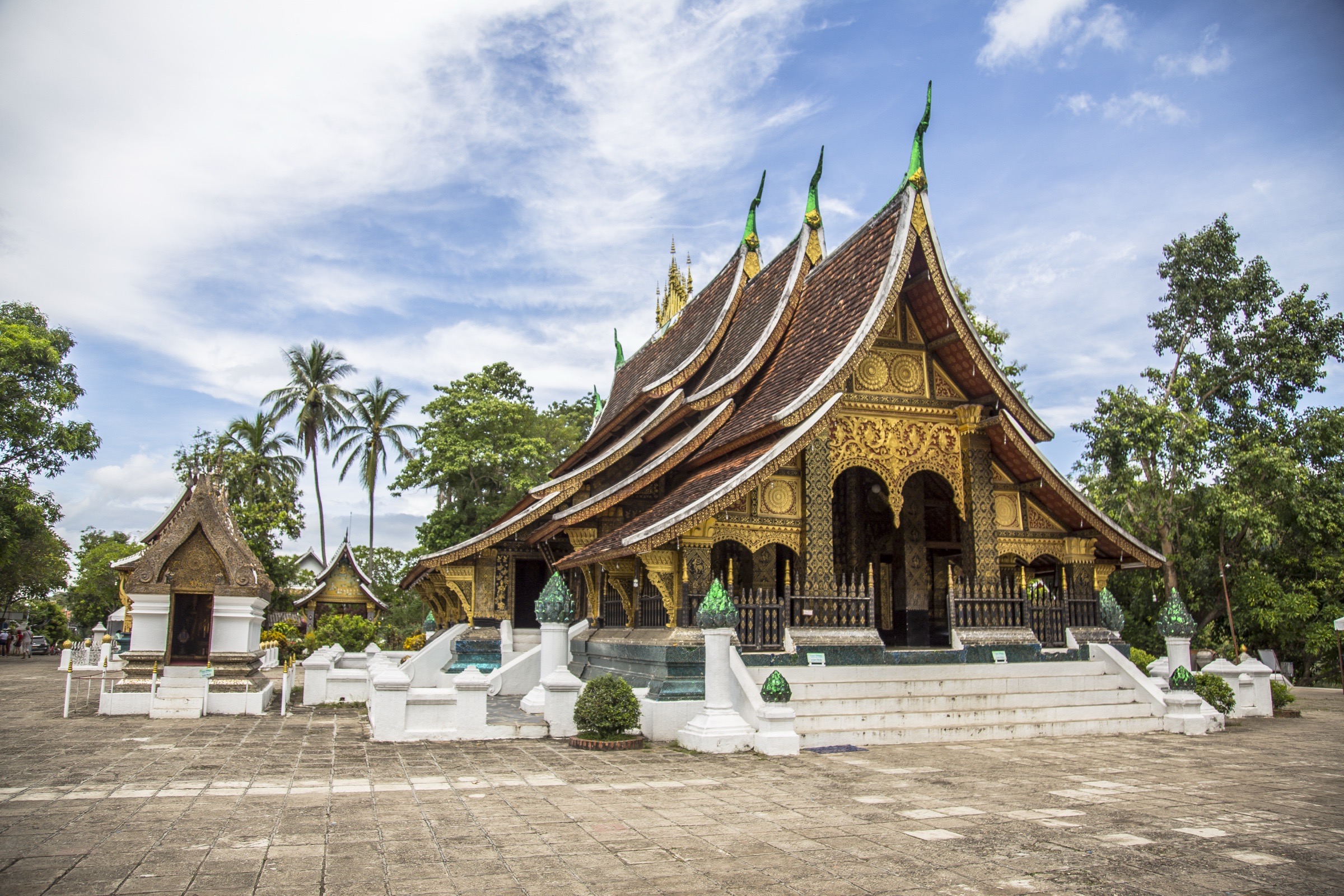
A peninsula of gilded temples, monasteries, and colonial shophouses, small enough to walk. Wat Xieng Thong is the standout.
Mount Phousi gives the sunset view over the rivers. Kuang Si Falls, the turquoise tiered waterfall outside town, is the standout day trip.
The dawn alms-giving and the evening handicraft night market are the two daily rituals. Watch the first respectfully, browse the second.
Luang Prabang has an international airport with regional connections across Southeast Asia. The Laos-China high-speed railway also stops here, linking the town with Vientiane and the Chinese border in a few hours, which has made it far easier to reach than it once was.
For the slow arrival, take the two-day Mekong boat down from Huay Xai on the Thai border, an overnight river journey rather than a means of transport. In town, the old quarter is small and walkable, and bicycles are easy to rent.
Stay on or near the peninsula, the old town between the two rivers. From there the temples, the night market, and the riverfront are all on foot, and you wake up inside the part of town you came to see.
For a guesthouse in the old town, Villa Chitdara is the lodging pin on the Luang Prabang list. Beyond it the atlas does not yet carry a wide hotel pin set for the town, so book on the usual sites and read recent reviews for the property.
The old town is the whole point of Luang Prabang, a low-rise peninsula of gilded monasteries, colonial shophouses, and cafes, small enough to cross on foot. Wat Xieng Thong, the 16th-century temple near the tip of the peninsula, is the standout, with its sweeping low roofs and a glass-mosaic tree of life. Saffron-robed monks are a constant presence, and the dawn alms-giving, the Tak Bat, is a daily religious ritual best watched quietly and from a distance, if at all.
Mount Phousi, the steep hill in the middle of town, is the climb for the sunset view over the rivers and the rooftops. At its foot, the former Royal Palace is now the national museum. As the day ends, the night market fills the main street with Lao textiles and handicrafts.
Kuang Si Falls, the multi-tier waterfall about 30 km south of town, is the standout day trip. Its turquoise pools step down through the forest, several of them open for swimming, and a rescued-bear sanctuary sits near the entrance. Go early to beat the midday crowds, and allow a half-day with the travel.
The Mekong itself is the other half-day: slow boats run upriver to the Pak Ou Caves, two riverside caverns packed with thousands of old Buddha statues, often combined with a stop at a riverside village.
Luang Prabang eats on Lao cooking, lighter and herb-forward, alongside a lasting French legacy of bakeries and cafes. Look for khao soi in its northern Lao form, river fish, sticky rice, and the bitter-herb stew or lam.
| Spot | What it is |
|---|---|
| Tamarind | A well-known restaurant of traditional Lao cuisine |
| Dyen Sabai Restaurant | Lao food across the Nam Khan from the peninsula |
| Café Toui | A small Lao restaurant in the old town |
| Le Banneton | A French bakery and cafe |


