
Malta, a whole country you can cross in an hour
My Malta travel guide. The St Julian’s hotel strip, walking Valletta, Gozo by ferry, rabbit and where to eat, and the high-versus-low season tradeoff.
- Updated
- May 12, 2026
Current conditions and the practical reference material that helps turn the saved places into a trip.
7-day forecast from Open-Meteo. UV badges flag days when sun protection matters (3 and above is moderate; 8 and above is risk territory for unprotected fair skin within 30 minutes).
About 87% of the year's rain falls in these months. Typical highs around 19°C, lows around 17°C.
Typical highs around 23°C, lows around 21°C. About 15mm of rain a month.
Public holidays from Nager.Date.
Public-transit operators within 8 km of the city center. Click through to each operator’s site for routes, fares, and tickets.
Operators and modes are aggregated from individual transit-agency GTFS feeds. Route classifications come from each feed’s route type codes.
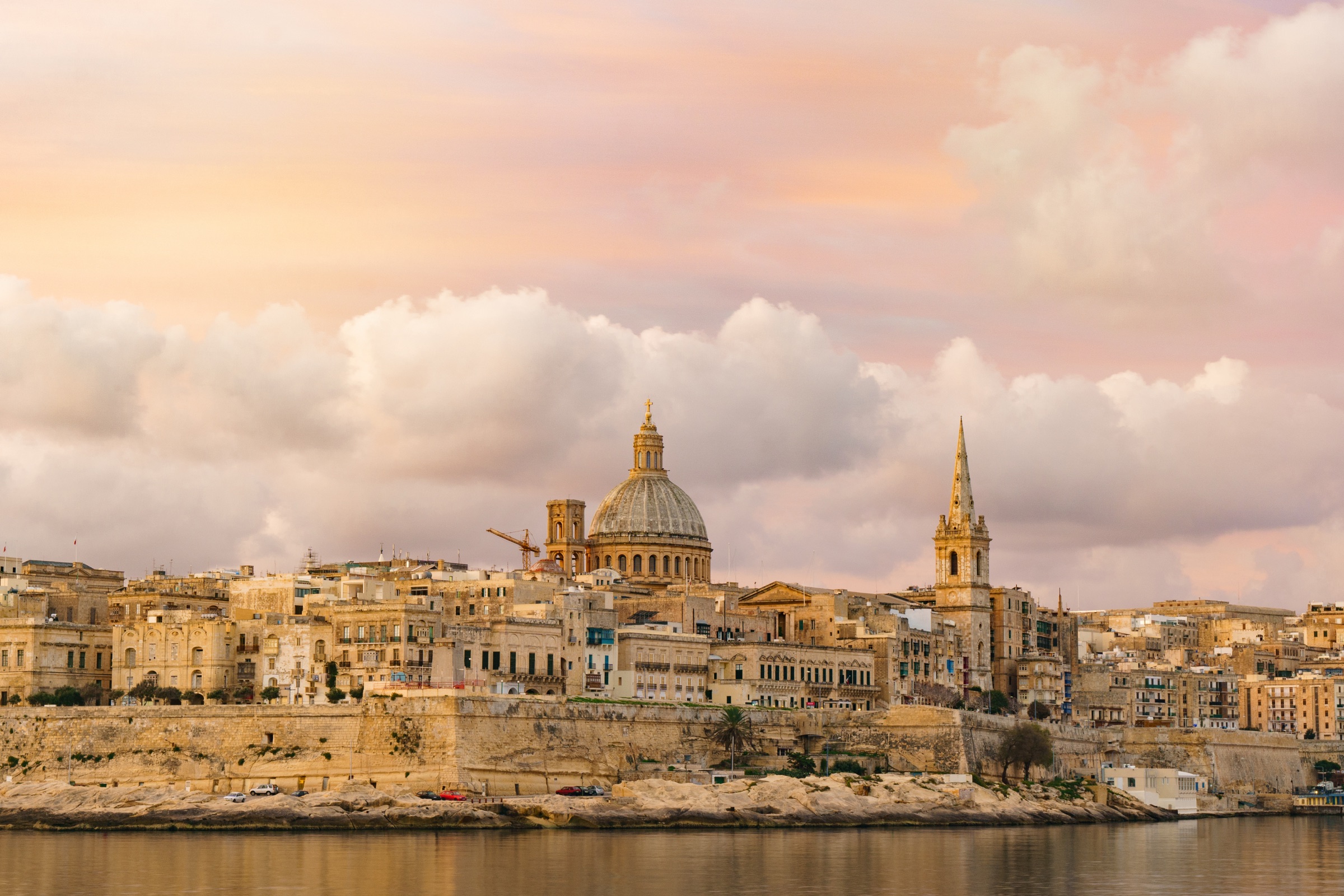
Valletta, also known as Città Umilissima, is the capital city of Malta and one of its 68 council areas. Located between the Grand Harbour to the east and Marsamxett Harbour to the west, its population as of 2021 was 5,157. As Malta's capital city, it is a commercial centre for shopping, bars, dining, and café life. It is also the southernmost capital of Europe, and, at just 0.61 square kilometres (0.24 sq mi), it is the European Union's smallest capital city.
The links below support the changing or licensed reference material on this page. Personal notes and ordinary geographic facts are not footnoted individually.
Monthly highs, lows, rainfall — long-term averages, NASA POWER.
Maps, image licenses, and the full dataset registry are listed in site credits.
My Malta travel guide. The St Julian’s hotel strip, walking Valletta, Gozo by ferry, rabbit and where to eat, and the high-versus-low season tradeoff.
Malta is the smallest country in the EU, and that is the planning fact everything depends on: 27 km long, a single base covers it. Stay on the St Julian's strip, then ferry, bus, and walk to Valletta, the Three Cities, Gozo, and a swim at Comino. The ferry and bus network determines how the islands fit together.
Planning brief
Malta is small. About 27 km long and 14 km wide, the whole archipelago is a single planning unit. You stay in one place, and you bus, walk, or ferry to everything else. The unofficial rule is that the hotel strip lives along the seafront of St Julian's and Paceville, and that is where most travelers actually sleep regardless of price band. The Hyatt, the InterContinental, and the Holiday Inn Express are essentially on the same street, so the choice is the room rather than the neighborhood. Valletta is a walk or short bus ride. Gozo is a ferry. The Three Cities and Mdina are short rides.
Most visitors should start with the hotel strip in St Julian's and Paceville unless there is a specific reason not to. It runs for about a kilometer along the seafront and carries the Hyatt, InterContinental, Hilton, Westin, Marriott, and Holiday Inn Express in roughly the same block. Pick by price. The location is the same.
Valletta sits about 5 km south of St Julian's. A 35 minute walk along the seafront via Sliema gets you there free, or the Marsamxetto ferry across the harbor from Sliema costs a couple of euros and drops you at the foot of the city. Gozo is a 25-minute car ferry from Ċirkewwa at the north tip of Malta, runs every 45 minutes through the day, around €4.65 single per foot passenger.
Stuffat tal-Fenek (rabbit stew) is the dish the island grew up on. Most restaurants do a version, and a real one is the order once. Beyond the rabbit, expect tourist-aimed cooking. The strip is full of pasta, pizza, kebab, sushi, gastropub. Some of it is good, none of it is local cuisine you would write a book about. That is fine. The meals are part of the trip rather than the destination.
Peak season (June to early September) is hot and full and noisy, with bachelor and hen parties thick on Paceville on weekends. Shoulder (April to May, October) is the better window. Warm, swimmable, less crowded, hotels reasonable. November is cheap but the weather is hit-or-miss. The swim is gone and the rain comes on more days than not.
Malta International Airport (MLA) sits about 8 km south of Valletta and even closer to the St Julian's hotel strip where most travelers actually stay. The ride in is short and the rideshare market is healthy, so the choice of transit usually comes down to time of day, luggage volume, and whether you would rather pay €20 to arrive at your room or €2 to ride a bus.
| Mode | Time | Cost | When to use |
|---|---|---|---|
| Uber / Bolt | 20 to 25 min | €15 to €25 to St Julian's or Valletta | The right default. Pickup is a short walk from arrivals at a marked lot. The apps work cleanly. Door-to-door after a long flight |
| X2 bus to St Julian's, X4 to Sliema, X3 to Valletta | 30 to 50 min | €2 single (€3 in summer night service) | Cheap and frequent during the day. Slower with luggage and the bus stops are a short walk from many hotels. Works if you are traveling light |
| Taxi from the rank | 20 to 25 min | €25 to €35 (fixed-rate zones) | Marked yellow-and-black cars at the curb. Pay at the desk inside arrivals before you board so the fare is the printed zone rate rather than a negotiation |
Uber or Bolt is the right default for a hotel-to-arrival trip. The X-bus number depends on where you are staying. Have it in mind before you walk out so you can find the right stop on the bus signage. The white airport buses run frequently in the day and have luggage racks but get loud and busy in summer. Bus works for solo light travelers, not couples with bags after a redeye.
Malta's real seasonal pattern is the summer village festa. Carnival, fireworks, and Valletta cultural nights are the visitor-facing dates.
| Event | When | What it changes |
|---|---|---|
| Village festas | Late May to mid-September | Weekend fireworks, brass bands, decorated streets, and patron-saint processions across the islands |
| Malta Carnival | Before Lent | Valletta parades and a wilder Gozo version in Nadur. Valletta and St Julian's hotels tighten |
| Fireworks Festival | Late April | Free pyrotechnic displays over the Grand Harbour |
| Notte Bianca | Early October | Valletta museums, palaces, and venues open late |
| Malta Jazz Festival | Mid-July | Open-air jazz at Ta' Liesse Wharf in Valletta |
| Mnarja | June 28 to 29 | Harvest festival at Buskett Gardens, with folk music and traditional food |
There is one real hotel strip on Malta and it runs for about a kilometer along the seafront of St Julian's and Paceville. The Hyatt, the InterContinental, the Hilton, the Westin, the Marriott, and the Holiday Inn Express are all on essentially the same stretch of road. If you put a pin in the middle of the strip and walked five minutes in either direction you would hit four of them. There is no "better part" of the strip to chase. The decision is the room and the price band, not the neighborhood.
| Property | Why pick it | Where |
|---|---|---|
| Hyatt Regency Malta | The upper-mid pick on the strip. Clean, modern, fair price for a globalist or a paid stay, walking distance to everything on the strip and to the bus stop for Valletta | Triq Sqaq Lourdes, St Julian's |
| InterContinental Malta | The other big-brand mid-band option. A short walk from the Hyatt, a full pool deck, family-friendly | St George's Bay, St Julian's |
| Holiday Inn Express Malta | The value pick in the same strip. Basic, breakfast included, fair for one or two nights | Triq San Ġorġ, Paceville |
Sliema is the other walkable base, a slightly quieter seafront town one strip south of St Julian's, with a small but real selection of mid-range hotels. Valletta itself has a growing set of boutique hotels inside the walls that work for a different kind of trip. Book one if you want to wake up inside the old city rather than at a beach-resort property. For most first visits, the St Julian's strip is the right default. The city visits are short and the strip's pool deck is the rest of the day.
Malta is small enough that you can largely walk and ferry to the main sights without renting a car.
| Move | How it works | Cost | When to use |
|---|---|---|---|
| Uber / Bolt | Healthy rideshare market across both islands. Pick-up at the airport works cleanly. In-town rides arrive in five minutes | Reasonable for any in-island trip. Airport to St Julian's about €15 to €20 | The default for the airport transfer and for late-night rides |
| Public bus | The Malta Public Transport network reaches every village and town on a Tallinja card. Slow at rush hour, regular off-peak | Cheap (€2 single, €15 for a 7-day Explore card) | Day trips when you have time. Airport-to-St-Julian's on the X2 if you are traveling light |
| Walk | The St Julian's-to-Sliema-to-Valletta seafront promenade is flat and continuous | Free | The Valletta day. Bring water |
| Sliema Ferry (Marsamxetto) | Two-minute crossing of the harbor from Sliema to Valletta. Runs every 30 minutes | About €2.80 return | The faster Valletta-from-St-Julian's option than the bus |
| Ċirkewwa Ferry (Gozo Channel) | 25-minute car-and-foot-passenger ferry to Gozo. Foot passengers pay on the return leg only | About €4.65 round-trip foot, ~€16 per car | Gozo day-trip or longer Gozo overnight |
| Comino shuttle | Small boats run from Ċirkewwa or Marfa to the Blue Lagoon on Comino, no fixed schedule outside summer | €13 to €15 round-trip | Summer-day Blue Lagoon visit |
I broke the water moves out into a separate Malta ferries page because that is the practical transit layer here: Sliema to Valletta, Valletta to the Three Cities, Gozo Channel, and the Comino boats.
The right shape of a Malta day is to pick one of those moves and build the day around it: a walking day for Valletta, a bus day for Mdina, a ferry day for Gozo, a Uber-and-swim day for Marsaxlokk and St Peter's Pool.
Valletta is the main city. The UNESCO-listed City of Valletta was built by the Knights of St John after the Great Siege of 1565. The whole street grid sits on a small peninsula projecting into the Grand Harbor, surrounded on three sides by water and on the fourth by the Knights' fortifications. The city is about 1 km long and 600 m wide, walkable end-to-end in twenty minutes, with the major sights distributed along the central axis (Republic Street and Merchants Street).
A reasonable Valletta day:
Walk the side streets at any point. The grid is regular but the streets are stepped at the ends to handle the slope of the peninsula, which is half the charm.
The harbor-side neighborhoods on the other side of the Grand Harbor (Birgu, Senglea, Cospicua) are the older fortified towns the Knights used before they built Valletta. Less polished, fewer tourists, more daily Maltese life. The main visit is Fort St Angelo in Birgu, the medieval-and-Knights stronghold that anchored the Great Siege from the harbor side. The walk along the Birgu Waterfront past the marina is the slow part of the trip. The Malta at War Museum covers the World War II air-war and bomb-shelter side of the city's history.
Easiest access: dghajsa water taxi across from Valletta (a few euros), or the bus 1, 2, or 3 from Valletta's main bus terminal. A half-day from after Valletta lunch works.
Mdina is the small fortified medieval town in the interior, on a high point 30 minutes from St Julian's by bus or 20 by Uber. The walled core is car-free, about 250 residents inside the walls, and quieter than anything on the coast. Walk the perimeter on the ramparts for the view, see the cathedral, get a coffee on the small main square, then back out. About a two-hour visit. Pair it with the Saint Agatha catacombs just outside the walls if you have time.
The dusk visit is the version most travelers come away talking about. The limestone walls turn gold in the late light and the silence reads more clearly with the day visitors gone.
Gozo is the second-largest island in the archipelago, north of Malta proper, slightly greener and noticeably slower. The crossing runs every 45 minutes from the Ċirkewwa Ferry Terminal at the north tip of Malta, takes 25 minutes, and costs about €4.65 round-trip for a foot passenger (charged on the return leg only. You walk on for free and pay coming back). Cars are about €16 plus the per-passenger fare.
On Gozo, head for Victoria (the citadel-town in the middle of the island), Dwejra (the cliff-and-sea-arch coast on the west side), and the Ġgantija temples (the megalithic complex that predates the Egyptian pyramids by a thousand years). Ferries run from the main island, and small inland boutique hotels are available when the last return does not fit the route.
The Blue Lagoon on the small uninhabited island of Comino, between Malta and Gozo, is the famous turquoise-water swim. Small boats run as a shuttle from Ċirkewwa (and from the Marfa side of the same north-tip area) in summer, with no fixed schedule outside June-September. They leave when the boat fills, roughly every 20 minutes in peak. Buy the round-trip on the dock. €13 to €15 is the standard. The Lagoon is beautiful and very crowded in July and August. Midweek mornings are the only way to find space to swim.
Maltese food is hard to find in St Julian's. The strip is built for visitors and the menus on the strip are pasta-pizza-kebab-sushi-gastropub English-with-pictures, none of it particularly local and most of it priced for a passing-through dinner. That is fine. You eat well enough, and the trip is not really a food trip.
The two dishes to order once anyway are:
For the rest of the meals, the St Julian's saved-list set is the menu. The seafront places are Hungry Horse, Plough & Anchor, and Happy Dayz Shack. The pasta-and-pizza picks are Bianco's and MÉZ. The international set is OBI for sushi, Net Viet for Vietnamese, Georgia Restaurant for Georgian, and Two Buoys for the bar-food bay-front evening. Mamachi is the Maltese-leaning casual option. All of it renders below on the pin map for browsing.
Peak Malta is mid-June through early September. The weather is reliably hot, the water is swimmable, the hotels are full, and the prices reflect it. Shoulder (April to May, October) is the better trip. Warm enough to swim by midday, less crowded, hotels reasonable. November and early December are the cheap season and you pay for it in weather. Daytime temperatures sit around 15 to 18°C, rain becomes regular, the swim is over, and the trip becomes a city-walk-and-museum one rather than a beach one.
The other planning consideration is the bachelor and hen party crowd. Paceville, the nightlife strip directly inland from the St Julian's hotels, is a known stag-do destination for UK and European groups in summer. The clubs are loud and the streets around them at 2 a.m. are not the calm-weekend version. Seafront hotels insulate from the noise. You are a block from the strip rather than in it. If the crowd is a deal-breaker, travel outside peak summer or base in Sliema or Valletta.