Current conditions and the practical reference material that helps turn the saved places into a trip.
The next week in New York City
7-day forecast from Open-Meteo. UV badges flag days when sun protection matters (3 and above is moderate; 8 and above is risk territory for unprotected fair skin within 30 minutes).
Today
Overcast
26° / 18°
UV High
Wed
Overcast
26° / 18°
UV High
Thu
Drizzle
32° / 23°
1.8 mm
UV High
Fri
Drizzle
34° / 25°
UV High
Sat
Drizzle
33° / 25°
1.5 mm
UV High
Sun
Partly cloudy
34° / 25°
UV High
Mon
Drizzle
36° / 25°
3.3 mm
UV High
Climate
Summer (Jun-Sep)
Typical highs around 25°C, lows around 19°C.
Winter (Dec-Mar)
Typical highs around 5°C, lows around 0°C.
In August 4
Drag to scrub across the year.
JFMAMJJASOND
Weather
26° / 21°
Typical high / low
4 mm rainfall this month
Daylight
13.8h
06:05 – 19:56local
Holidays coming up
Public holidays from Nager.Date.
Airports
closest LGA · 13 km
Getting around New York City
Public-transit operators within 8 km of the city center. Click through to each operator’s site for routes, fares, and tickets.
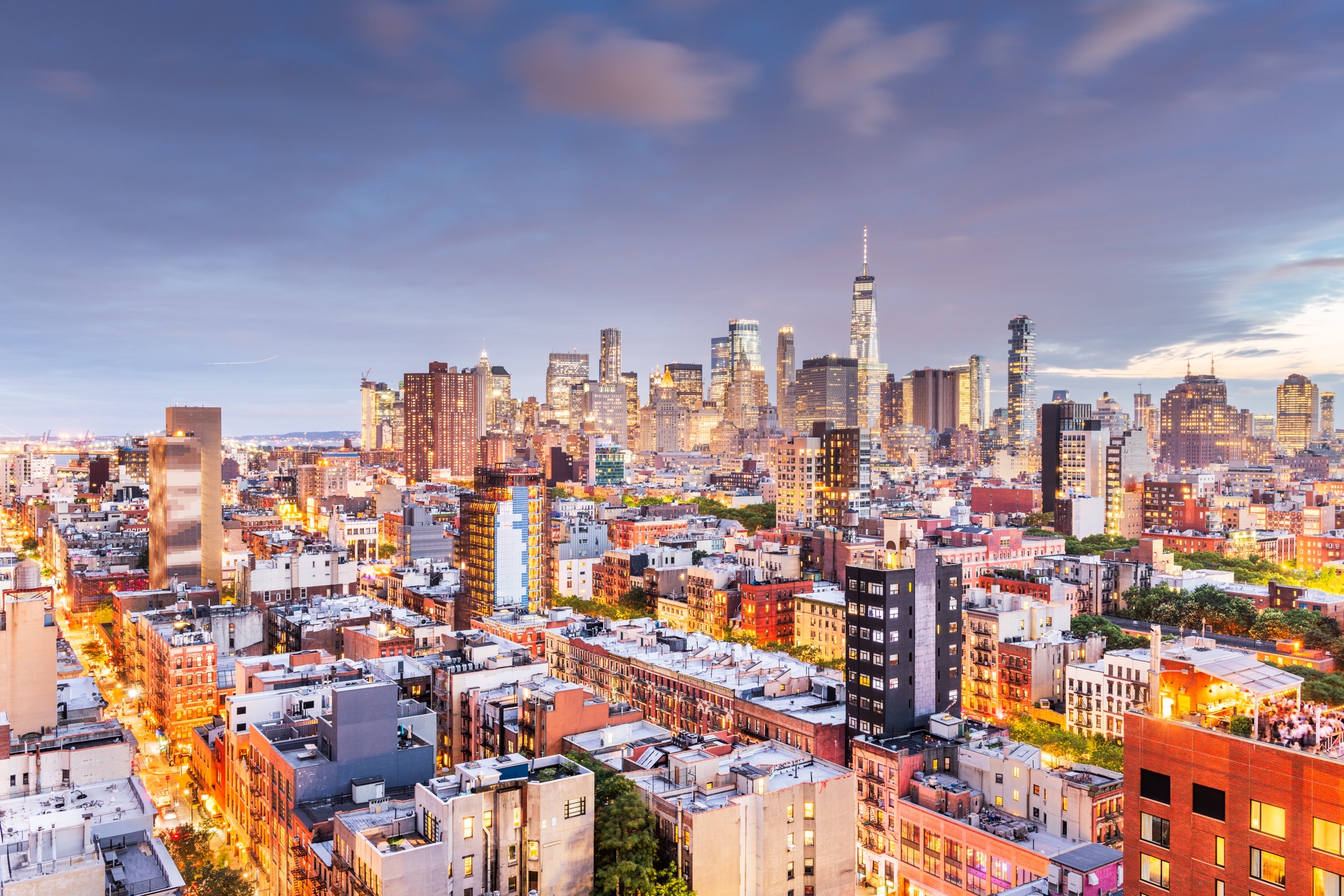
New York, often called New York City (NYC), is the most populous city in the United States. It is located at the southern tip of New York State on New York Harbor, one of the world's largest natural harbors. The city comprises five boroughs, each coextensive with its respective county. It is the geographical and demographic center of both the Northeast megalopolis and the New York metropolitan area, the largest metropolitan area in the United States by both population and urban area. New York is a global center of finance and commerce, culture, technology, entertainment and media, academics and scientific output, the arts and fashion, and, as home to the headquarters of the United Nations, international diplomacy.
The links below support the changing or licensed reference material on this page. Personal notes and ordinary geographic facts are not footnoted individually.
highlowrainfallcomfortable months
Monthly highs, lows, rainfall — long-term averages, NASA POWER.
New York City is too big to finish, and the first-timer mistake is trying. It is 8.5 million people across five boroughs, so plan around a couple of neighborhoods and a short list of sights rather than the whole map.
Planning brief
Planning New York City
New York City is the largest city in the United States, about 8.5 million people across five boroughs at the mouth of the Hudson. It is too big to see in one trip, and the first-timer mistake is trying. Plan a first visit around a few neighborhoods and a short list of sights rather than the whole map.
Choose a few neighborhoods
Do not try to cover the city. Pick two or three neighborhoods, go deep, and accept that a first trip is mostly Manhattan and a slice of Brooklyn. The rest waits for next time.
Book the big sights ahead
The observation decks, the Statue of Liberty ferry, and the popular museums all sell timed tickets. Buying online a few days out is the difference between walking in and losing an hour in a line.
The subway is how you move
Tap a contactless card or phone at the turnstile with OMNY. The subway runs 24 hours, reaches every borough, and is far faster than a taxi in Manhattan traffic.
Eat wide, not fancy
New York's best eating is the range, not the tasting menus. A hawker hall, a slice, a deli, a dumpling counter, and a borough you have not been to yet.
Four or five days is the shape of a first visit. That covers the major sights, two or three neighborhoods explored properly, a museum or two, and a day across the river in Brooklyn, without the forced-march pace that ruins a New York trip.
The city has years of things to do, so the planning is about choosing well, not covering everything. Pick a few neighborhoods, go deep, and let the rest wait for the next trip. Trying to tick off all five boroughs in a long weekend is how people come home tired and unconvinced.
How do I get in from the airports?
Three airports serve the city, and the best one depends on where you land.
Airport
Where it is
Into Manhattan
JFK
Queens, southeast
AirTrain to the subway or the LIRR commuter train. Flat-rate taxi about 70 dollars plus tolls and tip
LaGuardia (LGA)
Queens, closest to Manhattan
No direct train. The Q70 bus links to the subway. Taxi 40 to 60 dollars
Newark (EWR)
New Jersey, west
AirTrain to a NJ Transit train into Penn Station, around 15 dollars. Often the smoothest
Rideshare works from all three but surge pricing and airport pickup fees can push it past the taxi rate. For JFK and Newark, the train is usually faster than a car in rush-hour traffic.
Where should I stay?
Most first-time visitors stay in Manhattan, and the real rule is to stay near a subway line. The borough matters less than the walk to the train.
Area
Why pick it
Trade-off
Midtown
The most central and best-connected, near Times Square, Grand Central, and most transit
Busy, expensive, and the least characterful part of the city
Lower Manhattan
FiDi and Tribeca, near the 9/11 Memorial and the ferries, quieter at night
A longer ride up to Midtown sights
Village / SoHo / Chelsea
Atmosphere, restaurants, and walkable streets, the most New York-feeling base
Among the priciest rooms in the city
Brooklyn
Williamsburg, Brooklyn Heights, and DUMBO, with skyline views and more space
A subway ride from Manhattan sights, though a short one
Long Island City (Queens)
Lower rates, fast subway to Midtown, a quick value base
Less to do at street level after dinner
Long Island City is the version of the value trade that can actually work: skyline views, fast subway links, and a little breathing room after Manhattan, as long as you accept that the street-level atmosphere is quieter.
The atlas does not yet carry hotel pins for New York City, so book on the usual sites and read recent reviews for the property.
How is the city laid out?
New York has five boroughs: Manhattan, Brooklyn, Queens, the Bronx, and Staten Island. Most first trips concentrate on Manhattan and cross into Brooklyn for a smaller set of neighborhoods.
Manhattan is the long, narrow island most of the famous sights sit on. Above 14th Street it runs on a numbered grid, which makes it easy to navigate: streets run east-west, avenues run north-south, and addresses climb as you go north. Below 14th Street, in Greenwich Village and the older downtown, the grid breaks and the streets have names, which is where visitors get briefly lost.
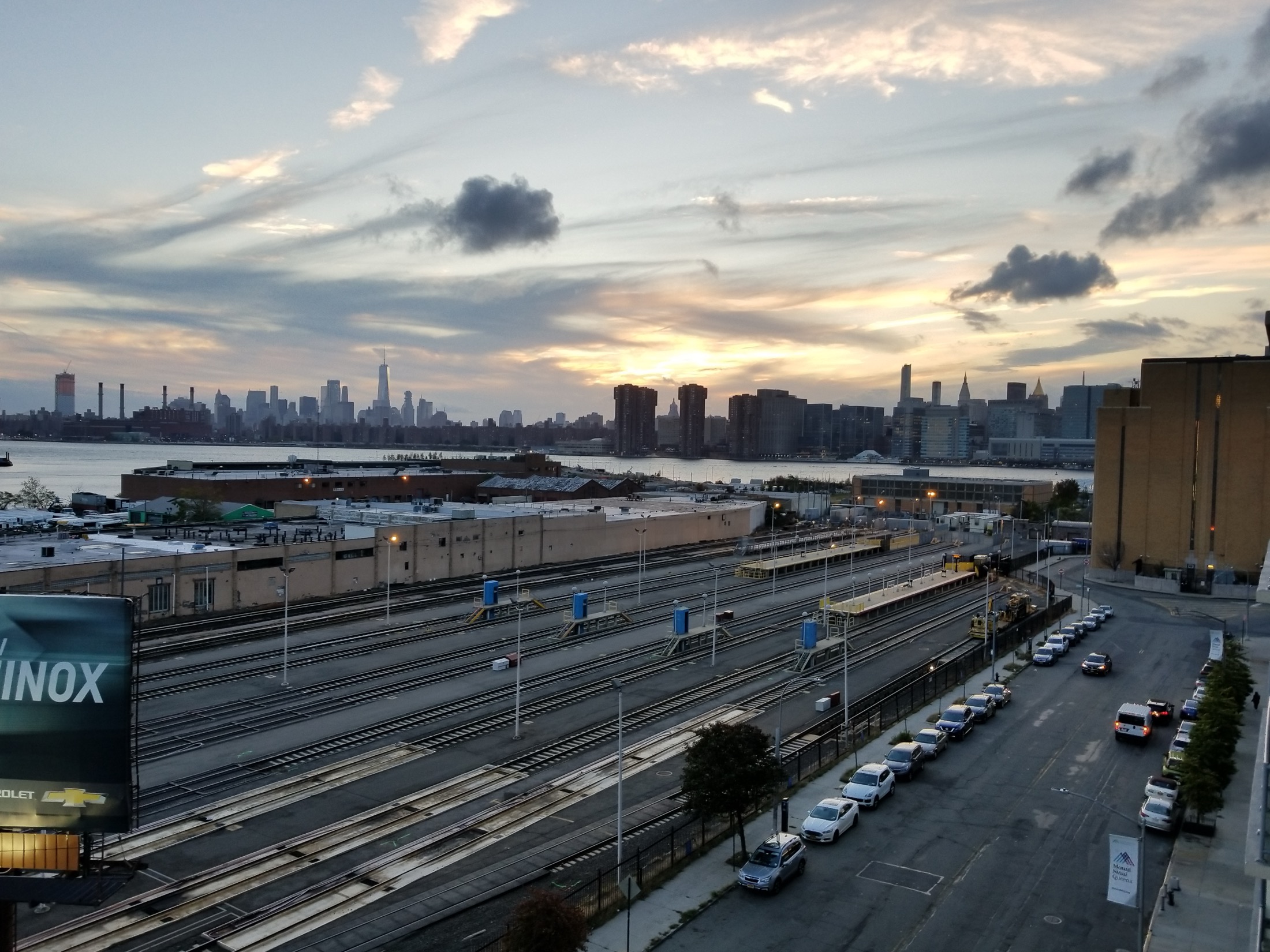
Brooklyn, across the East River, is easiest to plan as its own geographic block, especially Williamsburg, DUMBO, and Brooklyn Heights. Queens is the most diverse, with the city's deepest range of food. The Bronx holds Yankee Stadium, the zoo, and the botanical garden. Staten Island is mostly residential, but the free Staten Island Ferry past the Statue of Liberty is one of the best free things in the city.
The first-timer sights
The famous list is long. These are the ones a first trip is built around, with the booking advice that saves the queue.
The observation-deck advice is a mercy rule, not a dare. Pick one high view, time it for good light if you can, and let the skyline do the work instead of paying for four versions of the same thrill.
Central Park is the 843-acre park in the middle of Manhattan, free, and best entered with no fixed plan. It can absorb hours without a fixed route.
The Statue of Liberty and Ellis Island are reached by ferry from Battery Park. Book the ferry online ahead, and book far ahead if you want crown access.
The observation decks are a choice, not a checklist: the Empire State Building, Top of the Rock at Rockefeller Center, Edge in Hudson Yards, and Summit One Vanderbilt. Pick one, buy a timed ticket online.
The museums that anchor a trip are the Metropolitan Museum of Art, the Museum of Modern Art, and the American Museum of Natural History. Book timed entry. The Met operates on a suggested-donation basis for New York State residents only.
The 9/11 Memorial and Museum in Lower Manhattan. The outdoor memorial pools are free, and the museum is a timed ticket.
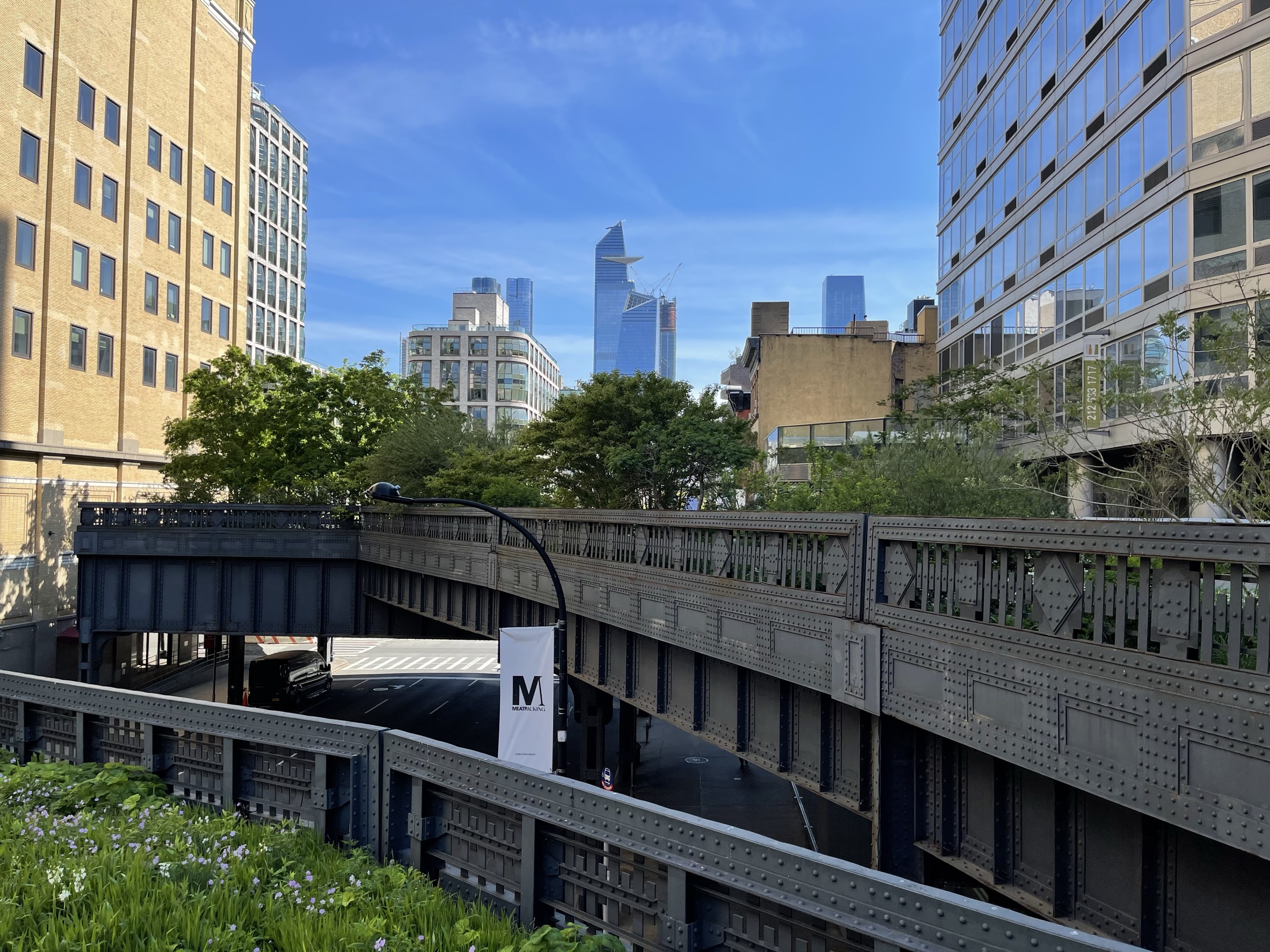
The High Line is the elevated park built on a former rail line on the west side, free, best walked end to end.
The Brooklyn Bridge walk from Manhattan to DUMBO is free and one of the best hours in the city. Go early to beat the crowds.
The High Line works because it is a walk, not a single sight: old rail geometry, new towers, planting, side streets, and little moments where the city is easier to read from one floor above it.
A note on Times Square: the costumed characters and the people handing out "free" CDs or bus tour tickets expect payment and can be pushy. Enjoy the lights, keep walking, and do not let anyone put a costume arm around you for a photo.
How does the subway work?
The New York City subway runs 24 hours a day and reaches all five boroughs. It is faster than a taxi anywhere in Manhattan during the day.
I broke the fuller route notes out into the New York City Subway guide, but the short version is simple: pay with OMNY by tapping a contactless credit card, debit card, phone, wearable, or OMNY card directly at the turnstile. The fare is 3 dollars for most riders, and OMNY caps subway and local bus spending at 35 dollars in a 7-day period as long as you keep using the same card or device. You tap when you enter, not when you exit.
Two practical notes. Express trains skip stops, local trains make every stop, and the same line runs both, so check the train before you board. And service changes on nights and weekends are constant in New York, so check the posted notices or a transit app rather than trusting the map on the wall.
Where should I eat?
New York's best eating is the range, not the price. The whole world cooks here, and a good food day moves between a hawker stall, a pizza slice, a deli counter, and a borough you have not tried. Queens in particular repays a full food day.
For a single recommendation, Urban Hawker packs a run of Singaporean and Southeast Asian stalls under one roof near Times Square, which is the easiest good meal in the hardest neighborhood to eat well in.
Quick answers
How much time do I need in New York City?
Four or five days for a first visit. That is enough for the major sights, two or three neighborhoods explored properly, a museum or two, and a day in Brooklyn, without the forced-march pace that ruins a New York trip. The city has years of things to do, so a first trip is about choosing well rather than covering everything.
How do I get from the airport into Manhattan?
Three airports serve the city. JFK in Queens connects by the AirTrain to the subway or the LIRR commuter train, or a flat-rate taxi runs about 70 dollars plus tolls and tip to Manhattan. LaGuardia, also in Queens, is the closest but has no direct train. The Q70 bus links it to the subway, and a taxi runs 40 to 60 dollars. Newark in New Jersey connects by AirTrain to a NJ Transit train into Penn Station for around 15 dollars, which is often the smoothest option.
Where should I stay in New York City?
Most first-time visitors stay in Manhattan. Midtown is the most central and best-connected, near Times Square and the major transit, but it is busy and not the most characterful. Lower Manhattan, Greenwich Village, SoHo, and Chelsea trade some convenience for atmosphere. For more space and a lower rate, Brooklyn neighborhoods like Williamsburg and Brooklyn Heights, and Long Island City in Queens, are a short subway ride from Midtown. Stay near a subway line and the borough matters less.
How does the subway work?
The New York City subway runs 24 hours a day and reaches all five boroughs. Pay with OMNY by tapping a contactless credit card, debit card, phone, wearable, or OMNY card directly at the turnstile. The fare is 3 dollars for most riders, and OMNY caps subway and local bus spending at 35 dollars in a 7-day period as long as you keep using the same card or device. You tap when you enter, not when you exit.
 +2
+2
 +1
+1

 +1
+1