Current conditions and the practical reference material that helps turn the saved places into a trip.
7-day forecast from Open-Meteo. UV badges flag days when sun protection matters (3 and above is moderate; 8 and above is risk territory for unprotected fair skin within 30 minutes).
About 71% of the year's rain falls in these months. Typical highs around 14°C, lows around 7°C.
Typical highs around 21°C, lows around 12°C. About 59mm of rain a month.
Public holidays from Nager.Date.
Public-transit operators within 8 km of the city center. Click through to each operator’s site for routes, fares, and tickets.
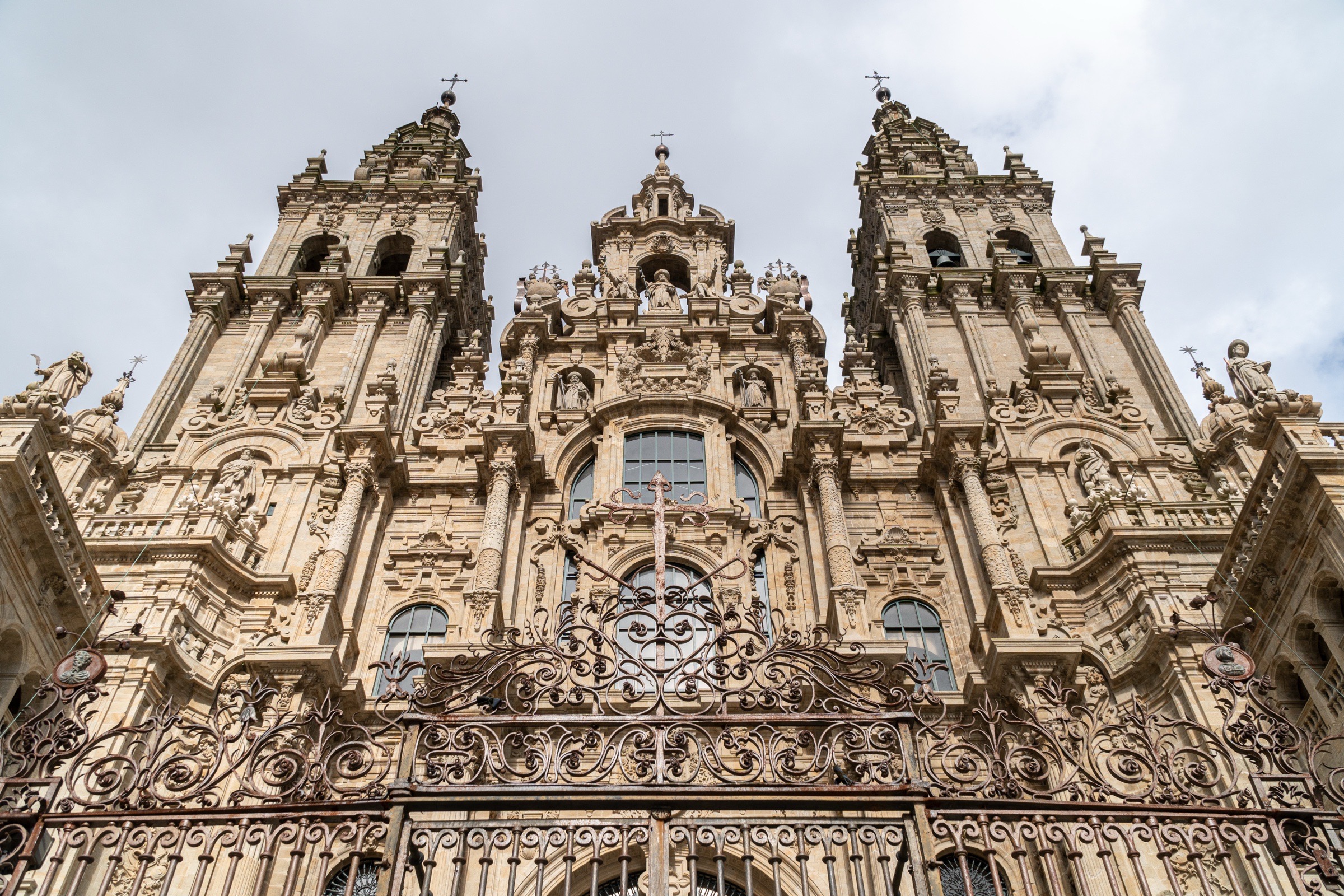
Santiago de Compostela, alternatively abbreviated to Santiago or Compostela, is the capital of the autonomous community of Galicia, Spain. It is located in the province of A Coruña, in the northwest of the Iberian Peninsula. The city has its origin in the shrine of Saint James the Great, now the Cathedral of Santiago de Compostela, as the destination of the Way of St. James, a leading Catholic pilgrimage route since the 9th century. In 1985, the city's Old Town was designated a UNESCO World Heritage Site.
The links below support the changing or licensed reference material on this page. Personal notes and ordinary geographic facts are not footnoted individually.
Monthly highs, lows, rainfall — long-term averages, NASA POWER.
Operators and modes are aggregated from individual transit-agency GTFS feeds. Route classifications come from each feed’s route type codes.
Maps, image licenses, and the full dataset registry are listed in site credits.

A compact Santiago de Compostela note: the produce market, Bonaval park, and the cathedral square to visit after the day crowds thin.
Santiago de Compostela is the Galician city where the Camino de Santiago ends, built around the cathedral that holds the shrine of Saint James. The old town is compact, granite, and better on foot than on a checklist. This list collects three stops that make sense around the cathedral rather than inside it.
Mercado de Abastos is the produce market to visit before lunch, with fish, cheese, meat, vegetables, and the food-stall rhythm that makes Galicia feel distinct from the rest of Spain. Parque de San Domingos de Bonaval is the quieter reset: terraced convent grounds, old stone walls, and views back over the rooftops.
Praza da Quintana is the square directly behind the cathedral. Go in the evening if you can, when the Camino arrivals, local walkers, and cathedral bells all pass through the same piece of stone.