
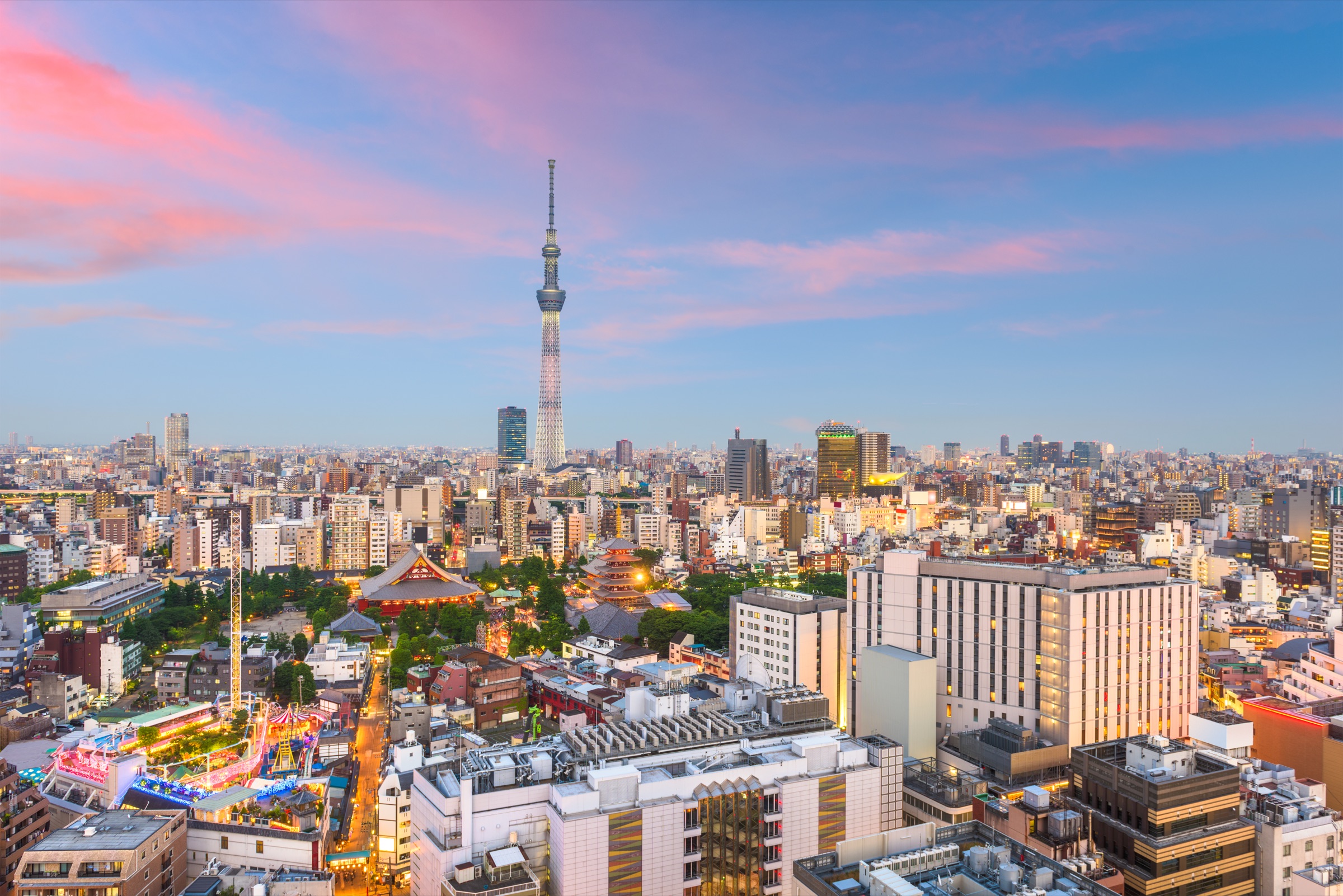
Tokyo, the world's largest city, three wards at a time
My Tokyo travel guide. Cherry blossom season, where to stay by trip type, the wards by train, booking Ghibli and teamLab, and the sushi rotation.
- Updated
- May 14, 2026
Current conditions and the practical reference material that helps turn the saved places into a trip.
7-day forecast from Open-Meteo. UV badges flag days when sun protection matters (3 and above is moderate; 8 and above is risk territory for unprotected fair skin within 30 minutes).
About 67% of the year's rain falls in these months. Typical highs around 25°C, lows around 17°C.
Typical highs around 12°C, lows around 2°C. About 90mm of rain a month.
Public holidays from Nager.Date.
Public-transit operators within 8 km of the city center. Click through to each operator’s site for routes, fares, and tickets.
Tokyo, officially the Tokyo Metropolis, is the capital and most populous city of Japan. With a population of over 14 million in the city proper in 2023, it is one of the most populous urban areas in the world. The Greater Tokyo Area, which includes Tokyo and parts of six neighboring prefectures, is the most populous metropolitan area in the world, with 41 million residents as of 2024.
The links below support the changing or licensed reference material on this page. Personal notes and ordinary geographic facts are not footnoted individually.
Monthly highs, lows, rainfall — long-term averages, NASA POWER.
Operators and modes are aggregated from individual transit-agency GTFS feeds. Route classifications come from each feed’s route type codes.
Maps, image licenses, and the full dataset registry are listed in site credits.
My Tokyo travel guide. Cherry blossom season, where to stay by trip type, the wards by train, booking Ghibli and teamLab, and the sushi rotation.
東京
Tokyo is the largest metro area in the world, and it reads exactly that big the moment you land. The trip is not seeing Tokyo so much as picking three or four wards and going deep on each. The food is the reason most people come. Plan by ward rather than trying to cover the whole city.
Tokyo has two airports. Narita (NRT) is 60 km east of the center and handles most long-haul international. Haneda (HND) is 15 km south and handles a growing share of long-haul plus all domestic. If your booking site offers either, take Haneda.
| Mode | Time | Cost | When to use |
|---|---|---|---|
| Narita Express (N'EX) from NRT | 55 to 75 min | ¥3,000 to ¥3,250 | The default from NRT. Direct to Tokyo, Shinjuku, Shibuya. Reserve seats for peak hours |
| Keisei Skyliner from NRT | 40 to 50 min | ¥2,580 | Faster than N'EX but only to Nippori and Ueno. Useful for hotels on the east side or for Asakusa |
| Keikyū Line from HND | 15 to 25 min | ¥330 to ¥630 | The default from HND. Direct to Shinagawa with connections to the rest of the JR network |
| Tokyo Monorail from HND | 20 min | ¥520 | Alternative from HND. Drops you at Hamamatsucho on the Yamanote Line |
| Airport Limousine Bus | 60 to 120 min | ¥3,200 from NRT, ¥1,250 from HND | Direct to major hotels. Useful with heavy luggage and no transfers |
| Taxi | 60 to 90 min from NRT, 30 to 45 from HND | ¥22,000+ from NRT, ¥7,000 to ¥10,000 from HND | Reasonable only from HND for late arrivals with bags |
Tokyo doesn't have a single center. The city is a constellation of 23 special wards on the Kantō plain, each with its own gravity. The JR Yamanote Line (the green-painted loop on every map) connects most of the wards a tourist cares about and is the planning anchor for the trip. The line goes around clockwise. Most of the major wards are stops on it.
The Yamanote stops to know, in order:
Wards off the Yamanote that earn the detour:
Lines to know in shorthand besides the Yamanote: Ginza Line (orange) is the oldest subway line, runs Asakusa → Ueno → Shibuya across the east-west tourist spine. Hibiya Line (silver) runs Roppongi → Ginza → Akihabara → Asakusa, the second tourist spine. Oedo Line (magenta) is the deep ring that connects Roppongi to Tsukiji. Marunouchi Line (red) connects Shinjuku to Tokyo Station to Ginza.
Tokyo's calendar has three practical checks: cherry blossom, Golden Week, and New Year. The rest is about neighborhoods and day trips.
| Event | When | What it changes |
|---|---|---|
| Cherry blossom | Late March to early April | Peak-bloom hotels rise fast. Book months ahead and follow forecasts from late February |
| Golden Week | April 29 to May 5 | Japan travels. Avoid big day trips and long intercity transfers |
| Sanja Matsuri | Third weekend of May | Asakusa shrine festival. Stay near Asakusa or Ueno if this is the reason |
| Sumida River Fireworks | Last Saturday of July | Riverside near Asakusa fills hours before launch |
| Obon | Mid-August | Locals leave Tokyo. Small restaurants close and day trips stay busy |
| Autumn leaves | Mid-November to early December | Good city parks, but Nikko, Hakone, and Kamakura book heavily |
| New Year | December 31 to January 3 | Closures, shrine visits, and a quieter city than usual |
Tokyo's hotel range is the deepest of any global city. Pick by what you came for.
For a first Tokyo trip. Base near a Yamanote stop with good local food and easy transfers. Shinjuku for transit access and big-Tokyo nightlife, Ginza for upscale-and-quiet, Asakusa for old-Tokyo morning walks, Shibuya for shopping and youth culture, Marunouchi for the brick Tokyo Station feel.
| Ward | Why pick it | Trade-off |
|---|---|---|
| Shinjuku | The transit hub. Bullet trains, every line. Restaurants and bars open late. Great for first-time visitors who want to move around the city quickly | Big, crowded, loud. Kabukicho on the east side is a separate ecosystem (see the scams section below) |
| Ginza / Marunouchi | Upscale, polished, quiet at night, walking distance to the Imperial Palace and the brick Tokyo Station. The "adult Tokyo" base | Quiet at night. Restaurants close earlier than Shinjuku or Shibuya |
| Asakusa | Old Tokyo. Walking distance to Sensōji and the river. Cheaper hotel rates than central Tokyo | Further from the Shibuya / Shinjuku scene. Plan more train time |
| Shibuya | Shopping, youth culture, neon, the crossing | Loud, crowded, you trip over influencer photo shoots |
| Roppongi | International-leaning, art-museum density, late-night bars | The Roppongi bar strip can get rough late (see scams). Hotel rates rise on weekends |
| Tokyo Station / Marunouchi | Inside the bullet-train hub. Easy onward to Kyoto, Osaka, Hakone | Business-district feel. Less street-level energy |
For a longer trip or a return visit, base in a different ward each week and walk the local neighborhood at dinner before riding the Yamanote out for the day. The wards feel different at street level.
The Tokyo transit system is two networks stacked on the same map. JR East (Yamanote, Chuo, Sobu, etc.) and Tokyo Metro / Toei Subway (the underground lines). Google Maps treats them as one. Your fare doesn't.
The newer contactless Tap to Ride gates on Tokyo Metro and Toei are useful, but I would still steer most visitors toward Suica, Pasmo, or Welcome Suica. Those work across the broader rail/bus/shop world, while bank-card tapping is still more limited once JR and through-running trips enter the picture.
Tokyo runs a tighter advance-booking culture than most cities. A few must-book-ahead:
| Sight | What to know | Booking |
|---|---|---|
| Ghibli Museum (Mitaka) | The Studio Ghibli (Totoro, Spirited Away) museum on the western edge of Tokyo. Tickets are released the 10th of the previous month at 10:00 JST and sell out the same morning | ghibli-museum.jp via Lawson. Book 3 to 4 weeks ahead minimum. ¥1,000 adult |
| teamLab Planets (Toyosu) | Immersive digital-art installation, walk-through-water rooms. The selfie-Tokyo headliner | teamlab.art/e/planets. Book 1 to 2 weeks ahead for weekends. ~¥3,800. Closes for renovation occasionally, so check the date |
| teamLab Borderless (Azabudai Hills) | The other teamLab venue, reopened 2024 in the Azabudai Hills tower | teamlab.art/e/borderless. Book 1 to 2 weeks ahead. ~¥3,800 |
| Imperial Palace tour | The free 75-min English-guided tour of the inner palace grounds. Runs Tuesday-Saturday | sankan.kunaicho.go.jp. Book 1 to 4 weeks ahead. Free. Bring passport for entry |
| Imperial Palace East Gardens | The free walk-through of the outer-palace gardens. Different from the tour | No booking. Closed Mondays and Fridays |
| Toyosu Tuna Auction | The pre-dawn auction (5:30 a.m.) at the new wholesale market. Free observation deck OR ¥2,000 reserved viewing | shijou.metro.tokyo.lg.jp. Reserved slots: book 1 month ahead via the lottery |
| Shibuya Sky | 360° observation deck on top of Shibuya Scramble Square. Sunset slot is the photo | shibuya-scramble-square.com. Book 1 to 2 weeks ahead for the 16:00-18:00 slots. ~¥2,500 |
| Tokyo Skytree | The 634-m tower in Sumida (east of Asakusa). The Tembo Deck (350 m) is the standard ticket. Tembo Galleria (450 m) is the upsell | tokyo-skytree.jp. Walk-up works on weekdays, book online for weekends. ¥3,100 to ¥4,000 |
| Senso-ji and Meiji Shrine | The two headline shrines. Both free, both walk-up | No booking. Sensoji opens at 06:00, which is the right shot before the crowd |
Tour-guide note: most Tokyo sights are walk-and-read with the audio guide if there is one. The Imperial Palace tour is the rare one where the guide is the only access. teamLab venues are designed to be wandered through, no guide needed. The shrines reward a slow self-walk. The Spirited Away-style Sensoji backstory is on Wikipedia in two minutes if you want context.
Tokyo's food is its own argument: the highest concentration of Michelin-starred restaurants in any city on Earth, plus a casual side (conveyor-belt sushi, standing-only ramen counters, depachika department-store basement food halls) that the rest of the world copies. The picks below lean casual and accessible. High-end omakase needs reservations weeks ahead.
| Spot | Style | Where |
|---|---|---|
| Kyūbey | Premium edomae sushi | Ginza |
| Ginza 300 | Stand-up sushi at ¥300 a plate | Ginza |
| Manten Sushi Marunouchi | Reasonable counter omakase | Marunouchi |
| Himawari Sushi Shintoshin | Standing sushi bar | Shinjuku |
| Itamae Sushi Ginza Corridor | Counter sushi on the corridor strip | Ginza |
| Genki Sushi | Touch-screen-order conveyor belt | Shibuya |
| Uobei | Same model, cheaper, faster | Shibuya |
| Ippudo Roppongi | Ramen, the export chain at home | Roppongi |
| Maruka | Sanuki udon | Kanda |
| ANTCICADA | Insect-eating tasting menu | Nihonbashi |
Tokyo is famously safe. The exceptions cluster on two strips at night.
The rest of Tokyo, including walking home from any restaurant at any hour, runs as safe as any city anywhere. Lost wallets are returned with the cash. Phones left on tables are still there when you come back. The Kabukicho and Roppongi strips are the exceptions and they don't change the overall posture.