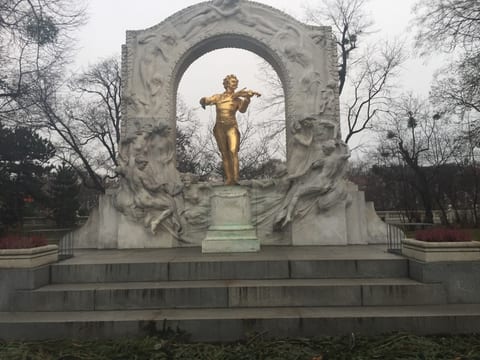
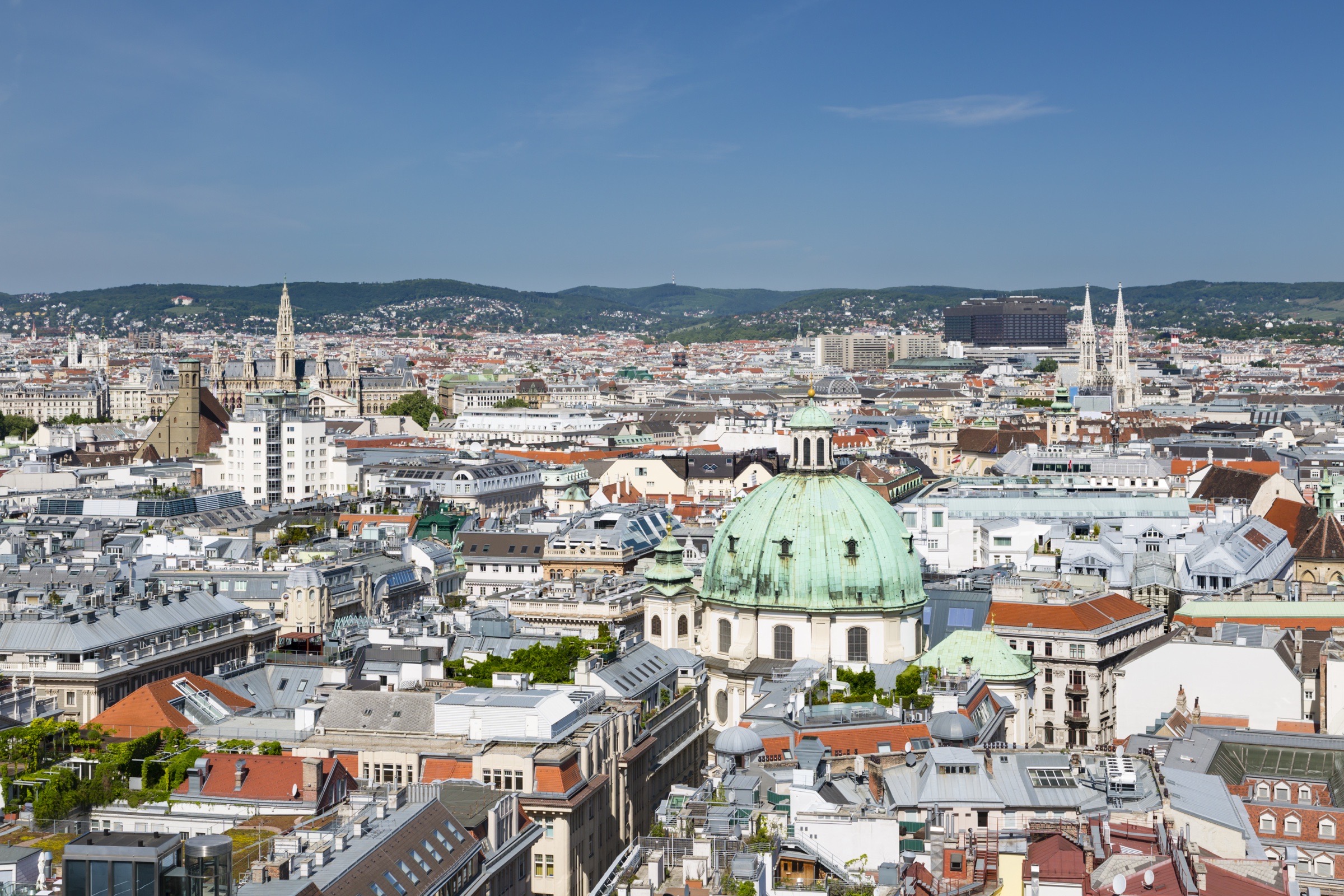
Vienna still reads like an imperial capital: the Ringstrasse grandeur, the Habsburg architecture, the two-century coffee-house habit, and the music of Mozart and Beethoven. The Vienna Woods and wine villages sit on separate routes beyond the central Ringstrasse.
Getting in from the airport
Vienna Vienna International (VIE) sits about 18 km southeast of the center. The CAT express train is the fastest direct option, with the S-Bahn S7 as the cheaper alternative.
| Mode |
Time |
Cost |
When to use |
| City Airport Train (CAT) |
16 min |
€14.90 single |
The fastest path. Non-stop to Wien Mitte (Landstrasse U-Bahn) every 30 minutes |
| S-Bahn S7 |
25 min |
€4.30 single |
The cheaper option. Stops at Wien Mitte and continues to Praterstern and Floridsdorf. Same line, slower, costs a third of the CAT |
| Uber / Bolt / FreeNow |
25 to 45 min |
€40 to €55 to the center |
Late arrival or heavy luggage. Works as well as taxi at a slightly lower price |
| Taxi from the rank |
25 to 45 min |
€45 to €60 metered |
Reliable but pricier than rideshare. The rank cars run a real meter |
Transit notes
Vienna is easier when you think in layers: U-Bahn for clean cross-town movement, trams for the Ring and surface city, S7/CAT for the airport. The U-Bahn lines I would remember are U1 for the central north-south axis and Donauinsel, U4 for Schonbrunn and Wien Mitte, and U6 if you care about the older Stadtbahn texture.
Paper tickets need validating. The system is easy, but it is still an inspection city.
The Badner Bahn is the southern tram-train edge toward Baden. It is not a first-day Vienna requirement, but it is exactly the kind of line that makes the metro area feel bigger than the Ringstrasse version of the city.
Festivals and big annual events
Vienna has three calendar checks: ball season, Christmas markets, and the early-summer culture festivals.
| Event |
When |
What it changes |
| Ball season |
New Year's Eve to Shrove Tuesday |
Formal balls across the city. Dress codes are real and tickets need planning |
| Christmas markets |
Mid-November to December 26 |
Rathaus, Schönbrunn, Belvedere, Karlsplatz, and Spittelberg are the main visitor picks |
| Vienna Festival |
Mid-May to mid-June |
Theater, music, and performance across the city. Rathausplatz opening night is the easy entry point |
| New Year's Concert |
January 1 |
Musikverein lottery-ticket event. Most visitors watch from a cafe |
| Donauinselfest |
Late June |
Huge free music festival on Danube Island, reached by U1 |
| Vienna Marathon |
Late April |
Ringstrasse and Prater road closures |
Where to stay
Vienna's center is compact. Most travelers do fine inside the Ringstrasse (the boulevard built on the line of the old city walls) or within a few stops of it. Pick by what kind of trip:
| District |
Why pick it |
Trade-off |
| Innere Stadt (1st) |
The old town inside the Ringstrasse. Walk to St. Stephen's, the Hofburg, the Albertina, and the opera. The most central base |
The most expensive rooms. Restaurants on the central streets price for tourists |
| Mariahilf (6th) |
Mariahilfer Strasse is the main shopping street, walkable to the Naschmarkt and the museum quarter. One U-Bahn stop from the Ringstrasse |
Less of the imperial-Vienna look. A working neighborhood that doubles as a hotel district |
| Neubau (7th) |
Boutique area, gallery scene, immediate access to the Museumsquartier. Quieter at night than the 1st, more walkable than further-out districts |
Smaller hotel inventory. Book early in peak |
| Leopoldstadt (2nd) |
Across the Danube Canal from the center, with the Prater on its eastern edge. Less expensive than the 1st, U-Bahn quickly to anywhere central |
Reads more residential than tourist. Less to do at street level after dinner |
| Landstraße (3rd) |
Near Wien Mitte and the CAT terminal, useful if you want easy airport in/out. Walking distance to the Belvedere |
Further from the Ringstrasse walk. Less atmospheric base |
Most first visits revolve around the Ringstrasse and the old center inside it. If the budget allows, the 1st district is where it pays off. If it doesn't, the 7th and the 6th work well, with the U-Bahn covering the short ride into the center.
Specific properties I have actually stayed at:
- Hyatt Regency Vienna (Landstraße). Easy location right off the train station, large rooms, strong water pressure, nice views. The catch: the bathroom is behind a glass door that opens into the main room with no privacy buffer (a pattern I have hit at multiple Vienna hotels and never understood). My room had no soap on arrival. Breakfast service runs 30-minute waits at peak. The 5-star branding does not quite match the soft product.
- Lindner Hotel Vienna Am Belvedere (JDV by Hyatt) (Landstraße). Great location near the Belvedere. Same no-bathroom-door issue.
The famous sights, and how to book them
Most Vienna headliners run timed entry. Walk-up is usually possible off-peak, but the gap between online and walk-up is the difference between a 5-minute and a 45-minute queue in summer.
| Sight |
What to know |
Booking |
| Schönbrunn Palace |
The Habsburg summer residence, 1,441 rooms, gardens behind. The "Imperial Tour" covers 22 rooms in 30-40 min. The "Grand Tour" covers 40 rooms in ~60 min and includes the rococo Vieux Laque Room |
schoenbrunn.at. Book 1 to 2 weeks ahead in peak (May to September). Imperial Tour ~€26, Grand Tour ~€32. Get the morning slot (~9:00 to 11:00) before the day-tripper coaches arrive |
| Belvedere (Upper Palace) |
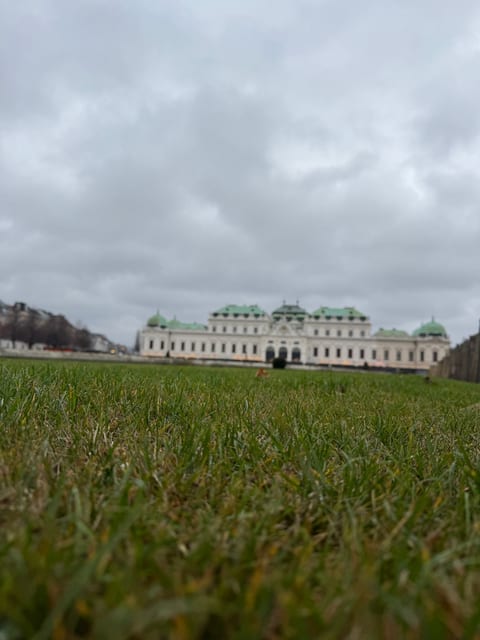
Klimt's The Kiss and most of the major Klimt holdings live here. The building is also one of the better baroque palaces in Europe |
belvedere.at. Book the morning slot online, ~€16. The Lower Belvedere is a separate ticket and skippable on a short trip |
| Albertina |
Habsburg art collection: Dürer, Picasso, Monet, Klimt drawings. Less crowded than Belvedere |
albertina.at. ~€20, walk-up usually fine outside peak weekends |
| Kunsthistorisches Museum |
The imperial art collection. Bruegel's Hunters in the Snow and the most-visited Vermeer in Europe (The Art of Painting) |
khm.at. ~€21, walk-up usually fine |
| Hofburg / Imperial Apartments / Sisi Museum |
The winter residence in the city center, three small museums in one ticket |
hofburg-wien.at. ~€19. The combined Sisi ticket (Hofburg + Schönbrunn + Imperial Furniture Collection) is ~€44 and saves money if you're doing all three |
| Spanish Riding School |
The Lipizzaner horses. Morning training (€16) is the affordable version. The Sunday performance (€26 to €230) is the splurge |
srs.at. Book performances 4 to 6 weeks ahead. Morning training is usually walk-up |
| Vienna Opera (Wiener Staatsoper) |
One of the great opera houses. Standing-room tickets at €15 are the steal of the city if you can wait in the day-of line at 1.5 hours before curtain |
wiener-staatsoper.at. Seated tickets €30 to €250+, book weeks ahead in peak. Tour-only tickets (the building without a performance) are ~€15 |
Tour-guide note: Schönbrunn's audio guide is included and is enough. The English-guided tour adds €5 and isn't materially better. Belvedere, Albertina, and the KHM are all walk-and-read with the audio guide. The Hofburg's audio guide leans heavy on Sisi mythology and is the one place where a self-walk with Wikipedia open is faster.
Where to eat
Wiener cuisine is the imperial style that runs on schnitzel, Tafelspitz (the slow-boiled beef in horseradish), goulash, and the coffee-house cakes (sachertorte, apfelstrudel, esterhazy). The Plachutta family runs the best-known Tafelspitz. The smaller picks below cover the casual end.
| Spot |
Why |
Notes |
| Plachutta Wollzeile |
Tafelspitz |
The best-known room for the imperial boiled-beef dish |
| Schachtelwirt |
A quick lunch |
Fast, fresh, delicious. Dining is small and shared with the kitchen, so the cooking smells follow you out |
| Cafe Neko |
Cat café |
No cover, no catty smell, friendly well-groomed cats. One of the better cat cafés out there |
| Café Ritter |
Classic coffee-house |
Pinned |
| Elstar |
Casual sit-down |
Pinned |
| Agrodolce |
Italian |
Pinned |
| Läderach (Kärntnerstrasse) |
Chocolate shopping |
Smells heavenly inside |
 +1
+1

 +1
+1
 +1
+1 +8
+8 +3
+3 +1
+1

 +3
+3
 +4
+4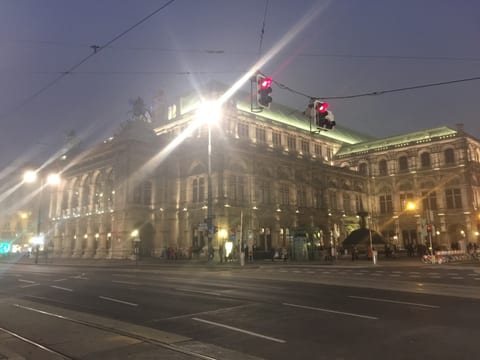

 +3
+3