Photos from Ávila
 +4
+4Old Town of Ávila with its Extra-Muros Churchesattraction
+4Current conditions and the practical reference material that helps turn the saved places into a trip.
7-day forecast from Open-Meteo. UV badges flag days when sun protection matters (3 and above is moderate; 8 and above is risk territory for unprotected fair skin within 30 minutes).
About 84% of the year's rain falls in these months. Typical highs around 13°C, lows around 3°C.
Typical highs around 30°C, lows around 14°C. About 17mm of rain a month.
Public holidays from Nager.Date.
Public-transit operators within 8 km of the city center. Click through to each operator’s site for routes, fares, and tickets.
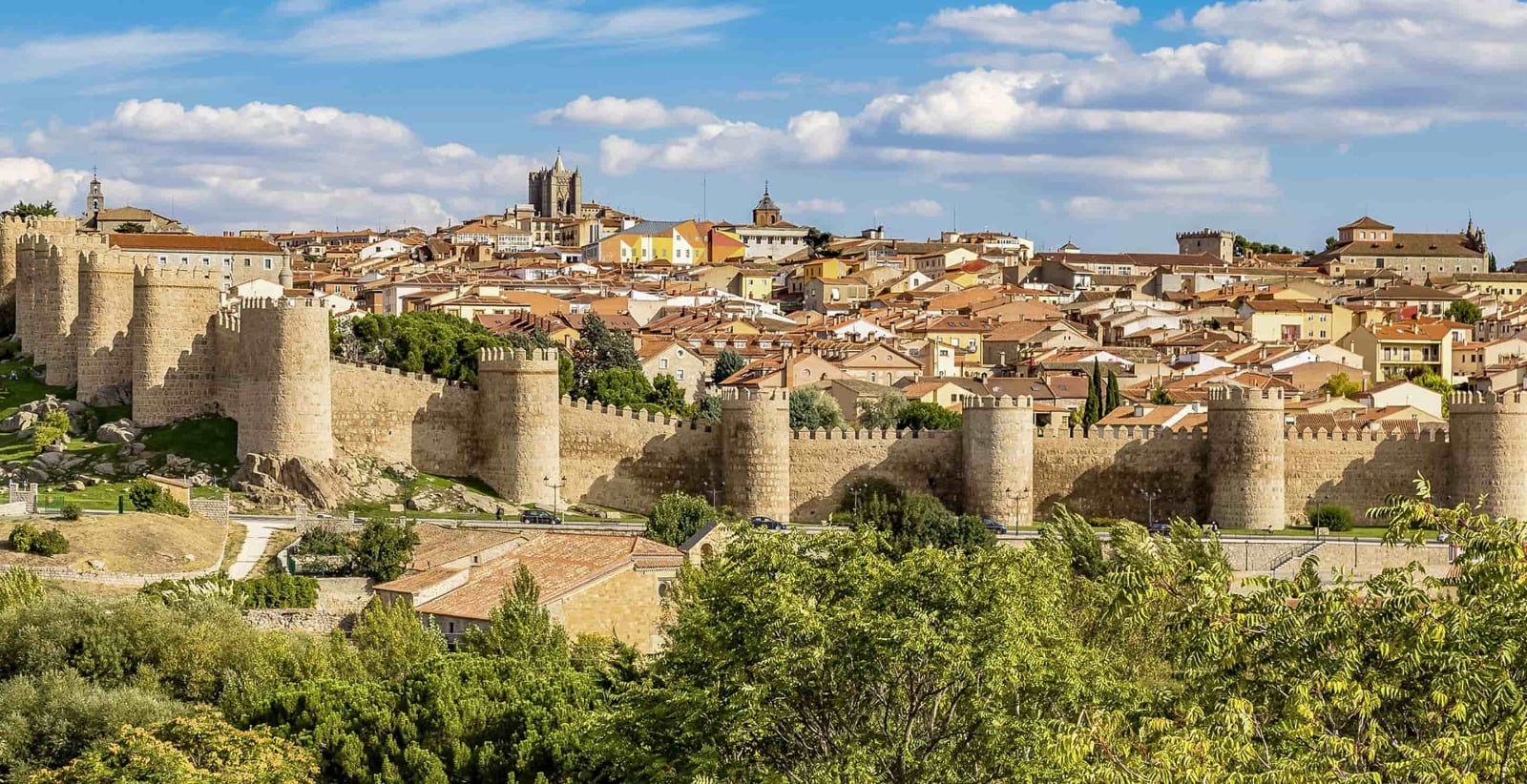
Ávila is the capital and most populated municipality of the Province of Ávila, located in the autonomous community of Castile and León in Spain. Located in the centre of the Iberian Peninsula, to the north of the Sistema Central, it lies on the right bank of the Adaja and, at an elevation of over 1,130 metres (3,710 ft) above sea level, is the highest provincial capital in Spain.
The links below support the changing or licensed reference material on this page. Personal notes and ordinary geographic facts are not footnoted individually.
Monthly highs, lows, rainfall — long-term averages, NASA POWER.
Operators and modes are aggregated from individual transit-agency GTFS feeds. Route classifications come from each feed’s route type codes.
Maps, image licenses, and the full dataset registry are listed in site credits.
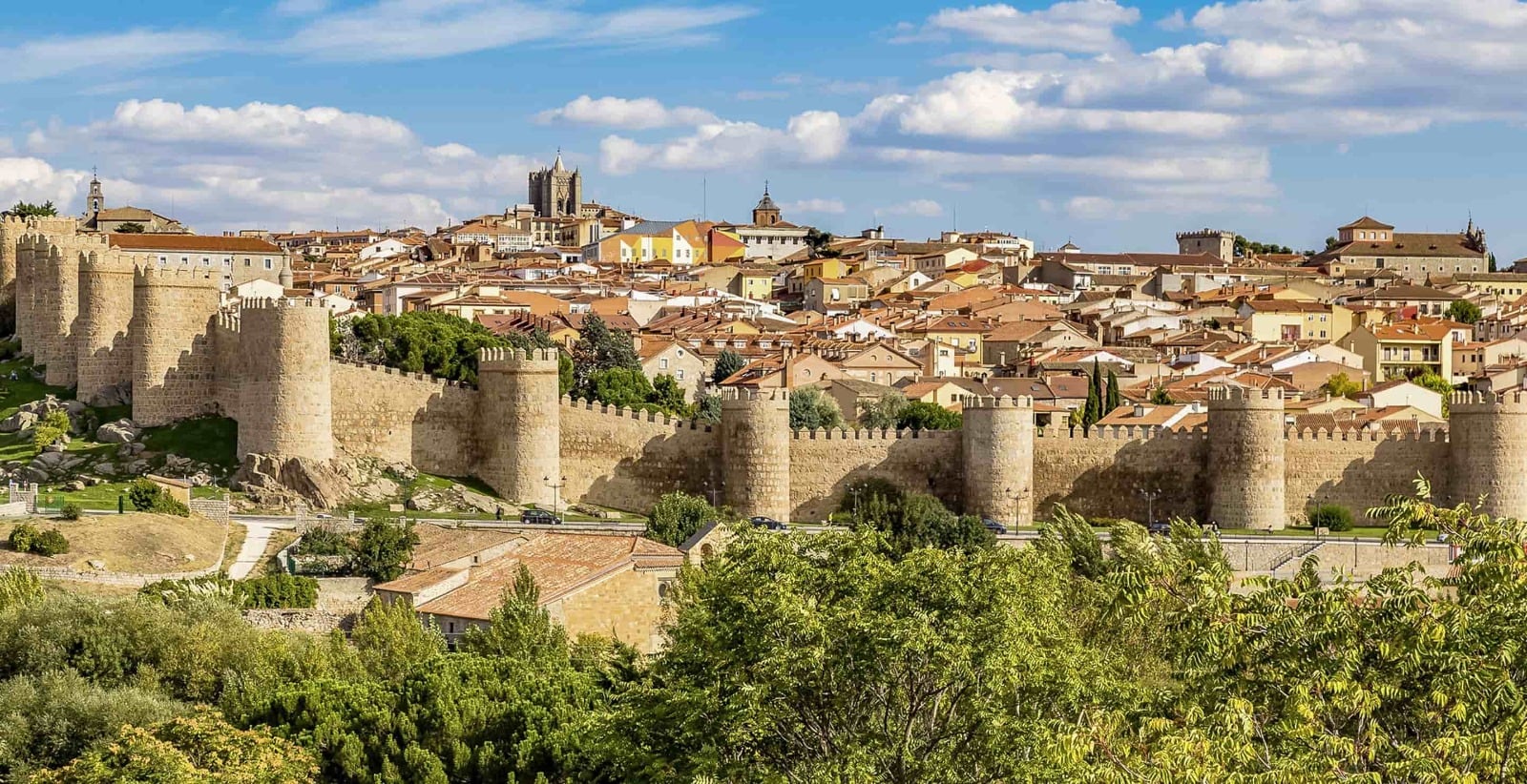
My Ávila travel guide. Walking the medieval walls, the sites connected to Saint Teresa, trains from Madrid, and where to eat.
Ávila is a granite city high on the Castilian plateau. The medieval walls still run around the old city, the cathedral is built into them, and Saint Teresa was born here in 1515.
Planning brief
Ávila sits high on the Castilian plateau, about 90 minutes from Madrid by train. Its medieval walls still run around the old city, and the birthplace of Saint Teresa makes it one of the main stops for anyone interested in Spanish religious history.
Trains from Madrid take about 90 minutes. Ávila station is a 15-minute walk from the walls.
Ávila's 2.5-kilometer circuit has 88 towers and nine gates. Long sections of the rampart are open to walk.
Teresa of Ávila was born here in 1515. A convent stands on the site of her family home, and several buildings in the old city are connected to her life.
At over 1,100 meters, Ávila is one of the highest provincial capitals in Spain. It is colder and windier than Madrid year-round. Bring a layer even in summer.
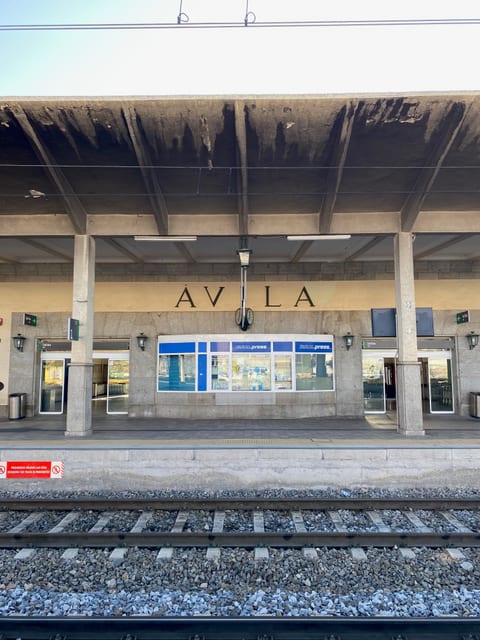
Regional and medium-distance trains run from Madrid to Ávila in about 90 minutes. Check the departure station when you book, because services use both Chamartín and Príncipe Pío. Ávila Railway Station sits about a 15-minute walk from the walls.
Inside Ávila you walk. The old city is small and entirely contained within the walls, and everything in this guide is a few minutes apart on foot. One thing to plan for that has nothing to do with transport: Ávila sits above 1,100 meters, one of the highest provincial capitals in Spain, and it is reliably colder and windier than Madrid. Bring a layer, even in summer.
The city walls are the main reason I come. Built from the late 11th century, they run for 2.5 kilometers with 88 semicircular towers and nine gates. Long sections have a walkable rampart, entered by ticket at marked points. From the top you can see how tightly the cathedral, churches, and houses fit inside the old city.
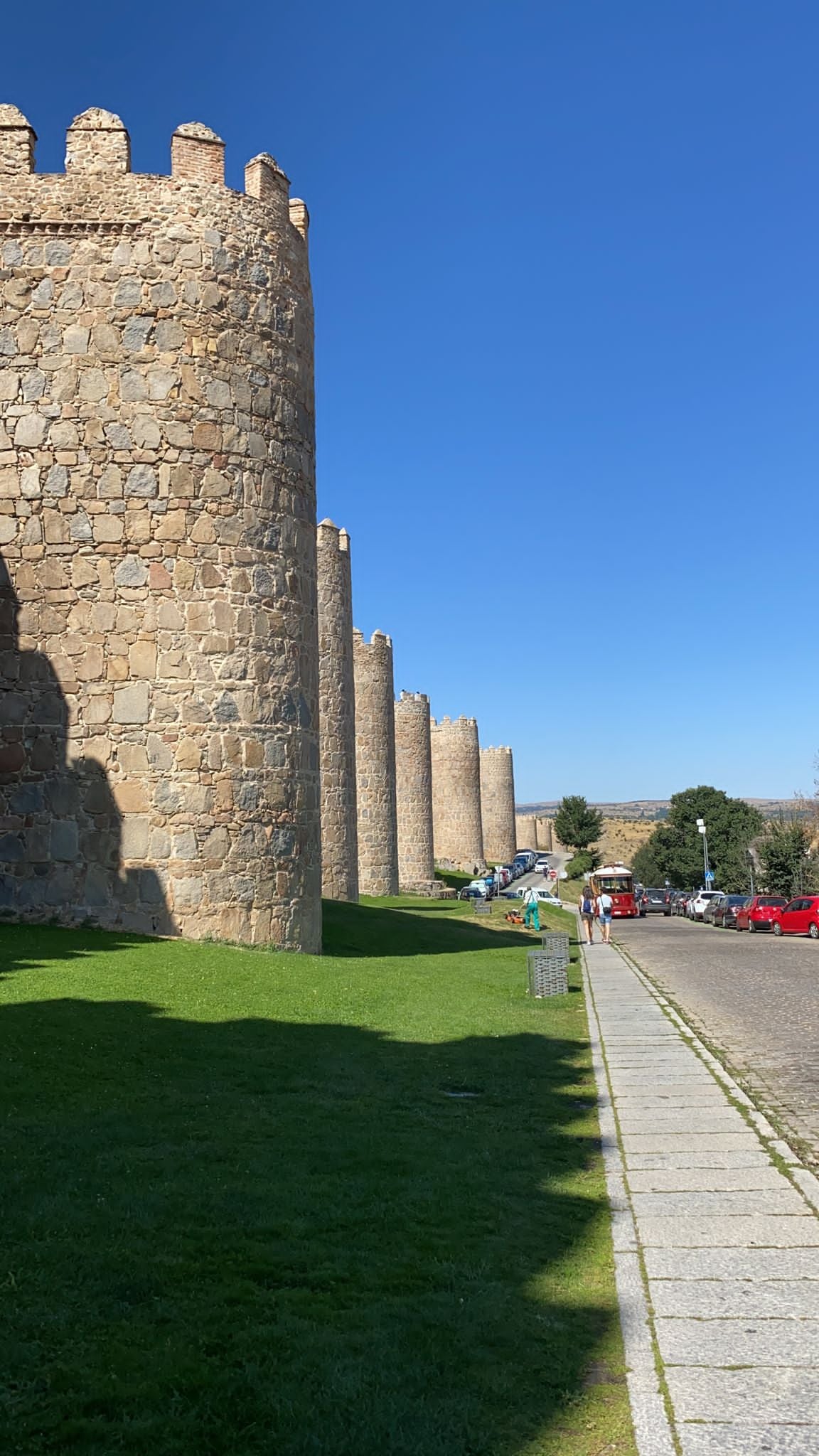
The walls are easiest to understand from outside. Mirador de los Cuatro Postes, a four-columned shrine on a rise across the river, faces the entire western side of the old city. It is a short walk or drive from the center, and the light is better late in the afternoon.
The cathedral is built into the walls themselves, its apse forming one of the defensive towers, which makes it as much fortress as church. The Catedral de Ávila is often called the first Gothic cathedral in Spain, its granite interior streaked with the reddish-and-white mottled stone the local quarries produced.
Teresa of Ávila, the Carmelite nun, mystic, writer, and reformer, was born in the city in 1515. The Convento de Santa Teresa, a Baroque church and convent, was built over the site of her family home. Several other buildings around the old city are connected to her life and to the Discalced Carmelite order she helped establish.
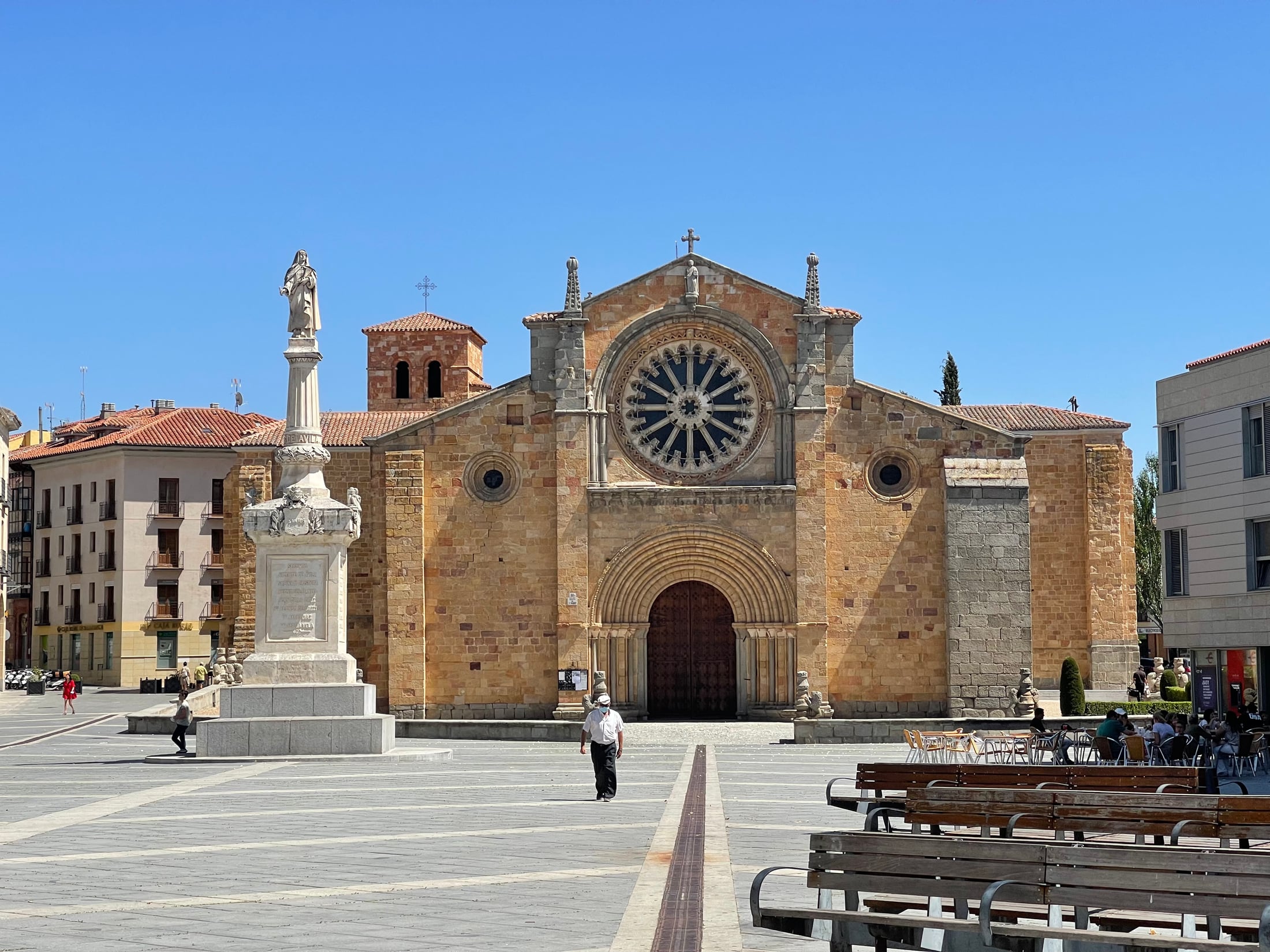
The Basilica of San Vicente, just outside the walls, is the city's major Romanesque church.
Ávila eats like the Castilian meat town it is. The local plate is the chuletón de Ávila, a thick bone-in beef chop, and the sweet to take home is the yemas de Santa Teresa, a candied egg-yolk confection named for the saint.
Restaurante Las Murallas and Restaurante Medieval are the traditional Castilian meals inside the walled-city frame. Mesón Gredos is the bar-restaurant for something more casual. La Lumbre and Los Candiles round out the options for a long lunch between the walls and the cathedral.
Saint Teresa's feast day and Holy Week are the main religious events. The medieval market is the big secular event inside the walls.
| Event | When | What it changes |
|---|---|---|
| Fiestas de Santa Teresa | Mid-October, around October 15 | The city's patron-saint festival, honoring Teresa of Ávila. Processions, concerts, a funfair, and the local foods. The biggest week of the Ávila year |
| Semana Santa (Holy Week) | The week before Easter | A serious, solemn Holy Week with processions through the walled streets. Quieter and more austere than the Andalusian versions, in keeping with the city |
| Mercado Medieval | A weekend in early September | Stalls, crafts, and performers fill the streets inside the walls |
| Jornadas Teresianas | October, around the patron festival | Talks, music, and religious programming tied to the Teresian heritage, layered onto the patron-saint week |
Mid-October is the busiest local festival period. The Mercado Medieval also fills the old city in early September.


