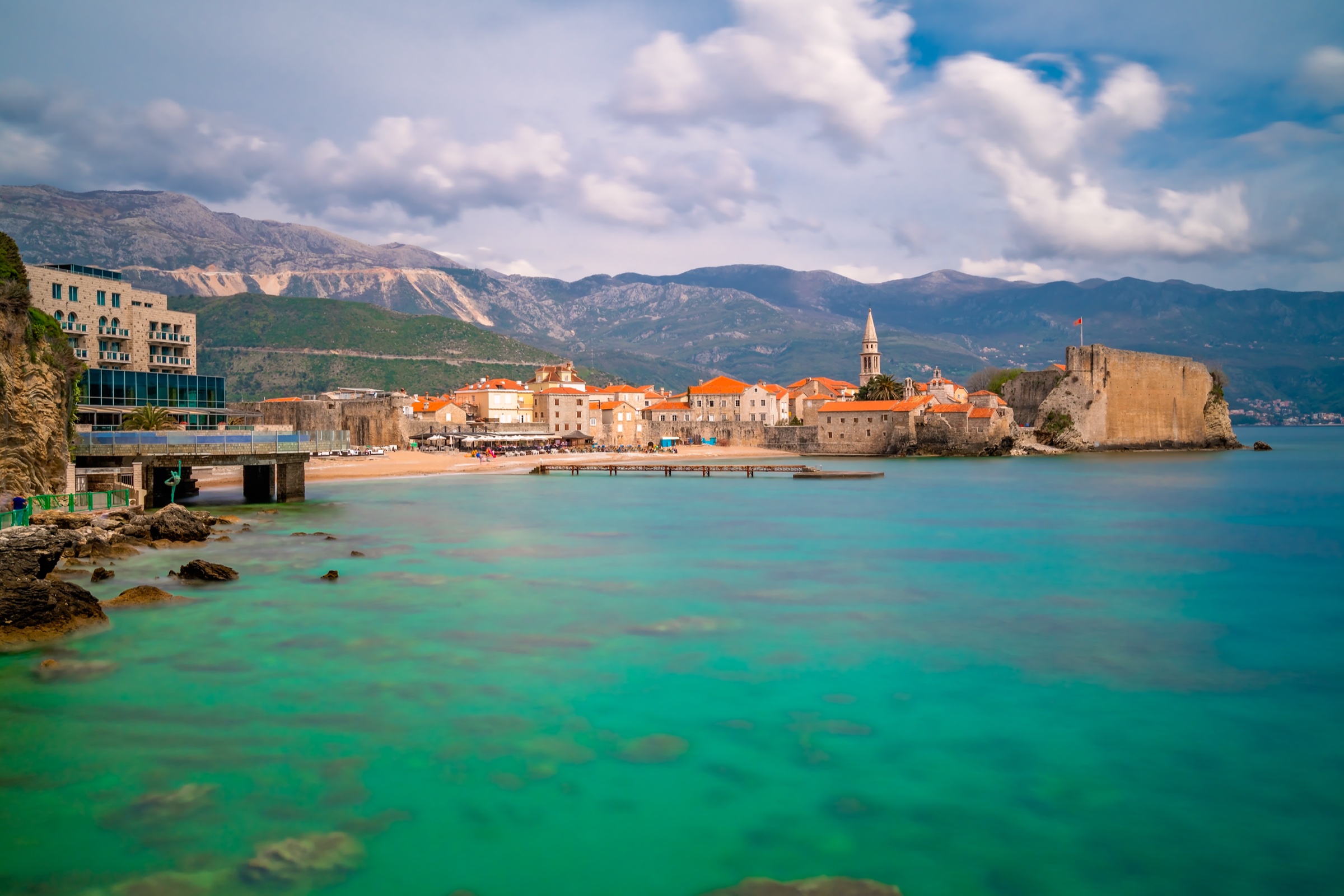
Budva is an old town wrapped in a beach resort
My Budva travel guide. The walled Old Town, the Budva Riviera beaches, Sveti Stefan, where to stay, and where to eat.
- Updated
- Jul 5, 2026
Current conditions and the practical reference material that helps turn the saved places into a trip.
7-day forecast from Open-Meteo. UV badges flag days when sun protection matters (3 and above is moderate; 8 and above is risk territory for unprotected fair skin within 30 minutes).
About 67% of the year's rain falls in these months. Typical highs around 11°C, lows around 5°C.
Typical highs around 23°C, lows around 15°C. About 76mm of rain a month.
Public holidays from Nager.Date.
Public-transit operators within 8 km of the city center. Click through to each operator’s site for routes, fares, and tickets.
Operators and modes are aggregated from individual transit-agency GTFS feeds. Route classifications come from each feed’s route type codes.
Budva is a town in the Coastal region of Montenegro. It had 17,479 inhabitants as of 2023, and is the centre of Budva Municipality. The coastal area around Budva, known as the Budva Riviera, is the center of Montenegrin tourism, renowned for its well-preserved medieval walled city, sandy beaches, and diverse nightlife. Budva is 2,500 years old, which makes it one of the oldest settlements on the Adriatic coast.
The links below support the changing or licensed reference material on this page. Personal notes and ordinary geographic facts are not footnoted individually.
Monthly highs, lows, rainfall — long-term averages, NASA POWER.
Maps, image licenses, and the full dataset registry are listed in site credits.
My Budva travel guide. The walled Old Town, the Budva Riviera beaches, Sveti Stefan, where to stay, and where to eat.
Budva is a small walled Old Town wrapped in a loud beach resort, the busiest stretch of the Montenegrin coast. It also works as a transport base for Kotor, Sveti Stefan, and the rest of the riviera.
Planning brief
Budva is a coastal town on the Adriatic in Montenegro, the center of the Budva Riviera, the country's busiest stretch of beach. At its heart is a small walled Old Town on a peninsula, ringed by modern resort development and a long run of beaches. The Old Town is compact, while beaches and coastal routes make up the rest of the resort.
The walled Old Town is compact, and the beaches and short coastal routes make up the rest of the destination.
A compact Venetian-walled quarter of stone lanes, churches, and a citadel on the sea. Small, but the reason Budva is more than a beach strip.
Budva is loud and full in July and August, quiet and half-shut in winter. Late spring and early autumn are the easier windows.
Sveti Stefan, Kotor, and the rest of the Montenegrin coast are all short trips. Budva works as a base for the whole riviera.
Budva has no airport of its own. Tivat Airport is the closest, about 20 km away, with Podgorica Airport around 65 km and Dubrovnik in Croatia about 70 km, the last involving a border crossing.
Buses run frequently along the coast road, linking Budva with Kotor, Tivat, and the other riviera towns. A car is useful for reaching the coastal day trips at your own pace.
For a first visit, base in or near the Old Town. From there the historic quarter, the main beaches, and the restaurants are all on foot, and you are at the center of the evening scene.
The resort areas spreading north and south along the coast trade the central location for newer rooms and quieter beaches. The atlas does not yet carry hotel pins for Budva, so book on the usual sites and read recent reviews for the property.
The Old Town, Stari Grad, is the reason Budva is more than a beach strip, a compact Venetian-walled quarter of narrow stone lanes, small churches, and a seafront citadel built into the walls. It takes a couple of hours to walk and is best in the early evening.
The beaches are the rest of the trip. The town beach and Mogren Beach, reached by a cliff path from the Old Town, are the closest. Above Mogren, Fort Mogren is a ruined Austro-Hungarian coastal fort, and the Door in Stone is a rock feature along the same shoreline. The Green Lagoon is one of the swimming spots around the bay.
Budva's position makes it a base for the Montenegrin coast. Sveti Stefan, the much-photographed fortified islet linked to the shore by a causeway, is a short trip south. It operates as a private resort, so the classic view is from the mainland. Kotor, with its dramatic walled old town under the mountains at the head of a deep bay, is under an hour north and one of the finest stops on the Adriatic. The whole riviera is connected by the coastal bus.
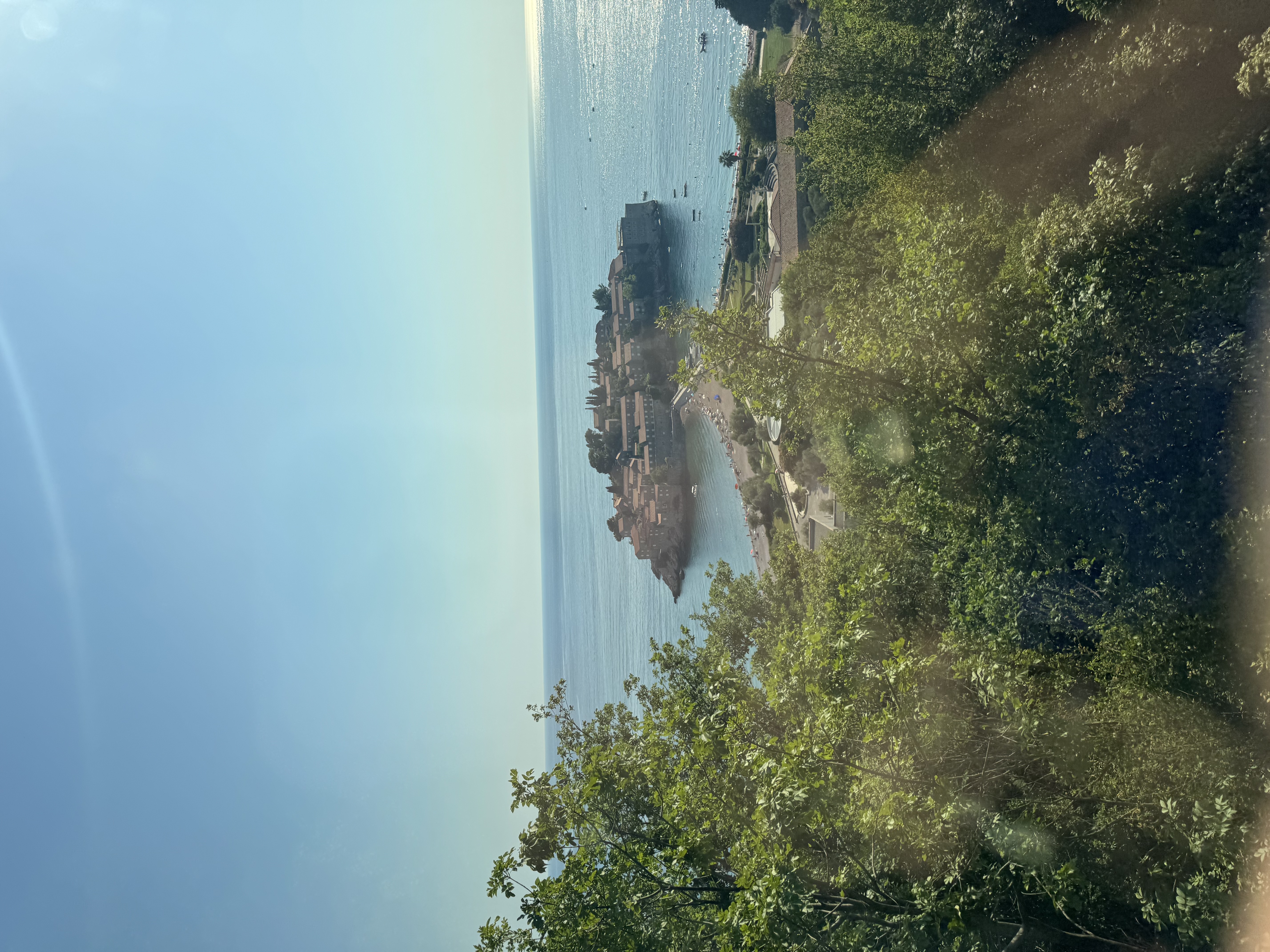
Budva eats on Adriatic cooking: grilled fish and seafood, Montenegrin meat and cheese from the interior, and the resort-town range of international options.
| Spot | What it is |
|---|---|
| Restoran Vista Vidikovac | A restaurant with a view over the coast |
| Madeira Laguna | A restaurant near the water |
| El Rey Caffe Bar | A cafe and bar |

