Photos from Eger

Eger Thermal Bathattraction
Current conditions and the practical reference material that helps turn the saved places into a trip.
7-day forecast from Open-Meteo. UV badges flag days when sun protection matters (3 and above is moderate; 8 and above is risk territory for unprotected fair skin within 30 minutes).
Typical highs around 25°C, lows around 13°C. Also the wettest months.
Typical highs around 2°C, lows around -5°C.
Public holidays from Nager.Date.
Public-transit operators within 8 km of the city center. Click through to each operator’s site for routes, fares, and tickets.
Operators and modes are aggregated from individual transit-agency GTFS feeds. Route classifications come from each feed’s route type codes.
Eger is the county seat of Heves County, and the second largest city in Northern Hungary. A city with county rights, Eger is best known for its medieval castle, thermal baths, baroque buildings, the northernmost Ottoman minaret, and red wines. Its population of around 53,000 (2017) makes it the 19th largest centre of population in Hungary, according to the census. The town is located on the Eger Stream, on the hills between the Mátra and Bükk mountains. The main campus of Eszterházy Károly Catholic University is in Eger.
The links below support the changing or licensed reference material on this page. Personal notes and ordinary geographic facts are not footnoted individually.
Monthly highs, lows, rainfall — long-term averages, NASA POWER.
Maps, image licenses, and the full dataset registry are listed in site credits.
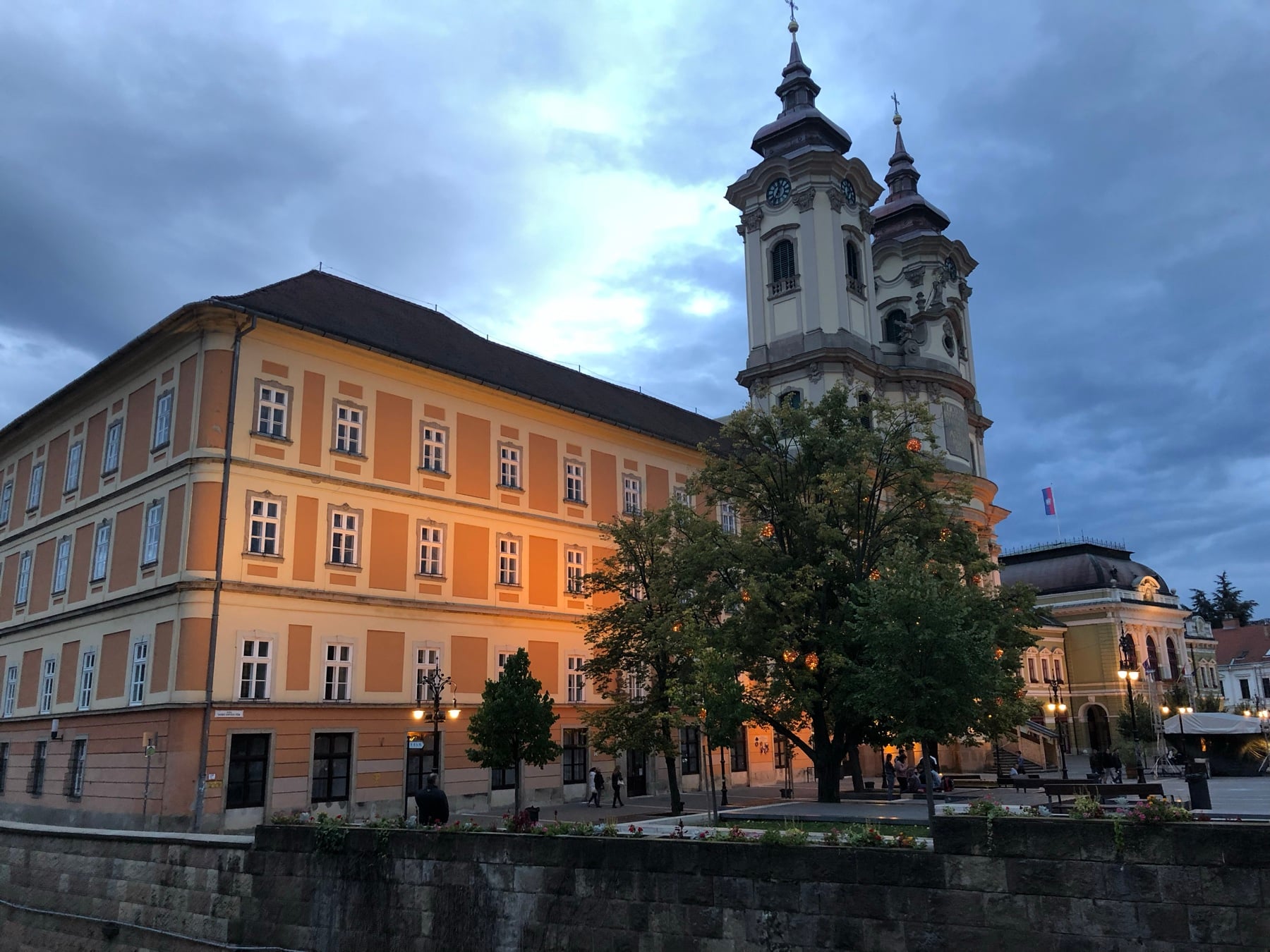
My Eger travel guide. The easy two-hour train from Budapest, the siege castle, Ottoman minaret, thermal baths, and Bull's Blood cellars of the Valley of the Beautiful Women.
Eger is the baroque wine town two hours from Budapest, famous in Hungary for a 1552 siege its castle somehow won and famous to everyone else for the red wine poured in the cellars on its edge. I came by train from Budapest, walked to the hotel and old town, then left the wine valley for the evening rather than watching the return clock.
Planning brief
Eger is the baroque wine town of northern Hungary, two hours from Budapest, with a castle that held off an Ottoman siege, the northernmost Ottoman minaret in Europe, thermal baths, and a valley of wine cellars on its edge. Trains connect it with Budapest, and hotels cluster between the station, old town, and wine valley.
Direct trains from Budapest-Keleti take about 1 hour 50 minutes to 2 hours. Recent public fare references cluster around 2,500-3,000 HUF one-way, with MÁV/MÁVPlusz the place to check and buy. The station, old town, castle, hotel zone, baths, and wine valley are all simple once you arrive.
Eger Castle held off a far larger Ottoman army in 1552, a defining moment in Hungarian national memory. The hilltop site has the museum, the casemates, and the view over the baroque rooftops.
A short walk or taxi from the center, Szepasszony-volgy is a horseshoe of wine cellars cut into the hillside, the place to drink Egri Bikaver, the red blend known as Bull's Blood.
The old town is a compact baroque ensemble around Dobó Square, the Minorite Church, and the Basilica of Eger. Eger also sits on thermal springs, with bathhouses for the slower half of a stay.
Direct trains run from Budapest-Keleti to Eger in about 1 hour 50 minutes to 2 hours through the day. MÁV's ticketing site and MÁVPlusz app are the right place to check the current fare and buy. As of the latest public fare references I found, a normal one-way Budapest-Eger ticket sits roughly around 2,500-3,000 HUF. I would treat that as a planning range rather than a fixed price, because Hungarian rail fares and app discounts can move.
Eger's station sits a 15-to-20-minute walk from the old town, or a short bus ride. Once you are in town, the logistics are easy: I walked from the station to the hotel, around the castle and old town, to the baths, and out toward the wine valley. The Szépasszony-völgy wine cellars are a real walk from the center rather than next door, so a taxi back is sensible if it is late, hot, or you have been doing the job properly.
Eger's direct trains, central hotels, castle, baths, and wine valley make it a low-friction connection from Budapest. The wine cellars run into the evening, so compare their closing times with the last useful train before choosing the route.
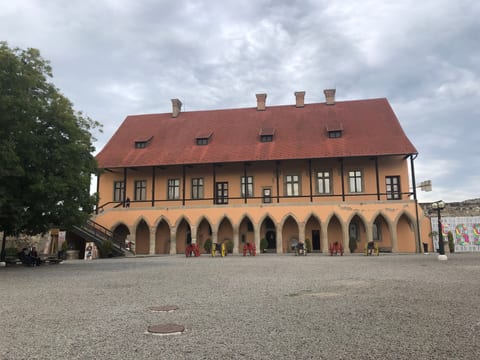
Eger Castle crowns the hill above the town and is the anchor of any visit. Its fame rests on the 1552 siege, when the defenders held against an Ottoman force many times their size, an episode that became a fixture of Hungarian national storytelling. The hilltop site holds the István Dobó Castle Museum, the underground casemates, and the best view over the baroque rooftops below.
The old town is a compact baroque ensemble. Dobó Square, named for the captain who led the siege defense, is the center of it, with the Minorite Church on one side. The Basilica of Eger is the large neoclassical cathedral, the second-largest church in Hungary. The minaret is the unexpected note, a 40-meter Ottoman tower, the northernmost surviving Ottoman minaret in Europe, a remnant of the decades the town spent under Ottoman rule. A tight internal staircase climbs it for anyone untroubled by narrow spaces.
For two smaller, more idiosyncratic stops, the Beatles Museum is a pretty cool private collection that is exactly the curiosity it sounds like, and the Márai visitor center is the active-tourism point for anyone planning to get out into the Bukk hills around the town.
Szépasszony-völgy, the Valley of the Beautiful Women, is the reason the last-train schedule matters. A short walk or taxi from the center, it is a horseshoe of cellars cut straight into the hillside, each run by a winemaking family, pouring the local reds cheaply from the barrel. The wine to order is Egri Bikaver, the dry red blend known in English as Bull's Blood. The cellars are informal, the pours are inexpensive, and the evening is the experience. Go after dark, take it slowly, and do not plan to catch a late train.
Imola Mansion Hotel is a comfortable base near the castle, an easy walk to the old town, baths, and the start of the castle climb. The wider hotel range in Eger is small but reasonable, concentrated around the old town.
For a meal, Macok Bisztró és Borbár is the standout, a modern bistro and wine bar at the foot of the castle hill with a serious local-wine list, the right place to taste the region's reds without committing to the full cellar crawl.
Eger's calendar leans, unsurprisingly, on wine.
| Event | When | What it changes |
|---|---|---|
| Eger Wine Festival (Egri Bikavér Ünnep) | July, several days | The town's headline event, a celebration of Bikavér and the regional wines around Dobó Square and the castle. Hotels fill, and the cellars are at their liveliest |
| Harvest days (Szüreti napok) | September | The autumn harvest festival, with a parade, folk music, and the new wine. The other strong window for a wine-focused visit |
| Castle history days | Summer, varying dates | Re-enactments and historical programming staged at the castle, leaning on the 1552 siege story. Family-scale |
| Christmas market | Advent, December | A compact market on Dobó Square. Smaller than the Budapest markets, a reasonable add-on rather than a reason to travel |
July and September are the wine-focused windows. Outside those windows, trains still run from Budapest throughout the year.


