Photos from Krka National Park
 +13
+13Skradinski Bukattraction
 +2
+2City Beach Skradinpark

Studenac Marketshopping
+13+2Current conditions and the practical reference material that helps turn the saved places into a trip.
7-day forecast from Open-Meteo. UV badges flag days when sun protection matters (3 and above is moderate; 8 and above is risk territory for unprotected fair skin within 30 minutes).
Typical highs around 27°C, lows around 16°C. The drier end of the year.
Typical highs around 7°C, lows around -1°C.
Public holidays from Nager.Date.
Public-transit operators within 8 km of the city center. Click through to each operator’s site for routes, fares, and tickets.
Operators and modes are aggregated from individual transit-agency GTFS feeds. Route classifications come from each feed’s route type codes.
Krka National Park is one of the Croatian national parks, named after the river Krka that it encloses. It is located along the middle-lower course of the Krka River in central Dalmatia, in Šibenik-Knin county, downstream Miljevci area, and just a few kilometers northeast of the city of Šibenik. It was formed to protect the Krka River and is intended primarily for scientific, cultural, educational, recreational, and tourism activities. It is the seventh national park in Croatia and was proclaimed a national park in 1985.
The links below support the changing or licensed reference material on this page. Personal notes and ordinary geographic facts are not footnoted individually.
Monthly highs, lows, rainfall — long-term averages, NASA POWER.
Maps, image licenses, and the full dataset registry are listed in site credits.
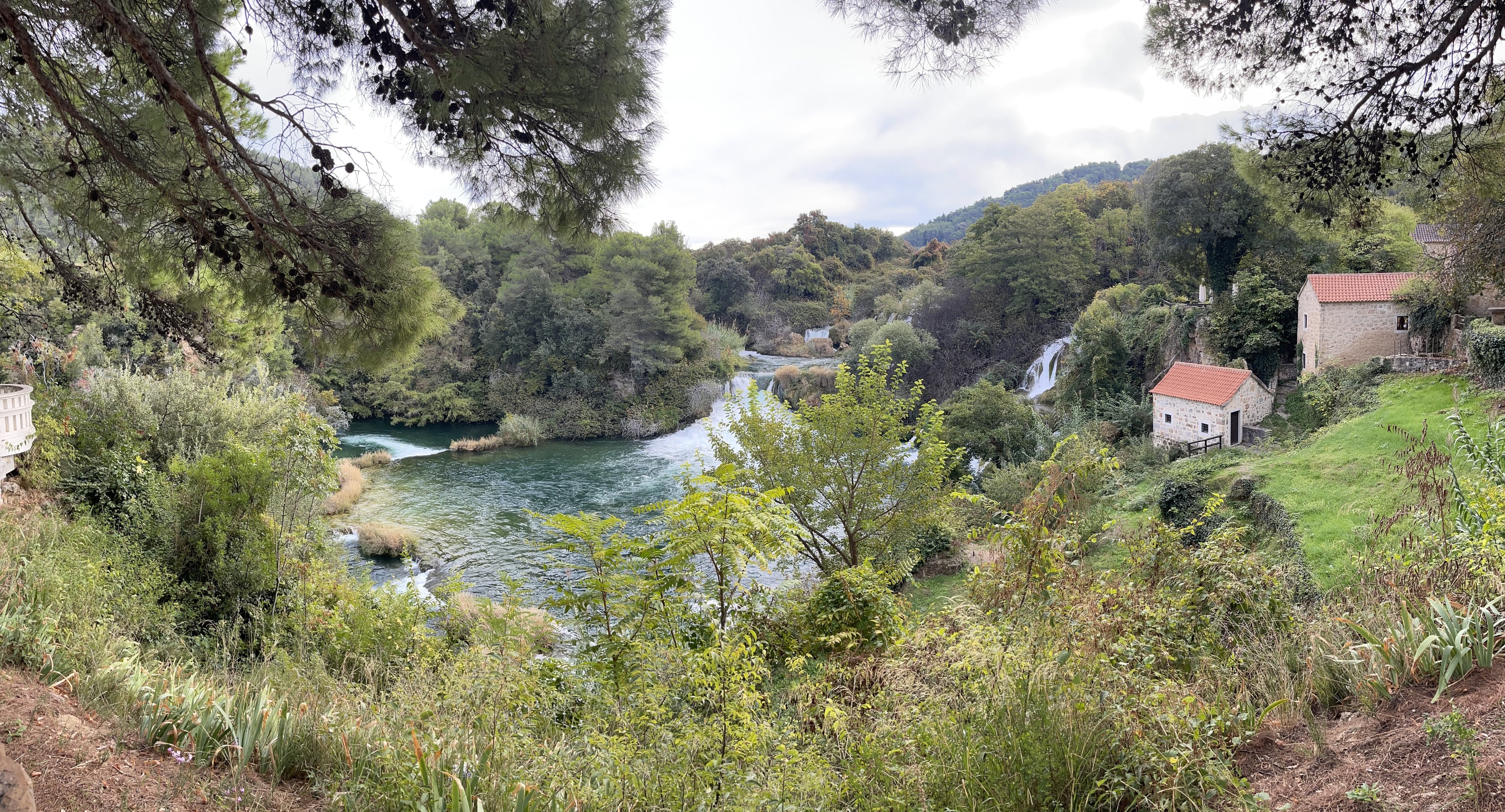
My Krka National Park guide. The Skradinski Buk waterfalls, the Skradin and Lozovac entrances, where to stay, and the Sibenik base.
Krka National Park is the Croatian river park built around a chain of travertine waterfalls, with Skradinski Buk, the wide terraced falls, as the centerpiece. It is an easy day trip from Split or the cathedral city of Šibenik. Go before the tour boats arrive. October was still lush, the water was moving, and the boardwalks had breathing room. Here's how I'd time it.
Planning brief
Krka National Park is a Croatian river park in inland Dalmatia, built around a chain of travertine waterfalls on the Krka River. The centerpiece is Skradinski Buk, the wide terraced falls at the park's south end. The riverside town of Skradin and the cathedral city of Sibenik are the two bases, and the park is an easy day from either, or from Split.
Skradinski Buk and its boardwalks are the core of a visit and take two to three hours. Add a boat trip upriver and it fills a day.
Skradin puts you on a national-park boat up the river. Lozovac is the road entrance with a free shuttle down to the falls. The choice changes the arrival.
Sibenik is the larger base, a UNESCO cathedral city on the coast. Skradin is the small riverside town at the park gate. Both are good, for different trips.
The park fills with tour groups by late morning, so a first-entry arrival is the move. Note that swimming at Skradinski Buk has been banned since 2021.
Half a day covers the main sight. Skradinski Buk, the terraced waterfall the park is known for, and the boardwalks that loop around it take two to three hours at a relaxed pace.
Adding a national-park boat trip upriver, to the Roški Slap falls or the small island monastery of Visovac, turns Krka into a full day. Most visitors do the park as a day trip and sleep in Šibenik, Skradin, or Split.
Plitvice Lakes is the prettier park, a taller and deeper chain of terraced lakes and falls. Krka is the easier walk. The boardwalks around Skradinski Buk stay mostly flat, with far fewer stairs than the climbs at Plitvice, and the crowds are thinner. Krka is also much closer to Split, about an hour out, while Plitvice sits inland and takes real effort to reach from the coast.
Both are travertine parks, the same limestone-and-moss chemistry building the same kind of falls. From Split the real difference is transit time. Plitvice sits far inland, so the day trip means six hours or more in a bus or car to spend a few in the park. Krka is about an hour each way, which leaves the day for walking instead of driving. If you are already traveling between Zagreb and the coast, Plitvice is the bigger landscape and the natural stop. Based in Split, Krka is the one I would do.
Krka sits in Dalmatia, close to the coastal city of Šibenik. The nearest airports are Split, about an hour southeast, and Zadar, about an hour northwest.
You can reach the park by bus, by car, or on an organized tour. Drivers and tour buses use the Lozovac entrance, where a shuttle runs down to the falls. Without a car, the bus from Split to the riverside town of Skradin is the easiest way in, and it puts you on the boat up the river to the waterfalls. The tributary of the Čikola into the Krka, the canyon on the approach, is part of the same protected landscape.
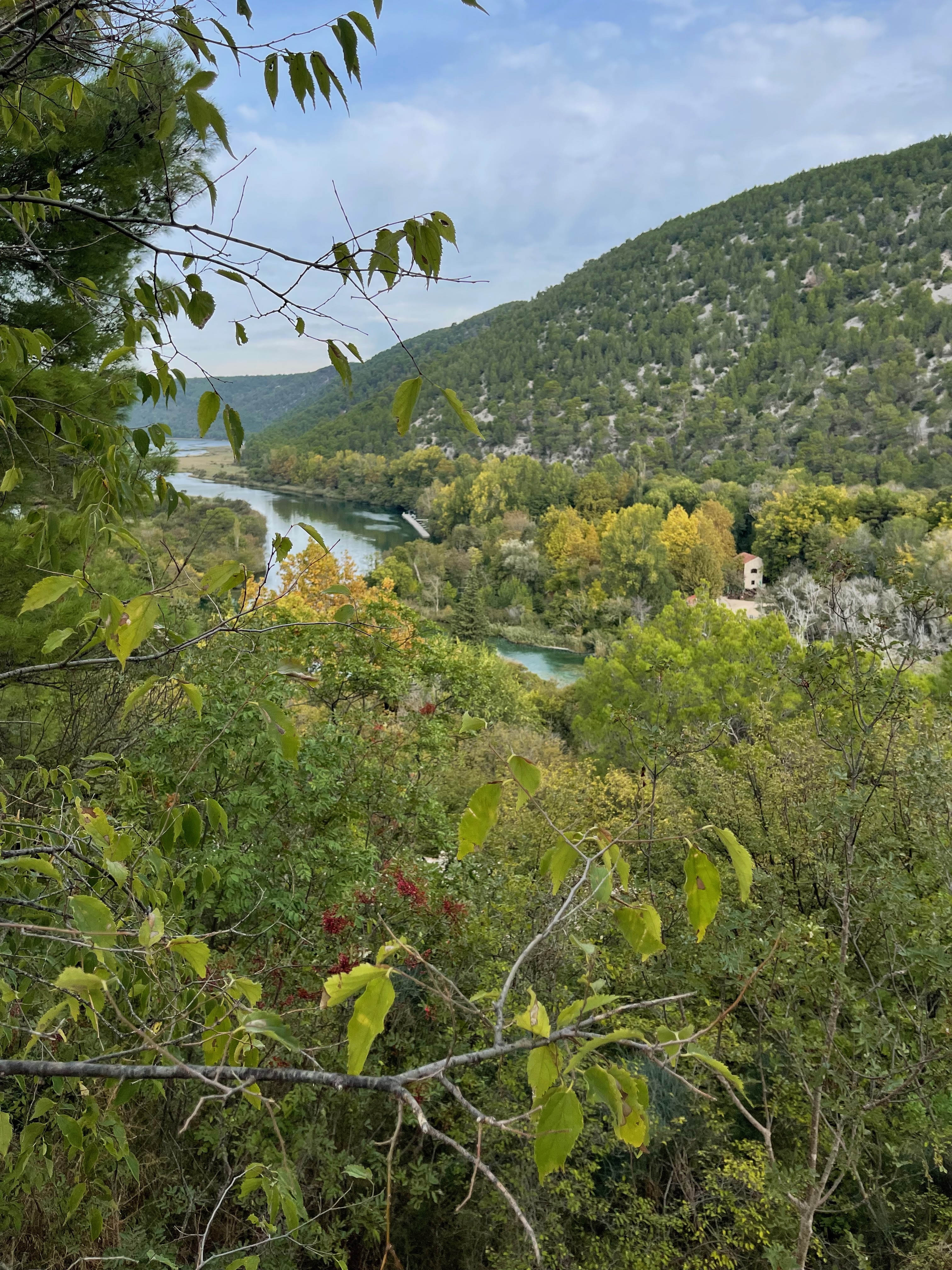
Krka is the best nature day trip from Split, and you can do it on public buses without a tour or a car. Buy the Split to Skradin ticket at the main bus station. I check the return times the day before, but buying the morning of is usually fine. The ride is about an hour and a quarter, and the bus sets you down a few blocks from the water in Skradin.
Skradin is small and walkable. I stop for coffee and a pastry before the park, though what is open depends on the time of year. Walk to the tourist office and buy your park ticket there. In July and August, buy online ahead so you skip the queue. From Skradin the ticket includes a boat up the river to Skradinski Buk, which is the scenic way in. You can also walk the riverside path in about an hour, but the boat is the better arrival.
At the falls, a small cluster of places to eat sits near the entrance, along with a few resident cats. The heart of the park is a set of loop trails on boardwalks and footbridges around Skradinski Buk. You can go further on longer routes that leave the park at other points, but buses back from those sides are scarce, so returning through Skradin keeps it simple. I usually have lunch in Skradin while I wait for the afternoon bus back to Split.
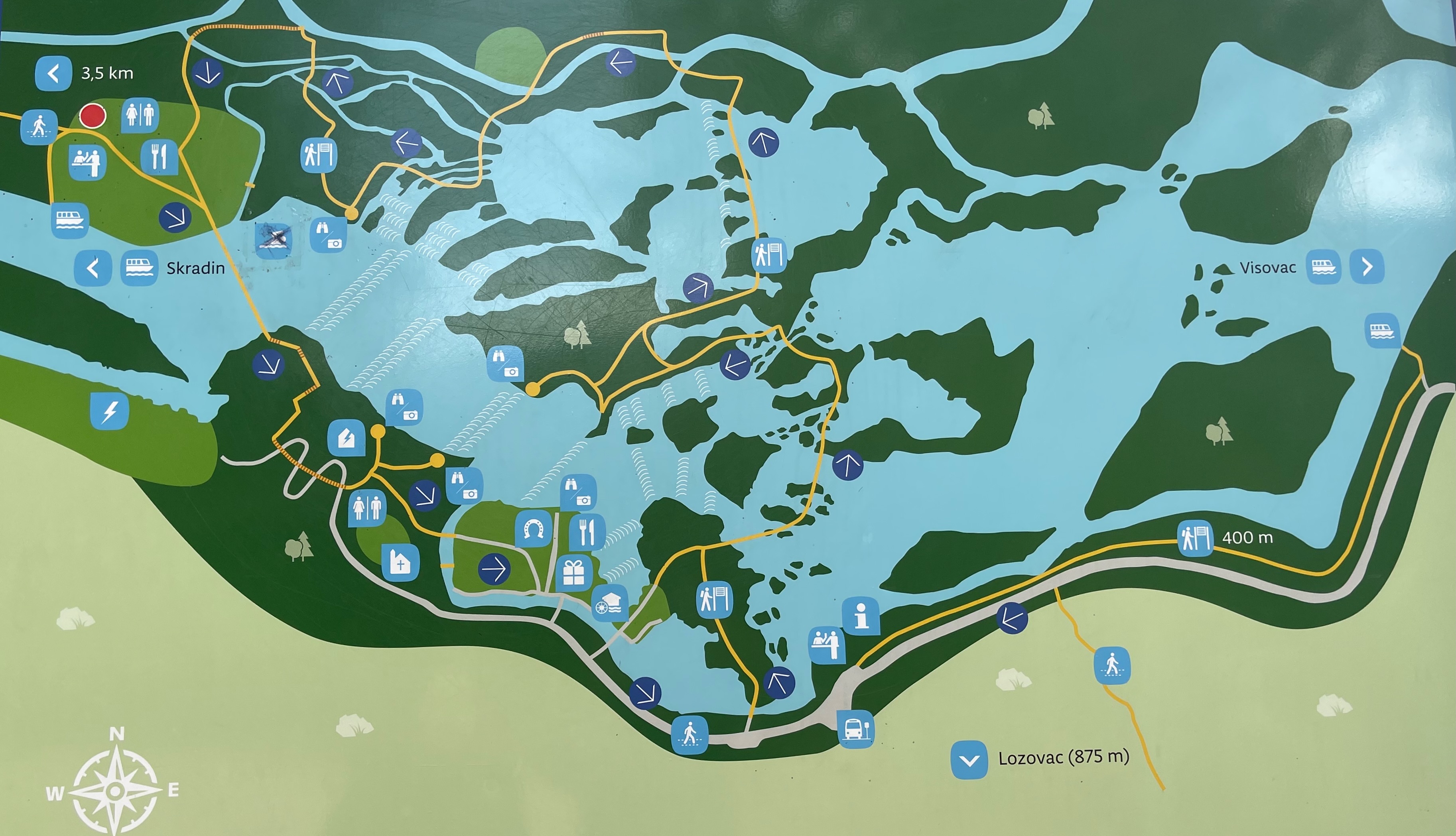
Krka has two main entrances, and the choice changes how you arrive.
| Entrance | How you reach the falls | Best for |
|---|---|---|
| Skradin | A national-park boat runs up the river from the Skradinski buk ferry pier to the falls. Scenic, and mostly a warm-season service | Visitors staying in Skradin, or anyone wanting the river approach |
| Lozovac | Park at the entrance, ride a free shuttle bus down to Skradinski Buk. Reliable and open year-round | Drivers, off-season visits, and the simplest logistics |
Buy tickets online in advance for any summer visit. Park entry prices are seasonal and highest in July and August. If your timing allows it, Skradin is the prettier arrival: the river valley makes the park feel like a journey rather than a parking-lot shuttle to a viewpoint.
Two bases make sense, for two kinds of trip.
Šibenik is the larger base, a working coastal city with a UNESCO cathedral, an old town of stone lanes, and a full range of restaurants and hotels. Skradin is the small, pretty riverside town right at the park's northern gate, calmer and closer to the water. For a marina hotel near Šibenik, D-Resort Šibenik sits on the waterfront by the city's marina.
The atlas does not yet carry a wide hotel pin set for the area, so book on the usual sites and read recent reviews for the property.
Skradinski Buk is the reason most people come, a 400-meter run of terraced travertine cascades dropping into a wide pool, circled by boardwalks and footbridges. It is photogenic and, in high summer, busy. An early entry, before the tour groups arrive in late morning, is the difference between a quiet walk and a slow shuffle. Shoulder season is the sweet spot if you have control over the calendar: enough water and green to make the falls feel alive, without the July-August crush.
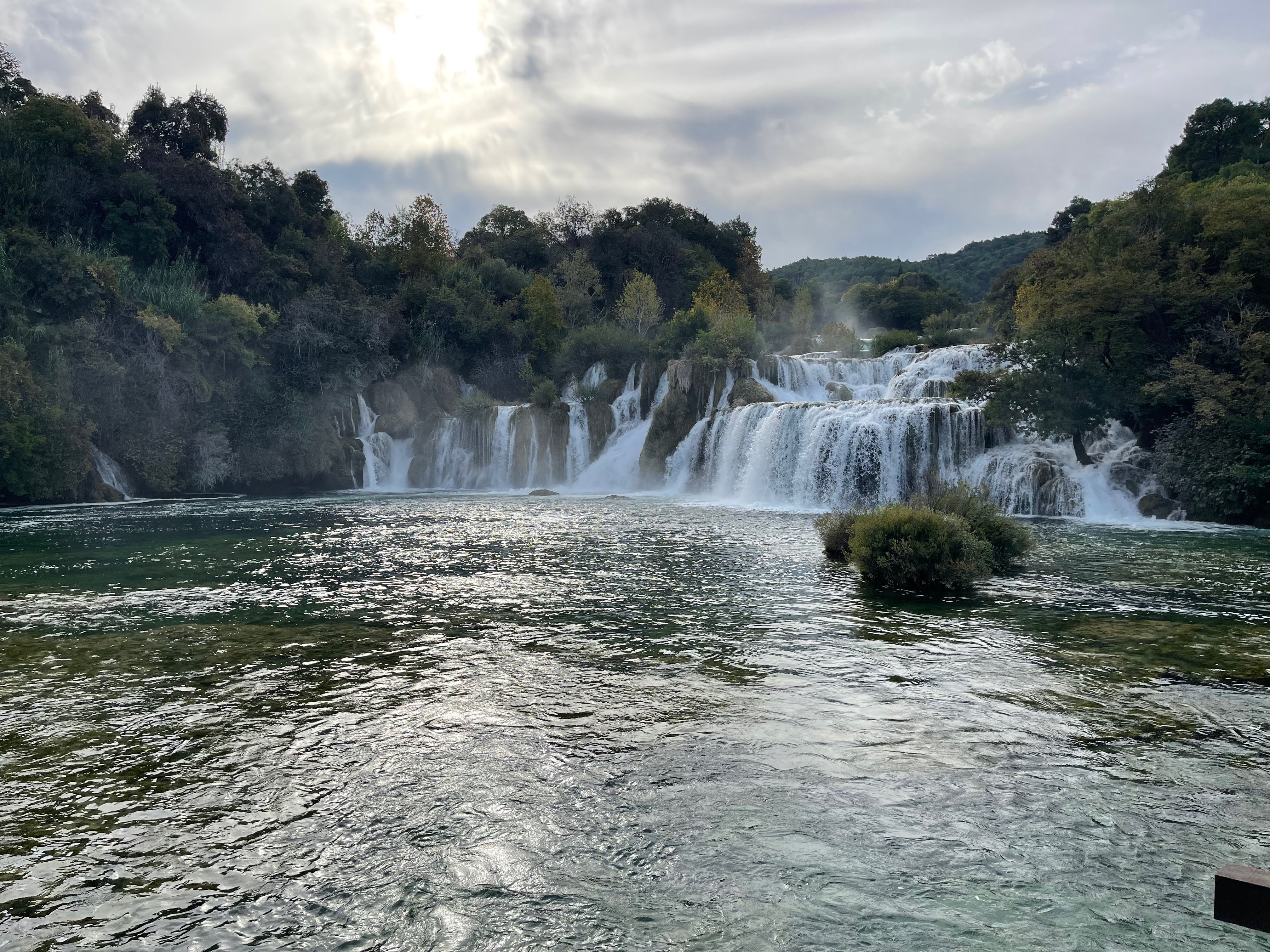
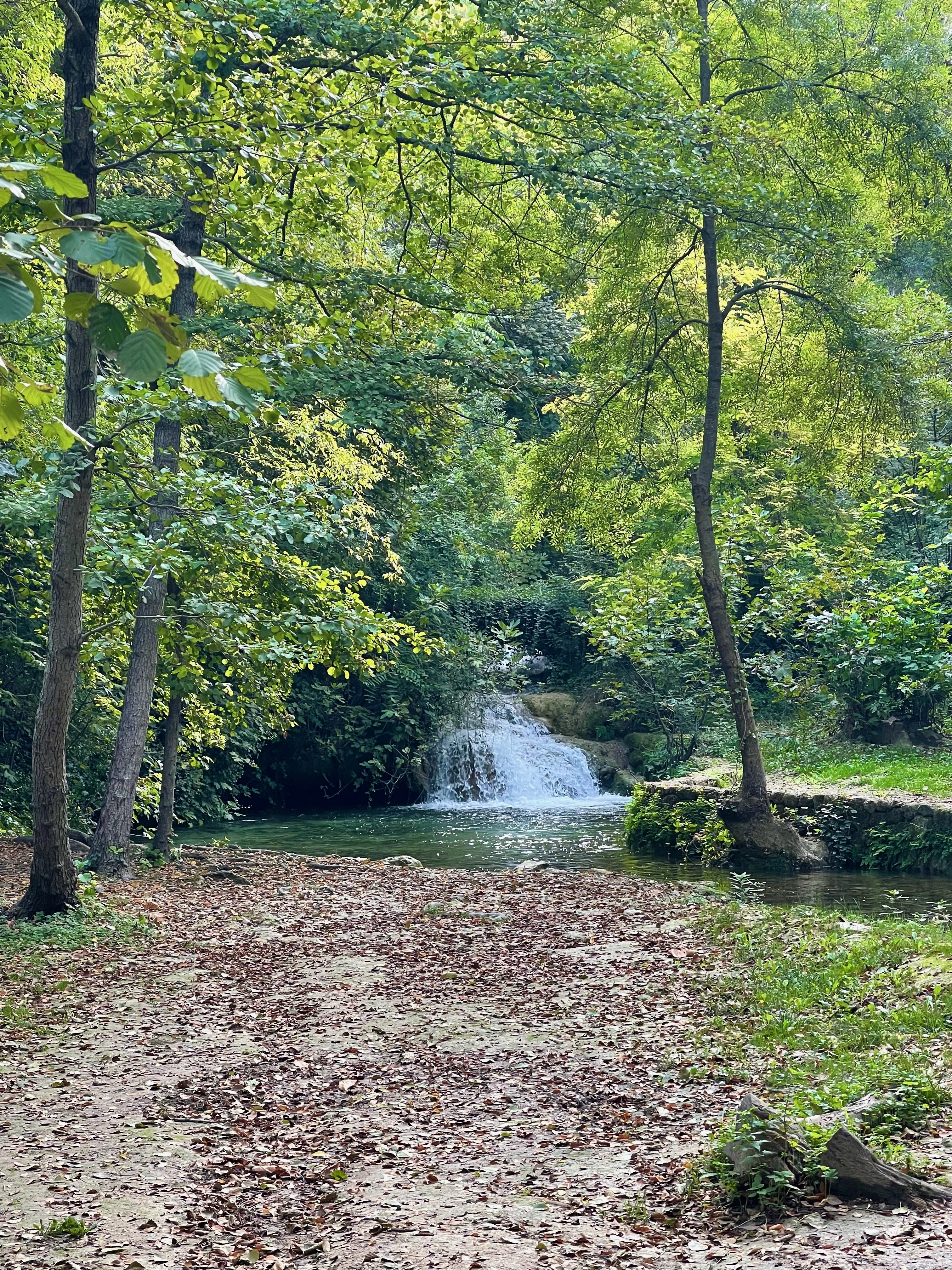

One change to plan around: swimming at Skradinski Buk has been banned since 2021, to protect the fragile travertine that builds the falls. The waterfalls are for looking now. For a swim, the river beaches around Skradin are the answer, including City Beach Skradin and Trutin beach on the calm water near the town.
Below the falls sits one of the oldest hydroelectric plants in the world. The Jaruga plant at Skradinski Buk started generating on August 28, 1895, days after the first plant at Niagara Falls, and it was the first alternating-current system in this part of Europe. It was built to light the streets of Šibenik, which became one of the first cities anywhere to run public lighting on an AC grid, on the same Nikola Tesla patents as Niagara. The generators came from the Ganz works in Budapest.
The park itself is younger. Krka became a Croatian national park in 1985, protecting the river canyon and the travertine barriers that build the falls. Those barriers are still growing, calcium carbonate settling on moss and algae to raise the terraces year by year. That slow, living deposit is what the swimming ban protects.
Šibenik is the coastal city beside the park and the better base for anyone wanting a town as well as a waterfall. Unlike most Dalmatian cities, it was founded by Croatians rather than Greeks or Romans, and it climbs the hillside in a tangle of stone streets and stairways.
The landmark is the Cathedral of St James, a 15th and 16th-century church built entirely of stone, with no brick or timber, and a UNESCO World Heritage Site. Above the old town, St. Michael's Fortress gives the wide view and hosts open-air concerts in summer. Out at the mouth of the St. Anthony Channel, St. Nicholas' Fortress is the 16th-century Venetian sea fort guarding the harbor entrance, itself UNESCO-listed as part of the Venetian defensive works.
The eating around Krka is Dalmatian: grilled fish, lamb, olive oil, and the wines of the Šibenik hinterland. Rak Winery is a local producer that makes a good tasting stop on a drive through the area.
Out on the islands off Šibenik, Bar Fingac is a bar on car-free Zlarin, and Obrt Antonia Beach Bar Vila is a beach-bar stop for a drink by the water. Both are warm-season places, reached by the local ferries.


