Photos from Zagreb

Botanical Garden of the Faculty of Science, University of Zagrebpark

Kai Street Foodrestaurant
 +1
+1Dolac Marketshopping
 +5
+5Zagreb Zooattraction
 +2
+2St Mark's Church Zagrebattraction
 +3
+3Ban Jelacic Squareattraction
+1+5+2+3Current conditions and the practical reference material that helps turn the saved places into a trip.
7-day forecast from Open-Meteo. UV badges flag days when sun protection matters (3 and above is moderate; 8 and above is risk territory for unprotected fair skin within 30 minutes).
Typical highs around 28°C, lows around 16°C.
Typical highs around 4°C, lows around -3°C.
Public holidays from Nager.Date.
Public-transit operators within 8 km of the city center. Click through to each operator’s site for routes, fares, and tickets.
Zagreb is the capital and largest city of Croatia. It is in the north of the country, along the Sava river, at the southern slopes of the Medvednica mountain. Zagreb stands near the international border between Croatia and Slovenia at an elevation of approximately 158 m (518 ft) above sea level. At the 2021 census, the city itself had a population of 767,131, while the population of Zagreb metropolitan area is 1,086,528.
The links below support the changing or licensed reference material on this page. Personal notes and ordinary geographic facts are not footnoted individually.
Monthly highs, lows, rainfall — long-term averages, NASA POWER.
Operators and modes are aggregated from individual transit-agency GTFS feeds. Route classifications come from each feed’s route type codes.
Maps, image licenses, and the full dataset registry are listed in site credits.
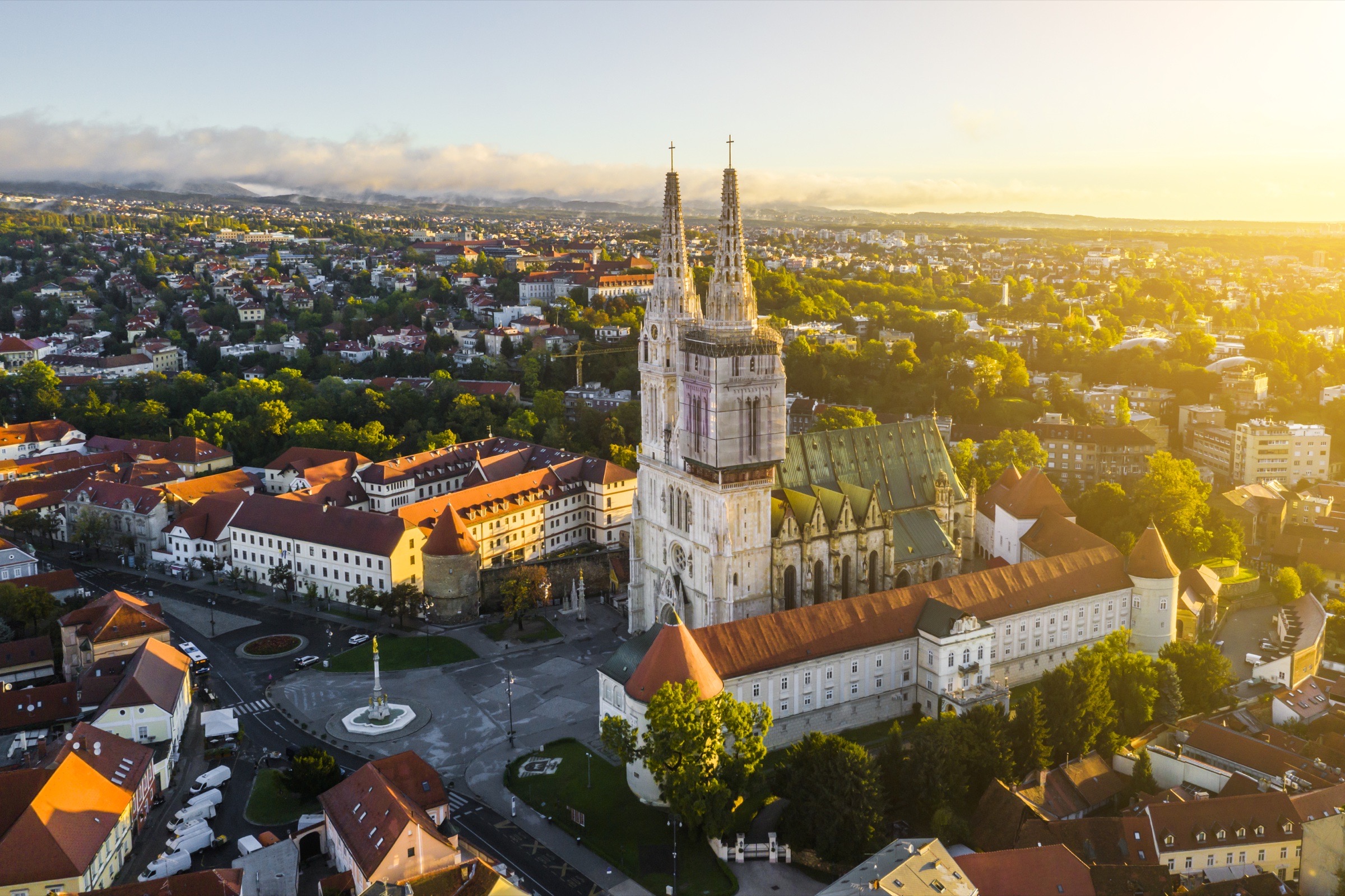
My Zagreb travel guide. The Upper Town and St. Mark's Church, Dolac market, the cafe culture, where to stay, and where to eat.
Zagreb is the Croatian capital travelers skip on the way to the coast, which is their loss: a relaxed, walkable Central European capital with a hilltop old town, a great open-air market, and a coffee culture that is a local institution. The central sights are compact, with wider regional connections beyond them.
Planning brief
Zagreb is the capital of Croatia, a city of about 800,000 inland from the coast. It is the part of Croatia most travelers skip on the way to the islands, which is their loss, because it is a relaxed, walkable Central European capital with a hilltop old town, a great market, and a serious cafe culture. The central sights form a compact route, with wider regional connections beyond it.
The Upper Town, main square, and market cluster in the center. The museums and parks spread through the Lower Town.
The medieval Upper Town sits on the hill, the 19th-century Lower Town spreads below it around grand squares and parks. The funicular links them.
The red-umbrella Dolac market above the main square is the city's larder. Go in the morning for produce, cheese, and the food stalls.
The weekend coffee ritual, the long sit on a cafe terrace, is a real local institution. Tkalciceva street is the densest run of cafes and bars.
Zagreb's Franjo Tuđman Airport sits about 17 km southeast of the center. A regular airport shuttle bus runs to the main bus station, from where the center is a short tram ride or walk. Taxis and rideshare take roughly 25 minutes.
Inside the city, an extensive tram network covers the Lower Town, and the historic core is small enough to walk. Zagreb is also a rail and bus hub, with connections to the coast and to neighboring capitals.
The Zagreb tram is the everyday city layer. For the old town, market, and Lower Town walks, you mostly use your feet. Use the tram for the bus station, rail station, outer neighborhoods, and the moments when the Austro-Hungarian grid gets longer than it looks.
Stay in or near the Lower Town, the 19th-century grid around Ban Jelačić Square. From there the Upper Town, the market, the museums, and the cafes are all on foot, and the trams cover anything further.
The streets around the main square and toward the train station are the convenient central choice. The atlas does not yet carry hotel pins for Zagreb, so book on the usual sites and read recent reviews for the property.
Zagreb is two towns stacked together. The Upper Town, Gornji Grad, is the medieval core on the hill, holding St. Mark's Church with its bright tiled-roof coat of arms, the Lotrščak Tower with its noon cannon, the Stone Gate shrine, and a cluster of small museums, including the much-loved Museum of Broken Relationships.
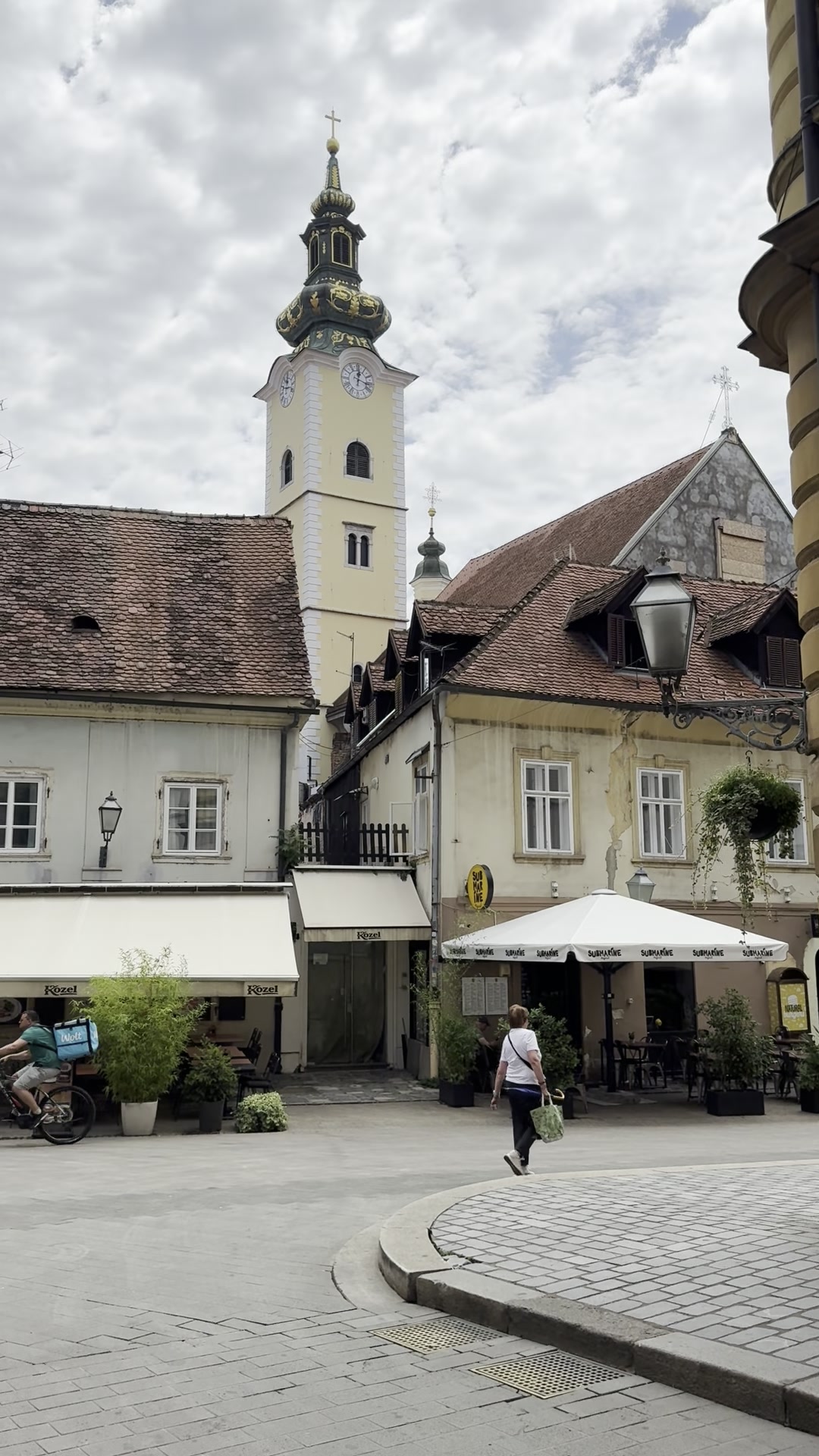
The Lower Town, Donji Grad, spreads below it, a 19th-century grid of grand Austro-Hungarian buildings, museums, and a chain of green squares known as the Green Horseshoe. The short funicular, one of the steepest and shortest in the world, links the two, though the walk up is also quick.
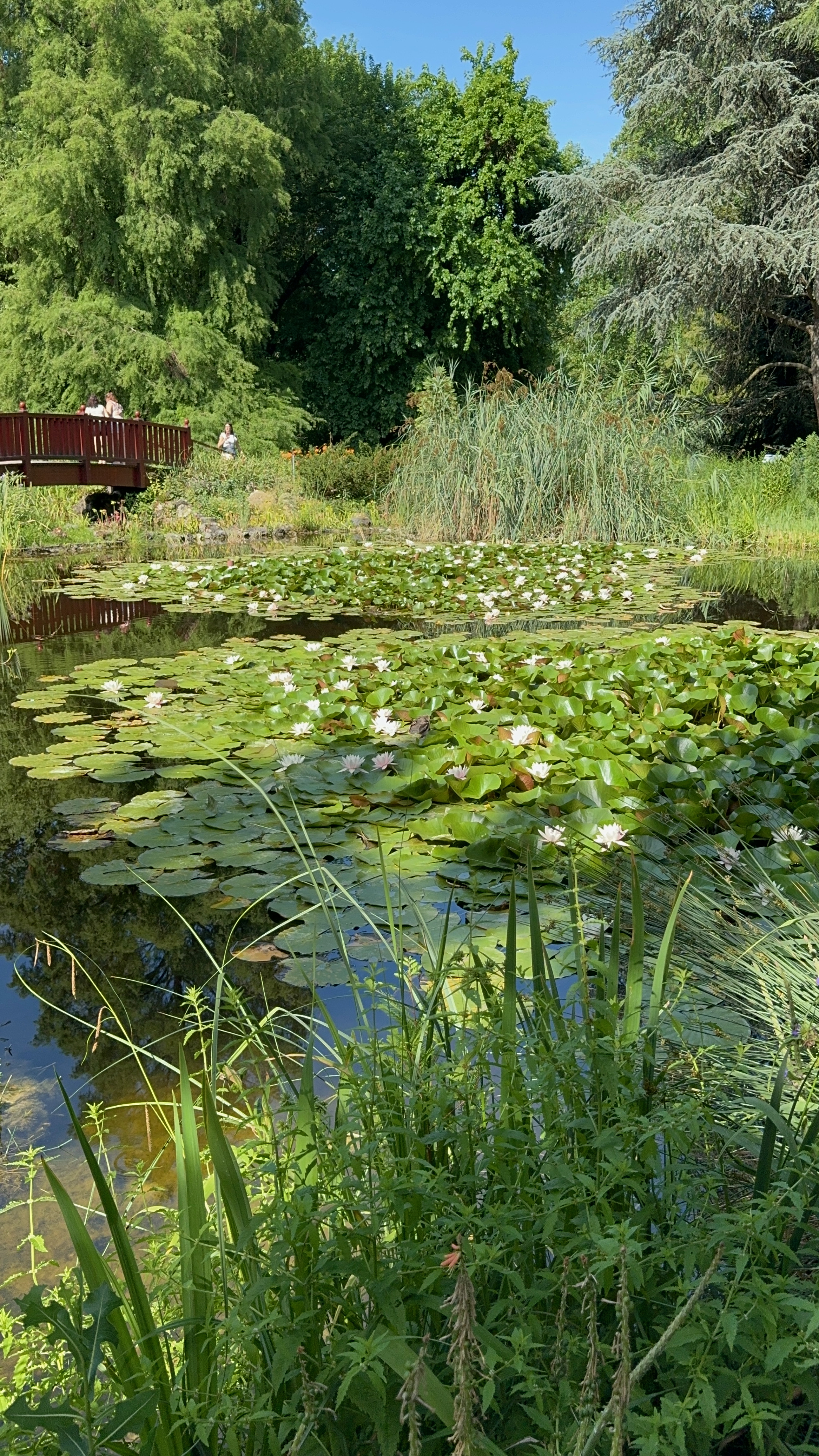
Add the Botanical Garden at the south edge of the Lower Town when you want to extend the Green Horseshoe beyond its main squares. It is cheap and calm.
Dolac Market, the open-air market just above Ban Jelačić Square, is the city's larder, a terrace of red-parasol stalls selling produce, flowers, cheese, and meat, with a covered hall below. Go in the morning. Pod Zidom Bistro sits right at the market and cooks from it.
The other Zagreb institution is coffee. The weekend špica, the long mid-morning sit on a cafe terrace to see and be seen, is a genuine local ritual. Tkalčićeva street, a pedestrian run of cafes and bars climbing toward the Upper Town, is the densest place to join it.
Zagreb eats on continental Croatian cooking, heartier than the coastal seafood style, with strong Central European and a growing international range on top.
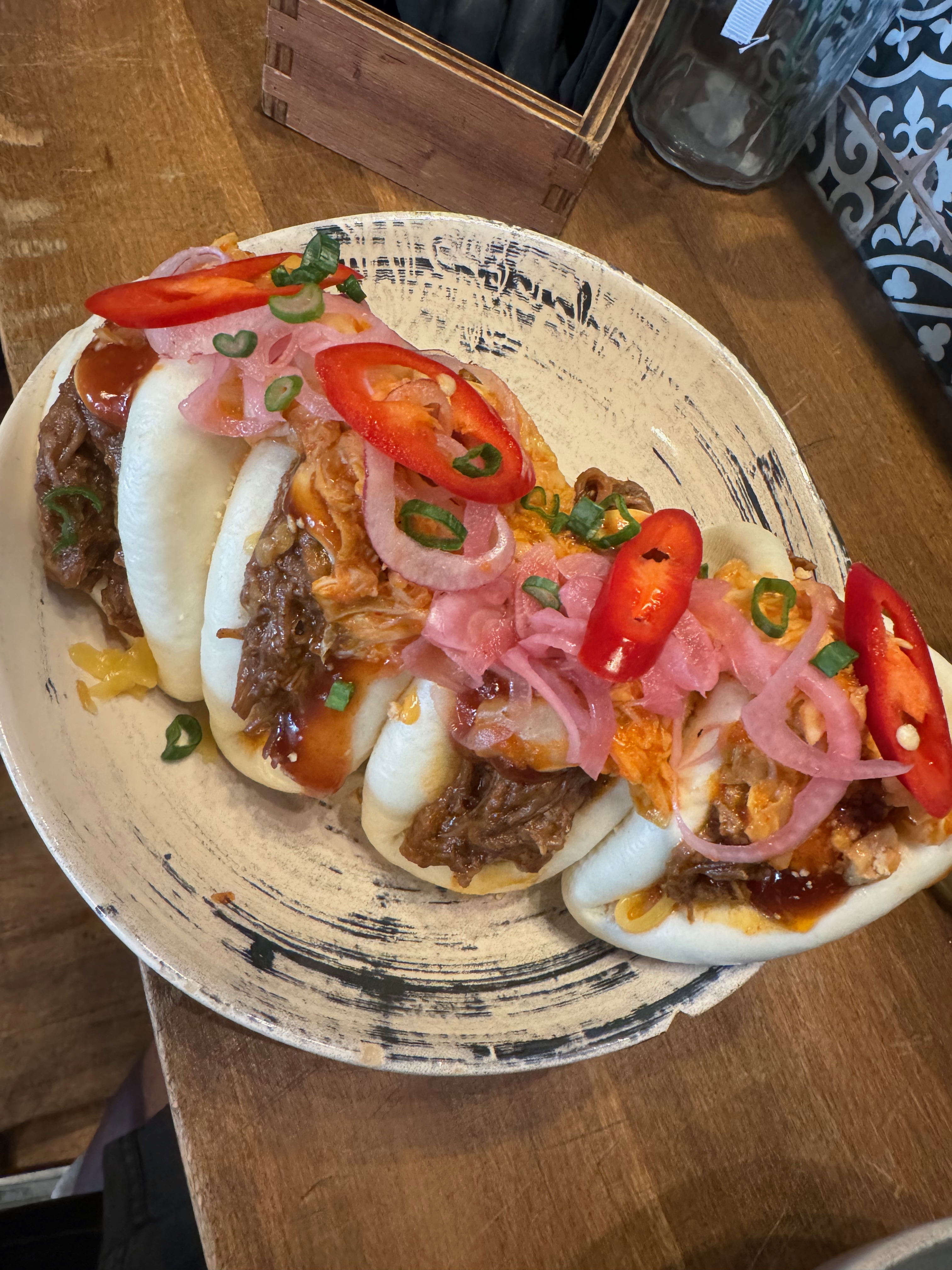
The saved Zagreb restaurant set is still small, but Kai Street Food is the practical standout: limited menu, nice staff, kitschy room, and an easy quick meal when you want something lighter than the city's heavier continental cooking.
| Spot | What it is | Rating |
|---|---|---|
| Kai Street Food | Small Asian street-food menu, strong quick meal | 5/5 |
| Pod Zidom Bistro | A bistro cooking from the Dolac market | Pinned |
| Byblos Restaurant | Lebanese and Middle Eastern | Pinned |
| El Greco | Greek | Pinned |
| SOI fusion bar | Asian fusion | Pinned |
| Vagabund | A casual restaurant and bar | Pinned |

