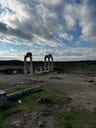
Photos from Pamukkale
 +3
+3Hierapolis-Pamukkalepark

Sultan Sofrasırestaurant
 +2
+2Pamukkale Sunset Spotattraction
 +2
+2Hierapark Thermal & Spa Hotel Deluxehotel
 +1
+1Naz Restaurantrestaurant
+3+2+2+1Current conditions and the practical reference material that helps turn the saved places into a trip.
7-day forecast from Open-Meteo. UV badges flag days when sun protection matters (3 and above is moderate; 8 and above is risk territory for unprotected fair skin within 30 minutes).
About 79% of the year's rain falls in these months. Typical highs around 14°C, lows around 2°C.
Typical highs around 30°C, lows around 15°C. About 24mm of rain a month.
Public holidays from Nager.Date.
Pamukkale, meaning "cotton castle" in Turkish, is a natural site in Denizli Province in southwestern Turkey. The area is famous for a carbonate mineral left by the flowing of thermal spring water. It is located in Turkey's Inner Aegean region, in the River Menderes valley, which has a temperate climate for most of the year.
The links below support the changing or licensed reference material on this page. Personal notes and ordinary geographic facts are not footnoted individually.
Monthly highs, lows, rainfall — long-term averages, NASA POWER.
Maps, image licenses, and the full dataset registry are listed in site credits.
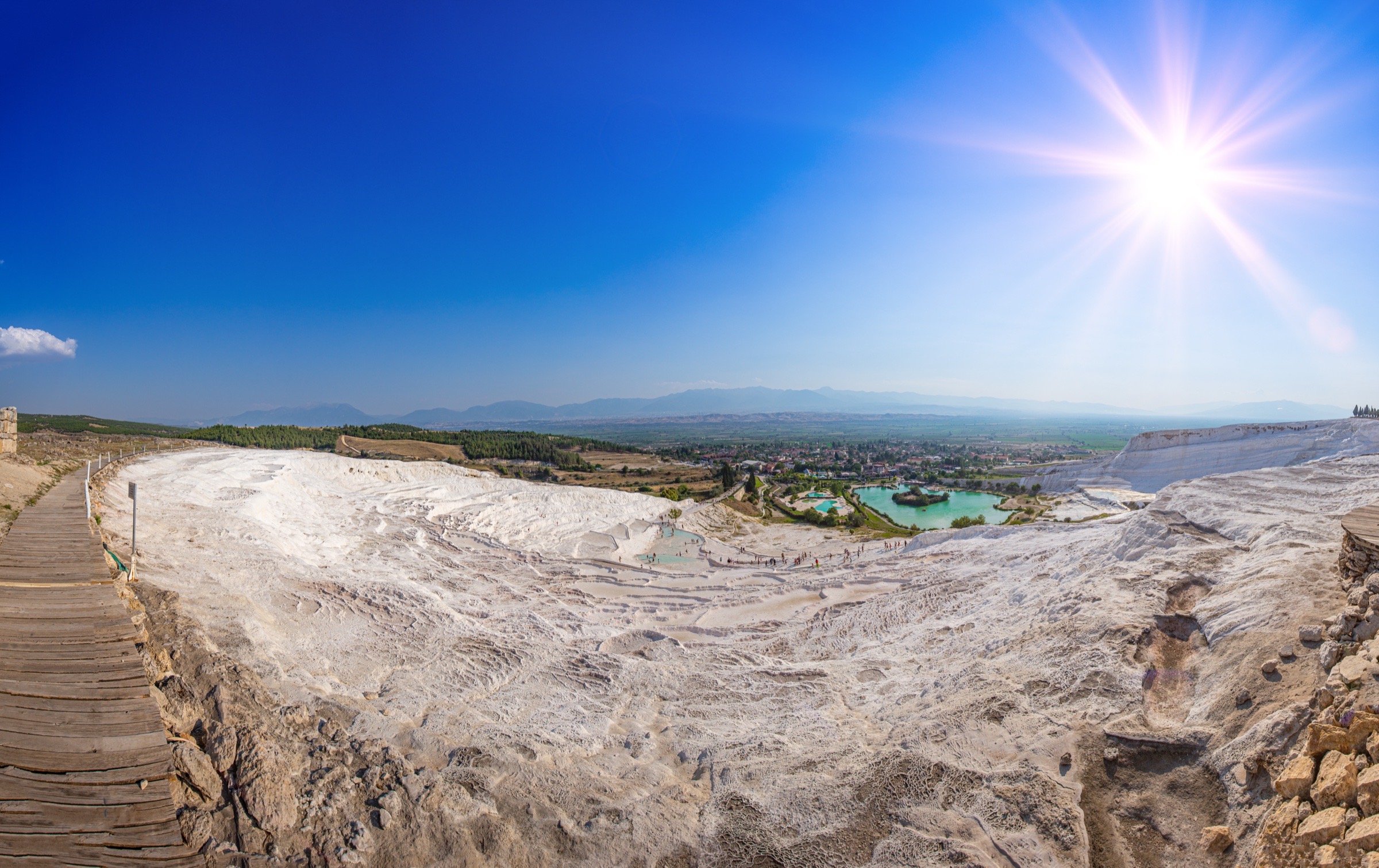
A compact Pamukkale note: the white travertine terraces, Hierapolis, and the separate thermal pool among the ruins.
Pamukkale is the site in southwest Türkiye where mineral-rich hot springs built a hillside of white travertine terraces. The terraces sit inside the same archaeological park as Hierapolis, the Greco-Roman spa city above them. This list covers the two pieces that shape most visits.

The Travertines of Pamukkale are the white terraces themselves. You walk the protected section barefoot, so expect hot, wet, and sometimes slippery stone rather than a soft spa path. Bring shoes you can take on and off easily, and keep water with you in summer.
Cleopatra Antique Pools is the thermal pool inside the Hierapolis ruins, where you swim among submerged Roman columns for a separate fee. Treat it as the actual bathing part of the visit. The terraces are the landscape and the walk, the pool is where you get in the water.