
📷 Original designer of the flag is unknown.· Public domainPulau Pinang - Pulau Mutiara | Penang - The Pearl of the Orient
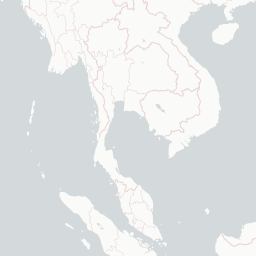
Penang is a Malaysian state located on the northwest coast of Peninsular Malaysia. It is divided into two parts by the Strait of Malacca: Penang Island to the west, where the capital city George Town is located, and Seberang Perai on the mainland Malay Peninsula to the east. These two halves are physically connected by the Penang Bridge and the Second Penang Bridge. The state shares borders with Kedah to the north and east, and Perak to the south.
Wikipedia →Summary excerpted from the Wikipedia article Penang, licensed under CC BY-SA 4.0. Text may be clipped or paraphrased to fit this page.
Visit Penang for landscape, water, gardens, and nearby routes. Use Penang to connect cultural institutions with streets, food, public space, and nearby landscape rather than treating each stop separately. A good itinerary should stay selective. Use one main anchor in Penang, then build outward only to places that sit naturally nearby. That keeps the visit to Penang legible and leaves time for ordinary streets to do their work. If the strongest material around Penang sits outside the center, give it its own time rather than forcing it into the same day.
Do not visit Penang expecting every useful stop to be close together or easy to improvise. Do the practical reading of Penang first: hours, routes, weather, crowds, and how far the neighborhoods really sit from one another. In Penang, keep the plan compact, check hours before arrival, and use taxis or rideshares when public transport is inconvenient or safety varies by area. If the main interest is one nearby site, it may be better to treat Penang as a base rather than the whole destination.
The warmer period in Penang generally falls in June through August. Heat and rain are the practical constraints; the day can change quickly from useful walking weather to heavy downpour. Use the extra light in Penang for one better route, not for too many stops. A warm-weather route in Penang needs a rhythm: outdoor stops, interiors, transit breaks, and enough shade.
The cooler, drier, or less humid months can be the more comfortable period in Penang. Rain is still the main constraint, not cold. The practical issue in Penang is not temperature alone, but what rain, humidity, storms, or sea conditions do to the plan. Use this period in Penang for close looking indoors, then add outdoor sections when weather and daylight cooperate. Keep Penang compact in this season: fewer outdoor sections, better hour checks, and practical rides when conditions make transit awkward.
7-day forecast from Open-Meteo. UV badges flag days when sun protection matters (3 and above is moderate; 8 and above is risk territory for unprotected fair skin within 30 minutes).
Monthly highs, lows, and rainfall (long-term averages, NASA POWER).
2 commercial airports within 100 km. Closest is Penang International Airport (PEN) at 15 km.
Public-transit operators within 8 km of the city center. Click through to each operator’s site for routes, fares, and tickets.
Operators and modes aggregated by TransitLand from individual transit-agency GTFS feeds. Route classifications (subway / tram / rail / bus / etc) come from each feed’s GTFS route_type codes.
This page blends public reference data, climate/elevation services, and personal notes. Travel requirements can change, so visa and entry details should be checked again before booking.
Summary, canonical article, and some image fallbacks.
Population, area, image, coordinates, and linked identifiers where available.
Monthly temperature and rainfall climatology.
1991-2020 temperature and precipitation cross-check for compact climate fields.
Coordinate-based elevation backfill.
Coordinate-based IANA timezone lookup.
Public domain, Original designer of the flag is unknown..
Global source notes, map tiles, flags, licenses, and attribution policy.