Photos from Phi Phi
 +4
+4Phi Phi Moon Longtailattraction
 +2
+2Patcharee French Bakeryrestaurant

Pi Leh Baypark
 +3
+3Sunflower Beach Barrestaurant
+4+2+3Current conditions and the practical reference material that helps turn the saved places into a trip.
7-day forecast from Open-Meteo. UV badges flag days when sun protection matters (3 and above is moderate; 8 and above is risk territory for unprotected fair skin within 30 minutes).
About 79% of the year's rain falls in these months. Typical highs around 29°C, lows around 28°C.
About 96mm of rain a month, against 258mm in the wet season.
Public-transit operators within 8 km of the city center. Click through to each operator’s site for routes, fares, and tickets.
The Phi Phi Islands are an island group in Thailand located in the Strait of Malacca between the large island of Phuket and the Straitscoast in the Krabi Province The islands are administratively part of Krabi Province. Ko Phi Phi Don is the largest and most populated island of the group, although the beaches of the second largest island, Ko Phi Phi Le are visited by many people as well. The rest of the islands in the group, including Bida Nok, Bida Nai, and Ko Mai Phai, are not much more than large limestone rocks jutting out of the sea. The islands are reachable by ferries, speedboats or long-tail boats, most often from Krabi town or from ports in Phuket Province.
The links below support the changing or licensed reference material on this page. Personal notes and ordinary geographic facts are not footnoted individually.
Monthly highs, lows, rainfall — long-term averages, NASA POWER.
Operators and modes are aggregated from individual transit-agency GTFS feeds. Route classifications come from each feed’s route type codes.
Maps, image licenses, and the full dataset registry are listed in site credits.
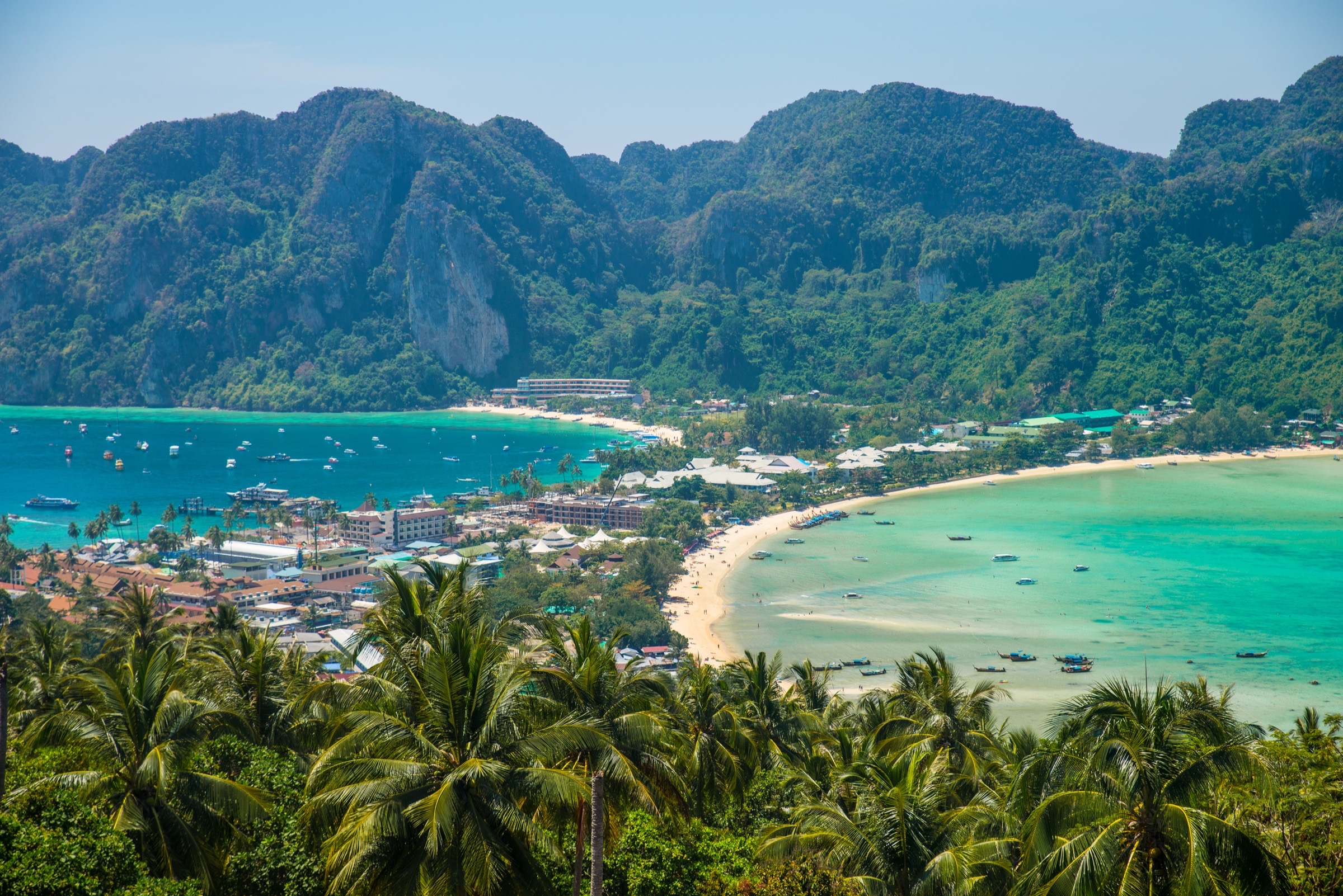
My Koh Phi Phi travel guide. The ferry from Phuket or Krabi, where to eat on Tonsai, Maya Bay, and the no-cars island lifestyle.
Koh Phi Phi is the small Thai island that blew up after The Beach and has been managing the crowds ever since. No cars, no airport, you arrive by ferry from Phuket or Krabi. Ferry schedules, boat access, and the no-cars layout determine the plan.
Koh Phi Phi has no airport. The standard arrival is the 90-to-120-minute ferry from Phuket or Krabi. The nearest international airports are Phuket (HKT) and Krabi (KBV).
| Mode | Time | Cost | When to use |
|---|---|---|---|
| Ferry from Phuket Rassada Pier | 90 to 120 min | 500 to 800 THB single | The default. Daily ferries via Phuket Ferry, Tigerline, or Andaman Wave Master to Tonsai Pier on Phi Phi Don |
| Ferry from Krabi Klong Jilad Pier | 90 to 120 min | 350 to 600 THB single | If you flew into Krabi (KBV). The ferry is slightly cheaper and the connection from KBV is smoother |
| Speedboat transfer | 50 to 70 min | 1,200 to 2,000 THB | Faster than the ferry. Rougher in choppy weather. Useful if you are short on time |
| Private longtail charter | 60 to 90 min | 4,000 to 7,000 THB | A group splitting the cost or arriving outside the ferry schedule. The most flexible option |
Phi Phi is small enough that its festival calendar is largely the Thai pattern overlaid with the island's tourism season. The Christmas-NYE window is the priciest and the busiest of the year by a wide margin.
| Event | When | What it changes |
|---|---|---|
| Christmas and New Year peak | December 20 to January 5 | The most expensive hotel window. Tonsai beach parties run all night, hotels book months ahead, and ferry tickets sell out |
| Songkran | April 13 to 15 | The Thai new year water-throwing. Tonsai village beach road becomes the local water-fight center. Smaller and more relaxed than the city versions |
| Loy Krathong | Full moon of the 12th lunar month, usually early to mid-November | Krathongs floated from the beaches at sunset. Quieter than the city versions, smaller scale |
| Maya Bay closure season | Variable, sometimes August to October | Maya Bay closes seasonally for coral and reef recovery. Verify the current schedule before booking a Phi Phi Leh boat tour |
| Full Moon Party | Every full moon | Not on Phi Phi, but some travelers pair it with Koh Phangan |
For lower prices, look at mid-January or late November instead of the Christmas and New Year peak.
Phi Phi food runs through casual beachside Thai (with the usual pad thai, green curry, and seafood-on-the-beach grill), Italian and pizza for the European traveler crowd, and the standard banana-pancake breakfast culture every small Thai island runs on. The picks below cover the spread.
| Spot | Rating |
|---|---|
| ACQUA Restaurant Phi Phi | Pinned |
| Anna's Restaurant | Pinned |
| Atom Beach Cafe and Restaurant | Pinned |
| Basil Bistro Bar & Restaurant | Pinned |
| Budsaba place | Pinned |
| Café 8.98 Phi Phi Island | Pinned |


