Bath travel guide: the day-trip shape, where to eat, and Stonehenge as the add-on
A personal Bath travel guide. The city as a day trip, Hotel Indigo if you stay over, Sunday roast at the Bathwick, and Stonehenge as the easy add-on.
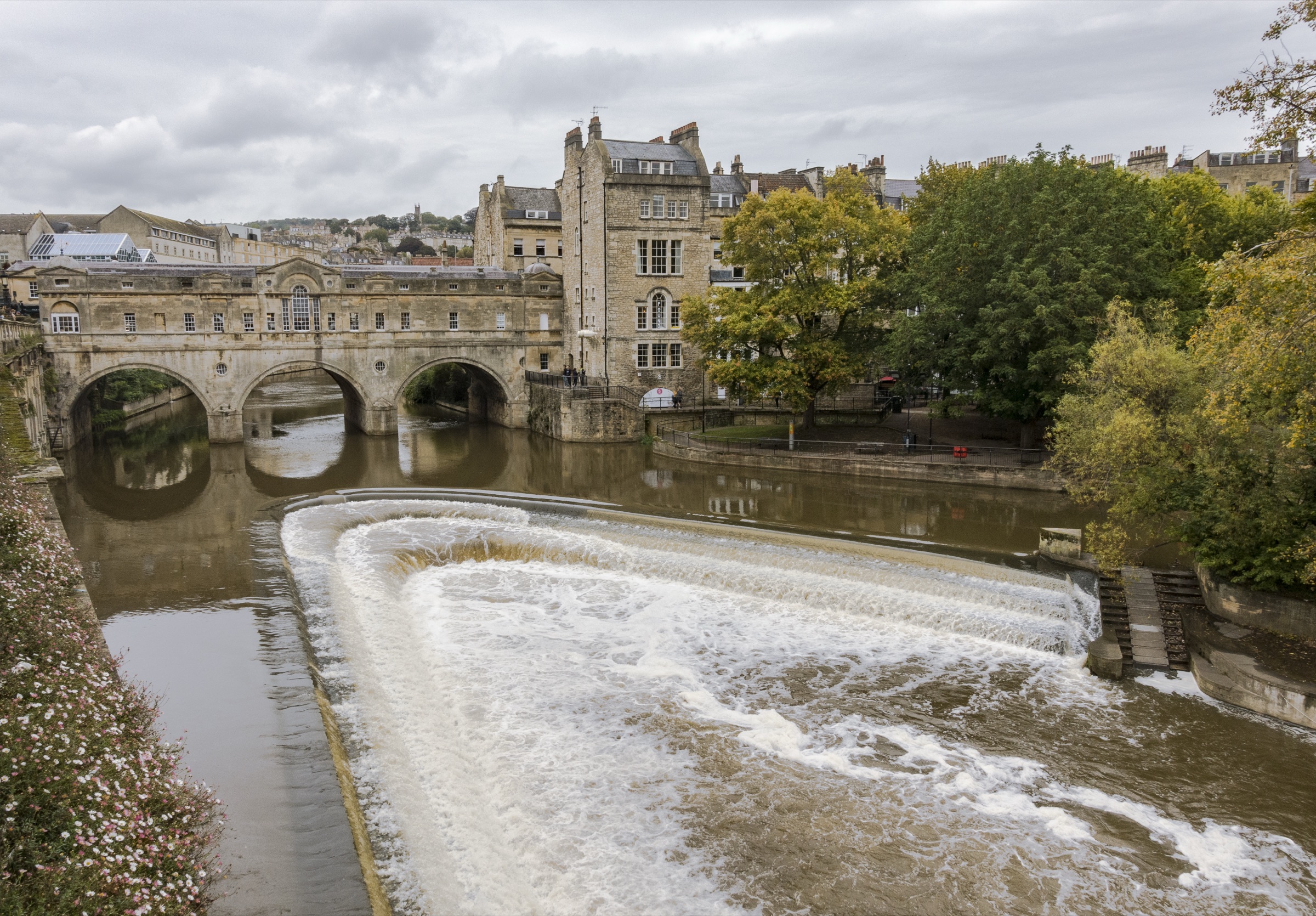
Bath is the small Georgian town on the western edge of England that most travelers see in a single day from London. The Roman bath complex (the city's namesake), the medieval abbey, the eighteenth-century townscape, and the river with the weir under the Pulteney Bridge all sit inside an area you can walk across in fifteen minutes. The version of the trip a first visitor takes is the day-trip version, and that is a good trip. The version a second visitor takes, or the visitor who is also doing Stonehenge or is using Bath as a weekend break from London, is an overnight, and that one rewards the stay.
The bathing side of Bath (the Roman Baths museum, the modern Thermae Bath Spa rooftop pool, the Sacred Spring) lives mostly inside the spa-day cross-list for this atlas. This writeup is the rest of the trip. Where to stay, where to eat, the long walk along the river, and the Stonehenge add-on.
On this page
- Day trip vs overnight
- Festivals and big annual events
- Where to stay if you stay over
- Sunday roast at the Bathwick
- Walking the river, the weir, and the viaduct
- The Roman Baths and Thermae Bath Spa
- Stonehenge as the Bath-Salisbury add-on
- Where to eat in town
Day trip vs overnight
The day-trip shape is the right one for most first visits. Train from London Paddington on Great Western Railway, about 90 minutes each way to Bath Spa station. Out of the station, ten minutes' walk to the Roman Baths and the abbey. Lunch in town. The afternoon at Thermae Bath Spa if you booked the rooftop slot. Dinner before the last train back. The whole day comes in under fifteen hours door-to-door from central London and you have done the small list of things Bath is famous for.
The overnight shape is what you do when the day-trip box is already ticked, or when you want a slower version of the same trip, or when you are using Bath as the base for the Stonehenge add-on. The overnight gives you the long walk along the river, the dinner in a real Bath restaurant rather than a station sandwich, and the morning the day-tripper does not have. If the trip falls on a Sunday at all, build the overnight around the roast at the Bathwick.
Festivals and big annual events
Bath is small enough that any major event reshapes the town for the weekend. Hotel inventory tightens, the train down from London fills up, and reservations at the better restaurants close out. Plan around the calendar deliberately.
| Event | When | What it changes |
|---|---|---|
| Bath Christmas Market | Mid-November to mid-December, around 18 days | The big one. Wooden chalets fill the streets around the abbey and Stall Street, lights go up across the Georgian terraces. Two million visitors over the run. Book a hotel weeks ahead for any weekend during the window. If you can do midweek, do |
| The Bath Festival | Mid-to-late May, around 10 days | Classical music, literature, and film across abbey, Guildhall, and theater venues. The Pump Room and the Roman Baths host evening concerts that are the unusual booking of the festival. Sells out early |
| Jane Austen Festival | Mid-September, 10 days | Period costumes, a Grand Regency Promenade through town, balls, talks. Niche but committed: the costume crowd books the hotels first. Worth knowing about even if it is not the reason you came |
| Bath Half Marathon | Mid-March | Road closures across the center, train station crowded both directions. If you are visiting that Sunday and have a car, expect detours |
| Great Bath Feast | October, three weeks | Restaurant-focused. Less of a hotel pressure event, more of a reason to book dinners ahead |
The Christmas Market is the one to plan around hardest. If a winter Bath trip is the goal, that is the window. If a quieter Bath is the goal, do the same trip in late January or February instead, when the spa is at its calmest and the city is back to its normal scale.
Where to stay if you stay over
Hotel Indigo Bath on South Parade is the pick I would book first. A Georgian terrace converted to a small hotel a few minutes' walk from the abbey, the Roman Baths, and Thermae Bath. The building is the right scale for the city. Fair price for a Bath one-night, and the location lets you walk out for dinner and walk back without thinking about transport.
Plenty of smaller properties work too. The B&Bs in the Bathwick Hill area sit a short walk from the center and run cheaper. The Royal Crescent Hotel and Spa is the luxury landmark, in the actual Royal Crescent terrace. Book it if the building is the point. Self-catering is also a workable option in Bath. The city's short-term rental market is regulated and stable, unlike Barcelona's.
Sunday roast at the Bathwick
If the trip overlaps with a Sunday, the meal worth building the day around is the roast at the Bathwick Boatman on Forester Road. The boathouse is an old Georgian river building converted into a dining room and terrace overlooking the Avon. The walk there is part of why the visit is worth it: out of the center of Bath, across Pulteney Bridge, along the Kennet & Avon Canal towpath, past the Sydney Gardens viaduct, then out to Forester Road on the far side of the river. About 30 to 40 minutes on foot at a relaxed pace, more if you stop to look at the canal locks. The reservation books up. Book the table before you book the train so the meal is set when you arrive.
The roast on the menu rotates through the standard English options (beef, pork, lamb, occasional vegetarian) and is the right scale of meal for the walk it earned. Beer on the terrace afterwards if the day is fair. Then the same walk back along the river toward Pulteney Weir, which by mid-afternoon catches the light off the abbey on the other side. That is the slow version of the Bath afternoon the day-tripper never gets.
Walking the river, the weir, and the viaduct
The underrated part of Bath is the river. Pulteney Weir is the horseshoe-step weir directly below Pulteney Bridge in the center, and the spillway that puts the abbey in the foreground of every postcard photograph of the city. Stand on the bridge, walk down to the lower terrace, then cross to the Bathwick side and pick up the towpath of the Kennet & Avon Canal.
The towpath runs east along the canal through Sydney Gardens, past the Cleveland House and the small canal locks. The Sydney Gardens viaduct is the Brunel-era railway arch that crosses the canal here, and you walk under it. It is the small piece of nineteenth-century engineering that I would not have gone looking for, that earned the trip when I stumbled on it. Keep going and the towpath reaches the river, the Avon turns south, and Forester Road comes up on the right. The full walk is the post-spa wind-down or the pre-roast appetite-builder, both of which justify the overnight.
Coming back into town, swing through the Royal Crescent and the Circus on the way back to South Parade for the photogenic Georgian terraces, then through the center to dinner.
The Roman Baths and Thermae Bath Spa
The headline doublet is fully covered in the spa-day cross-list, which goes into the museum vs modern-spa distinction in detail. The short version for the Bath planner:
- The Roman Baths is the museum: the first-century AD Roman complex with the Sacred Spring still bubbling at the center and the Great Bath still full of warm green water you walk around but cannot enter. About 90 minutes with the audio guide. Worth doing first. The bathing next door makes more sense after.
- Thermae Bath Spa is the modern bathing complex, open 9 a.m. to 9 p.m., book the timed entry online. The rooftop pool over the city is the reason to book it, regardless of weather. Rain on warm thermal water is part of the appeal rather than a problem.
Both sit on Stall Street in the center, about a hundred meters apart. The afternoon-museum-then-evening-spa shape is the one I would book.
Stonehenge as the Bath-Salisbury add-on
Stonehenge is more easily reached from Bath than from London direct, which is one of the better arguments for staying in Bath overnight. The shape of the day is Bath to Salisbury by train, lunch in Salisbury, the Stonehenge Tour bus or a free-walking-path approach, then back to Bath in the evening.
The train: GWR from Bath Spa to Salisbury runs frequently, takes about an hour, sometimes direct and sometimes with a Westbury change depending on the service. Salisbury station drops you a short walk from the cathedral close and the center.
The bus to the stones: the Stonehenge Tour is the dedicated hop-on-hop-off operated by Salisbury Reds. It leaves from outside Salisbury station, runs every 30 minutes in summer and less frequently in winter, takes about 30 minutes to the stones, and lets you also stop at Old Sarum on the way. The standard ticket bundles the bus with English Heritage admission to the stones, which is the easiest way to handle the visit.
The free walking path: the public byway across Salisbury Plain crosses near the stones and gives you a free view from outside the English Heritage paid perimeter. The route from the Larkhill side passes a pub near the artillery training area where you can park, have a pint, then walk over. You cannot walk all the way around the stones from this approach (the inner perimeter is fenced) but the view from the byway is real and the trip is free. The approach is worth knowing if you are sceptical of the paid English Heritage experience or have already done that version.
Salisbury itself eats much better than anything around the stones. The Stonehenge site has a single visitor-center café that prices for a captive market. Salisbury has a real food list. Côte Salisbury on St Thomas's Square is the French-bistro pick I would book first. Wagamama Salisbury on Bridge Street is the casual lunch when you have a bus to catch. The Haunch of Venison is the historic pub for a slower meal. The wider Salisbury planning (the cathedral, the Magna Carta, where to walk) sits in the Salisbury and Stonehenge cross-list.
A long Bath weekend that adds Stonehenge looks like: Friday evening train into Bath, Saturday in Bath (Roman Baths, lunch, spa, dinner), Sunday day-trip to Salisbury and the stones, evening back to Bath for the roast at the Bathwick if you can hit a late Sunday seating, train back to London on Monday morning.
Where to eat in town
A few picks from the saved list.
| Spot | Best for | Where |
|---|---|---|
| Bathwick Boatman | The Sunday roast on the river. Book in advance. This is the trip-builder meal of the guide | Forester Road, Bathwick |
| The Pump Room Restaurant | Afternoon tea in the eighteenth-century Pump Room with the spring water on tap. Touristy but worth it once | Stall Street, attached to the Roman Baths |
| Clayton's Kitchen | A modern British dinner inside the center. Reliable, fair price for the menu | 15A George Street |
| The Circus Restaurant | Small bistro a few doors off the Circus, useful for a quiet dinner away from the center crowd | Near the Circus terrace |
| Bath Guildhall Market | The small indoor market by the abbey. Sandwich, coffee, a quick lunch between sights | Guildhall Market, BA2 4AW |
The wider list of Bath restaurants (Henrietta, La Terra, Schwartz Bros, Smokehouse Kitchen, Noya's Kitchen, Koky BBQ, Maureen's Mediterranean, The Herd Steak Restaurant, Jars Meze, Thaikhun) renders under this writeup on the pin map for longer stays.
Planning Bath
Bath is a day trip first and an overnight second, and the planning decision is which of the two you are taking. The city is small, the headline objects (the Roman Baths, Thermae Bath Spa, the Royal Crescent, the river under the Pulteney Weir) are walkable from each other, and a train from London Paddington takes about 90 minutes. A day works. An overnight extends the trip into the kind of long walk past the viaduct and a Sunday roast that you cannot squeeze around a return train. The other reason to stay in Bath is to use it as the base for Stonehenge, which is more easily reached from Bath via Salisbury than from London direct.
A day is plenty if a day is what you have
Train in by mid-morning, Roman Baths, lunch in town, Thermae Bath Spa rooftop pool for a couple of hours, dinner before the train back. Bath is small enough that a single day covers the headline experiences without rushing. A second day opens up the slower side. Either shape is a real visit.
An overnight unlocks the slow side
The Hotel Indigo on South Parade is the overnight pick. Walkable to everything, fair price, the building is the right scale for the city. Stay one or two nights and you get the long river walk along the canal, an actual dinner in town, and (if a Sunday falls in the window) the roast at the Bathwick Boatman that the day-tripper version of the trip never reaches.
Sunday roast at the Bathwick if a Sunday fits
A 30-to-40 minute walk along the canal and the river takes you to the Bathwick Boatman, an old Georgian boathouse on Forester Road. Sunday roast in the dining room, a beer on the terrace overlooking the Avon, the same walk back through Sydney Gardens. If your Bath weekend overlaps with a Sunday, this is the meal worth building the day around. Book the table when you book the train.
Stonehenge is a Bath-Salisbury add-on
The train to Salisbury runs frequently and takes about an hour from Bath Spa. From Salisbury the Stonehenge Tour bus connects the station to the stones. Salisbury itself eats better than anything around the site, so plan the meal in town and the visit on a side bus. A free walking-path approach exists too, from the Larkhill side of Salisbury Plain.
Quick answers
- Is Bath a day trip or an overnight?
- Both work. The choice is which one matches the trip you are taking. A day trip from London by Great Western Railway from Paddington takes about 90 minutes each way and gives you the Roman Baths plus Thermae Bath Spa plus dinner in town before the last train back. An overnight unlocks the long walk along the river to the Bathwick Boatman, a Sunday roast in a Georgian boathouse, and the bath-and-walk rhythm that is the version of the city most travelers come away with.
- Where should I stay in Bath?
- The Hotel Indigo on South Parade is the pick I would book first. A Georgian building turned hotel, walkable to the Roman Baths, the abbey, and the spa, fair price for a Bath one-night. Plenty of smaller B&Bs and boutiques work too at lower rates. The city has more rooms than the day-tripper market suggests because most visitors do not actually stay.
- How do I get to Stonehenge from Bath?
- Train to Salisbury (about an hour, GWR from Bath Spa direct or with a Westbury change depending on the service), then the Stonehenge Tour bus from outside the Salisbury station. It runs every 30 minutes in summer and links the station, Old Sarum, and Stonehenge on a hop-on-hop-off ticket. A car version works too if you have one. The free-walking-path approach via Larkhill is the third option for visitors who would rather see the stones from a public byway than buy the English Heritage ticket.
- Is the Roman Baths worth doing if I am also doing the spa?
- Yes. The Roman Baths is the ancient archaeological museum. Thermae Bath Spa is the modern bathing complex. They sit next door to each other and are different experiences. The Roman Baths takes about ninety minutes. The spa takes a half day. Doing the museum first lets you understand what you are bathing in next door. The full spa-day planning sits inside the [spa-day cross-list](/lists/spa-day).
- What is worth doing besides the baths?
- Walk the river under Pulteney Weir, cross Pulteney Bridge into Bathwick, follow the towpath along the Kennet & Avon Canal east past the Sydney Gardens viaduct, and out to the Bathwick Boatman. The viaduct and the canal locks are the underrated half-hour of the trip. The Royal Crescent and the Circus are the photogenic Georgian terraces ten minutes north of the center. The Bath Guildhall Market is the small indoor market near the abbey, useful for a sandwich.
Keep reading
Companion pages on places and themes that overlap with this list.