Budapest, including the Banks of the Danube, the Buda Castle Quarter and Andrássy Avenueattraction
+2
Madal Cafe - Specialty Coffee Shoprestaurant
Szimpla Kertrestaurant
Cave Church (Sziklatemplom)attraction
+3
Museum and Library of Hungarian Agricultureattraction
+4
Kossuth Lajos Squareattraction
+2
Dohány Street Synagogueattraction
+2
Budapest Eyeattraction
+1
Hungarian State Opera Houseattraction
+2
St. Stephen's Basilicaattraction
+7
Hungarian Parliament Buildingattraction
+2
Matthias Churchattraction
Plan Budapest
Current conditions and the practical reference material that helps turn the saved places into a trip.
The next week in Budapest
7-day forecast from Open-Meteo. UV badges flag days when sun protection matters (3 and above is moderate; 8 and above is risk territory for unprotected fair skin within 30 minutes).
Today
Overcast
40° / 27°
UV High
Wed
Overcast
41° / 29°
UV High
Thu
Overcast
40° / 31°
UV High
Fri
Thunderstorm
32° / 25°
2.9 mm
UV Moderate
Sat
Overcast
31° / 23°
UV High
Sun
Clear
33° / 21°
UV High
Mon
Partly cloudy
35° / 23°
UV High
Climate
Summer (Jun-Sep)
Typical highs around 27°C, lows around 15°C. Also the wettest months.
Winter (Dec-Feb)
Typical highs around 3°C, lows around -4°C.
In August 4
Drag to scrub across the year.
JFMAMJJASOND
Weather
29° / 16°
Typical high / low
2 mm rainfall this month
Daylight
14.3h
05:38 – 19:58local
Festivals around this date
Holidays coming up
Public holidays from Nager.Date.
Airports
closest BUD · 18 km
Getting around Budapest
Public-transit operators within 8 km of the city center. Click through to each operator’s site for routes, fares, and tickets.
Budapest is the capital and most populous city of Hungary. It is Hungary's primate city with 1.7 million inhabitants and its greater metro area has a population of about 3.3 million, representing one-third of the country's population and producing above 40% of the country's economic output. Budapest is the political, economic, and cultural center of the country, among the ten largest cities in the European Union and the second largest urban area in Central and Eastern Europe. Budapest stands on the River Danube and is strategically located at the center of the Pannonian Basin, lying on ancient trade routes linking the hills of Transdanubia with the Great Plain.
The links below support the changing or licensed reference material on this page. Personal notes and ordinary geographic facts are not footnoted individually.
Budapest is two cities the Danube splits: hilly, quiet Buda on the west, flat and busy Pest on the east where you will stay. The thermal baths are its signature, and the food has caught up hard in the last decade. Here's how I'd plan it. The baths get their own writeup in my spa-day list.
Budapest Ferenc Liszt International (BUD) sits about 24 km south-east of the city. The 100E airport bus is the cleanest option for most visitors, with rideshare as the alternative.
Mode
Time
Cost
When to use
100E airport bus
35 to 45 min
2,500 HUF special airport ticket
The default. Direct to Deák Ferenc tér in the city center. Buy in BudapestGO, at machines, or tap a bank card on board with Pay&GO
Bolt / Uber-equivalent
30 to 50 min
7,000 to 12,000 HUF
Late arrival or heavy luggage. Bolt is the dominant Hungarian rideshare. Pickup at the marked airport lot
Bus 200E + Metro M3
50 to 70 min
850 HUF with a 90-minute ticket, or two normal singles
The cheapest path. Bus 200E to Kőbánya-Kispest, transfer to the M3 blue metro into the center
Taxi from the rank
30 to 50 min
~9,500 HUF flat rate via Főtaxi
Főtaxi is the licensed airport rank. Queue at the desk inside arrivals for a fixed-fare booking
Transit notes
Budapest Metro is an unusually mixed system. M1 is the fun one: the tiny 1896 Millennium Underground, built shallow under Andrássy út, with small yellow trains and a direct ride to Hősök tere, City Park, and Széchenyi Thermal Bath. If you are going to the big yellow bath, take M1 at least one way.
The rest of the metro is practical rather than quaint. M2 and M3 do the heavy city work, and M4 is the newer architectural layer, especially around Szent Gellért tér and Fővám tér. Deák Ferenc tér is the center-of-the-web transfer point where M1, M2, M3, and the 100E airport bus all make sense.
Budapest Tram is just as important. Tram 2 along the Pest bank of the Danube is the scenic one. Trams 4/6 along the Grand Boulevard are the everyday workhorses for Nyugati, Oktogon, Blaha Lujza tér, and south Buda. If you only look at the metro map, you miss a lot of how Budapest actually moves.
Payment is better than it used to be but still mode-dependent. On the metro and 100E, Pay&GO lets you tap a bank card or phone wallet and validate in one move. For trams and regular buses, use BudapestGO, a travelcard, or paper tickets. If you use paper tickets, validate them. Inspectors do check.
Festivals and big annual events
Budapest's practical calendar is Sziget, F1, Christmas markets, and a few civic holidays along the Danube.
Event
When
What it changes
Sziget Festival
August 11 to 15 in 2026
Big music festival on Óbudai Island. M3-line hotels fill first
Hungarian Grand Prix
July 24 to 26 in 2026
Hungaroring race weekend. Budapest hotels fill across the city
Christmas markets
Mid-November to early January
Vörösmarty Square and the Basilica market are the main ones
Budapest Wine Festival
September 9 to 12 in 2026
Buda Castle wine weekend with smaller hotel impact
St Stephen's Day
August 20
Danube fireworks and civic ceremonies around Basilica and Parliament
Budapest Spring Festival
Late March to early April
Classical music and arts programming without major hotel pressure
The famous sights, and how to book them
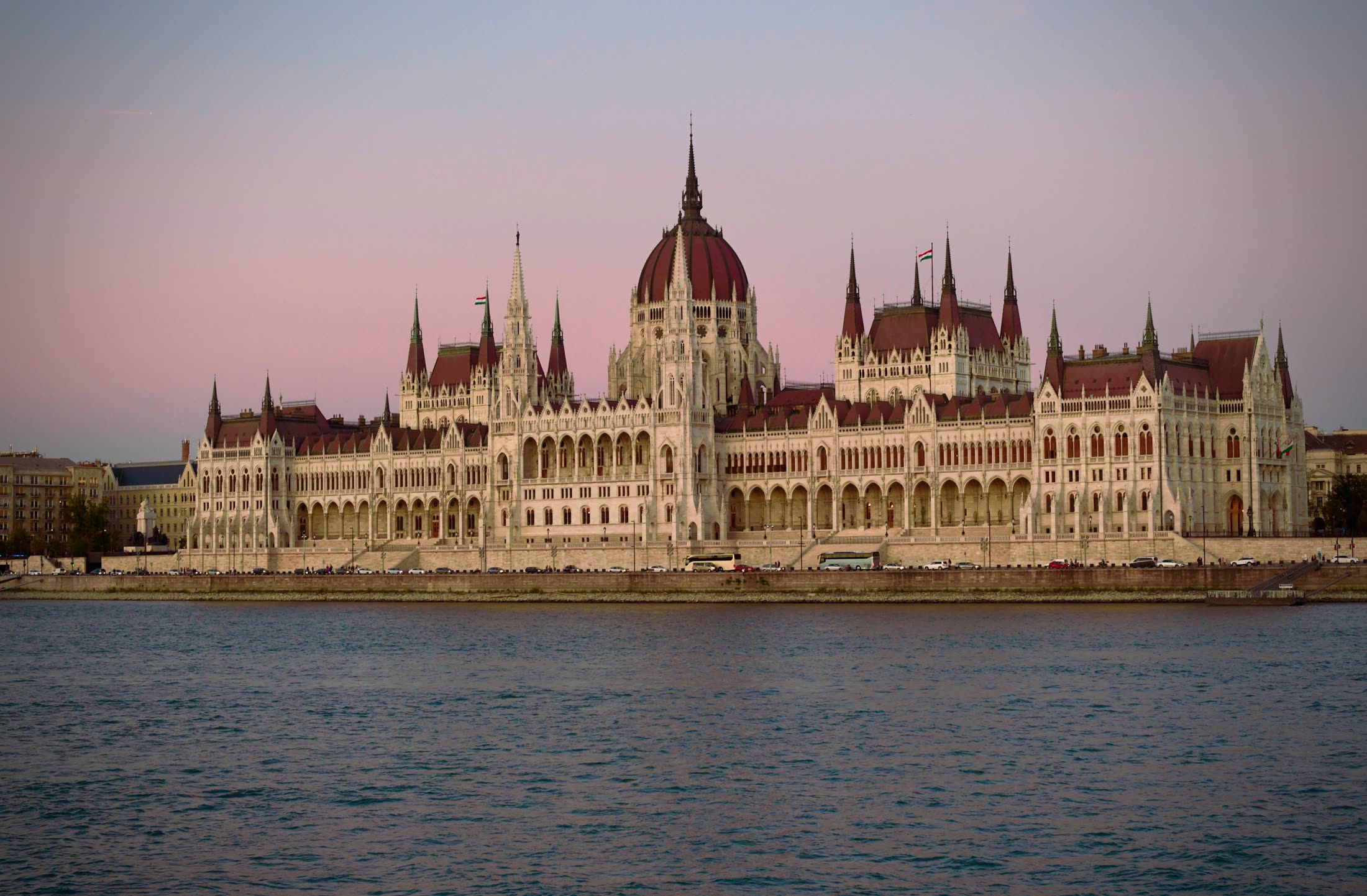
Book the Parliament tour if you want to go inside: the official timed tour is the actual way into the building, one of the few Budapest sights where that holds.
Sight
What to know
Booking
Hungarian Parliament tour
Neo-Gothic riverfront landmark, Europe's third-largest parliament building. The Holy Crown of Saint Stephen is inside. The tour is the only way to see the interior
jegymester.hu (the only official seller). 45-min English tours sell out 1 to 2 weeks ahead in peak. ~9,000 HUF for non-EU visitors. Book before you land. Tours are not refundable and run on time
Széchenyi Thermal Bath
Largest medicinal bath in Europe, neo-baroque yellow building in City Park. The Pest-side mass-scale option, less atmospheric than Gellért but with the outdoor pools that produce the famous winter steam photo. My note from the day: indoor pools had flotsam and were not the highlight, the outdoor pools are great, and the main outdoor pool was closed for renovation on my visit
szechenyibath.hu. ~8,500-12,000 HUF depending on weekday/weekend, all day. The discount tickets before 9 a.m. are the way to go. Cabin (private) costs slightly more than locker
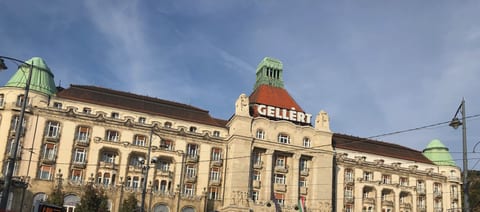
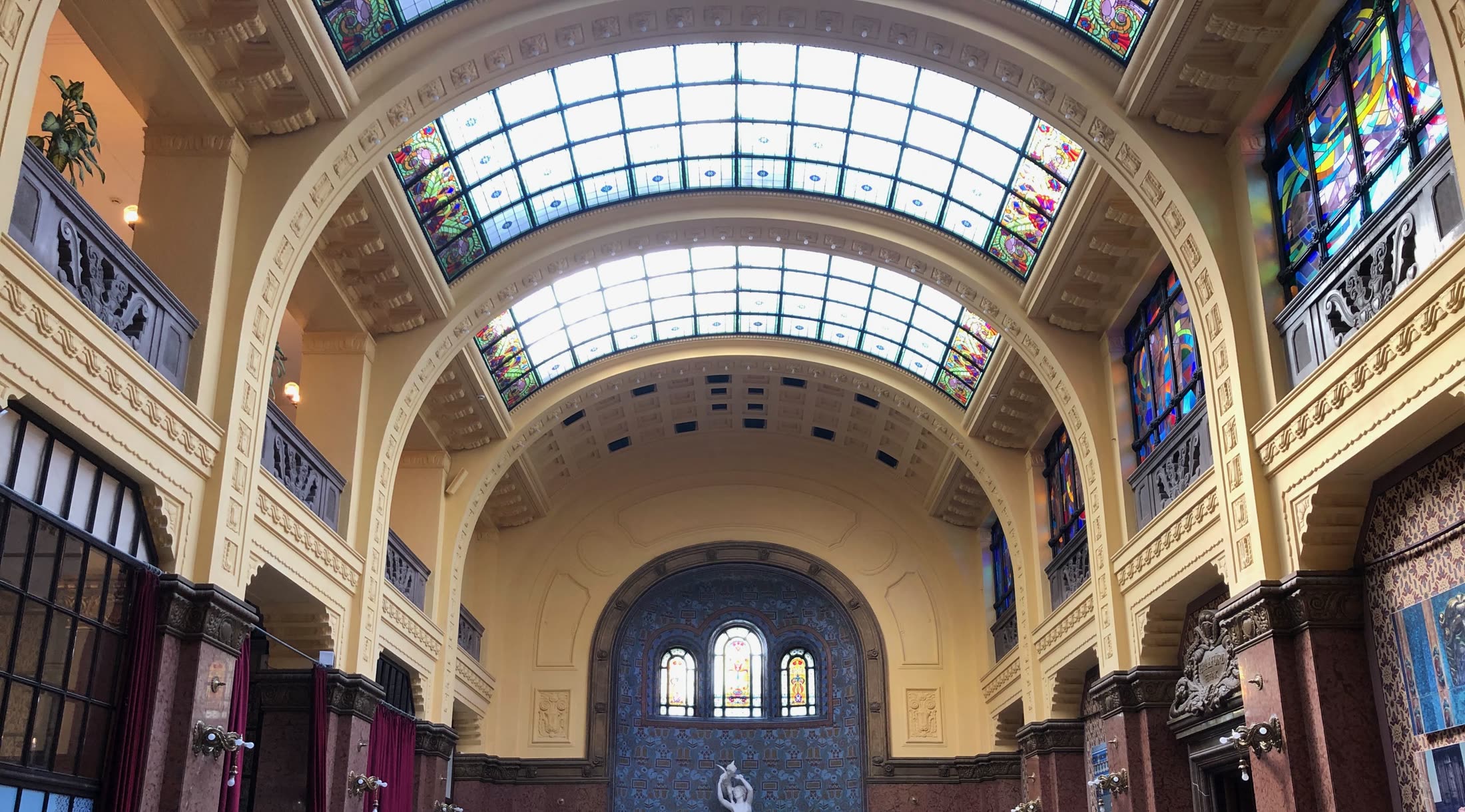
Art Nouveau bath inside the Hotel Gellért, the more photogenic option, and my favorite from past trips
gellertbath.hu. Closed for renovation from October 1, 2025, with planned reopening in 2028. Until then, use Széchenyi, Rudas, Lukács, or Palatinus instead
The 16th-century Ottoman-era bath, octagonal pool under a dome. The most historically interesting
rudasbath.hu. Smaller, cheaper (~5,500-8,000 HUF). Mixed-gender only on weekends. Weekdays alternate single-gender. Check the schedule before booking
St. Stephen's Basilica
The dome climb has the best central-Pest view. The Holy Right Hand of Saint Stephen is in a side chapel. Free entry. The dome and treasury are ticketed
bazilika.biz. ~3,200 HUF for the dome. Walk-up usually fine
Buda Castle + Fisherman's Bastion
Free to walk the grounds and the Bastion terraces (the photogenic white-stone fairy-tale walls overlooking the river). Castle interior houses the Hungarian National Gallery, ticketed separately
The walk is free. Buda Castle Funicular is ~4,500 HUF return. The climb is fine, the funicular is the queue trap
Dohány Street Synagogue
The largest synagogue in Europe and the center of the Jewish Quarter
jewishtourhungary.com. ~10,000 HUF including the Hungarian Jewish Museum and the Holocaust Memorial garden. Book a day or two ahead in peak
The Roman-period archaeological site in Óbuda, the remains of the provincial capital of Pannonia. Off the standard tourist circuit
A bit of a hike to get there, but the extensive collection of artifacts pays it back
The thermal baths are the city's signature. The spa-day cross-list covers the choice between Gellért, Széchenyi, and Rudas in more depth. For 2026 planning, the live choice is Széchenyi for the outdoor steam-and-snow photo, Rudas for the Ottoman dome, Lukács for a more local Buda-side soak, and Palatinus for a Margaret Island pool day. Gellért is the building I love most, but it is a renovation wait-list item until the planned 2028 reopening.
Gellért is the bath I would pick for the building itself: stained glass, tilework, and a calmer scale than Széchenyi's famous outdoor complex. For now, it is a memory-and-reopening-watch pin.
Tour-guide note: the Parliament tour is the rare case where the guide is the only way in. The building isn't a self-walk. The baths are the opposite, no guide needed. The Buda Castle hill walk benefits from a guide if you care about the layered medieval / Ottoman / Habsburg history, but Wikipedia plus a slow walk works fine.
Where to eat
Hungarian food carries the imperial weight: paprika, goulash, slow-braised meats, cured sausage, lángos (the deep-fried flatbread that lives at every market). The restaurant scene has modernized steadily. The picks below mix the casual and the formal.
Great selection of taps. The food is heavy but well prepared. The reason I keep mentioning it: I once mis-tipped a €50 bill thinking it was a smaller one, walked off, and the staff ran after me to give it back. Not the service you assume
Three to four days covers Buda Castle, the Parliament view from across the Danube, the major thermal baths (Széchenyi or Gellért), the Jewish Quarter ruin-bar scene, and a proper meal at one of the historic cafés. A fifth day adds a Szentendre or Eger day trip. The Pest side is denser for food and bars. Buda is quieter and more residential.
Which thermal bath should I pick?
For 2026, pick Széchenyi if you want the famous outdoor bath shot, Rudas if you want the Ottoman dome and rooftop Danube view, or Lukács if you want the more local Buda-side bath. Gellért is my favorite architecturally, but it closed for renovation on October 1, 2025 and is planned to reopen in 2028.
How do I get from Budapest Airport to the center?
Bus 100E runs from BUD direct to Deák Ferenc tér (the central interchange) in 35 to 45 minutes with a special 2,500 HUF airport ticket. The 200E bus + M3 metro combination is cheaper but slower and needs normal BKK ticketing. Taxi or Bolt is the luggage fallback. Avoid the unofficial drivers in arrivals.
Where should I stay in Budapest?
Pest district 5 (Belváros) or 7 (Erzsébetváros, the Jewish Quarter) for first-time visitors. Both are walking distance to most sights and the ruin-bar evening rhythm. Buda district 1 (the castle hill) is the photogenic option but you cross the river for every dinner. Avoid the cluster directly around Keleti station. Convenient on paper, worse street feel.

 +4
+4 +2
+2 +3
+3 +1
+1 +1
+1 +2
+2 +1
+1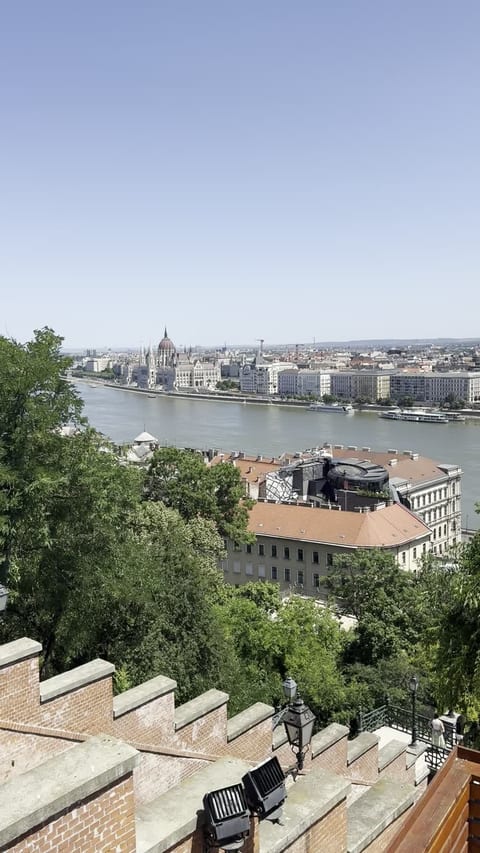
 +2
+2

 +3
+3 +4
+4 +2
+2 +2
+2 +1
+1 +2
+2 +7
+7 +2
+2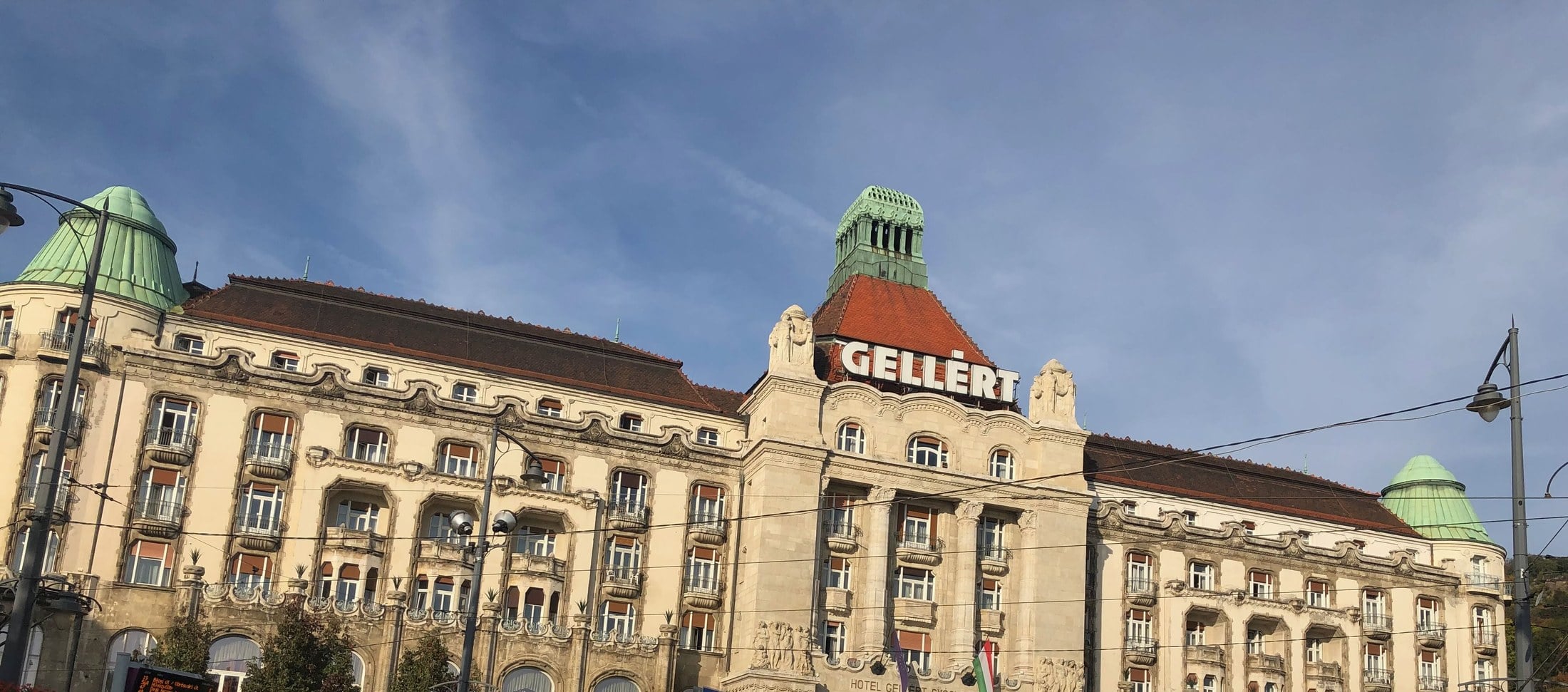





.svg)