Chiang Mai, the slower half of a Thailand trip
My Chiang Mai travel guide. Yi Peng sky lanterns in November, the Old City temples, khao soi, and where to base yourself.
- Updated
- Jul 5, 2026
Current conditions and the practical reference material that helps turn the saved places into a trip.
7-day forecast from Open-Meteo. UV badges flag days when sun protection matters (3 and above is moderate; 8 and above is risk territory for unprotected fair skin within 30 minutes).
About 88% of the year's rain falls in these months. Typical highs around 28°C, lows around 20°C.
About 26mm of rain a month, against 182mm in the wet season.
Public-transit operators within 8 km of the city center. Click through to each operator’s site for routes, fares, and tickets.
Operators and modes are aggregated from individual transit-agency GTFS feeds. Route classifications come from each feed’s route type codes.
Chiang Mai is the largest city in northern Thailand, the capital of Chiang Mai province and the second-largest city in Thailand by urban population. It is 700 km (435 mi) north of Bangkok in a mountainous region called the Thai highlands, and has a population of approximately 127,000 within the city municipality and an urban population of about 1.2 million as of 2023.
The links below support the changing or licensed reference material on this page. Personal notes and ordinary geographic facts are not footnoted individually.
Monthly highs, lows, rainfall — long-term averages, NASA POWER.
Maps, image licenses, and the full dataset registry are listed in site credits.
My Chiang Mai travel guide. Yi Peng sky lanterns in November, the Old City temples, khao soi, and where to base yourself.
เชียงใหม่
Chiang Mai is the calm half of a Thailand trip: where Bangkok is heat and noise, this is temples and a long lunch, with the mountains starting at the edge of town. The old city, mountain routes, and elephant refuges require separate transport plans.
Planning brief
Chiang Mai is the calm half of a Thailand trip. The pace is slow, the northern Thai food is a cuisine of its own, the temples sit close together in the Old City, and the mountains start at the edge of town. Match the base (Old City, Nimman, Riverside) to the day you want, and plan around the spring burn-off haze that can fog the air in March.
Old City for temples and the walking street markets. Nimmanhaemin for cafes, boutiques, and a digital-nomad lean. Riverside for a calmer luxury stay along the Ping. Doi Suthep for mountain access (you need a Grab for most evenings).
Wat Phra That Doi Suthep on the mountain (the photogenic one), Wat Chedi Luang in the Old City, Wat Phra Singh on the same walk. Modest dress required. Sarongs loaned at the gate.
Elephant Nature Park is the credible refuge. Bookings open weeks ahead. Avoid the operations that advertise riding. The sanctuary day is most of a full day with the round-trip drive included.
February is the sweet spot. Late February into early March is dry, sunny, and the air is clear. By mid-March the agricultural burn-off can drop visibility and air quality. If a March trip is unavoidable, plan around higher-elevation activities.
Chiang Mai International (CNX) sits about 5 km southwest of the old city walls. The ride into town is short enough that the option you pick matters less than it does for most airports. Even the cheapest moves get you to the moat in twenty minutes.
| Mode | Time | Cost | When to use |
|---|---|---|---|
| Grab | 10 to 20 min | 120 to 200 THB to most of the old city or the Nimman area | The default with luggage. Pickup is a marked rideshare lot a short walk from arrivals. The app shows the bay number |
| Airport taxi from the rank | 10 to 20 min | 150 THB flat fare to most of central Chiang Mai | Useful when Grab is surging or the app is glitching. Queue at the marked counter inside arrivals. You pay the desk and they hand you a slip for the driver |
| Songthaew (red truck) | 15 to 30 min | 40 to 80 THB per person, shared | A casual local option if you are traveling light and not in a hurry. Drivers wait outside arrivals. Agree the price before you load luggage |
Grab is the simple default. The rank taxi is good as the backup when the app surges in evenings or on weekends. The songthaew is the local way. Useful if you are traveling with a backpack and have time, less so on a midnight arrival with a suitcase.
| Window | Months | What to expect |
|---|---|---|
| Cool and dry | November to February | The best window. Mornings 15 to 20°C, days 30 to 35°C, low humidity. Peak season. Book hotels early |
| Hot and hazy | March | Days 30 to 35°C but agricultural burn-off can drop air quality and visibility. February-side is fine. Late March is risky |
| Hot and dry | April | The hottest month. Songkran (water-throwing new year) takes over mid-month. Loud, wet, fun if you came for it |
| Hot and wet | May to October | Afternoon thunderstorms most days. Rarely all-day rain. Hotels at their cheapest, less crowded |
The single best week of the year is the last week of February, give or take.
Chiang Mai's calendar is mostly Yi Peng and Songkran. Both can make the city full, loud, and expensive.
| Event | When | What it changes |
|---|---|---|
| Yi Peng | Early to mid-November | Sky lanterns plus Loy Krathong water offerings. Hotels and legal mass-release tickets sell months ahead |
| Loy Krathong | Same nights as Yi Peng | Krathong offerings on the Ping River and old-city moat |
| Songkran | April 13 to 15 | Old-city moat water fights, louder and wetter than Bangkok |
| Flower Festival | First weekend of February | Flower floats and a smaller local parade through the old city |
| Design Week | Early December | Craft, workshops, ceramics, and contemporary Lanna design around Nimman and the old city |
| Chinese New Year | Late January or February | Warorot Market and Wichayanon Road get the local version |
For Yi Peng, use a legal release event outside the center. Airport safety rules change year to year, and releasing a lantern from a hotel balcony is not the plan.
Chiang Mai has four real neighborhoods, each with a distinct rhythm:
| Area | Why pick it | Trade-off |
|---|---|---|
| Old City (Centro Histórico) | The walled core. Temples within five minutes' walk. Both walking-street markets (Sunday, Saturday) start here | Loud near the markets on weekends. Some street noise |
| Nimmanhaemin (Nimman) | Cafe and boutique density. The digital-nomad neighborhood. Best for cafe mornings and a younger crowd | Fewer temples. More traffic |
| Riverside | The calmer luxury option along the Ping river. Boutique hotels, garden settings | Further from the temple cluster. You Grab into town for evenings |
| Doi Suthep area | Quietest, mountain quiet, easy temple access | You Grab to anywhere with food density. No walking neighborhood at your door |
For most first-time visitors the Old City is the default. The temples and the walking streets are on foot, and you can take a Grab into Nimman for a cafe afternoon and back in fifteen minutes. Astra Suites Central is a reasonable mid-tier option inside the walls.
The three temples that anchor a Chiang Mai day:
| Temple | Where | Why |
|---|---|---|
| Wat Chedi Luang | Old City | The 14th-century chedi at the center of the walled city. One of the most photographed ruined-stupa silhouettes in northern Thailand |
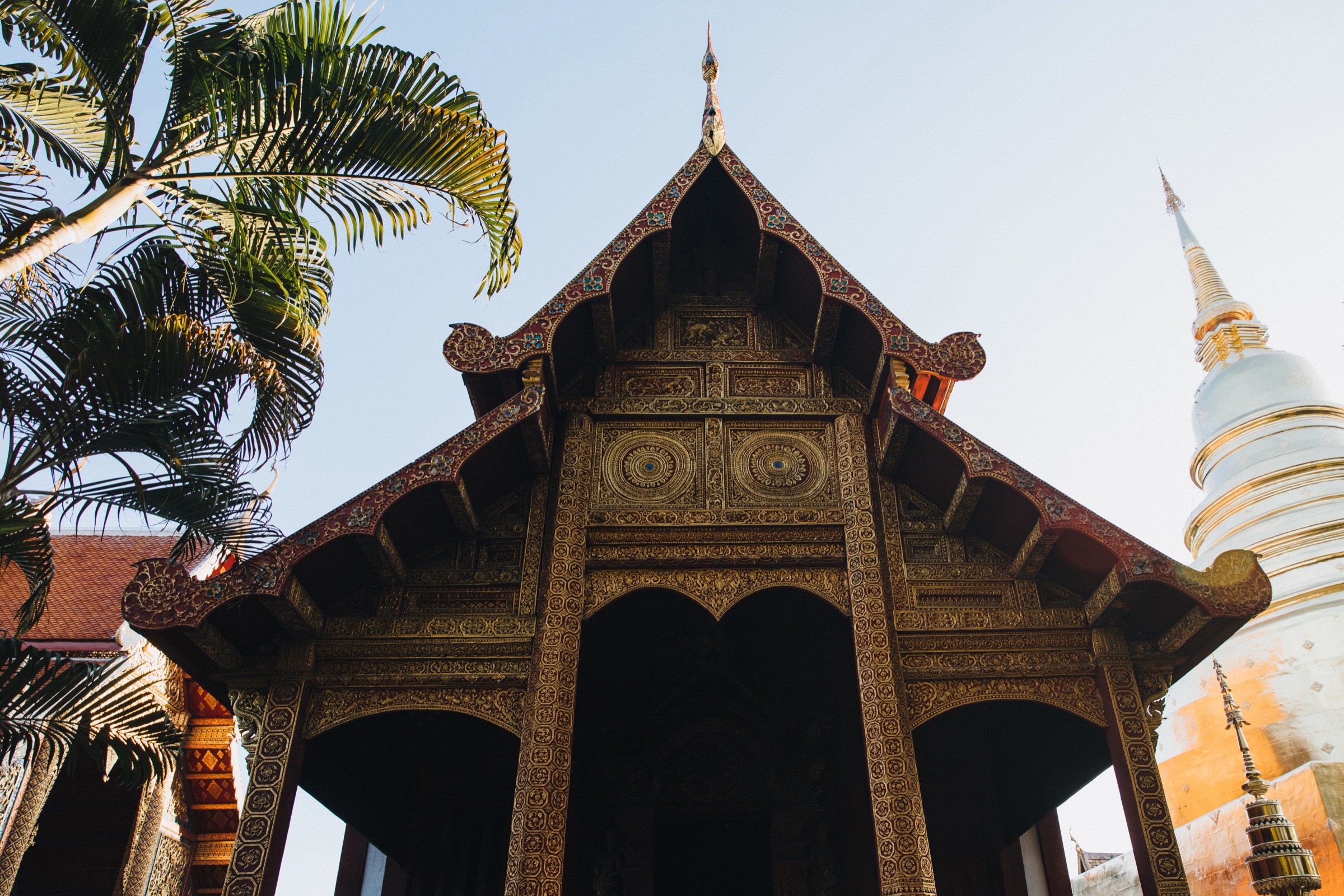
| Wat Phra Singh | Old City | Lanna-style architecture, central naga staircases, the calm one to spend an hour at |
| Wat Phra That Doi Suthep | Mountain summit, 15 km west of the city | The main temple. 309 stair-step naga staircase up. Best in early morning before the haze and tour buses. Grab one-way is about 200 to 300 baht |
Modest dress is required at all three. Shorts and tank tops will get you turned away or handed a loaner sarong. Bring a thin layer if you visit Doi Suthep in winter. The summit can be 5 to 10°C cooler than the city.
For a quieter alternative once the headlines are done, walk the smaller wats scattered through the Old City: Wat Sri Suphan (the silver temple), Wat Lok Moli, Wat Suan Dok. Each is a 15-minute stop.
Elephant Nature Park is the ethical anchor of any Chiang Mai trip. It is a rescue refuge an hour north of the city. No riding, no staged shows, focused on the animals. Half-day, full-day, and overnight options. Full-day is the right balance for the round-trip drive. Book one to two weeks ahead. The visit count is capped daily.
The skip: any tour that markets elephant riding or staged photo shows. The training process for those uses (locally called phajaan, the "crush") is widely documented and inhumane. Read the operator's website carefully. If it advertises rides, book somewhere else.
Doi Inthanon National Park is the half-day trip up the mountain, about 90 minutes by car west of the city. The summit (the highest point in Thailand at 2,565 m) has the royal-pagoda viewpoint, walking trails through cloud forest, and a couple of waterfalls along the road up. Best as a hired-driver day rather than a self-drive. The road is narrow and steep.
Sticky Waterfalls (Bua Tong) is the unusual one: limestone deposits make the rock surface grippy, and you can climb up the falls in bare feet. About 90 minutes northeast of the city. A half-day trip with a driver.
Chiang Mai's signature dish is khao soi, a creamy northern-Thai curry noodle with both soft and crispy egg noodles. Eat it at least once at a small shop, not at the airport.
| Spot | Best for | Notes |
|---|---|---|
| Khao Soi Arak | Khao soi (the dish) | Small and fast, and the queue moves. Around 60 to 80 baht a bowl |
| Barnakarn Kitchen | Tam sang (made-to-order) | Local-neighborhood Thai, point at what looks good. Cash. Expect 60 to 120 baht a plate |
| The House by Ginger | A nicer dinner | Garden room, refined Thai, the place for one slower evening |
| Pad Thai Por Kong | Pad thai, properly cooked | Cheap, fast, the version of pad thai that explains why the dish is famous |
| Lok Lok CNX | Skewers, beer, casual | Easy late-evening skewers with beer |
| Grazie Thai | Wan ton noodle | Small, family-run, fair price |
For coffee, Nimmanhaemin is the right neighborhood. Most of the city's third-wave shops are within a few blocks of each other on Nimman Soi 7 and the surrounding sois.
Put these two walking-street markets on the calendar:
For groceries and produce, Warorot Market is the working day market locals shop at. Good for sticky rice, jackfruit, dried snacks, and a glimpse of the food chain.
The Chiang Mai Night Bazaar is the every-night version near the river. More souvenir-driven than the walking streets but useful if you missed the weekend market.
A cooking class is the easy bonus afternoon: book one for the second or third day, after you have tried enough Thai food to know what you want to make. Most schools include a Warorot market visit at the start.
Companion pages on places and themes that overlap with this list.

