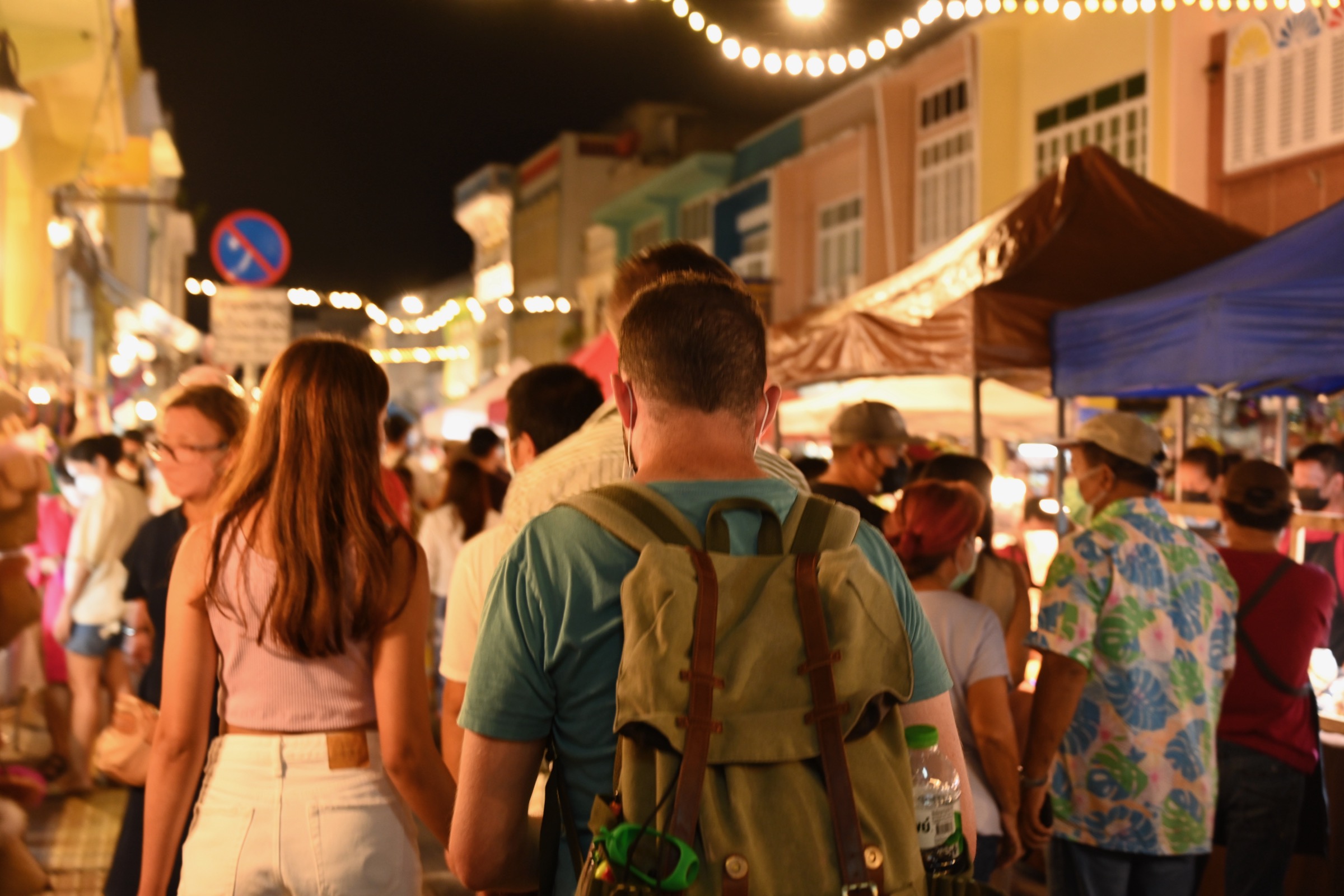
For a first Thailand trip, I would resist the urge to see the country evenly. I would give Bangkok enough time to know your way around, see at least one of the Islands, and then spend a few more days on the beach.
Thailand is one of those places that can seem overwhelming if you've only visited western European or North American countries. The truth is, it's actually one of the easier places to navigate with a bit of background knowledge. There's 0 need to pay a travel agency to plan the trip for you.
A practical first Thailand route
First, go for at least ten to fourteen days. In most cases, you will start with Bangkok by necesity as most long haul flights land here. Next, if you want to do this on easy mode: choose either Chiang Mai or Khao Yai, then an option between Phuket or Koh Samui. That gives you city, culture or nature, and beach without turning the trip into a transfer puzzle.
| Stop | Why I would include it | How long |
|---|---|---|
| Bangkok | Temples, river ferries, street food, markets, transit that actually works | 2 to 4 days |
| Khao Yai | National park, vineyards, cooler mornings, birdlife and wildlife | 2 to 3 days |
| Chiang Mai | Northern temples, markets, khao soi, slower city days | 4 to 7 days |
| Phuket | Practical big beach island, many hotel styles, direct flights | 3 to 5 days |
| Koh Samui | Quieter beach week, resort rhythm, less urge to keep moving | 3 to 5 days |
I would not do both Phuket and Koh Samui on a short trip. You can, but then the beaches become logistics. Pick the island whose inconvenience you prefer. Phuket is easier to reach and busier. Samui is calmer and often pricier to reach.
The boring details that make the trip easier
Uber does not operate in Thailand. Download Grab before landing instead. Like Uber, Grab handles cars, food delivery, and in some cities motorbike taxis. Paying by card also means you are not trying to count unfamiliar currency in the back of a cab at midnight. Also, one of the small luxuries of Thailand is ordering pad thai for a few dollars at 2am and having it simply appear.
Use ATMs unless your own bank punishes you for it. Money changers often look cleaner than they are once the spread is included. Bring a card that behaves well abroad and withdraw in Thai baht, not your home currency, when the machine asks.
Sort mobile data before you leave the airport. You will want it for Grab, maps, translation, and the usual moment where you are standing outside a terminal trying to identify which driveway your ride is using. An eSIM keeps this simple. Airalo is one option, though prices and plan sizes move around.
Temple clothing is not optional. Shoulders and knees should be covered at major temples and cultural sites. The heat makes this mildly annoying, so pack lightweight layers instead of assuming you will figure it out later. The elephant pants and printed scarves sold around markets are useful in exactly this situation. As a rough local reference, elephant pants are often 100 to 200 THB, about $3 to $6, and simple scarves are often 90 to 150 THB, about $3 to $5. Check the seams, the edge finishing, the thickness of the fabric, and the zipper if there is one. A bad zipper usually tells you everything.
Bangkok is easier if you stop fighting it
Bangkok is usually the entry point, and I think it deserves a few days even if the beach is the emotional reason for the trip. Do not try to cross it casually by car. Use the BTS Skytrain, the MRT subway, the Chao Phraya river ferries, and Grab. If you take a metered taxi, make sure the meter starts. A negotiated flat fare is rarely your friend.
I would stay in Sukhumvit, Silom, or Riverside depending on the trip. Sukhumvit is convenient and international, with hotels, malls, bars, and BTS access. It is not the most distinctive version of Bangkok, but it works. Silom is a good compromise, with business-district order, markets, bars, and Lumpini Park. Riverside is calmer, better for ferries and the old-city temples, and usually more expensive. Khao San Road is backpacker Bangkok. That is useful information, not an insult. Stay there only if that is the trip you want.
For the main old-city temples, start with Wat Phra Kaew and the Grand Palace, add Wat Pho for the reclining Buddha and the massage school, and cross the river to Wat Arun. The river matters here. It is one of the ways Bangkok becomes easier to understand, because the older ceremonial city sits close to the water.
For markets, I would choose based on purpose. Chatuchak is the large weekend shopping market. Chinatown is where I would go hungry. The floating markets outside the city can be visually interesting, but many are now visitor circuits rather than ordinary markets. That does not make them worthless. It just means I would treat them as a staged day out, not as a window into normal shopping.
February and March are warm and mostly dry in Bangkok. Highs around 30 to 35°C are normal, and the humidity makes the afternoon feel heavier than the number suggests. This is the city where scheduling less can make the day better.
Khao Yai is the nature break from Bangkok
Khao Yai makes sense when Bangkok has been enough and you want trees, hills, animals, and cooler mornings. The national park is about three hours from Bangkok by road, with Pak Chong as the practical gateway. You can get to Pak Chong by train or bus, but once you are there, public transit stops being the solution. Hire a driver, join a tour, rent a car, or rent a scooter only if your license and insurance actually cover it.
The park is the point. Haew Narok is the tallest waterfall in the park. Haew Suwat is the one many visitors know from The Beach. Morning and evening are better for wildlife. Elephants are possible, not guaranteed. Deer, gibbons, hornbills, and other birdlife are more realistic expectations. Trails range from short walks to longer hikes, so this does not need to become an endurance trip.
Outside the park, PB Valley and GranMonte are the better-known wineries. I would treat them as a pleasant half-day rather than a reason to build the whole itinerary around the area. Chokchai Farm, Palio Khao Yai, and the viewpoints are useful filler if you have a driver and time between park visits.
February and March are warm and dry here, with cooler mornings. Waterfalls may be thinner than in the rainy season, but the roads and trails are easier to manage.
Chiang Mai is the better city when the air is good
Chiang Mai is the part of this itinerary where I would slow down. A few days is fine, but a week makes more sense if you like markets, temples, cafes, and not changing hotels every other morning. The Old City is easy to walk, and the moat gives the center a clear shape, which matters after Bangkok's scale.
Start with Wat Phra That Doi Suthep on the mountain, Wat Chedi Luang in the Old City, and Wat Phra Singh for Lanna architecture. Lanna refers to the historical northern Thai kingdom, and the difference matters visually: rooflines, woodwork, ornament, and temple layouts do not feel like Bangkok copied northward.
Food is a good reason to stay longer. Try khao soi early in the trip so you have time to eat it again. Warorot Market is the everyday market. The Sunday Walking Street is the easier visitor-facing version. Nimmanhaemin is better for cafes and work time than for old-city atmosphere, which is not a criticism. Sometimes you need a quiet table and an iced coffee more than another temple.
The problem is smoke season. Late February, March, and often April can bring bad air from agricultural and forest burning across northern Thailand and nearby countries. This is not a small aesthetic issue. In a bad week, views disappear and outdoor plans stop making sense. If Chiang Mai is the reason for the trip, I would rather go November through January or after the rains begin.
Phuket and Samui are not interchangeable
Phuket is the practical island. It has the airport, the hotel range, the tour infrastructure, and the bluntest version of beach tourism. Patong is nightlife and crowds. Kata and Karon are calmer and easier for families or beginner surfers. Kamala is quieter. Bang Tao is more resort-driven. Phuket Town is the choice if you care more about Sino-Portuguese streets, cafes, and markets than sleeping on the sand.
The good day trips are obvious because everyone else also knows them: Phi Phi Islands, Phang Nga Bay, James Bond Island. They are crowded, but the limestone scenery still explains the boats. On the island itself, Big Buddha, Wat Chalong, Old Phuket Town, Promthep Cape, and the night markets are the practical set of stops.
The annoyance is transport. Taxis and tuk-tuks cost more than they should. Grab helps, but it does not magically make the island cheap to cross. A scooter gives freedom and risk in the same package. Do not rent one unless you are legal, insured, and honest about your comfort level.
Koh Samui is the quieter beach choice, though not always the cheaper one. The airport is small and pleasant, and Bangkok Airways controls much of the route, which keeps flights expensive. Chaweng is the busy beach. Lamai is quieter without being empty. Bophut and Fisherman's Village are good for food and families. Choeng Mon is calmer and more resort-oriented.
On Samui, I would not overbuild the itinerary. Wat Phra Yai, Wat Plai Laem, Ang Thong Marine National Park, Namuang Waterfall, and the Secret Buddha Garden are enough if you need movement. The better reason to be there is often a slow beach day, a pool, and dinner close to the hotel.
For February and March, both Phuket and Samui can work well. Phuket and the Andaman coast are in their dry, calmer-sea window. Samui is also usually good then. The question is less about temperature, which will be warm either way, and more about rain, water conditions, and how much island transport you want to negotiate.
What I would skip or handle carefully
I would not build a trip around tuk-tuks. Take one once if you want to, agree on the price first, and then use better transport.
I'm not big on elephant sanctuaries. Some are serious rescue operations. Some have learned the vocabulary of ethical tourism without changing enough of the underlying practice. If you must... any "sanctuary" that offers riding, bathing shows, or lots of contact is not really a santuary.
I would not schedule Chiang Mai in March without checking air quality. Cheap rooms are not useful if you spend the week inside.
I would also avoid making Thailand too tidy in the itinerary. Good days often come from doing fewer things: one temple, one ferry, one market, one meal that takes longer than planned. That sounds obvious from home. It becomes harder to remember once every guide is telling you to add three more stops.