Photos from Ko Samui

Chor Chang Villa Resorthotel
Current conditions and the practical reference material that helps turn the saved places into a trip.
7-day forecast from Open-Meteo. UV badges flag days when sun protection matters (3 and above is moderate; 8 and above is risk territory for unprotected fair skin within 30 minutes).
About 51% of the year's rain falls in these months. Typical highs around 28°C, lows around 27°C.
About 128mm of rain a month, against 266mm in the wet season.
Public-transit operators within 8 km of the city center. Click through to each operator’s site for routes, fares, and tickets.
Ko Samui or Koh Samui, often locally shortened to Samui, is an island off the east coast of Thailand. Geographically in the Chumphon Archipelago, it is part of Surat Thani Province, though as of 2012, Ko Samui was granted municipal status and thus is now locally self-governing. Ko Samui, with an area of 228.7 square kilometres (88.3 sq mi), is Thailand's second largest island after Phuket. In 2018, it was visited by 2.7 million tourists.
The links below support the changing or licensed reference material on this page. Personal notes and ordinary geographic facts are not footnoted individually.
Monthly highs, lows, rainfall — long-term averages, NASA POWER.
Operators and modes are aggregated from individual transit-agency GTFS feeds. Route classifications come from each feed’s route type codes.
Maps, image licenses, and the full dataset registry are listed in site credits.
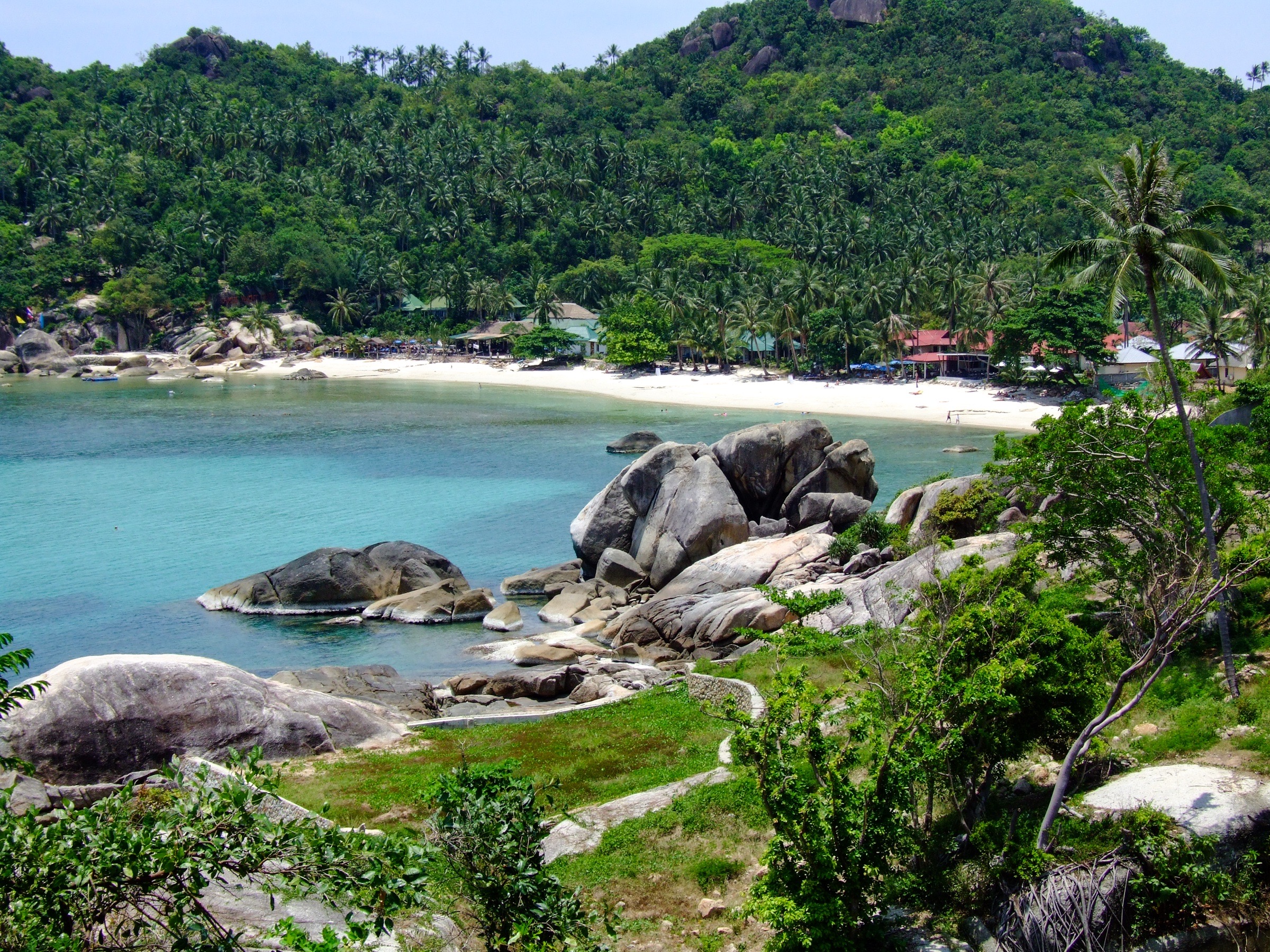
My Koh Samui travel guide. Choosing between Chaweng, Lamai, Bophut, and Choeng Mon, the beach clubs, the temples and viewpoints, and what to skip.
Koh Samui is the Thai island I'd go back to first when I want the trip to be simple. It is not the cheapest or the most off-grid, but it does logistics well: easy airport, good hotels, beach clubs, temples, and distinct bases around the island.
Planning brief
Koh Samui is the Thai island I would return to first when I want the trip to work without effort. The main decision is which beach you base on, since the island is a single ring road. Chaweng for choice, Lamai for slower, Bophut for food, Choeng Mon for quiet. Fly via Bangkok unless you really want to ferry.
There are no long-haul direct flights to Samui. Connect in Bangkok and fly Bangkok Airways into Koh Samui Airport (USM). They own the airport, run the most frequencies, and tend to be punctual. Bangkok is the usual connection on the way in or out.
Chaweng is the big, social, family-and-backpacker beach. Lamai is the same idea, slightly older crowd, slightly quieter. Bophut around Fisherman's Village is the food base. Choeng Mon is the small, upscale, work-from-island base.
Samui has limited brand range. Specific Western brands, craft beer selection, and specialty hair products are all easier to find in Bangkok. A quick MBK/Siam run on the way through is the answer.
Local taxis and Grab cost roughly the same. ~300 ฿ between adjacent beaches, which lands at $20 round-trip on a day out. Motorbike rental is about the same per day. A license is legally required to ride. Check what your insurance covers.
The airport in Samui is a small regional. No jet bridges (you ride a cart in), no international long-haul. You connect via Bangkok or fly low-cost into Surat Thani and ferry across.
| Route | Time | Cost | Notes |
|---|---|---|---|
| Long-haul → BKK → Bangkok Airways USM | ~24 hours from US/EU | Premium-ish on the regional leg | Bangkok Airways owns the airport and runs the most frequencies. Reliably on time |
| Long-haul → BKK → low-cost URT → ferry | Same plus ~4 hours | Cheaper on the regional leg | The ferry route can flip the savings if the wind is bad and they cancel |
While you are in Bangkok, top up on anything you cannot live without. Samui has limited brand range. Specific Western things, craft beer selection, specialty hair products are all easier to find at MBK or one of the Siam malls.
Koh Samui follows the Thai festival calendar, but nearby Koh Phangan full-moon dates affect hotels and ferries.
| Event | When | What it changes |
|---|---|---|
| Full Moon Party | Every full moon | Koh Phangan party dates can fill Samui hotels and extend ferry hours |
| Half Moon Festival | Every half moon | Smaller Ban Tai party with lighter hotel pressure |
| Songkran | April 13 to 15 | Water fights around Chaweng and Lamai |
| Loy Krathong | Early to mid-November | Krathong offerings from beaches and hotel fronts |
| Samui Regatta | Late May or early June | Yacht regatta out of Chaweng. Nearby hotels fill |
| Chinese New Year | Late January or February | Lion dances and fireworks around Maenam |
| Christmas and New Year | December 20 to January 5 | Most expensive hotel window, with NYE fireworks over Chaweng |
| Vegetarian Festival | Late September or early October | Yellow-flag vegetarian food stalls, smaller than Phuket |
The island is a ring road. You will sleep on one beach and visit the others.
| Beach | Crowd | Best for | Trade-off |
|---|---|---|---|
| Chaweng Beach | Backpackers, families, honeymooners. The biggest mix | First-timers. Choice in hotels, food, beach clubs, jet ski, nightlife | The most crowded. Faces east, so sunrise yes, sunset no. Close to the airport, planes overhead |
| Lamai Beach | Slightly older, slightly slower | Same idea as Chaweng without the volume | Still busy. Same eastern sunrise/no-sunset situation |
| Bophut / Fisherman's Village | Mature travelers, families | The strongest food base on the island. Holiday Inn Resort sits here | Neither sunrise nor sunset views are optimal |
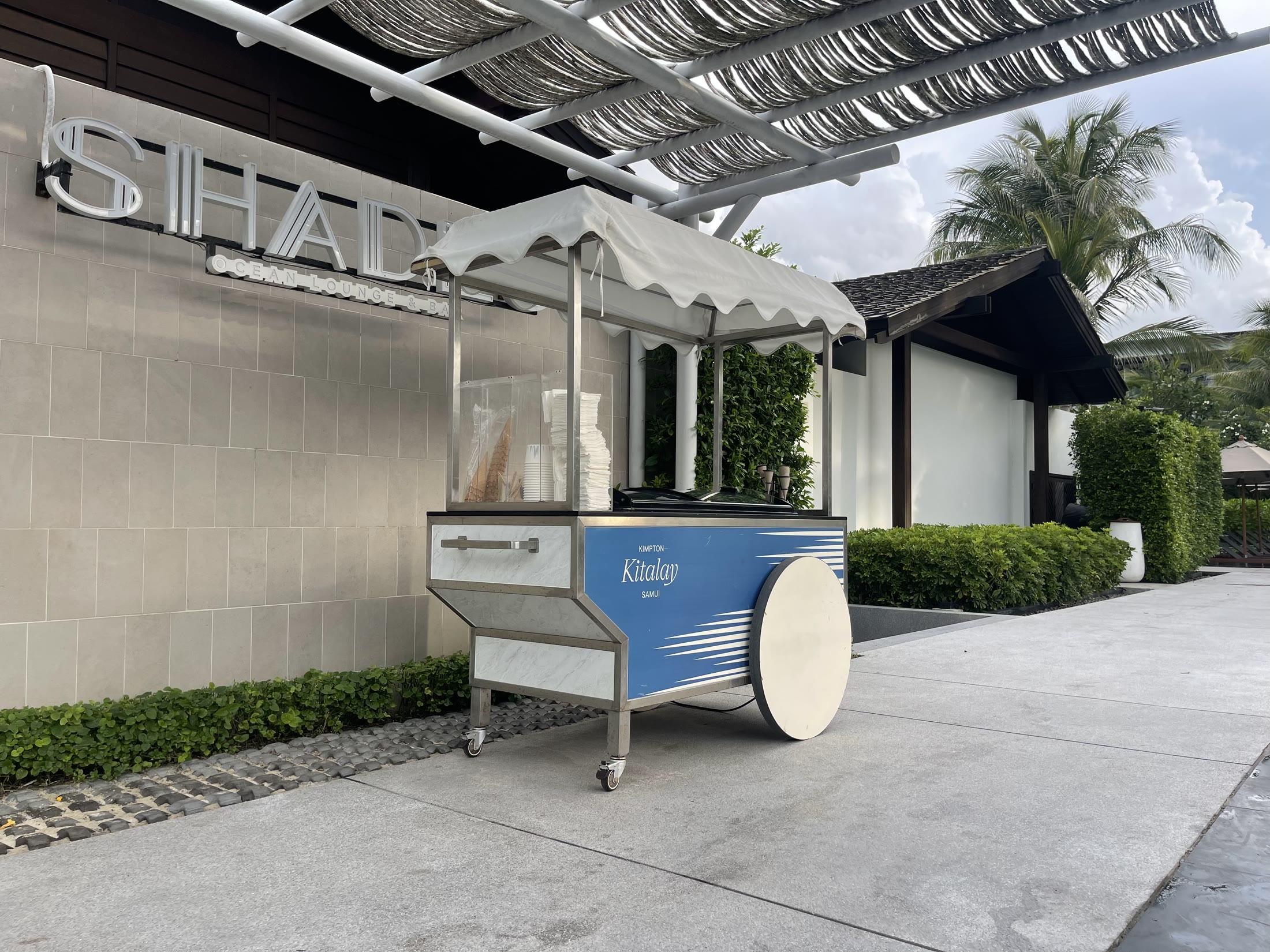
| Choeng Mon Beach | Upscale, honeymooners, remote workers | Quiet, small bays. Six Senses, Vana Belle (Luxury Collection), and Kimpton Kitalay sit on this side of the island at $200+ a night | Limited nightlife. Some people find it too quiet |
The basic rule: the east side gets the planes and the sunrise, the north has the airport and the easiest food rhythm, the south and west are quieter but harder to range from.
For a budget anchor with real space, Chor Chang Villa Resort is close enough to the beach to walk, with rooms that come in at a fair price for the size. Useful when the resort-on-the-beach budget does not work.
Local taxis and Grab cost roughly the same, with Grab being the easier card-payment option. Plan on roughly 300 ฿ to go between adjacent towns, which lands at about $20 round-trip on a day out. A scooter rents for about the same per day. Many hotels include a free airport shuttle on arrival. Ask before you book a transfer.
If you rent a scooter, a motorcycle license is legally required and increasingly checked, and most rental shops will hold your passport or take a large cash deposit.
A half-day circuit on the northeastern corner of the island.
| Stop | Why |
|---|---|
| The Big Buddha / Wat Phra Yai | A 12 m gilded Buddha at the northern tip. Photogenic, quick. Free, dress to cover knees and shoulders |
| Wat Plai Laem | A short drive from Big Buddha. 18-armed Guanyin statue and a laughing Buddha across a lake. Thai-Chinese fusion architecture |
| Hin Ta Hin Yai (Grandfather/Grandmother rocks) | Natural rock formations on the south coast. Brief, slightly silly, between Lamai and the south end |
A morning covers all three plus coffee. Bring covered legs and shoulders for the temples.
| Sight | Effort | Notes |
|---|---|---|
| Mu Ko Ang Thong National Marine Park | Day boat trip from Nathon or Bophut Pier | 42 islands of limestone, hidden lagoons, white-sand beaches. The flagship day-trip from Samui |
| Secret Buddha Garden (Magic Garden) | Half-day, hill drive | Hidden hilltop sculpture garden by a local fruit farmer. Quirky, quiet, photogenic |
| Namuang Waterfall | Half-day | Two-stage falls in the center of the island. First is easy, second needs a moderate hike |
| The Cocoon / Samui Viewpoint and Jungle Club | Half-day, hill drive | Cliff-side bar/restaurants with wide inland views. Sunset-timed if you can |
The Samui beach club scene has grown sharply. Pricing is European (€10 to €15 for a cocktail at the marquee names), but day-bed minimums are usually F&B credit you can actually use.
| Spot | Where | Notes |
|---|---|---|
| SEEN Beach Club Samui | Maenam | The polished, design-led one. Sunsets |
| Coco Tam's | Bophut | Lower-key, beanbags on the sand, fire-twirlers at sunset |
| Elephant Beach Club | Lipa Noi (west coast) | Fast wifi, big portions, floating cushions in the water, a real pool. Day-club energy with the sunsets |
| Mira Serene | West coast | The beach-shack done right. Relax, order big, the view is the cover charge |
| Nahm | South coast | Make reservations. Even arriving early without one, the better tables are gone. Prices run high for Thailand, fair for Samui. Sunsets when the weather cooperates |
| Night Market Fishermans Village | Bophut, Friday nights | Street food, locally cheap, the right pick for a cheap dinner |
| Crab Shack | Maenam | Beach-front seafood, casual, lobster and crab at honest prices |
| Tops Food Hall Central Samui | Chaweng | Air-conditioned market with a good sushi counter, cheap takeaway |
The "floating market" excursions are mainland-Thailand sales, not Samui ones. Sea Walker tours (helmet on the seabed) photograph well but feel staged. The "tiger temple" attractions are not what they appear to be. They have been shut down repeatedly on welfare grounds and should not be on a 2026 itinerary.
Companion pages on places and themes that overlap with this list.
