Photos from Montevideo
 +3
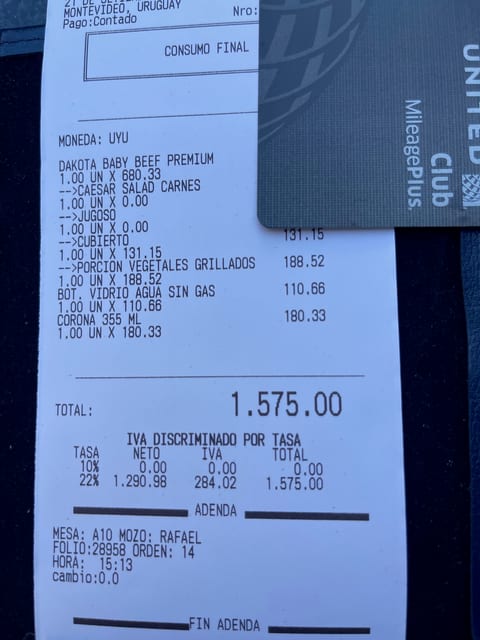
+3Dakota SteakHouse & Barrestaurant
 +2
+2Coa Vietrestaurant

Sometimes Sundayrestaurant
 +1
+1Mercado Willimanrestaurant
 +2
+2Mercado del Puertorestaurant

Teatro Solísattraction
+3+2+1+2Current conditions and the practical reference material that helps turn the saved places into a trip.
7-day forecast from Open-Meteo. UV badges flag days when sun protection matters (3 and above is moderate; 8 and above is risk territory for unprotected fair skin within 30 minutes).
Typical highs around 25°C, lows around 19°C.
Typical highs around 14°C, lows around 9°C.
Public holidays from Nager.Date.
Montevideo is the capital and largest city of Uruguay. As of the 2023 census, the city proper has a population of 1,287,452, making up about 36.8% of the country's total population, in an area of 201 square kilometers (78 sq mi). Montevideo is situated on the southern coast of the country, on the northeastern bank of the Río de la Plata.
The links below support the changing or licensed reference material on this page. Personal notes and ordinary geographic facts are not footnoted individually.
Monthly highs, lows, rainfall — long-term averages, NASA POWER.
Maps, image licenses, and the full dataset registry are listed in site credits.
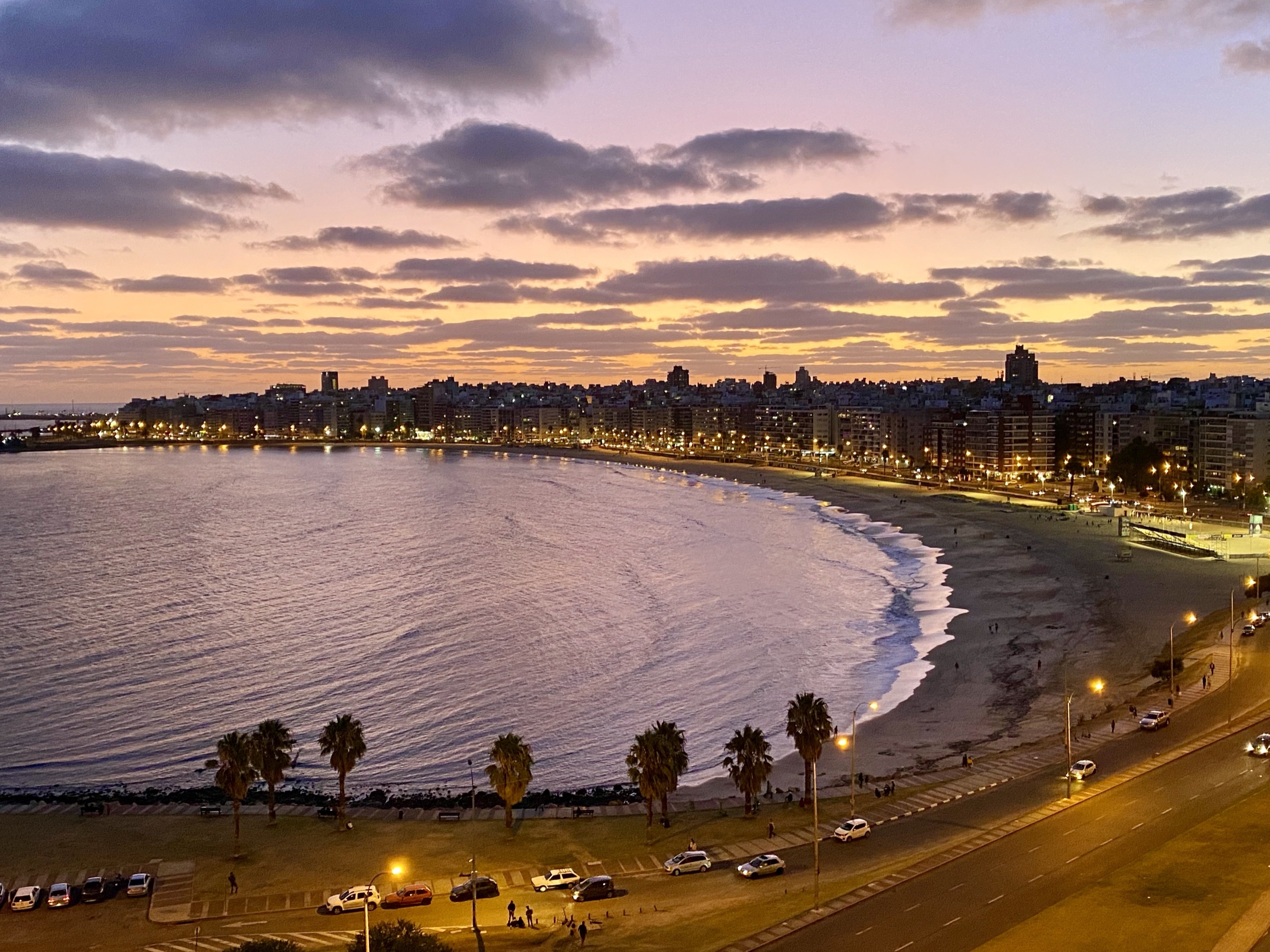
My Montevideo travel guide: the Buquebus ferry, Rambla walks, Mercado del Puerto asado, realistic prices, and where to stay in Punta Carretas or Pocitos.
Montevideo is the easy add-on to a Buenos Aires trip, 2.5 hours across the river by ferry into Uruguay, customs cleared at the terminal. But it is not a city I would attack with a checklist. Montevideo is laid back by design: an asado lunch, a long walk on the Rambla, a sunset over Punta Carretas, a beer somewhere with the river air doing half the work.
Uruguay is a relatively small country, so the capital is kind of it in terms of the big-city layer: the better hotel choices, the widest restaurant range, the government and business gravity, the main cultural calendar. Even then, Montevideo feels calmer and more independent than chain-driven capitals. You will find more small shops, local restaurants, parrillas, bakeries, and bars than big international everything. Just do not expect bargain-Latin-America prices. A lot of the city feels closer to Spain than to cheaper regional neighbors.
Planning brief
Montevideo is the easy add-on to a Buenos Aires trip, but it is not a bargain checklist capital. Come for the laid-back pace: the Buquebus, a slow asado lunch, long Rambla walks, independent restaurants and shops, and sunsets over the Rio de la Plata.
From Puerto Madero in Buenos Aires to the Port of Montevideo in 2.5 hours, customs pre-cleared on the Argentine side. First-class is only 20 to 30% more and gets you bigger chairs and the better view. The terminal lets you out next to Ciudad Vieja, so you walk into town.
The Rambla is one of the main things to do in Montevideo. Build in time to walk the waterfront, sit with a beer, and let the day stay loose. Montevideo works better when you stop trying to make it perform like Buenos Aires.
Aloft in Punta Carretas is a useful option if you are a Marriott Bonvoy member: great location, okay rooms, and high-floor sunsets, but still basic in the way Alofts are. Hyatt Centric near Pocitos feels more like a four-star stay than a three, though business logistics were disorganized for me.
Uruguay is small, and Montevideo is where most of the country's capital-city options collect. Prices often feel closer to Spain than to cheaper Latin American destinations. The city is calmer, with more independent restaurants and shops than chain sprawl.
The Buquebus ferry is how to come. It leaves from the Terminal Buquebus in Puerto Madero, downtown Buenos Aires. Customs is faster and gentler than any airport, and Argentine exit formalities happen at the terminal before boarding, so when you step off the boat in Montevideo you walk straight into town.
| Option | Time | Notes |
|---|---|---|
| Buquebus (ferry) | ~2.5 hours | First-class cabin is 20 to 30% more for bigger chairs and a better window. Pre-clear Argentine customs at the terminal |
| Flight via AEP/EZE | ~1 hour gate-to-gate, more like 4 hours door-to-door | Fastest if you are heading deeper into Uruguay. The airport transfers cancel the time savings for Montevideo alone |
The terminal in Montevideo sits next to Ciudad Vieja and across the street from the Mercado del Puerto. If you only have the day, the asado is right there.

Carrasco International Airport sits about 40 minutes outside the city. Uber works at MVD on paper, but the driver count is thin and most pickups take 15 to 20 minutes. The official airport taxis are clean and pleasant (often a Mercedes E-Class wagon for around $50 to $60 to the center), and that is the option I would default to with bags.
Montevideo's big calendar fact is its long Carnival season, especially the Llamadas nights in February. That fits the city: slow build, neighborhood rhythm, public space, music, and a lot more local texture than big-ticket spectacle.
| Event | When | What it changes |
|---|---|---|
| Carnaval de Montevideo | Late January to early March | Murga performances and candombe events across the city. Hotels tighten around key nights |
| Llamadas | Early February | Two candombe parade nights through Sur and Palermo |
| Día del Patrimonio | First weekend of October | Historic buildings, embassies, and private residences open free |
| Independence Day | August 25 | Civic ceremonies around Plaza Independencia |
| Workers' Day | May 1 | March along 18 de Julio and broad closures |
| Christmas and New Year | December 24 to January 5 | Peak domestic-travel window, though Punta del Este absorbs much of the pressure |
| La Pedrera New Year | December 31 to January 2 | Coastal New Year destination three hours east of Montevideo |
| Montevideo Marathon | Mid-May | Road closures along the Rambla |
| International Film Festival | Late March or April | Film festival across central venues |
Hotel inventory in Montevideo is thinner than you would expect for a capital city. That makes sense once you are there: Uruguay is small, Montevideo is the capital, but this is still a laid-back place rather than a giant business-hotel market. There are chain hotels, just not many of them, so location matters more than finding an ideal loyalty-program property.
The Aloft by Marriott Montevideo Hotel in Punta Carretas is a useful option if you are a Marriott Bonvoy member because of where it is: across from the mall, near restaurants, and easy for Pocitos, Punta Carretas, and the Rambla. I would call it a four-star stay now. The rooms are okay, but basic, which is fair because it is an Aloft. As the nicest Marriott option in Uruguay, though, it is a little underwhelming.

Hyatt Centric Montevideo also lands closer to four stars for me than three. The hotel itself is decent and the Pocitos-side location works. My problem was the work/logistics side: conference-room pricing, setup, and basic equipment took more chasing than they should have.
| Where | Hotel | Why consider it | Trade-off |
|---|---|---|---|
| Punta Carretas | Aloft by Marriott Montevideo | A useful option if you are a Marriott Bonvoy member, near the mall, restaurants, Punta Carretas, Pocitos, and the Rambla. Ask for a high floor for sunsets | Rooms are okay but basic. It is still an Aloft, and a little underwhelming as the top Marriott option in the country |
| Pocitos | Hyatt Centric Montevideo | Better if you want to lean Pocitos or keep Hyatt loyalty in play. Decent normal hotel stay | Business logistics were disorganized for me, especially conference-room setup and coordination |
| Apartments | Anywhere near Punta Carretas, Pocitos, or Parque Rodó | Bigger space, more residential feel, often cheaper for stays of a week or longer | Confirm air conditioning before you book. Many older Uruguayan apartments do not have it |

Right across the street from the ferry terminal in Ciudad Vieja. The front stalls are a tourist trap in the friendly sense: handicrafts, boxes of alfajores (dulce-de-leche sandwich cookies dipped in chocolate, the regional sweet), gringo photos of meat hanging over the parrilla (the wood-fired beef grill that anchors any Uruguayan or Argentine meal). Walk past those and get a table at Don García. The cooking is slow, ordering is ala carte, portions land as they are ready, and two hours is a normal lunch. If you only have the day in Montevideo, the asado plus the walk afterwards is the day.
Alfajores from one of the market shops are a fine present to take home. The labelled ones are usually cheaper than buying the same brand at a tourist boutique elsewhere in town.
The coastline runs the length of the city, broken only by the port and the marinas. The Rambla, the seafront promenade, is the spine of Montevideo, and walking it is not just a thing to do between attractions. It is one of the main reasons to be here.
This is where the laid-back culture makes the most sense: people walking, skating, jogging, sitting with friends, staring at the water, or turning an ordinary evening into a plan without making a big production out of it. The river is brown most of the year (it is the Río de la Plata, not the Caribbean), so think of the beaches as places to walk, sit, and have a beer, not as a swim-first beach destination.
| Beach | Best for | Trade-off |
|---|---|---|
| Playa Pocitos | The famous one. Wide curve of sand, joggers and skaters on the Rambla, easy walk from any Pocitos hotel | The most crowded, especially on summer weekends |
| Playa Ramírez | Closer to Punta Carretas, slightly quieter, easier to find space | Smaller and less photogenic |
If you walk Playa Pocitos far enough, you will hit El Parador, a small surf shack right on the Rambla. Cristian runs it. Tell him Mike sent you, order a Cerveza Zillertal (around $4 a beer), and write off the rest of the evening. Music runs a touch loud, the fresh air and the speed of service carry it.
Uruguayan eating is meat-led, but Montevideo has a better range than the quick stereotypes suggest. The city is more independent than chain-heavy: local parrillas, food halls, cafes, small shops, and neighborhood bars do more of the work than big international brands. Prices are not especially cheap, so choose places because they fit the day, not because you expect them to be a bargain.
| Spot | Best for | Notes |
|---|---|---|
| Don García | The Mercado del Puerto asado | Plan on two hours. Lunch was as good as Mercado del Puerto gets |
| El Parador | A beer on the Rambla at sunset | Cristian is the host. Around $4 a beer, fast service |
| Mercado Ferrando | The food hall choice for a group | The best of the Mercados in town. Big shareable tables, the taco stall and the pizza counters are on point |
| La Perdiz | A proper Punta Carretas parrilla for dinner | Slightly more upscale than the Mercado, older clientele, no port views. Reserve on a Friday or Saturday |
| Uruguay Natural Parrilla Gourmet | A weekend parrilla without the wait | Unlike most Montevideo steakhouses on Saturday and Sunday, this one is not jammed. Enough servers that you do not wait 20 minutes for a check |
| Montevideo Beer Company (MBC) | Local craft beer | Multiple locations. I usually start with the Pocitos one |
Buquebus and Colonia Express connect Buenos Aires with Montevideo across the Río de la Plata. Customs are cleared at the terminal before boarding. Check the last return before booking dinner or an evening event.
Montevideo is the calmer capital on the Río de la Plata: smaller than Buenos Aires, pricier than some travelers expect, and organized around the Rambla, outdoor lunches, and late dinners.
If you are traveling on through Uruguay, Colonia del Sacramento is the obvious next stop: small UNESCO old town, also reachable by Buquebus from Buenos Aires if you want to split the entry.
 Buenos Aires Buenos Aires | 2 hr 30 by Buquebus ferry |
| Cordoba (Argentina) | 3 hr by flight via Buenos Aires |


