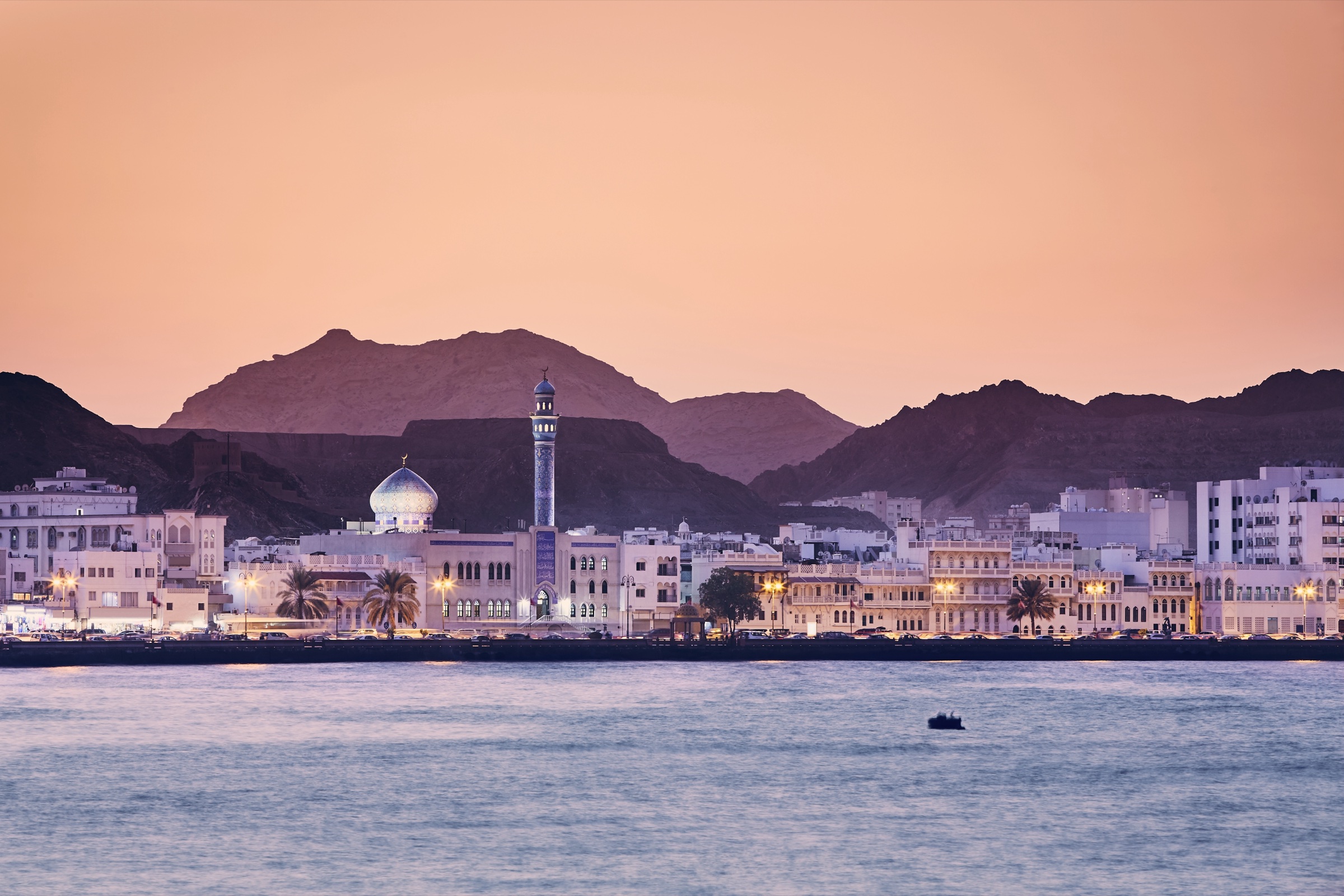
📷 Tristan· CC BY 2.0Muscat, where the desert meets the sea, and history meets the present.
Muscat is the capital and most populous city of Oman. It is the seat of the Governorate of Muscat. According to the National Centre for Statistics and Information (NCSI), the population of the Muscat Governorate in 2022 was 1.72 million. The metropolitan area includes six provinces, called wilayat, and spans approximately 6,500 km2 (2,500 sq mi). Known since the early 1st century CE as a leading port for trade between the west and the east, Muscat was ruled successively by various indigenous tribes, as well as by foreign powers such as the Persians, the Portuguese Empire and the Ottoman Empire. In the 18th century, Muscat was a regional military power: its influence extended as far as East Africa and Zanzibar. As an important port town in the Gulf of Oman, Muscat attracted foreign traders
Wikipedia →Summary excerpted from the Wikipedia article Muscat, licensed under CC BY-SA 4.0. Text may be clipped or paraphrased to fit this page.
Visit Muscat for museums, galleries, and collections, music, theater, and performance, religious and civic architecture. Use Muscat to connect cultural institutions with streets, food, public space, and nearby landscape rather than treating each stop separately. A good itinerary should stay selective. In Muscat, start with one strong anchor, then add a nearby walk, cafe, market, church, museum, bookshop, or evening event where the city supports it. For Muscat, this usually reveals more than adding one more distant sight. If the strongest material around Muscat sits outside the center, give it its own time rather than forcing it into the same day.
Do not expect Muscat to behave like one enclosed cultural district. In Muscat, treat hours and movement as part of the itinerary. For Muscat, group stops by area and keep enough slack for closures, slow transport, and limited hours. The route should leave enough slack for closures, delays, and the distance between neighborhoods.
For Muscat, June through August usually require the most attention to heat, light, and weather. For Muscat, severe heat makes shade, water, and practical transport part of the cultural plan. In Muscat, keep the route tight, carry water where appropriate, and avoid making one exposed site carry the whole day. Use interiors and later programming in Muscat to keep the itinerary from depending only on outdoor time.
The cooler or wetter season in Muscat generally falls in December through February. Cooler months are the practical season for outdoor sites, but nights can be cold and distances still matter. Use this period in Muscat for museums, archives, churches, theaters, and bookshops before adding longer walks. For Muscat, keep outdoor plans short, nearby, and flexible.
7-day forecast from Open-Meteo. UV badges flag days when sun protection matters (3 and above is moderate; 8 and above is risk territory for unprotected fair skin within 30 minutes).
Monthly highs, lows, and rainfall (long-term averages, NASA POWER).
1 commercial airport within 100 km. Closest is Muscat International Airport (MCT) at 31 km.
Public-transit operators within 8 km of the city center. Click through to each operator’s site for routes, fares, and tickets.
Operators and modes aggregated by TransitLand from individual transit-agency GTFS feeds. Route classifications (subway / tram / rail / bus / etc) come from each feed’s GTFS route_type codes.
2 pins · 2 visited
See these as a focused list: Things to do in Muscat →
This page blends public reference data, climate/elevation services, and personal notes. Travel requirements can change, so visa and entry details should be checked again before booking.
Summary, canonical article, and some image fallbacks.
Population, area, image, coordinates, and linked identifiers where available.
Monthly temperature and rainfall climatology.
1991-2020 temperature and precipitation cross-check for compact climate fields.
Coordinate-based elevation backfill.
Coordinate-based IANA timezone lookup.
Public domain.
Global source notes, map tiles, flags, licenses, and attribution policy.