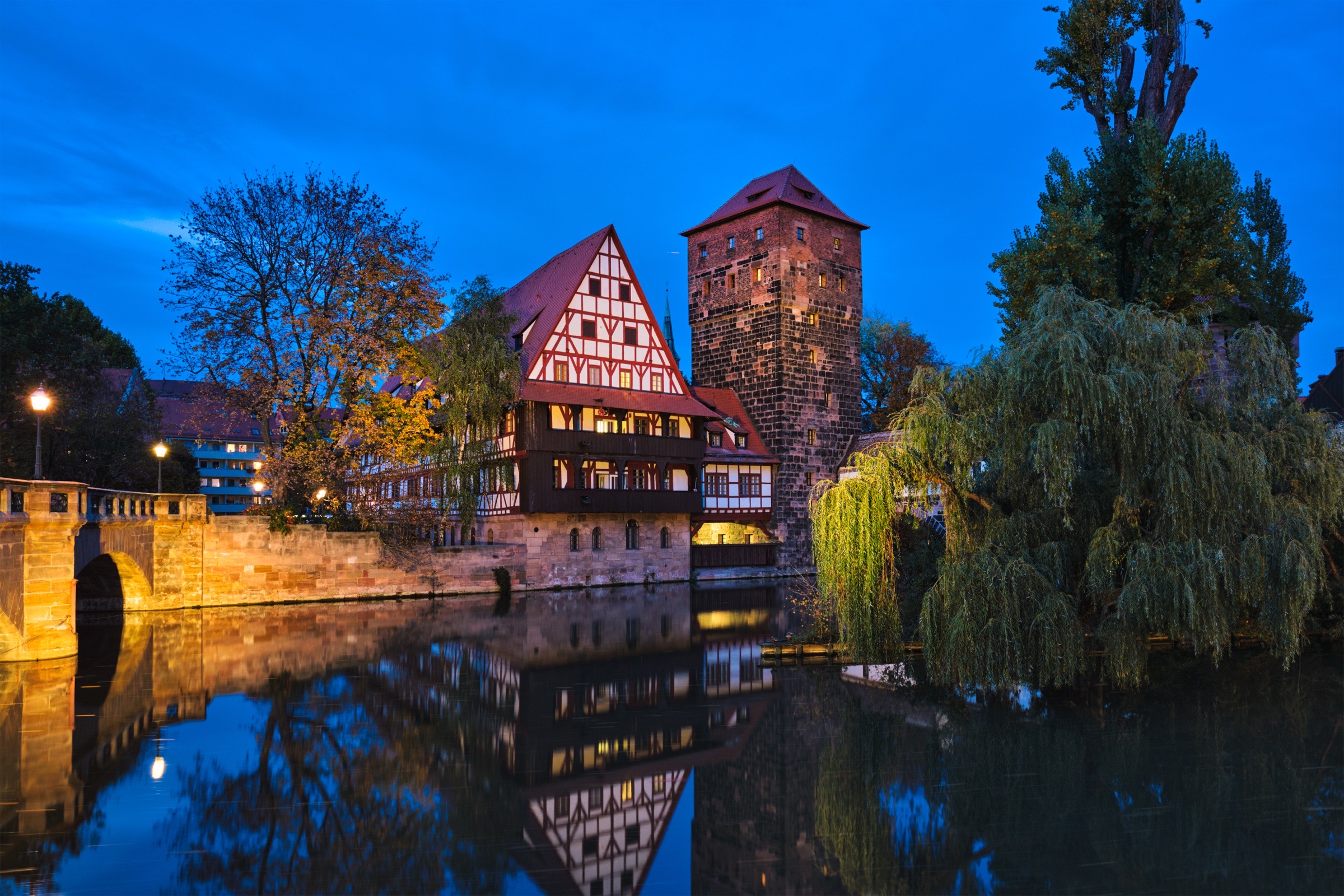
Nuremberg is the medieval Franconian city that, for the German Christmas-market trip, beats Munich. An imperial castle crowns the old town, the 20th-century weight of the Nazi rallies and the post-war Trials is real and clearly told, and the little Nürnberger sausage is the food.
Getting in from the airport
Nuremberg Albrecht Dürer Airport (NUE) sits about 7 km north of the center. The U-Bahn U2 connects directly into town from the airport in 12 minutes.
| Mode |
Time |
Cost |
When to use |
| U-Bahn U2 |
12 min |
€3.90 single, or €3.65 online |
The default. Direct to Nuremberg Hauptbahnhof every 10 minutes |
| Uber / FreeNow / taxi |
15 to 25 min |
€20 to €30 to the center |
Late arrival or heavy luggage |
| Pre-booked transfer |
15 to 25 min |
€35 to €55 |
Door-to-door for a group or a tired arrival |
| Bus 30 to center |
25 to 30 min |
Same VGN city fare as the U-Bahn |
Backup if the U-Bahn is down. Same fare, longer ride |
Transit notes
The Nuremberg U-Bahn is the system most visitors notice because U2 runs straight from the airport to the Hauptbahnhof. The tram is the slower surface layer for old-city edges, neighborhoods, and festival/fair days when the exact stop matters.
Festivals and big annual events
Nuremberg's calendar is mostly the Christmas market, summer music weekends, and a few trade-fair spikes.
| Event |
When |
What it changes |
| Christkindlesmarkt |
November 27 to December 24 in 2026 |
The famous Christmas market on Hauptmarkt. December weekends and nearby hotels book early |
| Bardentreffen |
July 30 to August 2 in 2026 |
Free open-air music across old-town squares and riverbank stages |
| Rock im Park |
Early June |
Major rock festival at Zeppelinfeld. South-side hotels fill |
| Spielwarenmesse |
Late January or early February |
Toy trade fair at Messe Nürnberg. Hotel prices jump for the week |
| Klassik Open Air |
Late July or early August |
Free classical concerts at Luitpoldhain |
| Norisring DTM |
First weekend of July |
Street-circuit race with transport and hotel pressure near Frankenstadion |
| Altstadtfest |
Mid to late September |
Franconian food, beer, music, and old-town market stalls |
| Walpurgisnacht |
April 30 |
Local bonfires before May Day |
Where to eat
Nuremberg food has its own side: the Nürnberger Rostbratwurst (the small finger-sized grilled sausages served three on a roll or six on a pewter plate with sauerkraut), Lebkuchen (the spiced Christmas cake the city has been making for centuries), Schäufele (the slow-roasted pork shoulder). The picks below mix the German base with the casual international rotation.
 +1
+1 +4
+4 +3
+3 +2
+2 +1
+1 +6
+6 +6
+6
 +4
+4