Photos from Valencia
 +16
+16Ciutat de les Arts i les Ciènciesattraction
 +1
+1La Lonja de la Seda de Valenciaattraction
 +10
+10Mercat Central de Valènciashopping
 +3
+3Mercat de Colónshopping
+16+1+10+3Current conditions and the practical reference material that helps turn the saved places into a trip.
7-day forecast from Open-Meteo. UV badges flag days when sun protection matters (3 and above is moderate; 8 and above is risk territory for unprotected fair skin within 30 minutes).
Typical highs around 31°C, lows around 18°C. The drier end of the year.
Typical highs around 15°C, lows around 5°C.
Public holidays from Nager.Date.
Public-transit operators within 8 km of the city center. Click through to each operator’s site for routes, fares, and tickets.
Valencia, officially València, is the capital of the Valencian Community and the province of the same name in Spain. It is located on the banks of the Turia, on the east coast of the Iberian Peninsula on the Mediterranean Sea. With a population of 824,340, it is the third-largest city in Spain. The urban area of Valencia has 1.6 million people while the metropolitan region has 2.5 million.
The links below support the changing or licensed reference material on this page. Personal notes and ordinary geographic facts are not footnoted individually.
Monthly highs, lows, rainfall — long-term averages, NASA POWER.
Operators and modes are aggregated from individual transit-agency GTFS feeds. Route classifications come from each feed’s route type codes.
Maps, image licenses, and the full dataset registry are listed in site credits.
My Valencia travel guide. The old town, Mercat Central, the Turia Gardens, the City of Arts and Sciences, where to stay, and where to eat paella.
València
Valencia is Spain's third-largest city. It has a walkable old town, a futuristic arts complex, and a former riverbed turned into a park across the city. It is also where paella comes from.
Planning brief
Valencia is Spain's third-largest city. The old town has the cathedral and two very different markets. The former Turia riverbed is now a long park leading to the City of Arts and Sciences. This is also where paella comes from.
The old town, the markets, and the City of Arts and Sciences show two very different sides of Valencia.
The old quarter holds the cathedral and two great market halls, the Mercat Central and the Mercat de Colon. Start there.
The old river was diverted and its bed turned into a green park that curves through the city. It links the old town to the City of Arts and Sciences.
Valencia is the home of paella. Have the real Valencian version, traditionally at lunch, and ideally near the rice fields of the Albufera.
Renfe's Euromed service uses València Joaquín Sorolla on the Barcelona and Alicante corridor. Confirm the station on the selected train before arranging a local transfer.
Valencia Airport sits west of the city and connects to the center on Metrovalencia lines 3 and 5. Valencia is also on Spain's high-speed rail network, with direct trains from Madrid.
Renfe's reserved-seat Euromed service connects València Joaquín Sorolla with Barcelona Sants, Castelló de la Plana, the Tarragona area, and Alicante Terminal. Calling patterns differ between departures. Check both the calling stations and the Valencia station printed on the selected ticket.
Within the city, Metrovalencia, trams, buses, and a good bike network cover everything, and the old town itself is walkable.
The old town, Ciutat Vella, is the best base for a first visit, putting the cathedral, the markets, and the restaurants on foot. Ruzafa, the neighborhood just south, is the trendier base, full of bars and restaurants.
If the beach is a priority, staying near the Malvarrosa puts you on the sand, though farther from the old town.
The old town is a walkable quarter of squares and lanes around Valencia Cathedral. A chalice kept in one of its chapels is traditionally identified as the Holy Grail. The Miguelete bell tower rises beside it. Nearby, the Lonja de la Seda, the Gothic silk exchange, is a UNESCO World Heritage Site.
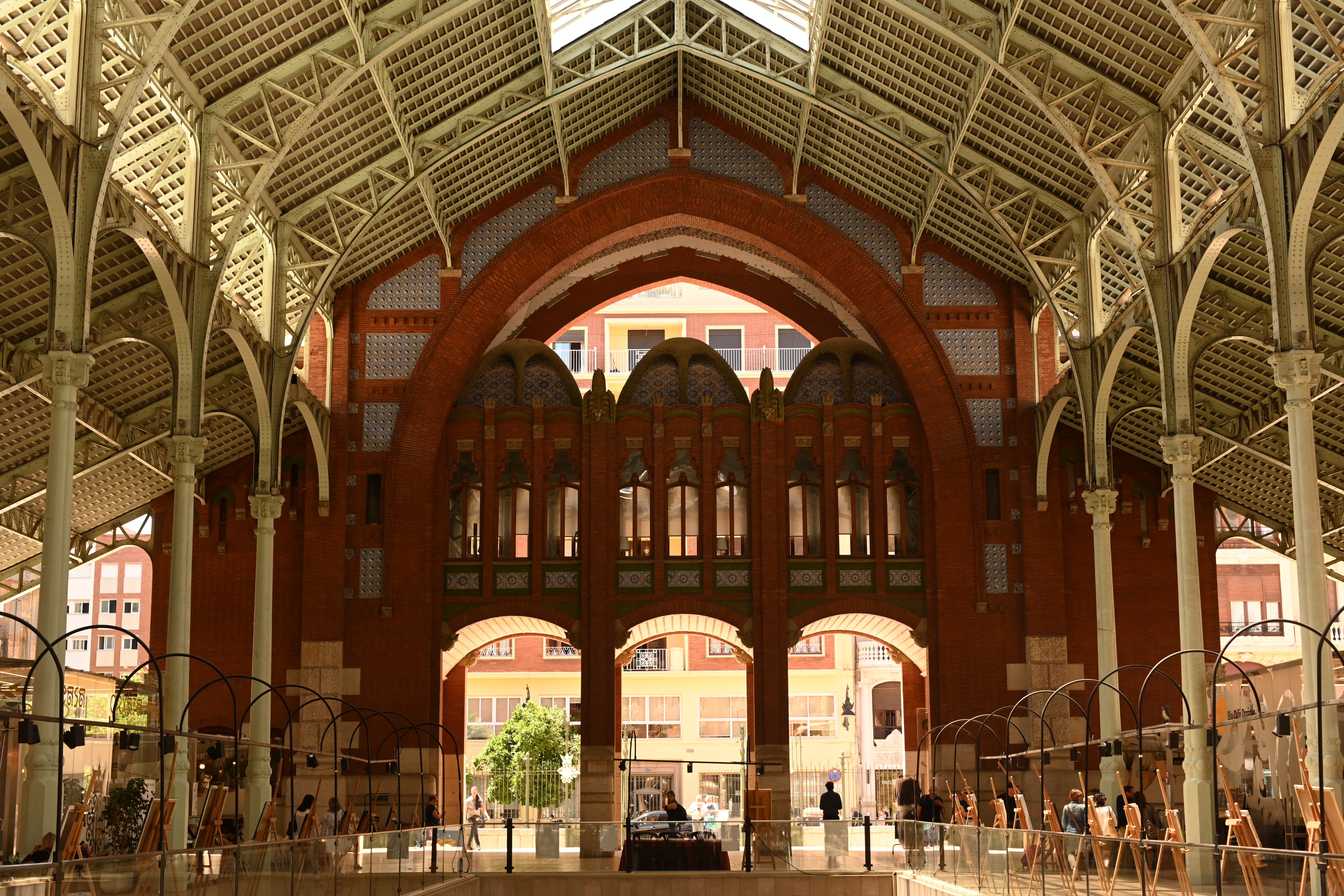
Two market halls serve different purposes. The Mercat Central is a large Modernista food market packed with produce, meat, and seafood stalls. The Mercat de Colón, another restored Modernista building, now has restaurants and cafes rather than a full grocery market.
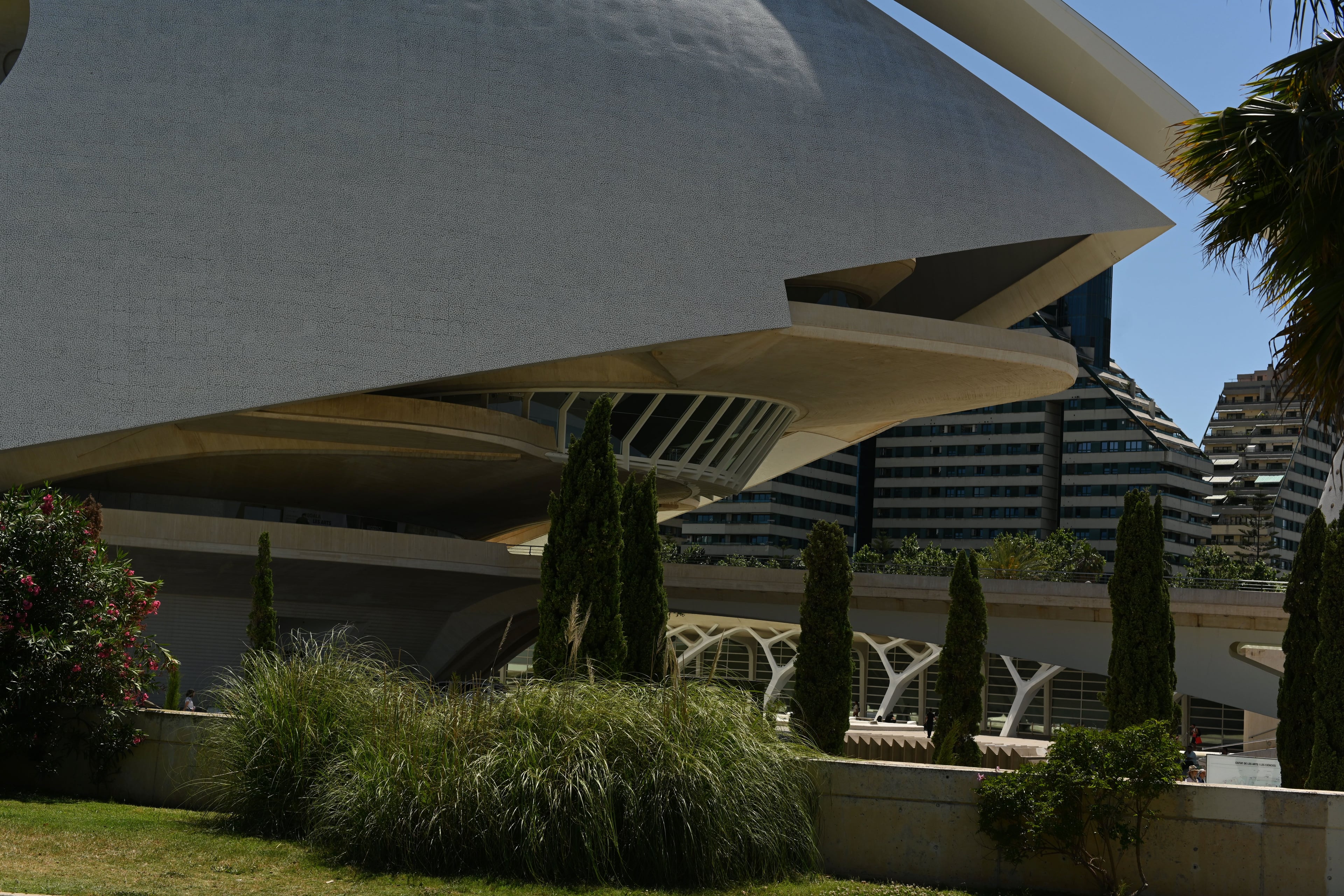
The Turia Gardens are Valencia's defining feature: after a catastrophic 1957 flood, the river was diverted and its old bed turned into a nine-kilometer park that curves through the city. Walking or cycling it links the old town to the City of Arts and Sciences, the white futuristic complex of museum, aquarium, and opera house designed largely by Santiago Calatrava at the park's seaward end.
Rice is central to Valencian food. Traditional paella valenciana uses rabbit, chicken, and beans, and is usually eaten at lunch. I look for restaurants that specialize in rice rather than the places selling a long menu beside a major sight. The Albufera lagoon south of the city is surrounded by rice fields and rice restaurants.

| Spot | What it is |
|---|---|
| Mercat Central de València | The vast Modernista food market |
| Mercat de Colón | A restored Modernista market, now a food-and-cafe hall |
| Infraganti | A restaurant |
| Sukar Pastelería de Autor | A pastry shop |


.svg)