Current conditions and the practical reference material that helps turn the saved places into a trip.
The next week in Alicante
7-day forecast from Open-Meteo. UV badges flag days when sun protection matters (3 and above is moderate; 8 and above is risk territory for unprotected fair skin within 30 minutes).
Today
Overcast
31° / 24°
UV High
Wed
Overcast
32° / 24°
UV High
Thu
Overcast
31° / 25°
UV High
Fri
Overcast
32° / 25°
UV High
Sat
Overcast
32° / 24°
UV High
Sun
Partly cloudy
35° / 24°
UV High
Mon
Overcast
33° / 23°
UV High
Climate
Summer (Jun-Sep)
Typical highs around 30°C, lows around 19°C. The drier end of the year.
Cold and damp season (Nov-Mar)
Typical highs around 15°C, lows around 6°C. Most of the year’s greyest, wettest weeks.
In August 4
Drag to scrub across the year.
JFMAMJJASOND
Weather
31° / 20°
Typical high / low
0 mm rainfall this month
Daylight
13.7h
07:15 – 20:57local
Festivals around this date
Holidays coming up
Public holidays from Nager.Date.
Airports
closest ALC · 9 km
Getting around Alicante
Public-transit operators within 8 km of the city center. Click through to each operator’s site for routes, fares, and tickets.
Alicante or Alacant is a city and municipality in the Valencian Community, Spain. It is the capital of the province of Alicante and a historic Mediterranean port. With a population of 358,608 as of 2024, it is the 2nd-largest city in the Valencian Community and the 10th-largest in Spain.
The links below support the changing or licensed reference material on this page. Personal notes and ordinary geographic facts are not footnoted individually.
City background. Wikipedia summary may be clipped or paraphrased. Structured fields are cross-checked against the related references. Related: Wikidata.
highlowrainfallcomfortable months
Monthly highs, lows, rainfall — long-term averages, NASA POWER.
Alicante has a compact center, a city beach below the castle, and a tram line running north along the Costa Blanca. I shop at the market, change beaches by tram, and use cooler weather for the castle, Lucentum, El Campello, Santa Pola, or Tabarca.
Planning brief
Planning Alicante
I use Alicante as a base for the Costa Blanca. The center has the market, castle, Postiguet, and restaurants. The tram reaches San Juan, El Campello, Benidorm, and the northern coast.
Choose the center or the coast
Stay central for the Mercat, castle, Postiguet, restaurants, and train station. Playa de San Juan and El Campello are quieter and more residential. Benidorm is the high-rise resort option.
The tram changes the map
TRAM d’Alacant links the center with San Juan, El Campello, and Benidorm. L9 continues from Benidorm toward Dénia. The tram does not serve the airport. Use Bus C6 or a taxi.
Take the lift up, walk down
For Castell de Santa Bàrbara, the easy route is the paid lift from Postiguet up to the castle, then the walk down through the older paths into the old town. The descent is steep, so skip it for anyone with mobility limits, bad knees, or a stroller.
Do the Roman coast
Lucentum is the Roman city near Albufereta. Illeta dels Banyets in El Campello adds fish tanks, baths, and a long archaeological sequence. Santa Pola has Portus Ilicitanus, the Roman port tied to Elche. Tabarca adds the island day.
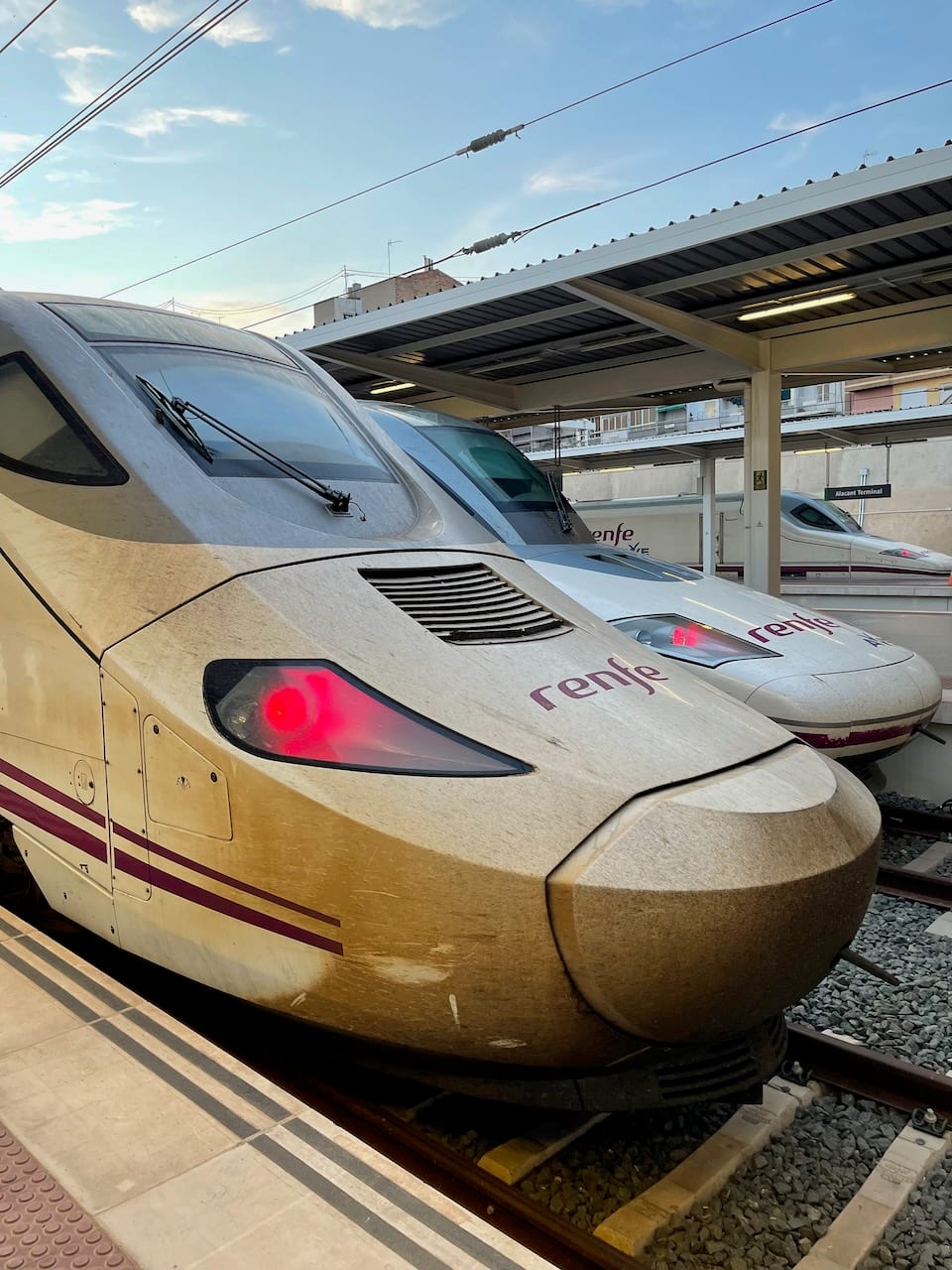
Alicante Terminal puts you in the city center, within walking distance of Luceros and the tram.
Alicante airport (ALC) is useful, but it does not connect to the tram. Bus C6 links the airport with Alicante Terminal, Alfonso X El Sabio, Luceros, Vázquez de Mella, and Puerta del Mar. Those stops connect into the city tram network. With luggage, late arrival, or a family group, a taxi is usually simpler.
From North America, I usually connect through Madrid or Barcelona and finish by train. The Madrid to Alicante high-speed route has three operators:
| Operator | Service | Notes |
|---|---|---|---|
| Renfe | AVE and other high-speed services | Several fare classes and the widest schedule |
| OUIGO | Double-deck high-speed trains | Lower base fares, with luggage and seat options sold separately |
| Iryo | ETR 1000 high-speed trains | Several fare classes and onboard food service |
Spanish high-speed trains use airport-style security. Build in 15 to 20 minutes at the station. The platform stays closed until boarding, fares move like flight prices, and seats are assigned. Book adjacent seats if you are traveling as a group.
Renfe's reserved-seat Euromed service links Barcelona Sants with Alicante Terminal. The principal corridor runs through Valencia, Castelló de la Plana, and the Tarragona area, but the stops differ between departures. Check the selected train rather than assuming every Euromed uses the complete station sequence.
Where to stay on the Costa Blanca
Alicante city center is the easiest place for the train station, restaurants, market, castle, and Postiguet. The tram also makes it practical to stay farther up the coast.
Base
Use it for
Transit
Notes
Alicante center
Restaurants, Mercat, old town, Postiguet, castle
Walk, bus, central tram stations at Luceros and Mercat
Best for arriving by train and eating in the center
Albufereta
Quieter beach stay close to Lucentum
L1 / L3 toward the north coast
Good middle ground between the center and Playa de San Juan
Loud, high-rise, and very British in parts. Stay there if you want cheap nights out
Altea, Calp, Dénia
Northern Costa Blanca stay
L9 from Benidorm toward Dénia
Treat these as their own bases rather than daily commuter towns from Alicante
The center gives you restaurants and history. Playa de San Juan is quieter and more residential. El Campello has a smaller town center with Roman ruins nearby. Benidorm is a different kind of trip.
Using the tram without treating it like a metro
From Alicante Terminal, walk to Luceros and use the TRAM d'Alacant for the coast. I only rent a car for coves and inland places the tram does not reach.
The network is a coastal railway with a tram section in the city. L1 runs from Luceros to Benidorm. L3 is the local line toward El Campello. L4 and L5 serve Playa de San Juan. L9 continues from Benidorm toward Dénia, with stops including Altea, Calp, Teulada, and Gata de Gorgos.
The center, Castell de Santa Bàrbara, Postiguet, and port are walkable. I use the tram for San Juan, El Campello, the smaller coves, and Benidorm. The station notes are in the Alicante tram stops guide.
Check TRAM d'Alacant before traveling for current service, works, transfers, and ticket rules. L9 in particular has had modernization works and service changes over time.
Beaches and island days
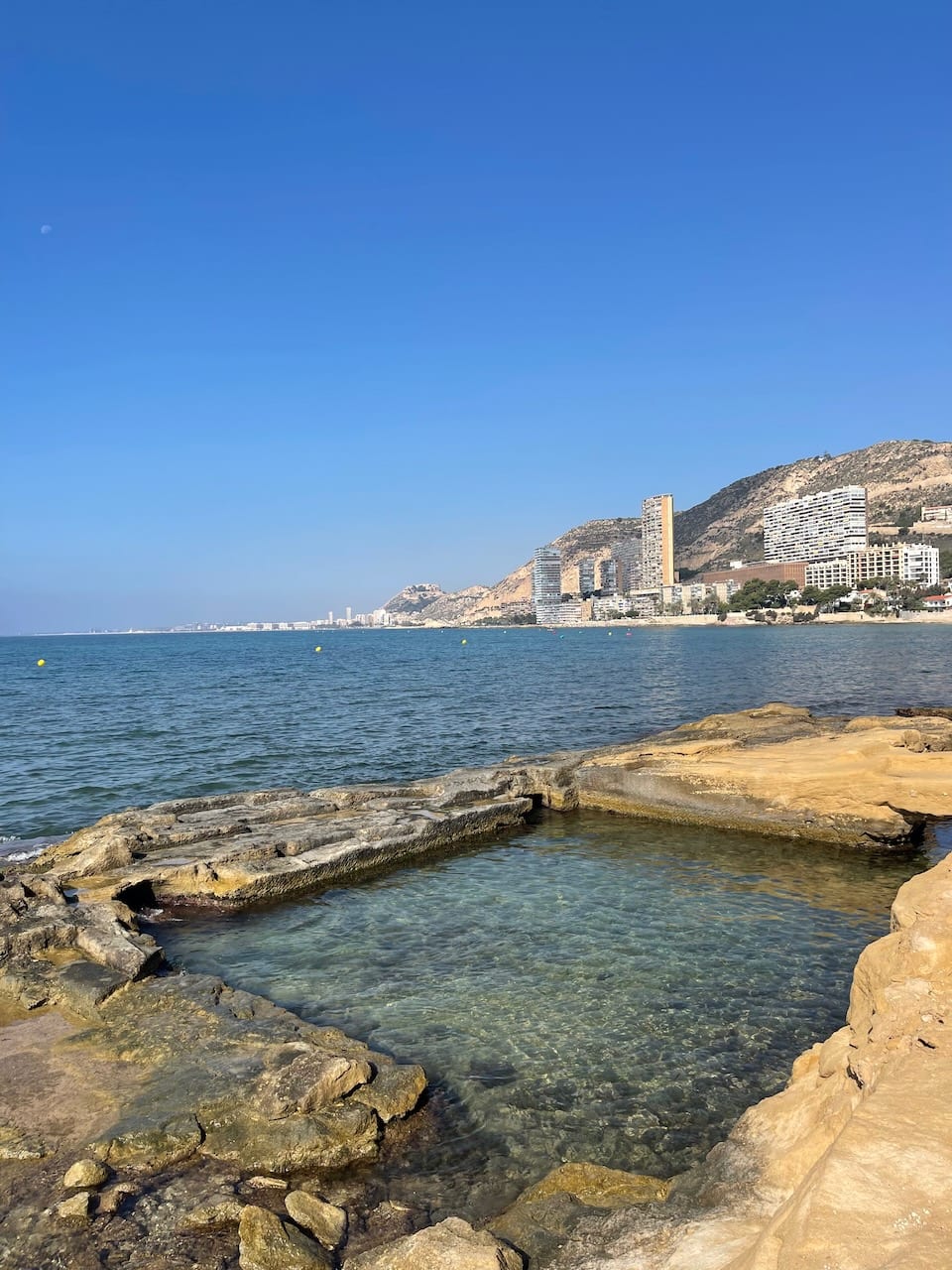
The Costa Blanca name is literal enough. Alicante has city sand, quieter suburban sand, long apartment beaches, rocky coves, and an island day.
A car helps for Cala del Moraig, Jávea, and the more dramatic coves
The rocky coves are the reason to rent a car: clearer water, better photos, and a different Costa Blanca feel from Postiguet.
Castell de Santa Bàrbara and the Roman coast
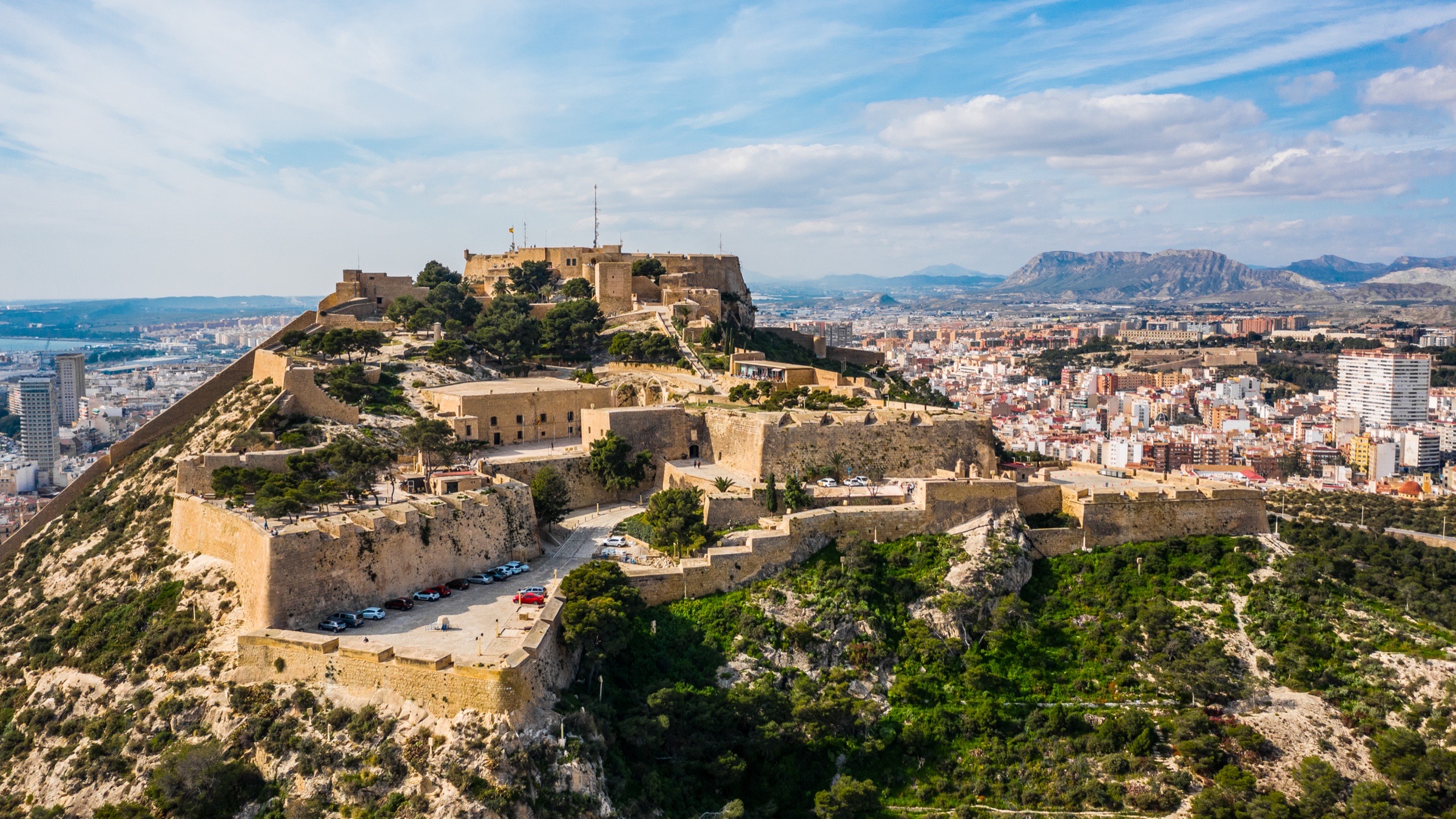
Castell de Santa Bàrbara sits 166 meters up on Mount Benacantil above the old town. The paid lift from Postiguet is the easiest way to the top. I like taking the lift up, then walking down through the older paths into the old town. Be aware, the descent is steep. Do not take this route with anyone who has mobility limits, bad knees, or a stroller.
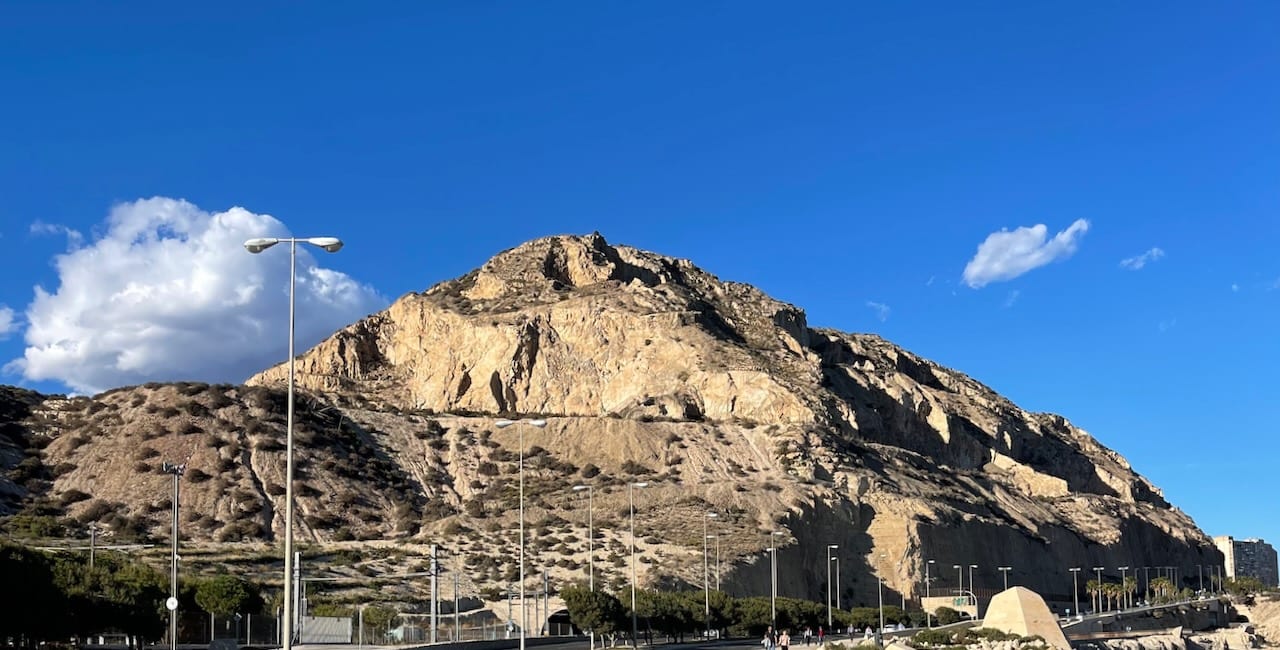
The castle is the city's main orientation point. You can see the back of Mount Benacantil from the train station. Walk toward it and turn right for the port, old town, and Postiguet.
Lucentum, at Tossal de Manises near Albufereta, was the Roman city that preceded modern Alicante. The site preserves streets, houses, a forum, baths, and the outline of the ancient center. It sits about 3 km from central Alicante, close to Albufereta.
El Campello adds another archaeological layer. Illeta dels Banyets is a small promontory with Bronze Age, Iberian, Roman, and later remains. You can see Roman fish tanks cut into the rock and will usually find people swimming in/nearby.
Santa Pola, south of Alicante, is a Portus Ilicitanus Roman port that served the Elche area, with warehouses, a fish-salting economy, a villa, and museum material tied to the sea. This is also the jumping off point to visit Isla Tabarca, an 18th-century fortified village, marine reserve water, and a small inhabited island.
Mercado Central and where to eat
The Mercado Central de Alicante is one of my favorite spots to walk around. Fish is downstairs, meat and produce are upstairs. Go Tuesday through Saturday. Sunday is closed, and Monday has reduced service.
Alicante is easy to eat in. Even ordinary bars are competent on grilled meat, rice, seafood, sandwiches, and simple tapas. I have had fewer bad meals here than in many bigger Spanish stops.
Expensive by Alicante standards. The cinnamon rolls and cheesecake explain the line
A note on chocolate: Xocolateria Valor does traditional thick chocolate and churros, with a sea view, for less than most places. Service can run slow.
Local dishes to order by name
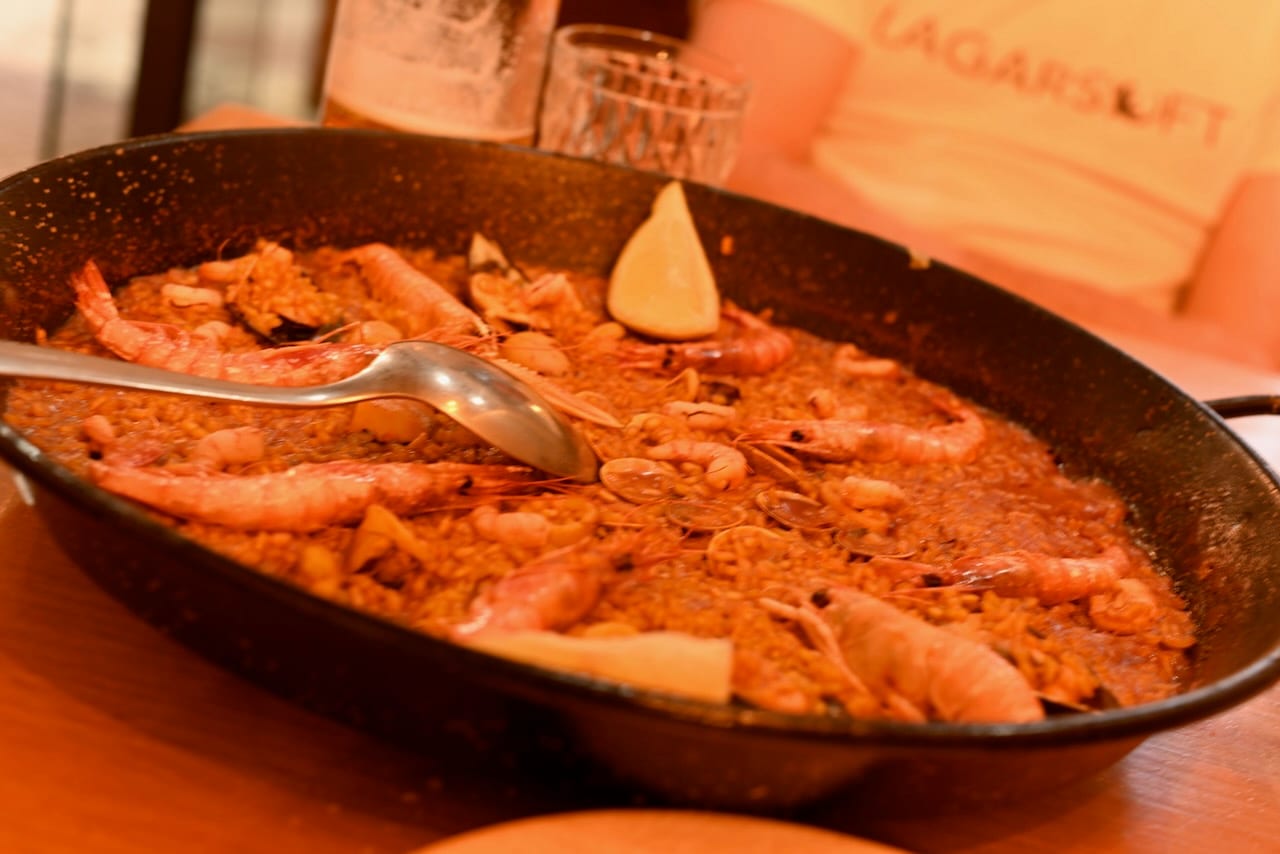
Seafood rice in Alicante. Arroz a banda is cooked in fish broth and is one of the local rice dishes to look for.
Arroz a banda. Rice cooked in fish broth, traditionally served in two courses. Most Alicante seafood restaurants do a version. Ask for the local style rather than generic paella when both appear on the menu.
Gazpacho alicantino. Not the cold tomato soup of Andalucía. This is a meat-and-flatbread game stew, often rabbit, chicken, or both, ladled over thin torta gazpachera bread. It is a lunch dish and makes more sense in autumn or winter.
Turrón. The almond-and-honey nougat tied to Jijona, about an hour inland. The hard Alicante variety and the soft Jijona variety are the two classic forms.
Festivals and annual events
Alicante's big calendar item is Hogueras de San Juan, the June fire festival. If you are choosing dates for a normal beach-and-apartment stay, this is the week to either book around early or avoid.
Event
When
What it changes
Hogueras de San Juan (Fogueres de Sant Joan)
June 20 to 24, five days plus warm-up week
Alicante's headline festival. Massive papier-mâché sculptures are built across the city's plazas and burned on the night of June 24, the Cremà. Daily mascletà, parades, bullfights, and fireworks over Postiguet change hotel pricing and crowd levels
Moros y Cristianos (Moors and Christians)
Variable, usually April, May, or July depending on town
The historic re-enactment festivals across Alicante province towns, including Villajoyosa, Alcoy, and Elche. Use it for town day-trip planning more than Alicante city planning
Carnival
The week before Lent, February or March
Smaller than Sitges or Tenerife, but a real Costa Blanca local weekend
Festes de la Mare de Déu del Remei
Around August 5, several days
A smaller Alicante summer festival in Santa Cruz
Semana Santa (Holy Week)
The week before Easter, March or April
Processions through the city, smaller than Málaga or Sevilla
Three Kings Day (Reyes)
January 5 evening, January 6 holiday
Cabalgata parade through the center on January 5. Most museums and many shops close January 6
Christmas Lights and Belén
Late November to January 6
Large nativity displays at the Town Hall and citywide light installations. Smaller hotel pressure than the summer events
Hogueras de San Juan fills the center with monuments, mascletàs, parades, and fireworks. Book early if you want those dates. Avoid June 20 to 24 if you want a quiet center.
Benidorm is the loud resort version of the coast. Go for the contrast: high-rises, British bars, big beaches, and late nights.
Altea and Calp sit beyond Benidorm on the L9 side. Check current service before planning them by rail.
Dénia is the northern end of L9. Check the full travel time and current service before going from Alicante.
Santa Pola and Isla Tabarca make the southern history-and-island day. Santa Pola has the Roman Portus Ilicitanus layer, and its harbor is the simplest Tabarca boat point.
Jávea (Xàbia) is 90 minutes by car. The old town and rocky coves at Cala del Moraig and Cala Granadella fit the rental-car day.
Pou Clar is the inland water option near Ontinyent, about 90 minutes by car.
Quick answers
Is there a direct train between Barcelona and Alicante?
Yes. Renfe runs the reserved-seat Euromed service between Barcelona Sants and Alicante Terminal. Valencia is the major midpoint, but intermediate stops differ between departures.
Can I stay outside Alicante city?
Yes. The city center is easiest for restaurants, the Mercat, the castle, and train arrival. Playa de San Juan is calmer and more apartment-oriented. El Campello has a beach, marina, and smaller-town center. Benidorm is the louder resort base.
Does the tram go to Alicante airport?
No. Use Bus C6 or a taxi from Alicante-Elche Airport. Bus C6 connects the airport with the train station, Alfonso X El Sabio, Luceros, Vázquez de Mella, and Puerta del Mar, where you can connect to TRAM lines.
What Roman sites should I see near Alicante?
Lucentum is the key site, 3 km from the center near Albufereta. Illeta dels Banyets in El Campello adds Roman fish tanks, baths, and earlier Iberian layers. Santa Pola has Portus Ilicitanus, the Roman port city and museum site.
Where should I eat in Alicante?
Bodeguita 1999 is my dinner pick for steak. Reserve ahead and order the steak medium rare. The Mercat is the daytime anchor. For cheap beer and sandwiches, 100 Montaditos is a chain, but the Playa de San Juan location is much more pleasant than the beachside one near Postiguet.
Is Alicante a party town?
Alicante has bars and late dinners, but Benidorm is the party base. If the trip is built around British pubs, karaoke, cheap nights out, and resort hotels, stay in Benidorm and use Alicante for the castle, market, and Roman sites.
 +1
+1 +4
+4 +3
+3 +1
+1 +1
+1 +2
+2


 +1
+1