
Lima is one of the world's great food cities
My Lima travel guide. Where to stay in Miraflores and Barranco, the ceviche and Nikkei food scene, the historic center, the Larco Museum, and the markets.
- Updated
- May 18, 2026
Current conditions and the practical reference material that helps turn the saved places into a trip.
7-day forecast from Open-Meteo. UV badges flag days when sun protection matters (3 and above is moderate; 8 and above is risk territory for unprotected fair skin within 30 minutes).
Typical highs around 22°C, lows around 14°C.
Public holidays from Nager.Date.
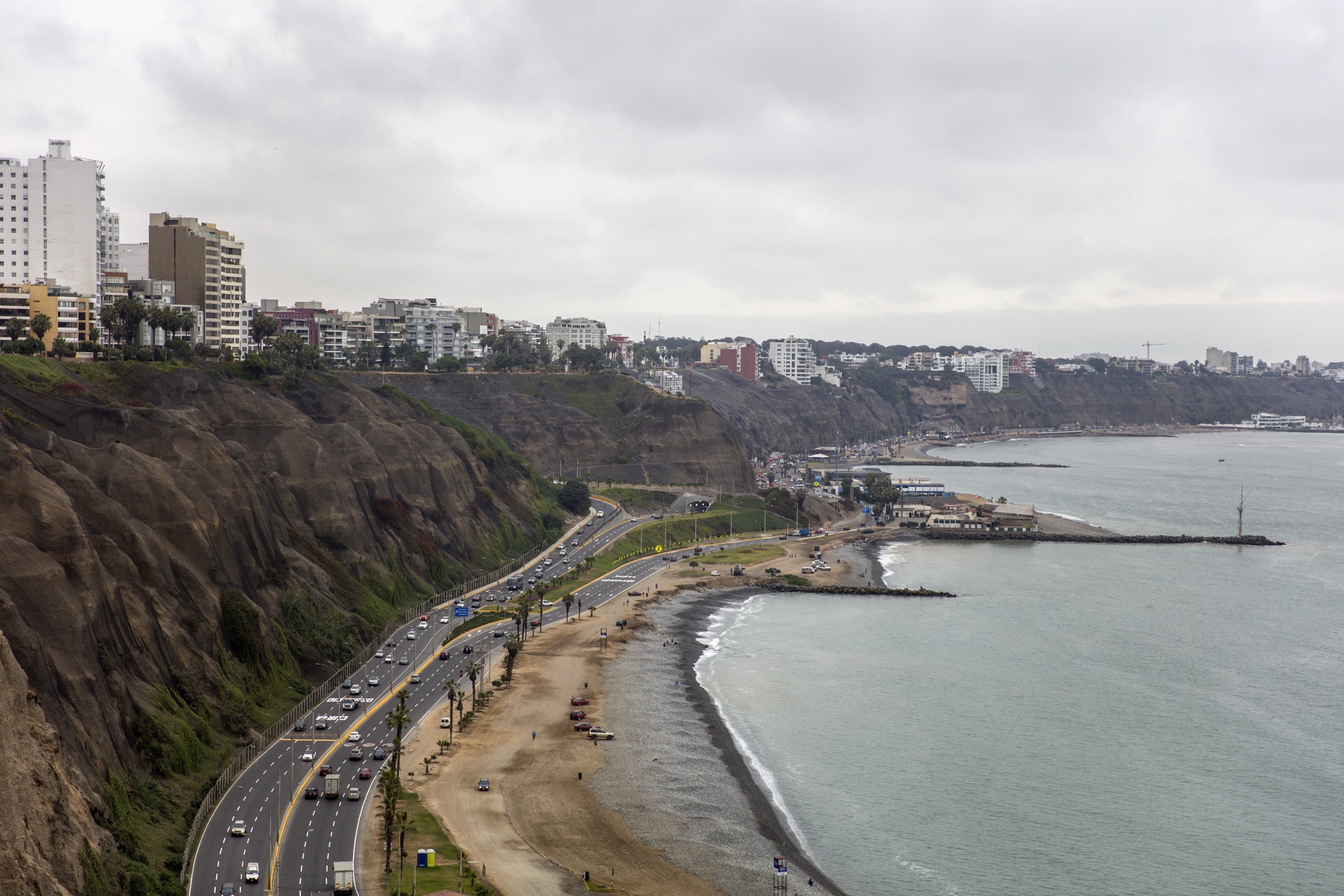
Lima is the capital and largest city of Peru, as well as a primate city. It is located in the valleys of the Chillón, Rímac and Lurín Rivers, in the desert zone of the central coastal part of the country, overlooking the Pacific Ocean. The city is considered the political, cultural, financial and commercial center of Peru. Due to its geostrategic importance, the Globalization and World Cities Research Network has categorized it as a "beta" tier city. Jurisdictionally, the metropolis extends mainly within the province of Lima and in a smaller portion, to the west, within the Constitutional Province of Callao, where the seaport and the Jorge Chávez Airport are located. Both provinces have had regional autonomy since 2002.
The links below support the changing or licensed reference material on this page. Personal notes and ordinary geographic facts are not footnoted individually.
Monthly highs, lows, rainfall — long-term averages, NASA POWER.
Maps, image licenses, and the full dataset registry are listed in site credits.
My Lima travel guide. Where to stay in Miraflores and Barranco, the ceviche and Nikkei food scene, the historic center, the Larco Museum, and the markets.
Lima is one of the best eating cities in the world, strung along desert cliffs over the Pacific. The historic center, Miraflores, Barranco, and the restaurant districts require separate routes through heavy traffic.
Planning brief
Lima is the capital of Peru, a city of about 10 million on the Pacific coast, built along desert cliffs above the ocean. Most travelers pass through on the way to Cusco and Machu Picchu, but Lima is one of the best eating cities in the world and stands on its own.
The historic center, clifftop neighborhoods, museums, and food scene sit in different parts of the city, so plan around Lima traffic.
Miraflores is the safe, walkable, clifftop district where most visitors stay, close to the markets, the coast path, and a short ride from everywhere else.
Ceviche, Nikkei, Chifa, and a deep fine-dining scene. Lima carries two of the world's most celebrated restaurants and a street-level food culture to match.
Most visitors stay in Miraflores and never see the colonial historic core. The Plaza Mayor and the monasteries make a good half-day.
Two or three days is the right amount of Lima. That covers the colonial historic center, the clifftop neighborhoods, a museum or two, and a real run at the food.
Lima is often treated as a layover on the way to the Inca sights, and a single night does not do it justice. Built in as a couple of unhurried days, it stands on its own, mostly on the strength of the eating.
Jorge Chávez International Airport (LIM) sits in Callao, northwest of the city, and opened a large new terminal in 2025. Depending on traffic it is 30 to 60 minutes to Miraflores, where most visitors stay.
Use an official airport taxi, booked at the desk inside the terminal, or an Uber, rather than accepting a ride from a tout in the arrivals hall. Agree the route and the rough fare before you set off.
The Lima and Callao Metro is important city infrastructure, but it is still too limited to be the normal visitor answer. Use it when your day actually sits on Line 1. For Miraflores, Barranco, airport arrivals, and restaurant nights, taxis or rideshare are usually the practical move.
For a first visit, the choice is between three central districts, and Miraflores is the default.
| Area | Why pick it | Trade-off |
|---|---|---|
| Miraflores | Safe, walkable, on the Pacific cliffs, close to parks, markets, and the coast path | The most touristed district, and priced accordingly |
| Barranco | The smaller bohemian neighborhood, arty, full of bars and restaurants | A little further from the center, quieter by day |
| San Isidro | Upscale and calm, the financial district, leafy and residential | Less street life, more of a business base |
The colonial historic center is better visited than slept in. The atlas does not yet carry hotel pins for Lima, so book on the usual sites and read recent reviews for the property.
The historic center, the old colonial core, is a UNESCO World Heritage Site and a half-day most Miraflores-based visitors skip. The Plaza Mayor is the heart of it, fronted by Lima Cathedral and the Government Palace, and the nearby San Francisco Monastery is known for its bone-lined catacombs. Plaza San Martín, a grand early-20th-century square, anchors the other end of the center.
Miraflores is the clifftop modern district, built around Parque Kennedy and the Malecón, the long landscaped path along the cliff edge above the Pacific. Larcomar is the shopping and dining complex built into the cliff face there, with the ocean below. Barranco, just south, is the small bohemian quarter, with the Bridge of Sighs and a strong bar and gallery scene.
Two museums stand out. The Larco Museum, set in a white colonial mansion, holds one of the best pre-Columbian collections in Peru, including a famous gallery of erotic ceramics. The Huaca Pucllana Site Museum is built around an adobe pyramid that rises in the middle of residential Miraflores, a pre-Inca ceremonial site you can tour and dine beside.
For shopping, three craft markets cluster in Miraflores: the Inka Market, Mercado 28, and the Miraflores Indian Market, all good for alpaca textiles, ceramics, and souvenirs, with prices that move if you ask.
This is the reason to give Lima time. Peruvian food runs on ceviche, the cured raw fish that is close to a national dish, Nikkei cooking from the Japanese-Peruvian community, Chifa, the Chinese-Peruvian style, and a fine-dining scene that puts Lima restaurants near the top of the world rankings year after year. The pisco sour is the drink.
| Spot | What it is |
|---|---|
| Maido | A celebrated Nikkei restaurant, regularly ranked among the world's best. Reserve far ahead |
| Alfresco | A seafood and ceviche restaurant |
Maido is the best-known name on the list and books out weeks in advance, so if a world-ranked tasting menu is part of the trip, reserve before you fly. Around it, Lima's everyday eating, the ceviche counters and the menú lunches, is where the city is just as good for far less money.