47.4996, 19.0388
Castle Hill
Budapest
About
Castle Hill (Várhegy) is a long limestone ridge on the Buda side of the Danube. It carries the Castle District (Várnegyed), a compact grid of cobbled streets and pastel houses that holds Buda Castle, Matthias Church, and Fisherman's Bastion, with a cave labyrinth running under the whole hill.
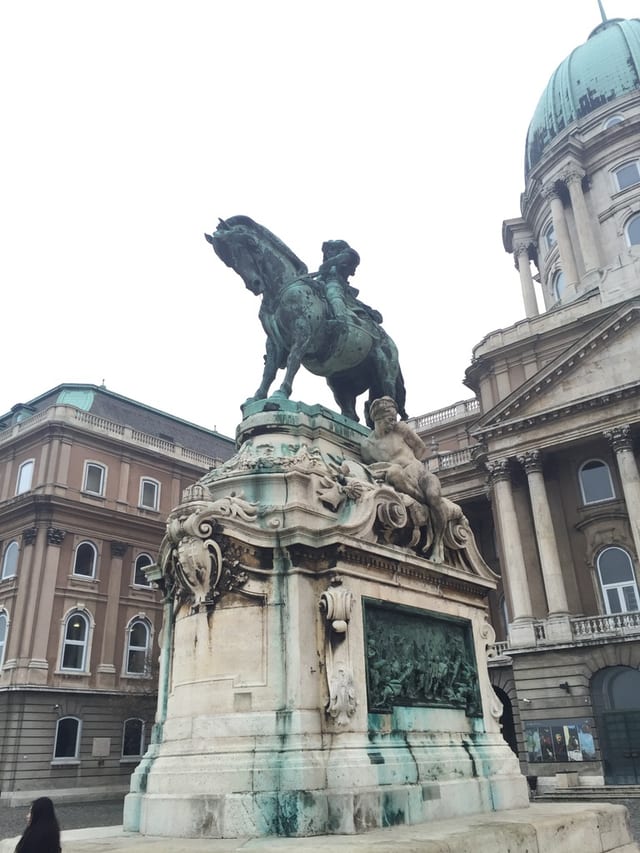
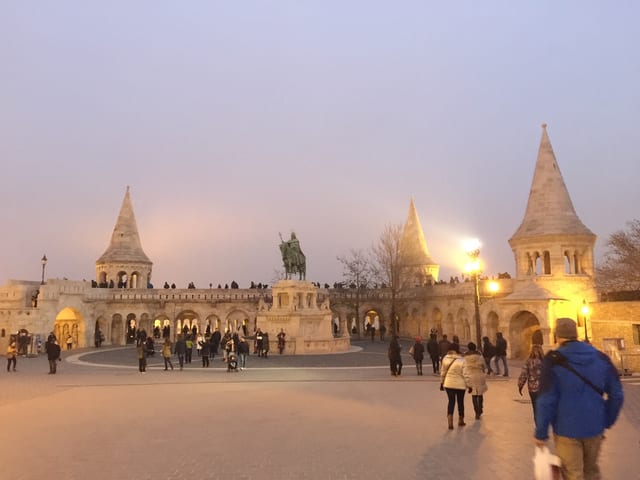
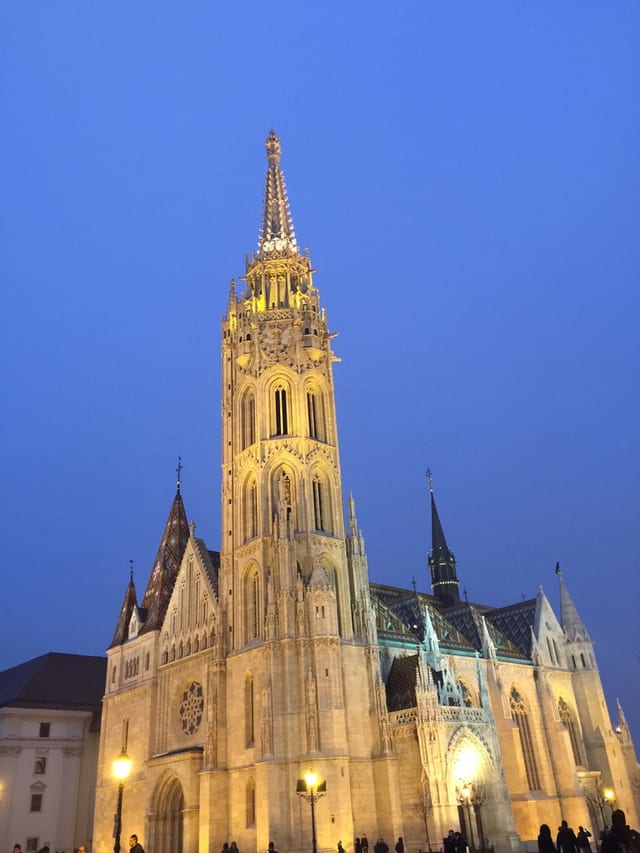
Most of what looks medieval here is not. Fisherman's Bastion, the white terrace of cloisters and cone-topped turrets that everyone photographs, is neo-Romanesque and was built between 1895 and 1902. Matthias Church looks Gothic but wears an 1890s reconstruction over its older bones. Buda Castle was gutted in the 1945 siege and rebuilt in the decades after. The Castle District you walk through is a careful re-creation of a medieval town more than a surviving one.
That gap between how old it looks and how old it is says something about Hungary. Fisherman's Bastion and the church restoration were built for 1896, the thousand-year anniversary of the Magyar arrival, at a moment when Hungary had real standing. After 1867 it shared the throne of Austria-Hungary as a co-ruler rather than a subject, and it used that standing to build a capital that announced a long, unbroken national story in stone.
The longer history is more broken than that. Hungary spent about 150 years under Ottoman occupation after the fall of Buda in 1541, then centuries inside the Habsburg empire, a failed revolution in 1848, two world wars that cost it most of its territory, and a Soviet-bloc era that ended in 1989. The country kept being pulled into larger empires and kept reassembling itself as Hungary. Castle Hill is where that pattern is easiest to see, a medieval skyline that is partly genuine, partly a 19th-century idea of the medieval, and partly a postwar rebuild, on a hill that has been taken and retaken for a thousand years.
Inside Castle Hill

More near here
Other pins within walking distance of Castle Hill.
Planning Budapest
The rest of my Budapest saves, on the city's planning pages.