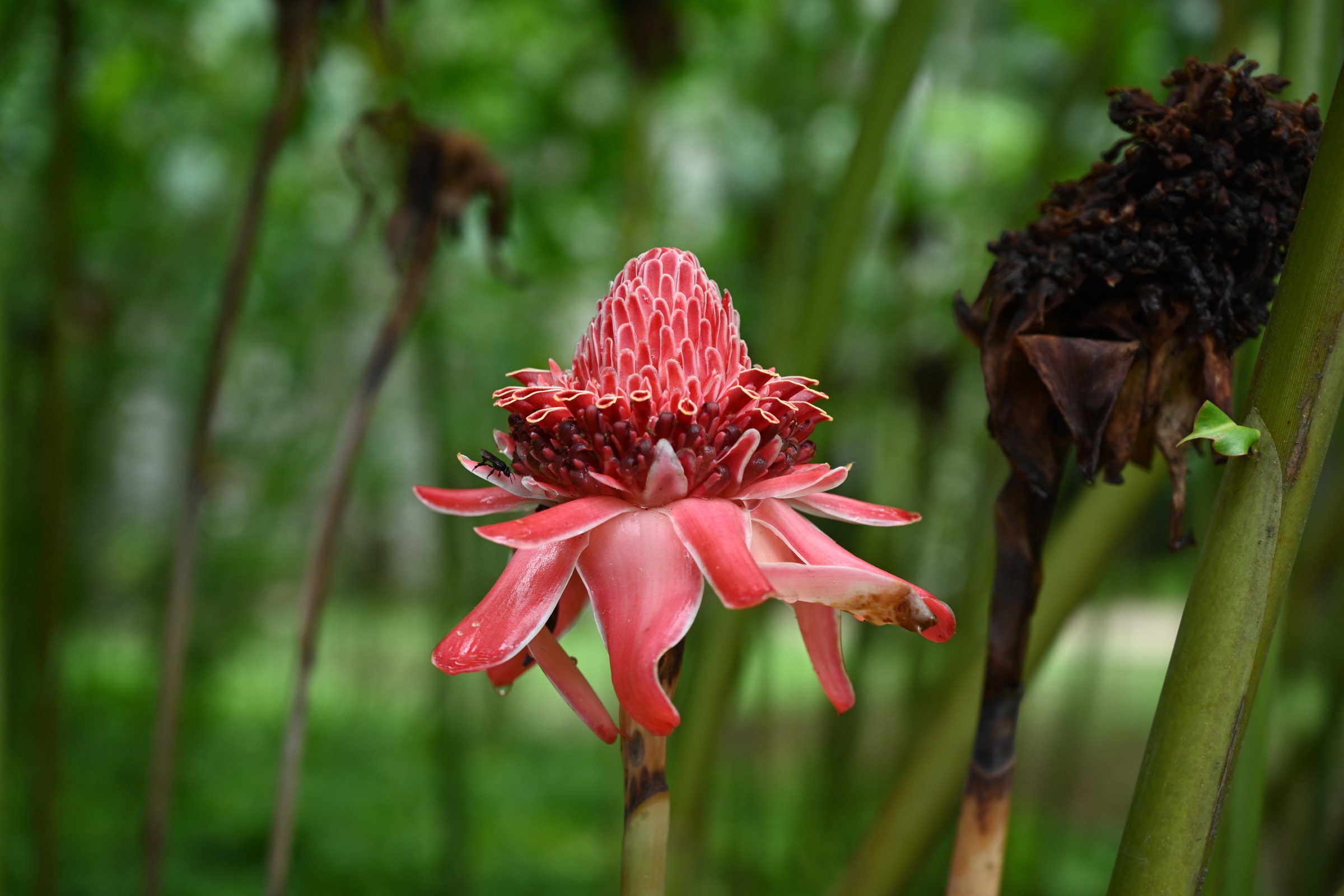
Rio gives you obvious ways to fill a first trip: Sugarloaf, Christ the Redeemer, Ipanema, Copacabana, and Santa Teresa. The Rio Botanical Garden is easier to skip than those, but I would put it in a morning if the trip has room. It is a royal-era garden from 1808, mostly flat, green, humid, and better with two or three hours than with a rushed stop.
I went on a damp afternoon and made the most obvious mistake possible: I forgot insect repellent. That detail matters more than selling it as a pretty garden. The site is humid, mostly flat, exposed in places, and easier to enjoy if you plan the visit like a garden walk rather than a museum stop. Go with time, water, repellent, and a weather window.
Where it sits in Rio
The Jardim Botânico do Rio de Janeiro sits in the Jardim Botânico neighborhood of Rio's South Zone, between Lagoa Rodrigo de Freitas and the base of Corcovado. It is its own outing, not the practical access point for Christ the Redeemer.
The site began as the royal garden founded after the Portuguese court relocated to Rio during the Napoleonic period. It opened to the public in 1822, and the layout still has that 19th-century scientific and imperial character: formal palm avenues, specimen collections, old institutional buildings, and long shaded paths.
The garden covers about 350 acres, with a smaller portion open to visitors. Corcovado rises behind the area, but the route to the statue runs elsewhere. Treat the garden and Cristo as separate outings.
Getting there without making it complicated
There is no direct metro stop at the garden. Any guide telling you to take Line 1 to a Jardim Botânico station is not describing the current trip correctly.
I used Uber, which is what I would do again from most of the South Zone. From Copacabana, Ipanema, Leblon, or Botafogo, the ride is usually short enough that the door-to-door ease wins, though traffic can stretch it. Buses stop near the entrance and can work if you are already on a convenient route, but I would not build a first visit around figuring that out in the rain.
Tickets, timing, and weather
Buy tickets online before you go. On-site payment rules and visitor categories change, and this is the kind of small hassle that feels silly only until you are standing at the entrance expecting to tap a card.
Prices are tiered by residence and nationality, and they are exactly the sort of detail that can go stale in a blog post. Check the official site before relying on any number, then buy in advance if the system is working.
Two to three hours is enough for most visitors. A serious plant person can spend longer. For a casual visit, the right version is a slow walk through the main sections, with enough time to stop when the weather changes.
What to look for once you are inside
The Avenue of Royal Palms is the obvious first image: a long formal allée planted in the 19th century, with tall palms pulling the eye down the path. Walk it even in rain because the scale is the reason it photographs so well.
The Japanese Garden is a smaller, more self-contained section with water, bamboo, and ornamental planting. The Cactus Garden is useful because it breaks the tropical expectation and gives you a drier, more architectural display. The Orchid Greenhouse concentrates the visit into one manageable interior stop, which is useful if the sky opens.
The Old Gunpowder Factory is the section I would not skip if you care about Rio's material history. Before the garden absorbed the site, the factory belonged to the same early 19th-century royal world that produced the garden. It keeps the visit from becoming only a walk through foliage.
What I would do differently
I would go in the morning if the forecast looked unstable. Rio's rainy-season storms, roughly November through March, can arrive quickly and with real force. There is shelter in parts of the garden, but much of the visit is outdoors.
I would bring insect repellent even if I thought I was only going for a short walk. I left covered in mosquito bites. That is funny once, and then it is just useful information.
I would not pair it too tightly with another major sight. Give it its own morning or afternoon, then leave room for lunch nearby or a slow ride back through the South Zone. Treating it as filler makes the visit feel smaller than it is.