DB Passenger Rail
Rail · Berlin · Deutsche Bahn
1 stations · 1 interchanges
Stations from my trips
Photographs from stations connected to this network.
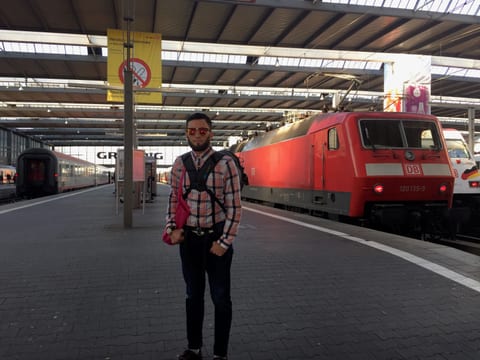
Service information checked . Check the operator before travel because schedules can change at short notice.
Quick facts
- Journey planning
- DB Navigator and bahn.de cover DB trains and most other scheduled public transport in Germany.
- The planner is broader than the operator. A result may be run by a regional company rather than Deutsche Bahn.
- Long-distance trains
- ICE is the principal high-speed category. IC and EC trains also handle long-distance trips within Germany and across borders.
- Regional trains
- RE and RB trains cover regional routes. S-Bahn trains handle suburban networks around major cities.
- The Deutschlandticket is valid on local and regional public transport, not on regular ICE, IC, or EC services.
- Tickets
- Long-distance fares range from train-specific saver tickets to flexible fares. Read the connection and refund rules before paying.
- Featured station
- Munich Central Station is the photographed station currently connected to this parent network.
- Network type
- National long-distance and regional rail, with services also run by other operators.
- National rail
Mike’s notes
Deutsche Bahn operates many trains in Germany, but not every service shown in DB Navigator or on bahn.de. Germany contracts many regional routes to other railway companies. The DB planner still covers most of them, so it is the easiest place to search a trip.
Read the train code before buying
ICE trains cover the fastest long-distance corridors. IC and EC trains are also long-distance services. RE and RB are regional trains, while S-Bahn identifies suburban networks around major cities.
That distinction controls ticket validity. The Deutschlandticket covers local and regional public transport, including most RE, RB, and S-Bahn services. It does not normally cover ICE, IC, or EC trains. A journey planner result can mix both categories, so check each leg rather than assuming one pass covers the complete route.
Booking, flexibility, and seats
Long-distance saver tickets cost less but bind the passenger to the booked service and carry tighter change or refund rules. Flexible fares cost more but allow more freedom on the selected route and date.
A DB account is not required to buy a digital ticket. Keep it available on the phone or as a PDF and carry the identification specified during purchase.
Seat reservations are separate from many second-class long-distance tickets. A reservation is useful on busy holiday, Friday, and Sunday trains, but it does not replace the travel ticket. First-class fare conditions may include a reservation, depending on the product.
When the trip changes
Platform changes and delays appear in the journey planner and DB Navigator. Recheck the connection before leaving for the station, then watch the live departure board. If a disruption breaks the booked itinerary, DB's passenger-rights guidance explains when another train may be used and when compensation applies.
Munich Central Station is the first photographed DB station connected to this guide. It is a large terminus with long-distance, regional, and S-Bahn services. Allow enough transfer time to confirm the train section and reach the correct platform, especially when moving between the main hall and the underground suburban platforms.