Berlin U-Bahn
Metro · Berlin · Berliner Verkehrsbetriebe (BVG)
9 lines · 175 stations · 25 interchanges
Every line drawn through its stations. Tap a line in the legend to hide or show it.
Lines
Stations from my trips
Photographs from stations connected to this network.
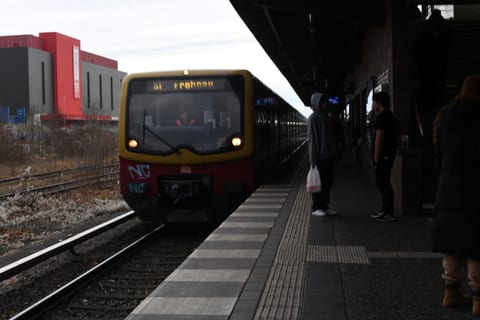 +1
+1Quick facts
- Operator
- BVG runs the U-Bahn, trams, buses, and ferries, S-Bahn Berlin runs the S-Bahn.
- Payment
- Buy tickets in the BVG app or machines. Validate paper tickets before travel, there are no normal gates.
- Use AB inside Berlin, ABC when the airport or Potsdam is involved.
- Mobile ticketingFare inspection
- Airport
- BER is FEX, regional rail, S-Bahn, or X7 bus to U7. It is not directly on the U-Bahn.
- Airport linkU7
Mike’s notes
Berlin runs a dense, integrated transit system: U-Bahn, S-Bahn, trams in the east, regional trains, and buses, all on one set of fare zones.
How to pay
Buy tickets in the BVG app or at machines. If you use a paper ticket, validate it before you board. Berlin has no ticket gates, so an open platform is not permission to ride for free, and inspectors work in plain clothes.
The zones are simple: AB covers the city, ABC adds BER airport and Potsdam.
The lines a visitor uses
The U-Bahn is dense in the center, and the S-Bahn carries the longer cross-town and airport trips. U5 is the newest central line, linking Hauptbahnhof, Brandenburg Gate, Unter den Linden, Museum Island, and Alexanderplatz since its 2020 extension. U2 is the older east-west line, severed by the Wall and reconnected in 1993. U8 runs north-south through Neukolln and Kreuzberg.
For BER, take the FEX, regional, or S-Bahn trains. The U7 reaches the airport only by the X7 bus at Rudow.
Short history
1902
U-Bahn begins
Berlin opens its first elevated/underground railway, starting the network that still gives the city its split elevated-and-tunnel character.
Cold War
A divided network
The divided city produces ghost stations, severed service patterns, and a transit geography that still explains parts of modern Berlin.
2020
U5 reaches Hauptbahnhof
The U5 extension links Alexanderplatz, Museumsinsel, Unter den Linden, Brandenburg Gate, and Hauptbahnhof into one central U-Bahn axis.