London Transit
Metro · London · Transport for London
12 lines · 339 stations · 164 interchanges
Every line drawn through its stations. Tap a line in the legend to hide or show it.
Lines
Central
District
Elizabeth
Hammersmith & City
Metropolitan
Northern
Piccadilly
Waterloo & City
Stations from my trips
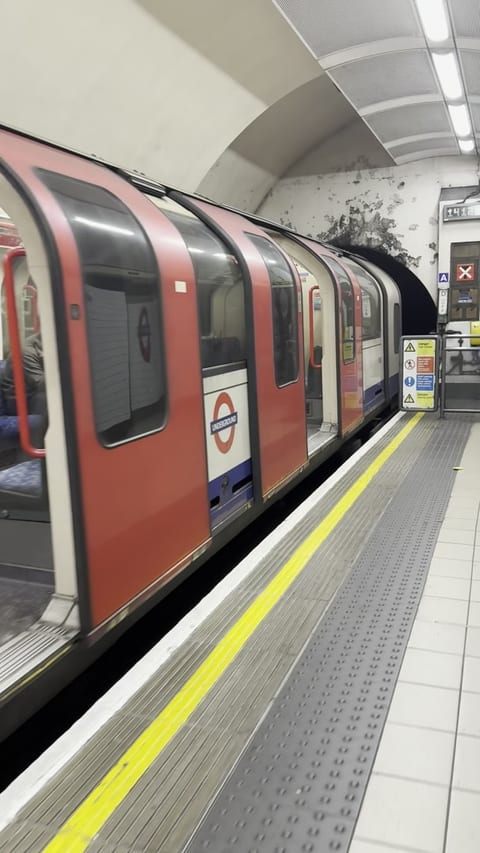
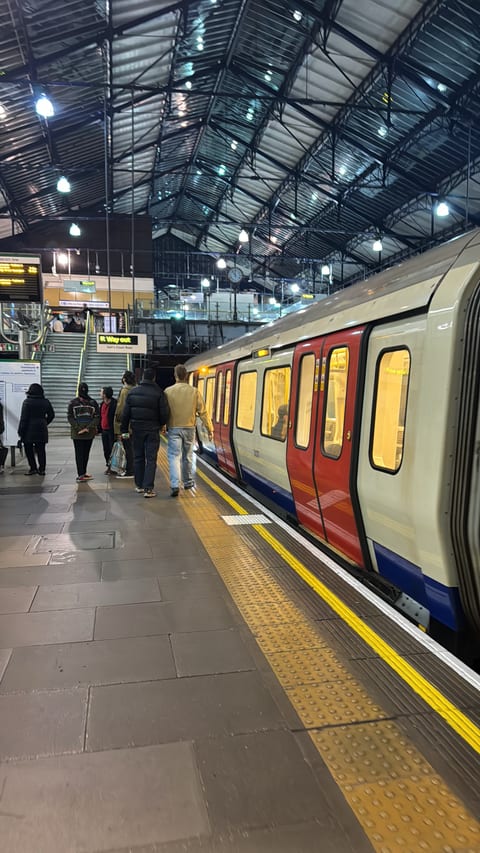
Photographs from stations connected to this network.

Quick facts
- Operator
- Transport for London is the public-facing transit authority for the Tube, DLR, Elizabeth line, Overground, buses, trams, and river services.
- The rail layers have different operators and histories, but the visitor habit is one TfL network.
- Payment
- Use a contactless card, phone wallet, or Oyster. For capping, keep using the same card or device.
- A phone wallet and the physical card in your wallet can count as different payment devices.
- ContactlessOysterFare capping
- Airport links
- Heathrow is easy by Elizabeth line or Piccadilly line. London City Airport is a DLR trip.
- Airport linkElizabeth lineDLR
- Fare checks
- Inspectors can check Oyster or contactless payments. If you use a phone, keep it charged for the whole trip.
- Fare inspection
- Built form
- London mixes deep Tube tunnels, cut-and-cover railways, sub-surface lines, automated DLR, and the Elizabeth line's newer mega-stations.
- These are layers of one usable transit system, not separate trip-planning worlds.
- Deep TubeCut-and-coverSub-surface railwayAutomated light metroRegional rail
- Luggage
- Elizabeth line and newer step-free stations are much easier with bags. Older deep Tube stations can involve stairs, long passages, and tight trains.
- Luggage-friendlyStep-free access
- Beyond London
- Brighton, Bath, Cambridge, and other day trips are usually National Rail, not the London Transit network.
- National Rail connections
Mike’s notes
London runs on one fare system across several rail networks: the Tube, the DLR, the Elizabeth line, the Overground, and National Rail. Tap in with the same contactless card, phone, or Oyster, tap out where the rail layer asks, and TfL caps the fare. Use one card or device for the whole trip so the capping works.
The layers
The Tube is two ages of railway. The sub-surface lines, District, Circle, Hammersmith & City, and Metropolitan, opened from 1863 with larger trains in shallow cut-and-cover tunnels. The deep lines, Northern, Bakerloo, Piccadilly, Victoria, Jubilee, Central, and Waterloo & City, run in the small electric tubes bored from the 1890s, which is why they sit deep and reach the platforms by long escalators. The DLR (1987) is the driverless, mostly elevated Docklands network for Canary Wharf, Greenwich, Woolwich, and London City Airport. The Elizabeth line (2022) is a fast east-west railway with full-size trains and step-free core stations.
Access and airports
Accessibility splits by age. The Elizabeth line and newer stations have lifts and level access. Most deep Tube stations are stairs and escalators, and only about a third of the network is fully step-free, so check your station if you have luggage or use a wheelchair. Heathrow is the Elizabeth or Piccadilly line, and London City is the DLR.
Day trips like Brighton, Bath, and Cambridge run on National Rail from a mainline terminus, not the Tube.
Short history
1863
The first Underground railway
The Metropolitan Railway opens and gives London the original sub-surface railway pattern: shallow tunnels, larger trains, and a very different feel from the later Tube.
1890s
Deep Tube London
Electric deep-level lines make the small round tunnels possible. This is the Tube feeling most visitors picture: narrower trains, deeper stations, and more vertical circulation.
1930s
A stronger design identity
This is the era of expansion, roundels, diagrammatic maps, and station architecture becoming part of how London explains itself.
1987
The DLR opens
The Docklands Light Railway adds the driverless, elevated, east-London layer. It is not the Tube, but it is absolutely part of how London Transit works.
1999
Jubilee Line Extension
The extension to Canary Wharf and Stratford brings a different architectural scale: big stations, clear interchanges, and a very late-20th-century version of London infrastructure.
2022-2023
Elizabeth line joins the map
The Elizabeth line gives London a faster east-west railway with larger trains and much easier luggage handling at many of its core stations.