Current conditions and the practical reference material that helps turn the saved places into a trip.
The next week in Amsterdam
7-day forecast from Open-Meteo. UV badges flag days when sun protection matters (3 and above is moderate; 8 and above is risk territory for unprotected fair skin within 30 minutes).
Today
Rain
34° / 23°
3.7 mm
UV High
Wed
Overcast
26° / 21°
UV Moderate
Thu
Drizzle
22° / 16°
UV High
Fri
Partly cloudy
23° / 14°
UV Moderate
Sat
Partly cloudy
26° / 14°
UV High
Sun
Overcast
25° / 18°
UV Moderate
Mon
Overcast
22° / 18°
UV Moderate
Climate
Summer (Jun-Sep)
Typical highs around 20°C, lows around 14°C.
Winter (Dec-Mar)
Typical highs around 6°C, lows around 2°C.
In August 4
Drag to scrub across the year.
JFMAMJJASOND
Weather
21° / 15°
Typical high / low
3 mm rainfall this month
Daylight
14.8h
06:22 – 21:08local
Festivals around this date
Holidays coming up
Public holidays from Nager.Date.
Airports
closest AMS · 11 km
Getting around Amsterdam
Public-transit operators within 8 km of the city center. Click through to each operator’s site for routes, fares, and tickets.
Local transit operators
FlixBus-euHeilbronner NahverkehrallGo (Keolis)TransdevEurostar Red (Thalys)EurostarBlaBlaCar Bus↗ (opens in a new tab)ArrivaFlixbusSchweizerische Bundesbahnen SBB
About Amsterdam
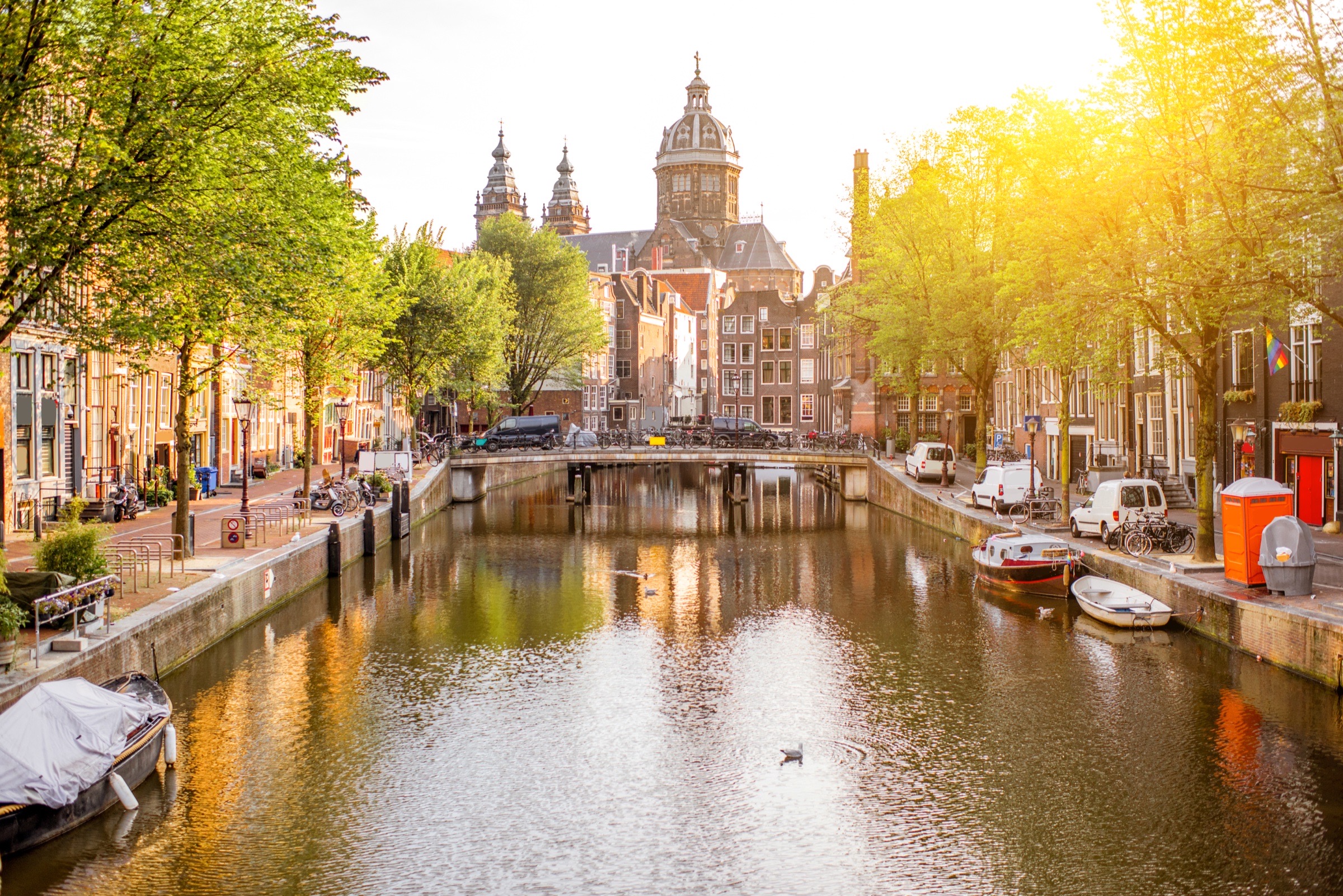
Amsterdam is the capital and largest city of the Netherlands. It has a population of 933,680 in June 2024 within the city proper, 1,457,018 in the urban area and 2,480,394 in the metropolitan area. Located in the Dutch province of North Holland, Amsterdam is colloquially referred to as the "Venice of the North", for its large number of canals, now a UNESCO World Heritage Site.
The links below support the changing or licensed reference material on this page. Personal notes and ordinary geographic facts are not footnoted individually.
City background. Wikipedia summary may be clipped or paraphrased. Structured fields are cross-checked against the related references. Related: .
highlowrainfallcomfortable months
Monthly highs, lows, rainfall — long-term averages, NASA POWER.
FlixBus-de
FlixBus-de
Dänische Staatsbahnen
HZZP
MeerPlus
Eu Sleeper
NS Int
Stadtwerke Schweinfurt
GoVolta
Operators and modes are aggregated from individual transit-agency GTFS feeds. Route classifications come from each feed’s route type codes.
Maps, image licenses, and the full dataset registry are listed in site credits.
Amsterdam, my guide to the canal city and the day trips out
My Amsterdam travel guide. Walking the canal ring, where to stay, King’s Day and Keukenhof tulip season, the Schiphol train, and day trips like Zaanse Schans.
Amsterdam is smaller and easier than it looks, a wheel of canals you can mostly cross on foot. The thing I tell every first-timer is that the Dutch trains are so good that basing outside the city and riding in is a real option, not a compromise. Here's how I'd plan it, day trips included.
Planning brief
Planning Amsterdam
Land at Schiphol, ride a train into town from the platform under the airport, and accept that the canals are pricey. Amsterdam itself is tram-first for visitors, but the Netherlands has the best regional rail in Europe, so the big train is often the fast move across town or back in from a cheaper base.
Schiphol is the easy arrival
Customs, bags, escalator, train. The platform sits directly under the airport. Tap the same contactless card or phone at the NS gate, ride to Centraal or Zuid, and tap out at the exit gate.
Don't fight the canal pricing
Central canal-house hotels are €200+. Amsterdam Zuid is mid-priced and clean. The Hague, Utrecht, and Rotterdam can be cheaper bases because NS trains run constantly into Amsterdam.
Tap your card on the train and tram
NS trains, GVB trams and metro, and regional buses all take OVpay. Use one card or device, tap in, tap out, and do not forget that train gates are part of the same visitor payment story.
Remember the Noord/Zuidlijn
Line 52, the blue North-South metro, is the fast spine: Centraal, Rokin, Vijzelgracht, De Pijp, Europaplein, Zuid. If you are arriving by train from The Hague or staying near Zuid, it is often the cleanest cross-city move.
Pick the boat tour deliberately
Do a canal boat tour, but do not buy from someone on the street. Architecture and small-boat tours are better than the big-boat circuit. Spend ten minutes comparing options before you book.
Long days, the canals at their best, herring season from late May. Hotel prices are at their highest and the central city is busy.
Shoulder
April, September, October
The light is still good, prices ease, museums and markets are easier. Pack a layer. The wind off the IJ has weight.
Quiet and dark
November to March
Short days, rain or sleet in most months, occasional canal-skating cold snap. The museums and cafes carry the trip in this window.
The light in late June is famously long. Sunset can be after 22:00. Rain is possible in any month, so pack accordingly.
Festivals and big annual events
Amsterdam has a few dates that change the city: King's Day, tulip season, Pride, and ADE.
Event
When
What it changes
King's Day
April 27
Orange street parties, canal boats, flea markets, and full hotels. The night before is busy too
Tulip season
Mid-March to mid-May
Keukenhof opens for its short season. Pre-book if peak bloom lines up with your dates
Amsterdam Pride
First weekend of August
Canal Parade weekend. Hotels book heavily
Liberation Day
May 5
Free concerts after Remembrance Day silence on May 4
Amsterdam Light Festival
Late November to late January
Canal light installations, usually easiest by boat
ADE
Mid-October
Electronic-music conference and festival across the city. Hotels book months ahead
Sinterklaas arrival
Mid-November
Family parade by steamboat
New Year's Eve
December 31
The center gets loud with fireworks. A quieter hotel means staying south of the core
Getting to and from Schiphol
Amsterdam Airport Schiphol sits about 9 km southwest of Centraal, and it is one of the easier major airport arrivals in Europe because the train station is directly under the terminal. Customs, bags, escalator down to the platforms (the Dutch signage uses spoor, meaning track or platform), and you are on a train within minutes.
The default for almost every arrival. Sprinter (local) and Intercity both run. Trains every few minutes day and night
NS train, direct to Zuid
8 to 10 min
~€4 on OVpay
If your hotel is in De Pijp, the museum quarter, or anywhere south of the center. Skips the Centraal transfer
Uber / Bolt
25 to 45 min
€40 to €60 to the center
Late arrival, heavy luggage, or a group splitting the fare. Pickup is at a marked lot a short walk from arrivals
Taxi from the rank
25 to 45 min
€50 to €65 to the center
Marked yellow-and-blue rank cars. Slightly more than rideshare. Reliable when the app surges
The train is the right default. The fare is OVpay. At Schiphol Plaza, follow the train signs down toward the platforms, use a yellow NS gate or pole, and tap a contactless bank card or phone wallet. Tap out with the same card or device at Centraal, Zuid, or wherever you leave the rail system. The system pairs the entry and exit taps to calculate the leg. If you forget to tap out, it charges the maximum possible fare for that journey, the same shape as the London Underground gotcha. Always tap out, even if the gate is open and the crowd is walking through. Visa, Mastercard, Maestro, Apple Pay, and Google Pay all work. Amex and Discover are less reliably accepted.
If your hotel is near Amsterdam Zuid station, take the train there directly instead of going to Centraal first. Some Schiphol services stop at Zuid before continuing. The southern hotels save 15 to 20 minutes of metro transfer time by going there straight from the airport.
Transit notes
Amsterdam is not really a "learn the subway map" city for most visitors. You mostly use the trams, because they run through the parts of the city you are actually walking around: canal ring, museum quarter, De Pijp, Oud-West, and the station approaches. They are slower than the train, but they keep you above ground and they make Amsterdam feel like Amsterdam.
The move people miss is that the big trains are also local tools. Schiphol, Zuid, Centraal, Zaanse Schans, The Hague, Utrecht, Rotterdam, and Delft are all part of the same practical travel layer. If your hotel is cheaper in The Hague or Rotterdam, or if you land at Schiphol and are staying south of the center, the NS train is the clean move.
The payment story is the reason this works. Bank card or phone wallet works across NS, GVB, and regional buses, no paper ticket and no OV-chipkaart needed. Charged per kilometer with a small boarding fee. The important habit is simple: use the same card or device, tap in, tap out.
Network
Covers
How to pay
NS
National rail. Schiphol run, Zaanse Schans, Zuid to Centraal, and Intercity to The Hague, Utrecht, Rotterdam
Tap in and out at station gates
GVB
Amsterdam metro, trams, and city buses. The trams are the workhorse inside the canal ring. Line 52 is faster between Centraal and Zuid
Tap on at the entry pole, tap off at the exit pole
Regional buses (Connexxion, EBS, Arriva)
Suburbs and nearby cities
Same tap
Learn the metro for one line: 52 / Noord-Zuidlijn, the blue north-south line. It is not the old visitor image of Amsterdam, but it is extremely useful: Centraal, Rokin, Vijzelgracht, De Pijp, Europaplein, and Zuid in one straight shot. If you arrive from The Hague, Rotterdam, Utrecht, or Schiphol into Amsterdam Zuid, this is the clean way to get into the canal-ring spine without first riding to Centraal.
It is also just a cool piece of engineering. The Noord/Zuidlijn runs under the IJ, under Amsterdam Centraal, and under the historic center. Some stations sit more than 20 meters down because the line had to be threaded through soft ground, canals, old foundations, and streets too narrow for easier construction. It feels more like a modern deep metro than the tram city above it.
I broke the system notes out further into the Amsterdam Metro and Amsterdam Tram guides, mostly so the route and payment details do not eat the whole city guide.
Featured transit moves
Move
How to do it
Why it matters
Schiphol to Centraal
Tap in at the NS gate under Schiphol, take the train to Amsterdam Centraal, tap out
The default airport arrival. Fast, cheap, and easier than a taxi into the canal ring
Schiphol to Zuid
Tap in at Schiphol, take a direct train to Amsterdam Zuid, tap out
Better for De Pijp, Museum Quarter, Zuidas hotels, and anything where Line 52 is the next leg
Zuid to the center
From Zuid, take Metro 52 toward Noord and get off at De Pijp, Vijzelgracht, Rokin, or Centraal
The clean north-south spine. This is the line to remember if you are staying south or arriving from another Dutch city
The Hague or Rotterdam into Amsterdam
Take NS to Amsterdam Zuid or Centraal, then tram or Metro 52 for the last leg
Makes cheaper non-Amsterdam hotels viable without turning the trip into a bus commute
Zaanse Schans
NS Sprinter from Centraal to Zaandijk Zaanse Schans, then walk across the bridge
The easy windmill half-day. It looks like a tour-bus thing, but the train is simpler
Where to stay
Central canal-house rooms are pricey for what you get. €200+ for a small room is normal, and the convenience of being inside the canal ring is real but does not always justify the price spread. Given how good Dutch rail is, basing further out is a fair option, not a punishment.
Cheapest of the three basing options. Rotterdam is the modernist counterweight to Amsterdam
Furthest of the three. You ride longer
Hoofddorp is not Schiphol. The "Schiphol airport hotels" marketed in Hoofddorp are several kilometers south of the airport in a separate town. You take a shuttle or short train to the terminal anyway. If you want airport convenience, stay at one of the hotels actually attached to Schiphol Plaza. If you want value, base in The Hague, Utrecht, or Rotterdam.
Zaanse Schans is the windmill day
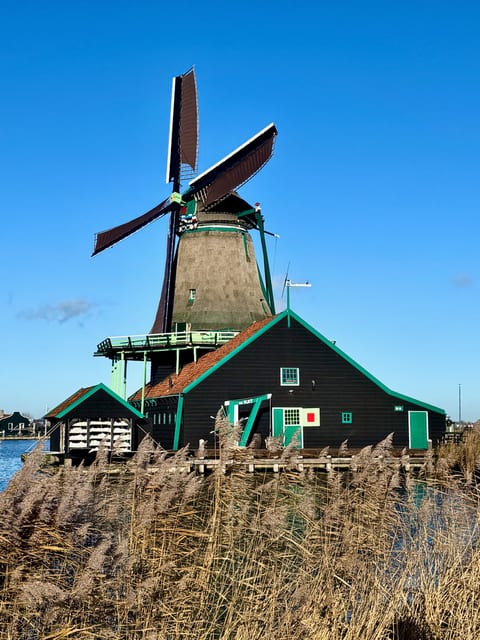
The single coolest thing within easy reach of Amsterdam is Zaanse Schans, an open-air collection of preserved 17th and 18th century working windmills along the Zaan river in Zaandam. It looks complicated to get to and it is not.
From Centraal, take the NS Sprinter toward Uitgeest. Get off at Zaandijk Zaanse Schans. About 17 minutes, one tap in at Centraal, one tap out at Zaandijk. From the station it is a ~15-minute walk: cross the Julianabrug over the Zaan and the windmills appear on your left.
Entry to the village is free. Individual windmills and museums charge admission if you want to go inside. I would build a half-day around it: morning train out, walk the windmills, eat at one of the cafés on site, train back by mid-afternoon.
If you would rather not commit a half-day, Brouwerij 't IJ keeps a windmill on the Amsterdam side. It is a craft brewery built at the foot of the De Gooyer windmill in Amsterdam-Oost, and the taproom is a pleasant place to drink a beer with the windmill turning above you.
Herring, ferry, and Foodhallen
The free thing I always do at least once: take the Buiksloterweg ferry from the docks behind Centraal across the IJ to Amsterdam-Noord. It runs every few minutes, takes about five, and costs nothing. The other side of the river is an easy walking afternoon, and I will usually pick up a herring and something to drink at Centraal first and eat them on the boat. It is the cheapest distinctive thing in the city.
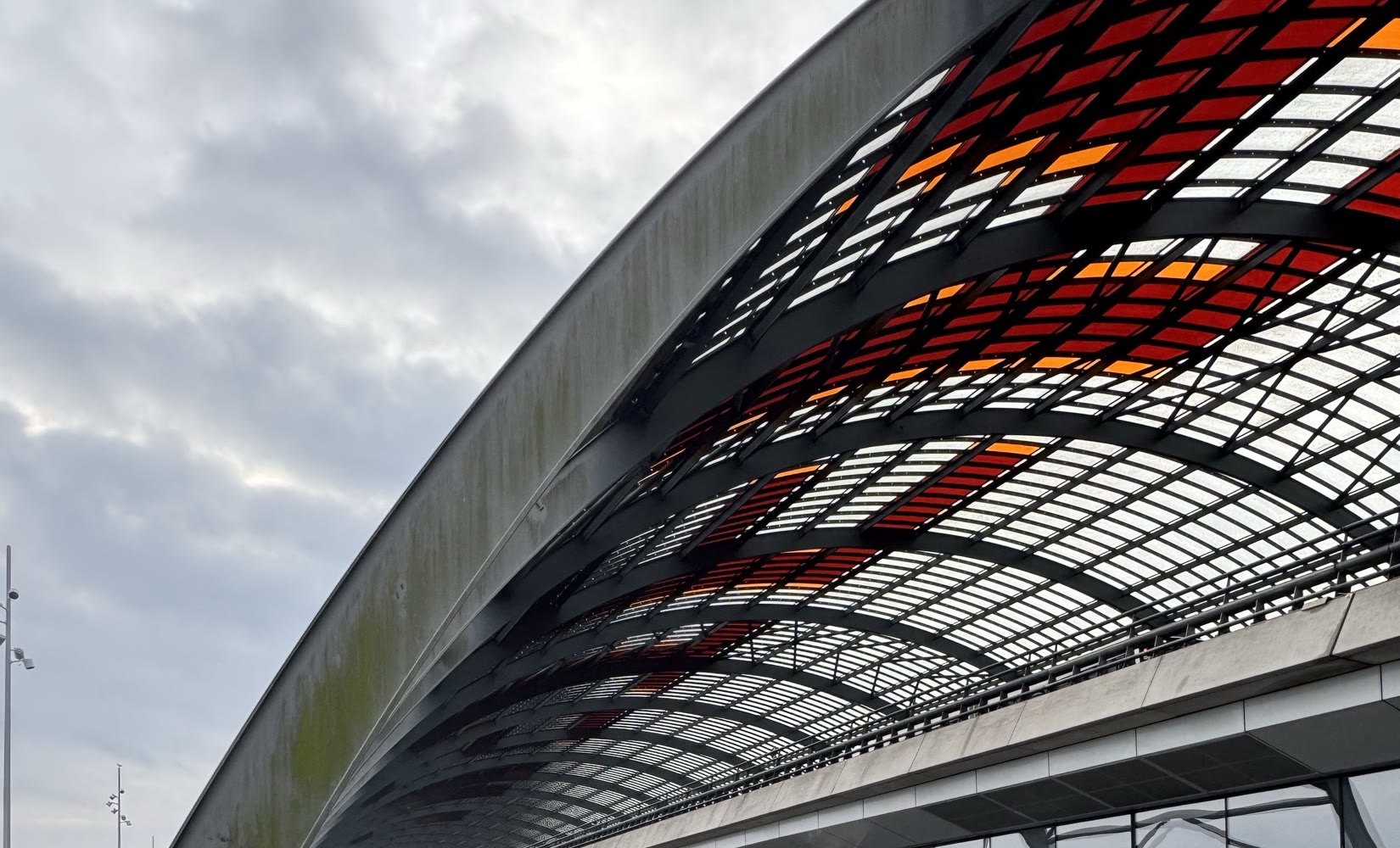
The Noord ferry starts from the back of Centraal, and the station roof deserves the same small pause as the boat ride: look up before you board.
If it is herring season (roughly late May through summer for Hollandse nieuwe), get one. Rob Wigboldus on Zoutsteeg, just off Damrak, is a tiny standing-only stall that has been in the same family for decades. Order it with chopped onion and pickle, eat it on the bench outside the alley.
For groups that cannot agree on dinner, Foodhallen in Oud-West is the easy answer. A covered hall in a converted tram depot with two dozen food stalls, a bar in the middle, and enough variety that the picky eaters and the adventurous ones both leave fed.
The canal boat tour
Yes, do one. The classic Amsterdam visitor activity that actually holds up. Pick deliberately: a small-boat or architecture-themed tour beats the big-boat sightseeing run, and they cost about the same. Spend ten minutes researching beforehand and book online.
Two things to skip on the canals. Do not buy a ticket from someone with a clipboard on the sidewalk near Centraal. The operators upsell and the boats are mediocre. And De Poezenboot, the cat rescue boat on Singel, is a charming concept with a real cause, but the line is always longer than the visit. Walk past, donate online if you care, keep going.
Museums to book in advance
Online timed entry is the rule, not the exception. Walk-ups are turned away. Book before you land.
The Secret Annex on Prinsengracht. The most famous Amsterdam museum and the hardest to book
Online only, releases tickets six weeks in advance at 10:00 CET. Sets out a full day's tickets per release. Sells out in minutes for peak weeks. Set a calendar reminder for the day tickets drop for your visit week
Touristy pick I would still make. Collection is dense and well-curated
Required online. Book a few days ahead in peak (May to September). On my last visit half of the queue at the door had not pre-booked and were turned away, so the warning is real. Same-week availability is usually fine off-peak
A small museum at the zoo dedicated to microorganisms. The microscope room is the highlight. Punches above its size
Walk-up OK
1 hour
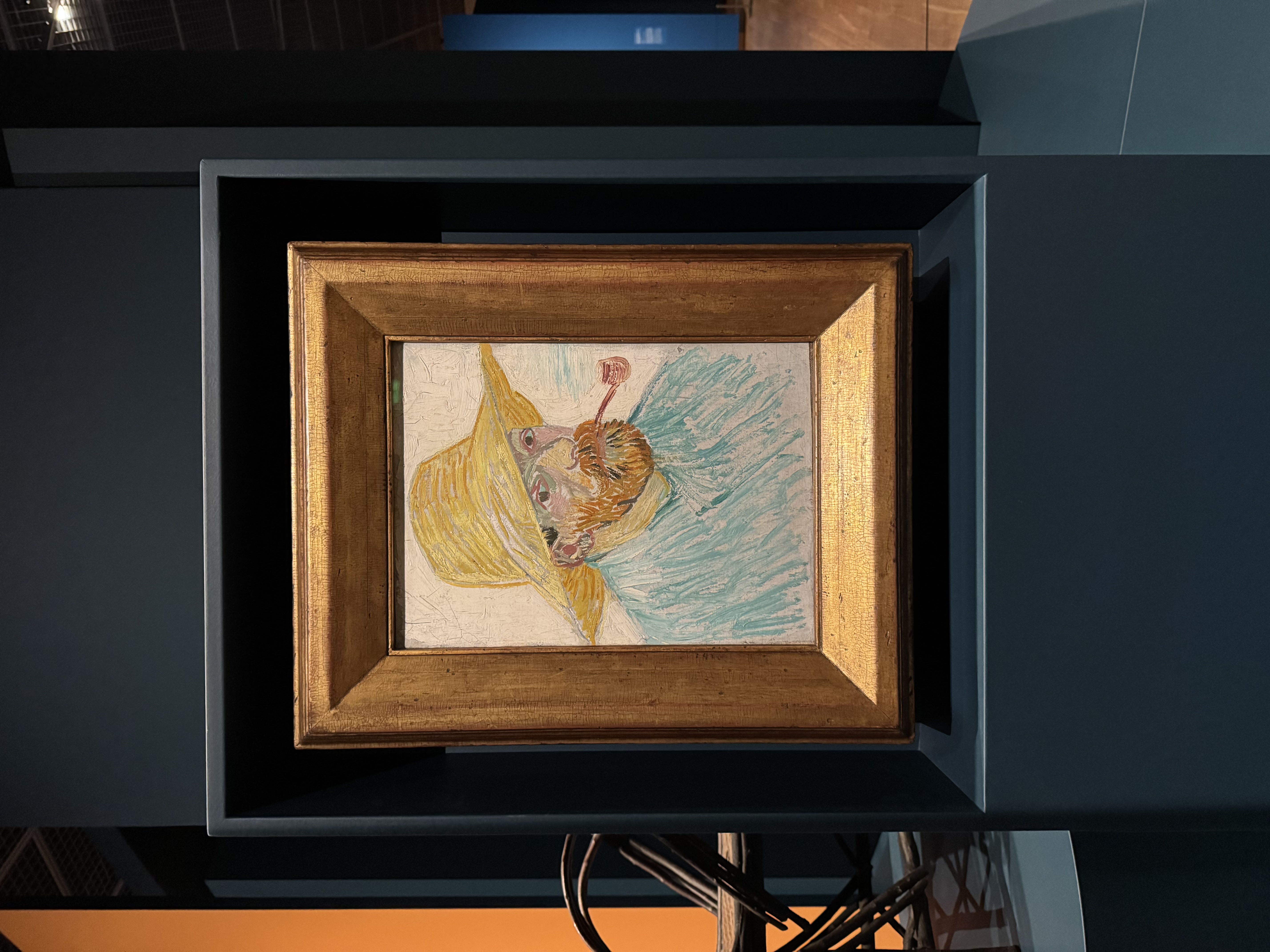
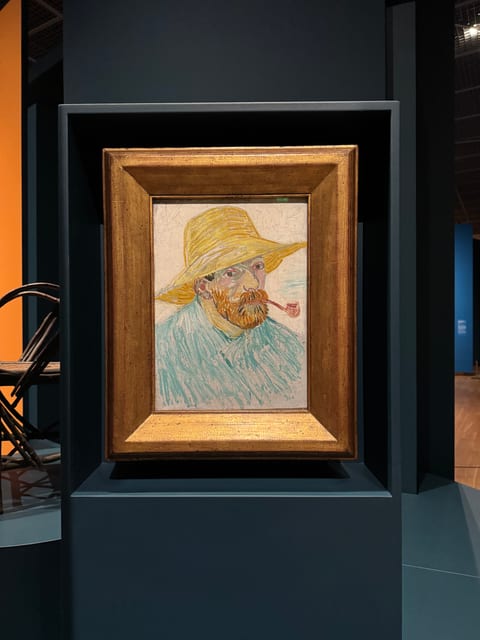
The Van Gogh Museum is compact and focused. A timed slot makes it much easier to enjoy, so book ahead.
The Anne Frank booking is the one that catches everyone. Six weeks before your visit date, at exactly 10:00 Amsterdam time, the museum releases tickets for that day. Most go in minutes. Miss the release window and the only remaining option is the small number of tickets the museum holds back for sale on the day-of (released at 09:00 Amsterdam time, also online, also gone fast). Don't queue at the door. There is no walk-up line.
Quick answers
How do I get from Schiphol to central Amsterdam?
Take a Sprinter or Intercity train from Schiphol Plaza to Amsterdam Centraal. The platform is one floor below arrivals. Signs are clear and in English. About fifteen minutes, runs every few minutes day and night. Tap a contactless card or phone at the NS gate before the platform, ride, and tap the same card or phone at the exit gate. Zuid is even faster if you are staying south of the center.
Where should I stay in Amsterdam?
Three real options. Central (anywhere along the canals or near Centraal) is convenient and pricey, often €200+ for an unremarkable room. Amsterdam Zuid is a business district with mid-tier chains around €100, sterile but clean. Given how good the trains are, basing in The Hague, Utrecht, or Rotterdam and riding in works well. All three have nicer hotels at lower prices and the regional train is part of the day.
Do I need a transit card?
No. As of the OVpay rollout, you tap a contactless bank card or a phone wallet directly on the gates and poles. Works on NS trains, GVB metro and trams, regional buses. Fares are charged per kilometer, no upfront top-up.
Should I book the Van Gogh Museum?
Yes, even if "touristy" makes you wary. The collection is dense and well-curated. The catch is that you must reserve a timed entry online. Walk-ups are turned away at the door, and the staff there spend most of the day explaining this to people who tried it.
Should I do a canal boat tour?
Yes, but pick deliberately. A small-boat or architecture-themed tour beats the big-boat sightseeing run. Spend ten minutes researching before you book. Do not buy a ticket from someone with a clipboard on the street.
 +2
+2 +3
+3 +4
+4




 +5
+5

 +1
+1 +5
+5 +1
+1