Pizzería Popular / Colores Santos - Buen Pastorrestaurant
Plaza Alberdiattraction
+4
Honestorestaurant
+5
Goody'srestaurant
+1
Terminal de Ómnibus de Córdobatransit
+1
Black Bullshopping
Centro Civico del Bicentenario "El Panal"attraction
+5
San Pietrorestaurant
+4
Burgerbeerrestaurant
Aeropuerto Internacional Córdoba (COR)transit
+1
Parque Las Heras-Elisapark
+11
Bros. Comedorrestaurant
+3
Temple Córdobarestaurant
+2
El Mercadilloshopping
+2
Parque Sarmientopark
Museo Emilio Caraffaattraction
Plaza San Martín Córdobaattraction
+1
The Bagel Side (TBS)restaurant
+1
STANDARD 69restaurant
Plan Córdoba
Current conditions and the practical reference material that helps turn the saved places into a trip.
The next week in Córdoba
7-day forecast from Open-Meteo. UV badges flag days when sun protection matters (3 and above is moderate; 8 and above is risk territory for unprotected fair skin within 30 minutes).
Today
Drizzle
21° / 11°
UV Moderate
Tue
Overcast
18° / 12°
UV Moderate
Wed
Overcast
20° / 12°
UV Moderate
Thu
Drizzle
17° / 8°
UV Moderate
Fri
Partly cloudy
17° / 3°
UV Moderate
Sat
Partly cloudy
14° / 5°
UV Moderate
Sun
Partly cloudy
13° / 2°
UV Moderate
Climate
Hot and wet season (Nov-Mar)
About 74% of the year's rain falls in these months. Typical highs around 29°C, lows around 14°C.
Cooler dry season (Apr-Oct)
Typical highs around 21°C, lows around 6°C. About 29mm of rain a month.
In August 4
Drag to scrub across the year.
JFMAMJJASOND
Weather
20° / 4°
Typical high / low
0 mm rainfall this month
Daylight
10.9h
07:53 – 18:49local
Holidays coming up
Public holidays from Nager.Date.
Airports
closest COR · 12 km
Getting around Córdoba
Public-transit operators within 8 km of the city center. Click through to each operator’s site for routes, fares, and tickets.
Local transit operators
Mar ChiquitaConiferalERSATAMSE
Operators and modes are aggregated from individual transit-agency GTFS feeds. Route classifications come from each feed’s route type codes.
About Córdoba
Córdoba is a city in central Argentina, in the foothills of the Sierras Chicas on the Suquía River, about 700 km (435 mi) northwest of Buenos Aires. It is the capital of Córdoba Province and the second-most populous city in Argentina after Buenos Aires, with about 1.6 million urban inhabitants according to the 2020 census.
The links below support the changing or licensed reference material on this page. Personal notes and ordinary geographic facts are not footnoted individually.
City background. Wikipedia summary may be clipped or paraphrased. Structured fields are cross-checked against the related references. Related: Wikidata, .
highlowrainfallcomfortable months
Monthly highs, lows, rainfall — long-term averages, NASA POWER.
Córdoba, Argentina is an old university city on the Suquía River. I spend enough ordinary time here to care about the grocery shop, the football bar, the bakery, and which branch of a restaurant has slipped. Start at Plaza San Martín, continue through the Jesuit center and Nueva Córdoba, then cross La Cañada into Güemes.
Planning brief
Planning Córdoba
Córdoba was laid out around Plaza San Martín. The Jesuit Block is a few streets west, Nueva Córdoba extends south toward Parque Sarmiento, and Güemes begins across La Cañada. The Sierras are west of the city and require a separate bus or car trip.
Start in the old center
Plaza San Martín, the Cathedral, Cabildo, Jesuit Block, university buildings, and several churches fit into one walk.
Continue south through Nueva Córdoba
Apartment towers, university students, cafés, Paseo del Buen Pastor, the Capuchin church, and Parque Sarmiento fill the blocks south of the old center.
Cross La Cañada into Güemes
The stone channel leads toward the restaurants, bars, galleries, and weekend market around Belgrano Street. Residential blocks begin quickly beyond the busiest streets.
Leave the city for the Sierras
Villa Carlos Paz, La Cumbre, La Cumbrecita, and smaller mountain towns sit west of Córdoba. Buses reach the main towns. A car is more useful for trailheads and routes between them.
Córdoba Airport is north of the city. Domestic flights connect it with Buenos Aires and other Argentine cities. International routes change often, so I check the current airport schedule before relying on a direct flight.
A taxi, remise, ride-hailing car, or city bus gets into the center. The exact time depends on traffic and the neighborhood. The international and domestic bus terminals are east of the center beside Nueva Córdoba, within a short taxi ride of most central hotels.
Where does the old center begin?
Plaza San Martín is the historic center. Córdoba's permanent street plan was established around the square in 1577. The Cathedral and Cabildo face it, and pedestrian shopping streets extend through the surrounding blocks.
A few streets west, the Jesuit Block contains the Church of the Society of Jesus, the former Jesuit residence, the university, and the Colegio Nacional de Monserrat. The Jesuits settled here in 1599, and the university dates to 1613. UNESCO lists the city block together with five Jesuit estancias elsewhere in Córdoba Province.
The center is compact enough to walk. Uneven pavement, traffic at crossings, and summer heat are the main things that slow it down.
What is in Nueva Córdoba and Parque Sarmiento?
Nueva Córdoba begins south of the center. Apartment towers, students, cafés, bars, clinics, and daily errands fill the neighborhood.
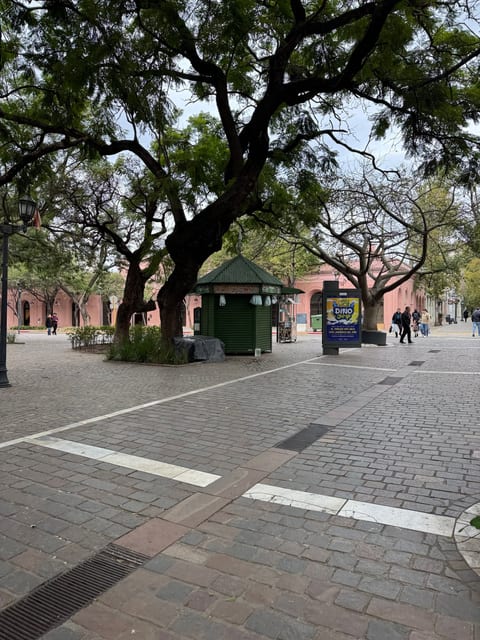
Paseo del Buen Pastor occupies a former women's asylum and prison that operated for almost a century. The surviving chapel now sits inside a cultural complex of galleries, restaurants, and open public space. One block away, the Church of the Sacred Heart, usually called the Capuchin church, has Augusto Ferrari's colored neo-Gothic facade and two unequal towers.
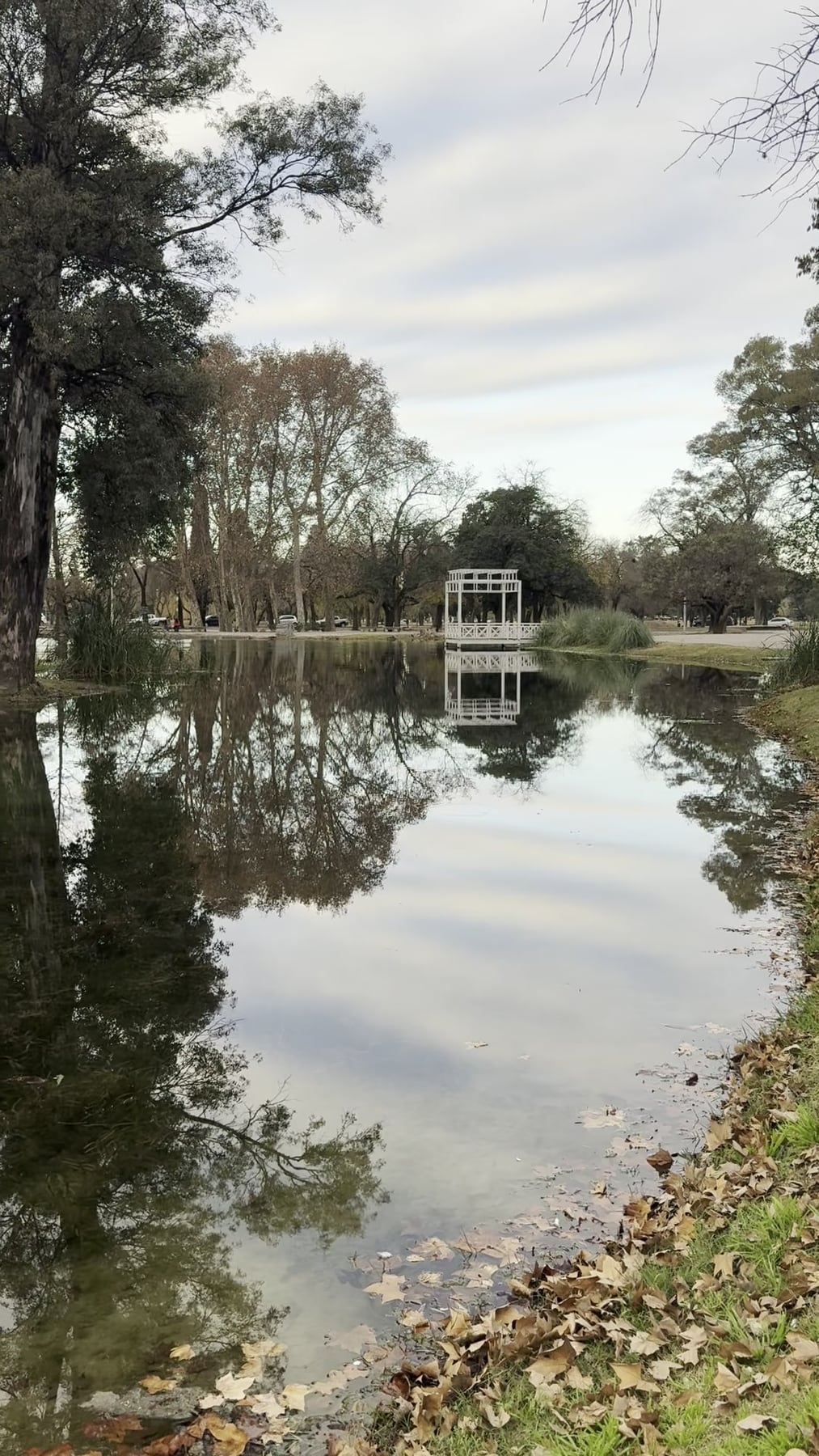
Parque Sarmiento begins farther east. Carlos Thays designed the park as part of the late nineteenth-century expansion that also produced Nueva Córdoba. Construction ran from 1889 to 1911. The park now contains a lake, rose garden, museums, sports facilities, and long paths used for walking, running, and mate. Maintenance varies from one section to the next.
The lake, paths, and shaded banks make Parque Sarmiento part of daily life in central Córdoba.
The Córdoba Botanical Garden is west of the center and requires a separate bus or car trip. I like it for a quiet walk with mate.
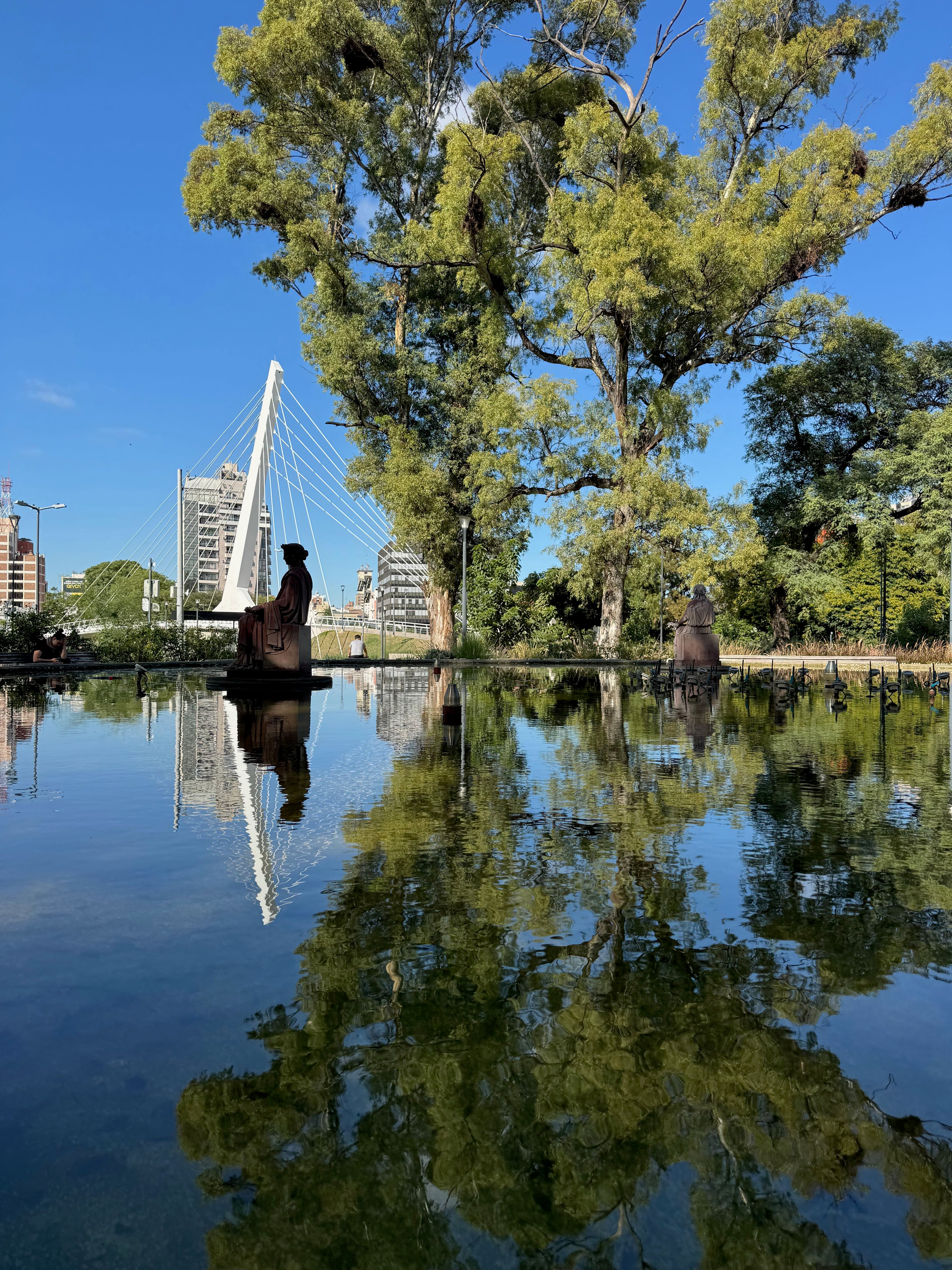
North of the center, Parque Las Heras-Elisa follows the Suquía. The rebuilt park has new paths, planting, play areas, and water features. The surrounding riverfront and Maipú corridor have also changed, so older descriptions of this part of the city are no longer reliable.
What changes at La Cañada?
La Cañada is the stone-lined channel carrying the Arroyo La Cañada through the center. The current walls and bridges opened in 1944 after repeated flooding, including a destructive flood in 1939. The large tipa trees along both banks were planted in 1948.
Güemes begins across the channel with restaurants, bars, galleries, antique shops, and the weekend market around Belgrano Street. The busiest blocks are easy to find. The neighborhood becomes residential quickly beyond them. I pay attention to the exact street at night rather than rely on a broad neighborhood label.
Where do I eat in Córdoba?
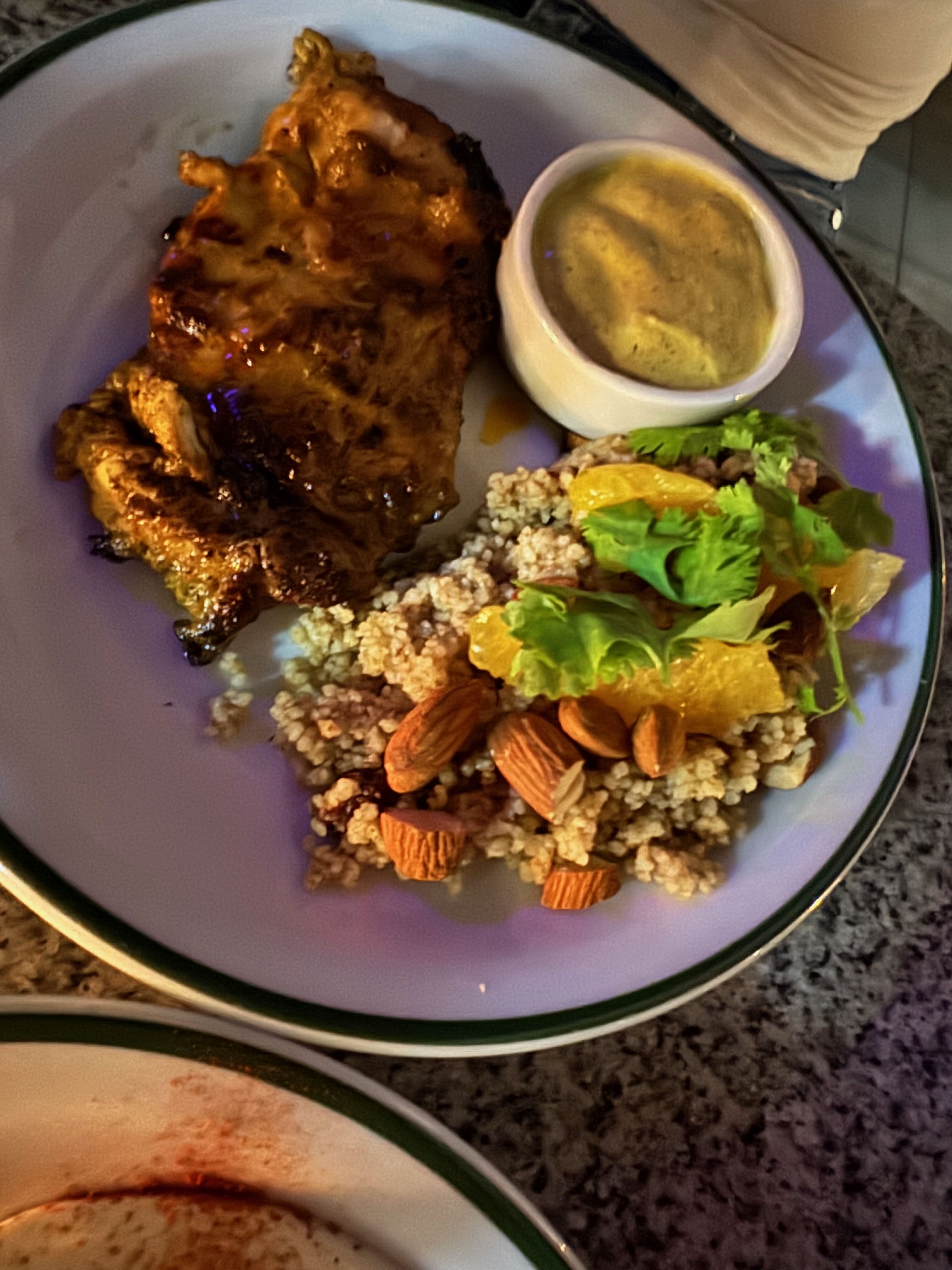
Bros. Comedor is my favorite place for lunch or dinner in Córdoba. The seasonal menu changes enough that I keep finding something new. I can often walk in on a quiet weekday afternoon, but I reserve for popular meal times. The entrance on 27 de Abril is discreet and upstairs.
The seasonal menu keeps me returning to Bros. Comedor.
The Bagel Side is my quick lunch near Buen Pastor. I order the everything pastrami. The food comes quickly, and it has repeatedly cost less than the nearby fast-food chains.
Honesto has some of the best pastries I have found in the city. The display case has tarts, medialunas, cookies, brownies, and laminated pastries. I come here for coffee and something from the case.
San Pietro is a Córdoba institution with white tablecloths, heavier food, and relaxed service. I would take my mother there. Nobody rushes the table, and a walk afterward is sensible.
El Papagayo is the formal tasting-menu restaurant. The cooking is excellent. I do not usually choose tasting menus, but I have had a very good meal here.
Galo Wines Jardín has enough range for a table ordering different things. The molleja is the dish I remember. Temple Córdoba has an interior terrace for a casual evening.
Why are the Standard 69 branches separate?
The central Standard 69 used to be one of my favorites. In April 2025, I was served undercooked chicken with blood on the plate, and another paid dish never arrived. That visit changed my rating to three stars.
The Villa Warcalde branch has remained a different experience for me, with very good food and a pleasant dining room. I keep the branch names separate because my visits produced different results.
Groceries, football, and asado
El Mercadillo is my favorite small neighborhood grocery shop. I buy milanesas, meat, vegetables, pasta, sauces, snacks, and the pantry basics for dinner here.
El Mercadillo is the neighborhood shop I use for dinner ingredients and pantry basics.
Burgerbeer is my football bar. It is casual, close to home, and serves beer with peanuts. I reserve for major matches. Some promotions are cash-only, so I carry cash when I want the advertised special.
Asado usually happens at home rather than in a restaurant. Houses and many apartment buildings have a parrilla, and shared rooftop quinchos are common. When I am bringing meat, Black Bull has the dry-aged and large bone-in cuts that are harder to find in a normal supermarket. It costs more and the shop is small, but the selection is excellent.
The hotel faces La Cañada and is walkable to the old center and Güemes.
Treat it as a location note rather than a ranked room recommendation.
Nueva Córdoba works for walking to the old center, restaurants, parks, and Güemes. The blocks around La Cañada put the center and evening restaurants on opposite sides of the same short walk. Hotels north of the center reduce the airport transfer but add a car ride to most of the places in this guide.
What can I reach in the Sierras?
Intercity buses leave Córdoba for the Sierras de Córdoba and cities across Argentina.
Villa Carlos Paz is the busy lake city just west of Córdoba. La Cumbre is farther north and quieter. La Cumbrecita is the pedestrian-oriented mountain village southwest of the city. Each works differently from Córdoba.
A bus works when the plan centers on one town. A car is more useful for small roads, trailheads, and routes that combine several places across the Sierras.
Quick answers
How do I get from Córdoba airport to the center?
The airport is north of the city. Taxis, remises, ride-hailing services, and buses connect it with central Córdoba. Traffic and the exact neighborhood determine the route.
Which neighborhood should I stay in?
Nueva Córdoba works for cafés, restaurants, parks, and walking into the historic center. The blocks around La Cañada and Güemes suit evening access. The northern hotels are quieter and closer to the airport but require a car for most central plans.
When do people eat dinner?
Córdoba runs later than many North American and northern European cities. Restaurants can be quiet early and busy after 9 p.m. Check the kitchen hours rather than assuming every place follows the same schedule.
Can I reach the Sierras without a car?
Intercity buses leave Córdoba for Villa Carlos Paz and many mountain towns. A car becomes more useful when combining smaller places or moving outside the main bus corridors.
 +3
+3 +2
+2
 +4
+4 +5
+5 +1
+1 +1
+1
 +5
+5 +4
+4
 +1
+1 +11
+11 +3
+3 +2
+2 +2
+2
 +1
+1 +1
+1