Photos from Heidelberg

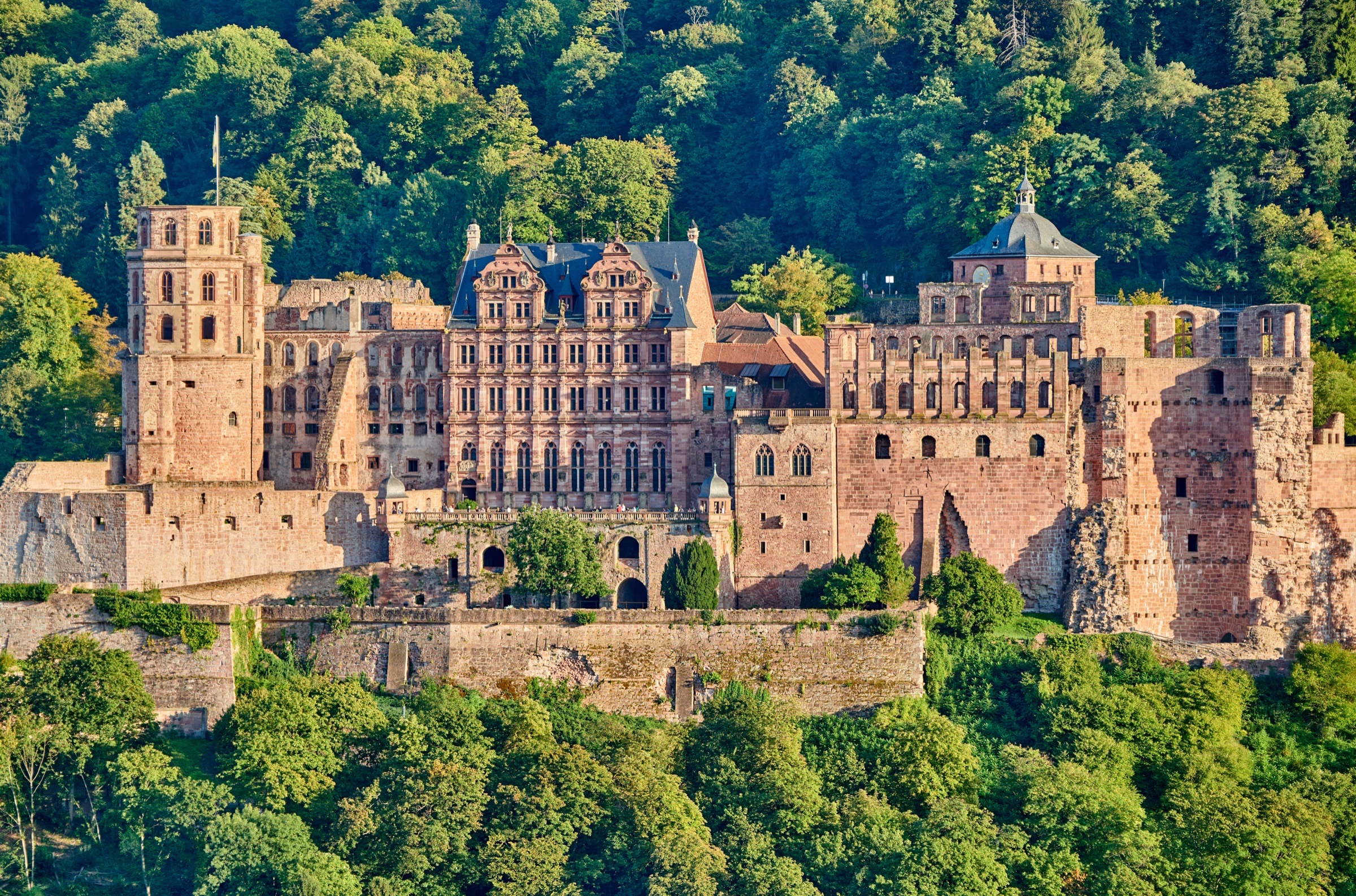
Heidelberg Castleattraction

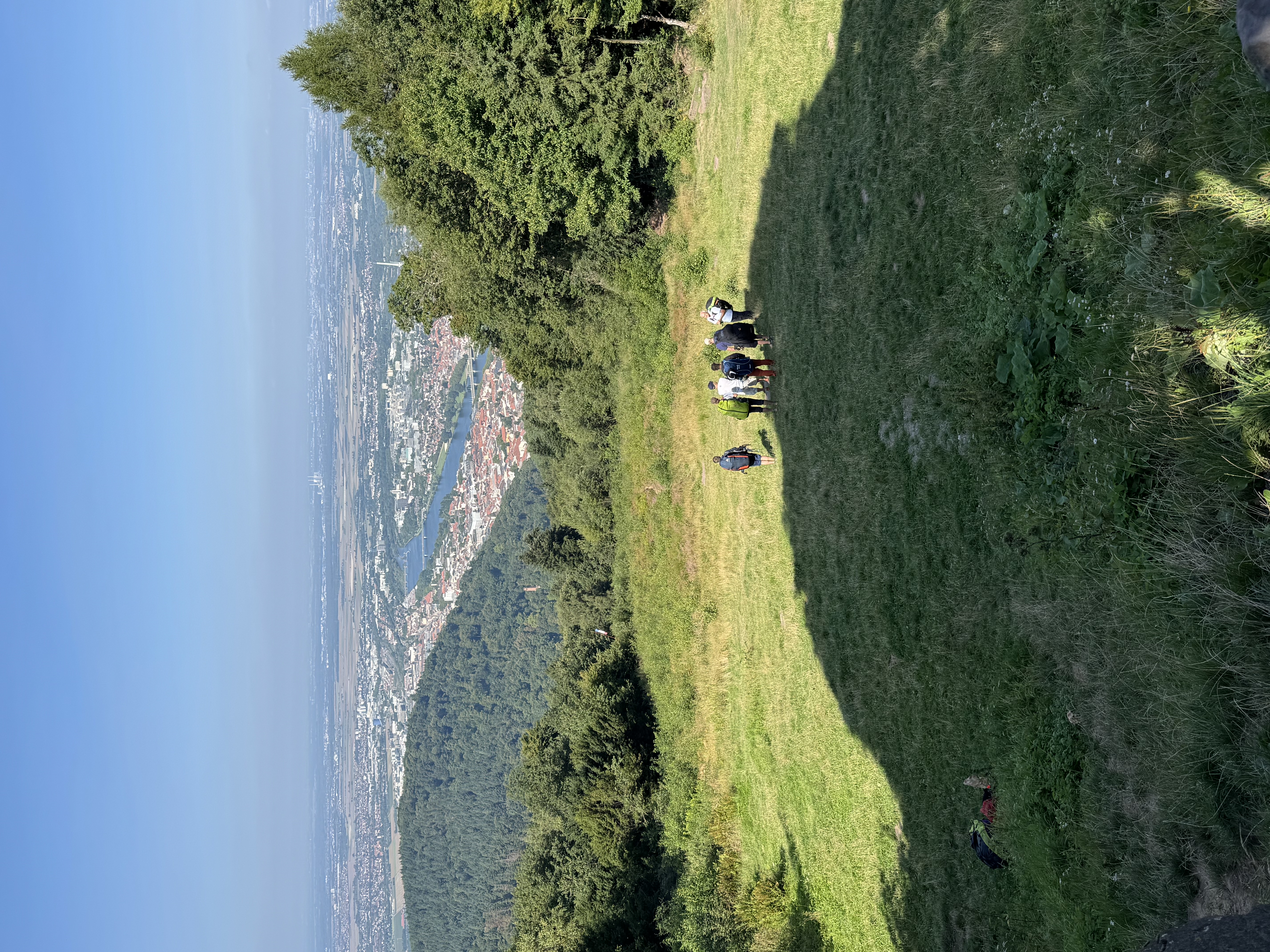
Königstuhlattraction
Current conditions and the practical reference material that helps turn the saved places into a trip.
7-day forecast from Open-Meteo. UV badges flag days when sun protection matters (3 and above is moderate; 8 and above is risk territory for unprotected fair skin within 30 minutes).
Typical highs around 25°C, lows around 14°C.
Typical highs around 6°C, lows around -1°C.
Public holidays from Nager.Date.
Public-transit operators within 8 km of the city center. Click through to each operator’s site for routes, fares, and tickets.
Heidelberg is the fifth-largest city in the German state of Baden-Württemberg, and with a population of about 163,000, of which roughly a quarter consists of students, it is Germany's 51st-largest city. Located about 78 km (48 mi) south of Frankfurt, Heidelberg is part of the densely populated Rhine-Neckar Metropolitan Region which has its centre in Mannheim.
The links below support the changing or licensed reference material on this page. Personal notes and ordinary geographic facts are not footnoted individually.
Monthly highs, lows, rainfall — long-term averages, NASA POWER.
Operators and modes are aggregated from individual transit-agency GTFS feeds. Route classifications come from each feed’s route type codes.
Maps, image licenses, and the full dataset registry are listed in site credits.
My Heidelberg travel guide. The castle and the Bergbahn, the Old Town and the Old Bridge, the Philosophers' Walk, where to stay, and where to eat.
Heidelberg is a castle town on the Neckar. The ruined red-sandstone castle stands on the hill above an intact medieval old town. It is a university city of about 163,000, a quarter of them students, 48 miles south of Frankfurt. I came through on points on a Sunday. The castle, Old Town, and Philosophers' Walk were the route.
Planning brief
Heidelberg is a university town of about 163,000 on the Neckar in southwest Germany, with a ruined hilltop castle over a long, intact Old Town. The Old Town is quietest before the excursion crowds arrive and after they leave.
The castle, Old Town, and Philosophers' Walk form the central route. The Old Town is quietest before the day-trip groups arrive and after they leave.
The funicular runs from the Kornmarkt up to the castle, and on to the Königstuhl summit. Walking up is possible, but the railway is part of the visit.
The Altstadt puts the castle, the Old Bridge, and the long pedestrian Hauptstrasse on foot. The main station sits a tram ride west of the center.
The path on the north bank looks back across the river to the castle and the Old Town. Go in late afternoon for the light.
Heidelberg has no airport of its own. Frankfurt Airport is the usual gateway, an hour out by direct train or shuttle bus. Stuttgart Airport sits a similar distance. The town is on the ICE high-speed rail network, so fast trains run from Frankfurt, Stuttgart, and beyond. The main station, Heidelberg Hauptbahnhof, sits a short tram ride west of the Old Town. The castle is the other way, up the hill.
Heidelberg itself is walkable once you are in the old town. The Rhein-Neckar tram is the practical station-and-regional layer, and the Heidelberg Mountain Railway is the practical scenic one: Kornmarkt to the castle, then up toward Königstuhl if you want the hill view.
Stay in or near the Altstadt, the Old Town. The castle, the Old Bridge, and the Hauptstrasse are all on foot from there. You also wake up to the quiet early-morning town the day-trippers never see.
I stayed at the Heidelberg Marriott Hotel on points, mostly to see it. It is a 1986 building in Bergheim, built as a Penta Hotel on the filled-in coal harbor. The riverfront look is the draw, not the history. The hotel is fine and no more than fine. I liked the river promenade out front, a flat walk into the Old Town. Skip it for the Altstadt if you are not burning points.
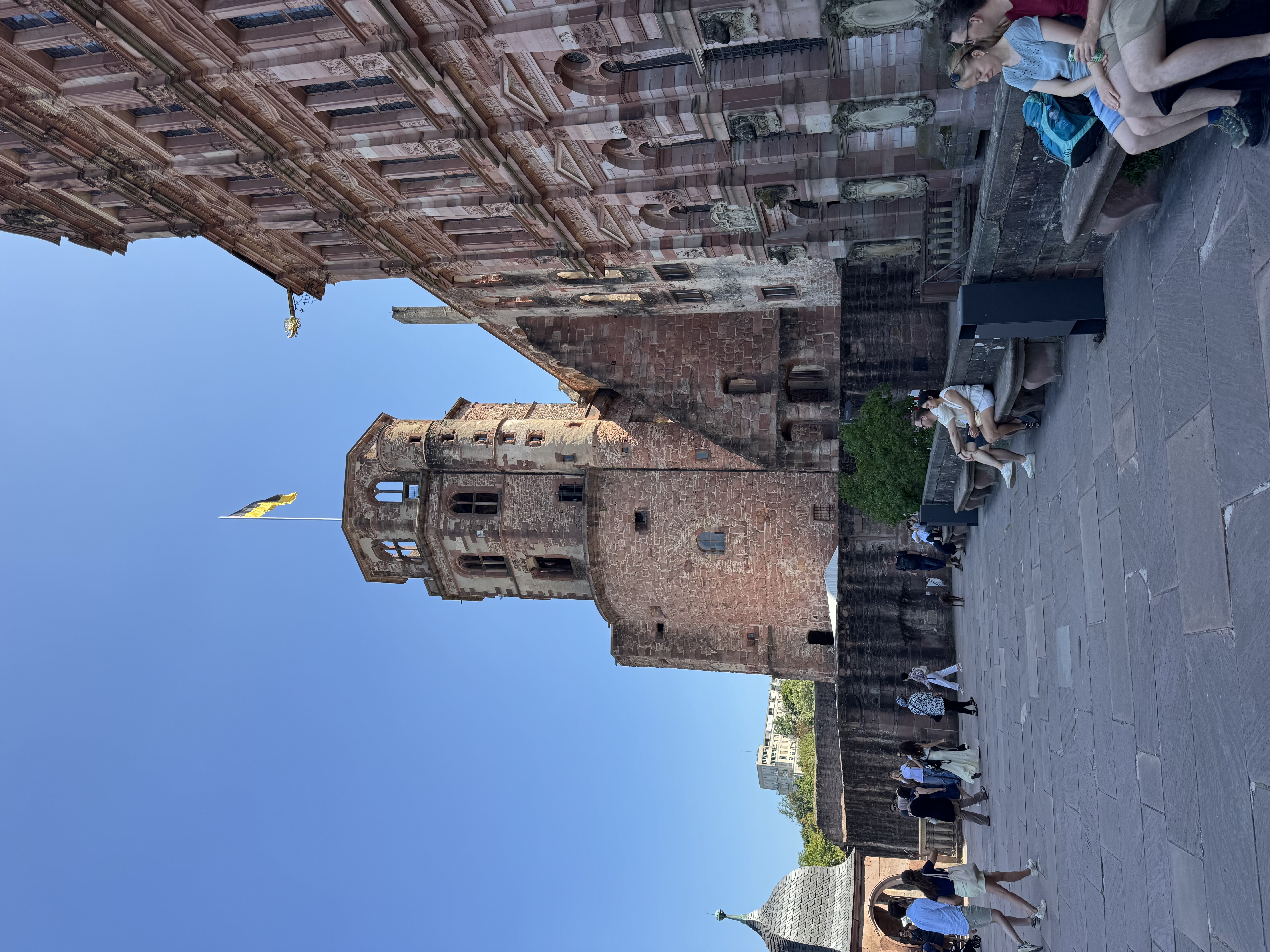
Heidelberg Castle is what most people come for, a part-ruined Renaissance palace on the hillside above the Old Town. French troops under Louis XIV sacked and burned it twice in the Nine Years' War, in 1689 and 1693. A lightning strike in 1764 ended the last attempt to rebuild it. The town left it a ruin and quarried it for stone. That is why it looks the way it does in every photo, whole facades standing next to roofless halls. Inside are the Great Tun, an 18th-century wine barrel holding about 220,000 liters, and the German Pharmacy Museum. The Heidelberg Bergbahn funicular runs up from the Kornmarkt to the castle, then on to the Königstuhl summit.
Below it runs the Hauptstrasse, the Old Town's pedestrian spine. It covers nearly a mile, among the longest intact old-town streets in Germany. Along it sit the Marktplatz, the Church of the Holy Spirit, and Heidelberg University. The university dates to 1386, the oldest in the country. If you want a chocolate stop, the Lindt Boutique is on the same street.
The Old Bridge, formally the Karl Theodor Bridge, crosses the Neckar at the edge of the Old Town. A twin-towered gate guards one end. At the other, a small brass monkey statue draws a line of visitors who rub it for luck.
The Philosophers' Walk, the Philosophenweg, climbs the Heiligenberg on the north bank, opposite the castle. University professors once walked it, hence the name. From the path you look back across the Neckar. The castle, the Old Town, and the Old Bridge line up together. The climb from the bridge is a steady uphill. Go in late afternoon, when the late sun is on the castle. Allow an hour or more for the round trip.
Heidelberg's food runs from old brewhouses to the cheaper kitchens of a student town. Vetter's Alt Heidelberger Brauhaus is the Old Town brewpub, with house beer and German food. Südseite Coffee Roasters and Bakery is a coffee roaster and bakery for the morning. Asia Heidelberg serves Sichuan food, and Gastro ART5 is another pinned restaurant.
One last thing, pure novelty. After the castle I went for ice cream and ordered Spaghettieis. It was the most interesting item on offer. I order the unfamiliar thing on principle. A restaurant won't serve something inedible. The shop presses vanilla ice cream through a potato ricer so it comes out shaped like spaghetti. Strawberry sauce is the tomato sauce, grated white chocolate the parmesan. Dario Fontanella invented it in 1969 in Mannheim, the bigger city next door. It is common across southwest Germany. The friends I was with told me it is a children's order. They were right. I ate it anyway, the way you try Dippin' Dots once for the novelty.


