
ភ្នំពេញ
📷 Looppty· CC BY-SA 4.0រាជធានីភ្នំពេញ | The Pearl of Asia
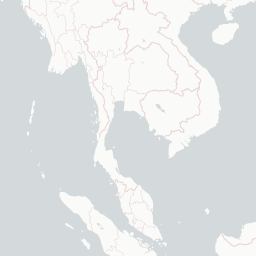
Phnom Penh is the capital and most populous city of Cambodia. It has been the national capital since 1865 and has grown to become the nation's primate city and its political, economic, industrial, and cultural centre. The city's name derives from Wat Phnom, a Buddhist temple, and Lady Penh, the city's founder. It sits at the confluence of the Tonlé Sap and Mekong rivers, and is the start of the Bassac River. It is also the seat of Cambodia's monarchy, based at the Royal Palace.
Wikipedia →Summary excerpted from the Wikipedia article Phnom Penh, licensed under CC BY-SA 4.0. Text may be clipped or paraphrased to fit this page.
Visit Phnom Penh for music, theater, and performance, religious and civic architecture, landscape, water, gardens, and nearby routes. In Phnom Penh, the strongest material is where museums, streets, religious buildings, markets, performance spaces, food, or nearby landscapes explain the surrounding region. A good itinerary should stay selective. For Phnom Penh, choose the anchor first; the cafe, market, church, gallery, or evening event should follow from that location. That restraint helps Phnom Penh feel like a place rather than a sequence of obligations. When Phnom Penh opens onto beaches, hills, rivers, gardens, or nearby towns, add them only when they sharpen the trip.
Do not visit Phnom Penh expecting every useful stop to be close together or easy to improvise. A route through Phnom Penh works best when opening days, transport, weather, and distance are treated as cultural logistics, not afterthoughts. In Phnom Penh, it is better to build a tight route than to rely on long transfers between secondary stops. If the main interest is one nearby site, it may be better to treat Phnom Penh as a base rather than the whole destination.
In Phnom Penh, the warm season usually means June through August. For Phnom Penh, the practical season is shaped by heat, glare, rain, and humidity rather than by summer alone. A warm day in Phnom Penh works best when outdoor observation is broken up by museums, churches, cafes, or galleries. Use the edges of the day in Phnom Penh for longer walks, then make the middle hours slower and more interior.
The cooler, drier, or less humid months can be the more comfortable period in Phnom Penh. For Phnom Penh, walking is often easier in the drier and cooler part of the year. Use this season in Phnom Penh only with flexibility for weather, sea conditions, and transport changes. Use this period in Phnom Penh for close looking indoors, then add outdoor sections when weather and daylight cooperate. A cold or wet day in Phnom Penh works best with shorter walks, confirmed hours, and a clear way back to lodging.
7-day forecast from Open-Meteo. UV badges flag days when sun protection matters (3 and above is moderate; 8 and above is risk territory for unprotected fair skin within 30 minutes).
Monthly highs, lows, and rainfall (long-term averages, NASA POWER).
1 commercial airport within 100 km. Closest is Techo International Airport (KTI) at 22 km.
Public-transit operators within 8 km of the city center. Click through to each operator’s site for routes, fares, and tickets.
Operators and modes aggregated by TransitLand from individual transit-agency GTFS feeds. Route classifications (subway / tram / rail / bus / etc) come from each feed’s GTFS route_type codes.
This page blends public reference data, climate/elevation services, and personal notes. Travel requirements can change, so visa and entry details should be checked again before booking.
Summary, canonical article, and some image fallbacks.
Population, area, image, coordinates, and linked identifiers where available.
Monthly temperature and rainfall climatology.
1991-2020 temperature and precipitation cross-check for compact climate fields.
Coordinate-based elevation backfill.
Coordinate-based IANA timezone lookup.
Global source notes, map tiles, flags, licenses, and attribution policy.