Photos from Munich
 +6
+6Neues Rathaus, Munichattraction
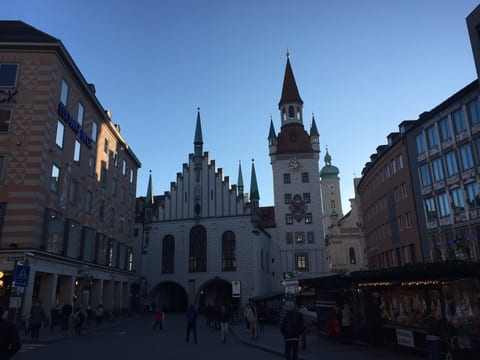
St. Peter, Munichattraction
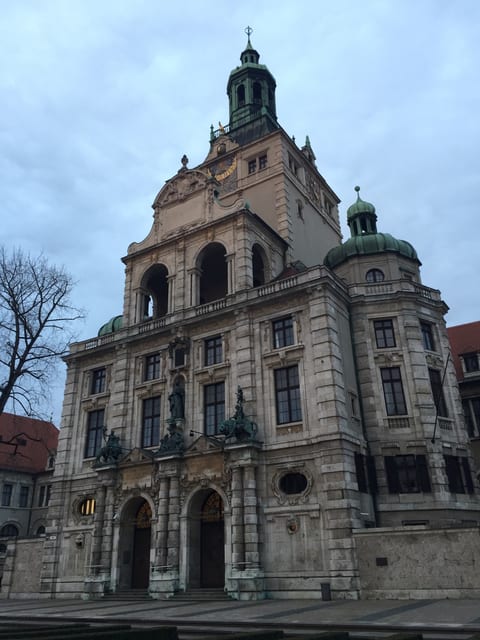
St. Lukas, Munichattraction
 +4
+4Isar River Munichattraction
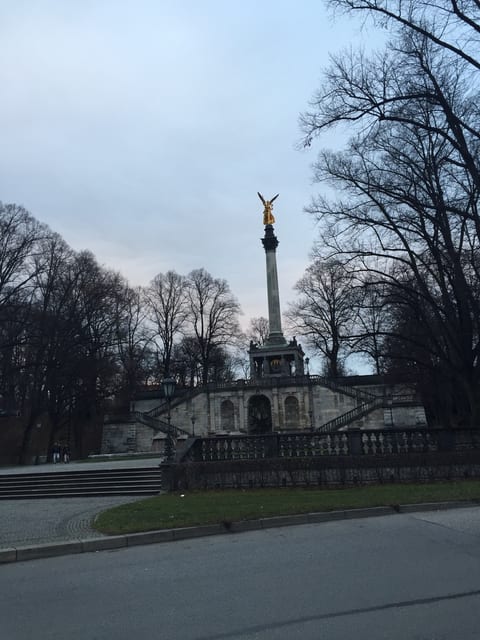
Friedensengel Munichattraction
 +2
+2Justizpalast Munichattraction
+6+4+2Current conditions and the practical reference material that helps turn the saved places into a trip.
7-day forecast from Open-Meteo. UV badges flag days when sun protection matters (3 and above is moderate; 8 and above is risk territory for unprotected fair skin within 30 minutes).
Typical highs around 21°C, lows around 12°C. Also the wettest months.
Typical highs around 3°C, lows around -4°C.
Public holidays from Nager.Date.
Public-transit operators within 8 km of the city center. Click through to each operator’s site for routes, fares, and tickets.
Munich is the capital and most populous city of Bavaria, Germany. As of 30 November 2024, its population was 1,604,384, making it the third-largest city in Germany after Berlin and Hamburg. Munich is the largest city in Germany that is not a state of its own, and it ranks as the 11th-largest city in the European Union (EU). The metropolitan area has around 3 million inhabitants, and the broader Munich Metropolitan Region is home to about 6.2 million people. It is the third largest metropolitan region by GDP in the EU. Munich is located on the river Isar north of the Alps. It is the seat of the Upper Bavarian administrative region. With 4,500 people per km2, Munich is Germany's most densely populated municipality. It is also the second-largest city in the Bavarian dialect area after Vienna.
The links below support the changing or licensed reference material on this page. Personal notes and ordinary geographic facts are not footnoted individually.
Monthly highs, lows, rainfall — long-term averages, NASA POWER.
Operators and modes are aggregated from individual transit-agency GTFS feeds. Route classifications come from each feed’s route type codes.
Maps, image licenses, and the full dataset registry are listed in site credits.
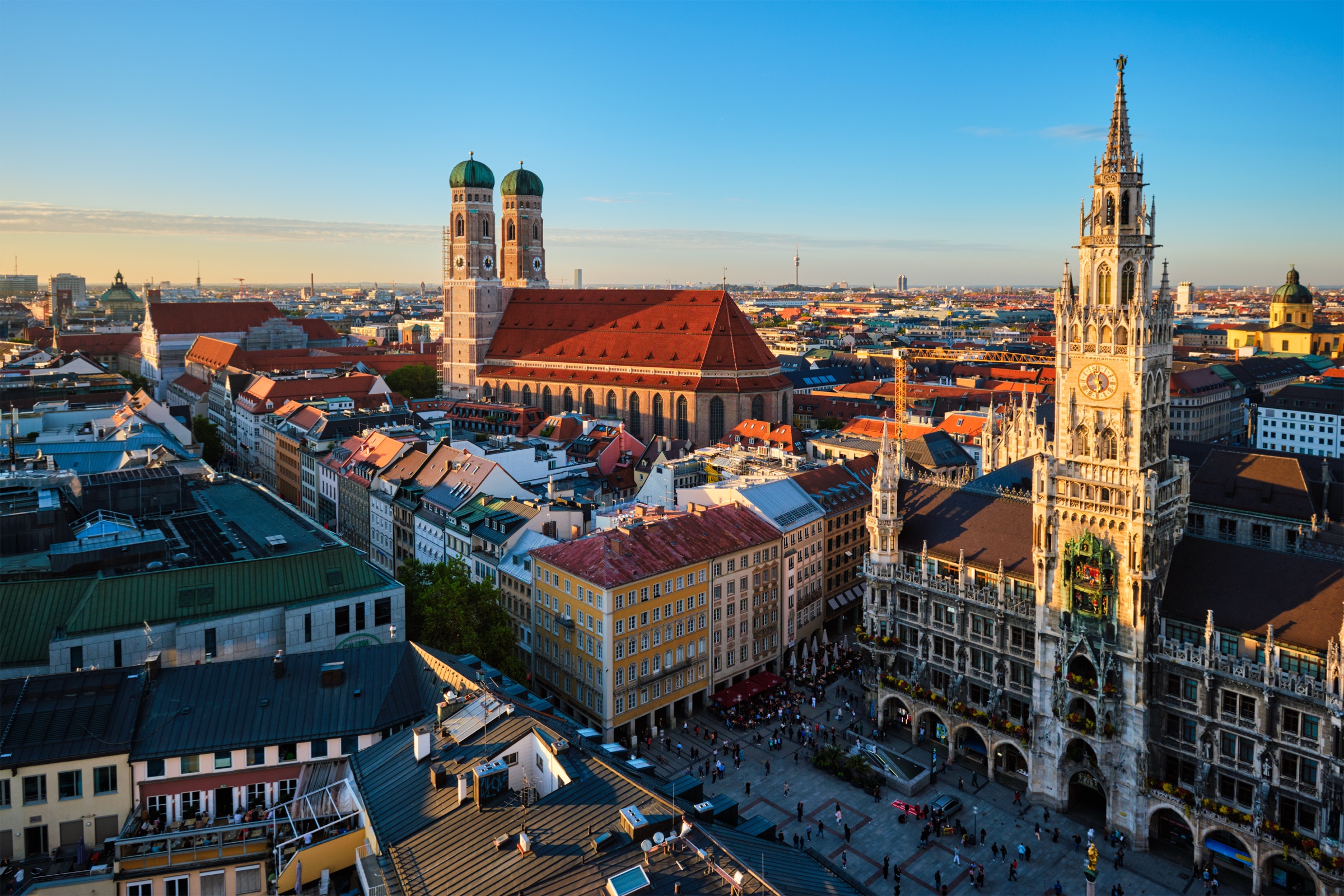
My Munich travel guide. Oktoberfest, the Hofbräuhaus and Augustiner beer halls, the Eisbach surfers, and where to base for a rail trip.
Munich is the Bavarian capital most people come to for two images, the beer halls and the surfers on the Eisbach standing wave, and both are exactly as advertised. Its rail network also makes it a hub for the Alps, Salzburg, and Vienna.
Planning brief
Munich is the Bavarian capital most travelers come for two images they have already seen, and both hold up in person. The brewery beer halls (the Hofbräuhaus most of all) are unembarrassed tourist attractions and still fun. The surfers riding the standing wave on the Eisbach where the river enters the Englischer Garten are the second Munich image, and that one is free. Base near the Hauptbahnhof for a rail-trip shape. The river surfers and the kiosk for a beer afterwards, a brewery dinner, a leberkäse sandwich on the way somewhere, and the museums for a half day if the weather is wrong for the park.
Munich is the hub for trains south to Erding and the Alps and east to Salzburg and Vienna. The Aloft on Bayerstraße sits five minutes walk from the central station. Basic, modern, fair price, laundry on-site. The Hauptbahnhof area itself can read a little rough on the street between dusk and dawn (the typical city-station mix), but the rooms and the access to the platform are the point. The Andaz in Schwabing is the fancier alternative if the rail trip is a few days here rather than a connection.
The standing wave at the Eisbach in the Englischer Garten runs all year. Surfers queue politely, ride the wave for about ten seconds each, fall off, climb out, walk back to the queue. Fräulein Grüneis on the corner has coffee and beer. You can sit on the bench, watch, and that is the afternoon.
The Hofbräuhaus is the famous one, also the least authentic, also still my favorite. Augustiner-Großgaststätten is the Munich beer the locals actually drink. Schneider is the wheat-beer one. Spatenhaus is the dressed-up Bavarian one across from the Opera. All of them are tourist-aware and all of them are still fun if you keep the expectation honest.
Leberkäse is a slab of Bavarian meatloaf served warm in a bread roll with sweet mustard. Three to five euros at any Metzgerei (butcher's shop) in the city. Vinzenzmurr is the chain. Bazi's Schlemmerkucherl in the Glockenbach is a fair sit-down version. Eat it on a bench in the sun, not on a plate.
Munich Airport (MUC) sits about 35 km north-east of the Hauptbahnhof and is well-connected by S-Bahn. The train is the practical default unless you have heavy luggage or a late arrival. Buy the ticket from the red vending machines on the platform (English language option is on the screen). The same ticket covers any continuing tram or U-Bahn for the rest of the day if you pick the day-pass version.
| Mode | Time | Cost | When to use |
|---|---|---|---|
| S-Bahn S1 or S8 | 40 to 50 min | About €15.10 single, or €17.50 day ticket covering the airport and Munich-area transit | The default. Both lines run from the airport (one terminal-side platform serves both) to Hauptbahnhof, Marienplatz, and Ostbahnhof every 10 to 20 minutes. Roughly the same time either way. S1 swings west, S8 swings east |
| Lufthansa Express Bus | 45 to 60 min | €13 single | Direct to Hauptbahnhof with luggage racks. Less frequent than the S-Bahn but a single seat the whole way. Useful if you are traveling with a suitcase that does not love S-Bahn stairs |
| Uber / FreeNow / taxi | 40 to 60 min | €65 to €90 to the center | Late arrival, heavy luggage, or a group splitting the fare. The taxi rank outside arrivals is reliable. Uber and FreeNow work too but pickup happens at a marked lot a short walk from the terminal |
The airport day ticket is the answer for almost every trip into town because it covers the airport ride and the rest of that day's Munich transit. Validate paper tickets once on first use. The system runs on the honor principle but the ticket inspectors are real.
If you are heading straight to Therme Erding (the spa-day hack covered in the spa-day cross-list), the smarter play is a taxi from MUC. The train route to Erding goes via the center and adds an hour. From MUC, Erding is 10 to 15 minutes by taxi, about €25 to €35.
The Munich U-Bahn is the city layer. The airport is the S-Bahn layer. Do not look for an airport U-Bahn. Use S1/S8 or the Lufthansa Express Bus into town, then U-Bahn from there.
For hotels and city days, U6 is the line I care about most because it serves Schwabing, the Andaz side, the university spine, and Garching. U3 is the Olympiapark and Thalkirchen line. Paper tickets need validating before the first ride.
The Munich tram is the visible city layer for shorter hops. Learn the U-Bahn first, then use the tram when it is the obvious direct line above ground.
Treat the base decision like any rail-hub city. If Munich is a stop between trains, stay by the Hauptbahnhof and prioritize a bed, a shower, and a working luggage room. If Munich is the destination, use a quieter neighborhood.
| Where | Property | Why pick it | Trade-off |
|---|---|---|---|
| Hauptbahnhof | Aloft by Marriott Munich | Five minutes walk to Munich Central Station. Clean, modern, basic, fair price, laundry on-site. The right base when you are using Munich as the rail hub | The Hauptbahnhof area reads a little rough at street level between dusk and dawn (the standard German city-station mix). The hotel itself is fine. The immediate block is not the slow-coffee street |
| Schwabing | Andaz Munich Schwabinger Tor by Hyatt | The dressed-up alternative. Design-hotel style, on the U6 line ten minutes from the center, the rooms are a step up. The base for a Munich trip rather than a rail connection | More expensive. Further from the station, so the rail-stop shape works less cleanly. Schwabing is the right neighborhood for the slower version of the trip |
The Aloft is the booking I would do nine times out of ten. The on-site laundry is the underrated detail. If you are on a longer rail trip and you need clean clothes before the train south, that one feature is the reason to book.

The Eisbachwelle is a standing wave in the river that runs along the southern edge of the Englischer Garten, formed where the Eisbach water flows over a built-in concrete step. It runs year-round. Surfers wear wetsuits in winter and shorts in summer, queue politely on either bank, drop into the wave one at a time, ride for about ten seconds, fall off, climb out, and walk back to the queue. From drop-in to queue reset, each turn takes about a minute and a half.
The right way to do it is not to surf (the wave is for experienced board surfers and the rocks are real) but to watch. There is a low wall along the Prinzregentenstraße side that is the best viewing position. You can stand or sit there for an hour and not get bored. Bring a beer. People do.
The kiosk for the beer is Fräulein Grüneis, a small green hut on Lerchenfeldstraße at the southwest corner of the park. Coffee, beer, simple snacks, a few benches. Order the Helles, walk it the two minutes back to the wall over the wave, and that is the afternoon. The kiosk is also a navigation anchor if you are meeting friends at the Eisbach. It is the easiest spot to find.
A second river-surfing spot, Floßlände, sits south of the city near Thalkirchen and is the more beginner-friendly wave. It only runs in summer when water levels are high, but if you want a softer wave to actually surf yourself, this is the one. The S-Bahn or the U-Bahn line U3 to Thalkirchen drops you within walking distance.
Leberkäse is the Bavarian meatloaf, served warm in thick slices in a Semmel (a small bread roll) with sweet mustard. The name translates as "liver cheese" and contains neither. It costs three to five euros at any Metzgerei (butcher) in the city, takes 90 seconds at the counter, and is the right snack to eat on a bench in the sun or on a tram between sights.
Start with Vinzenzmurr, the Munich butcher chain with branches around the center (Tal, Schäfflerhof, the area around the Hauptbahnhof, plus dozens of suburban ones). Ask for "ein Leberkäs-Semmel" and they slice you a warm wedge into a bread roll. Sweet mustard (süßer Senf) is the standard pairing.

The sit-down version is Bazi's Schlemmerkucherl in the Glockenbachviertel, which does a plate version with potato salad. The market version is the leberkäse counter inside the Viktualienmarkt (the central open-air food market that anchors the south side of Marienplatz). You eat it standing up at one of the high tables between the cheese stall and the beer garden in the middle of the market.
The Munich brewery beer halls are tourist attractions and I go anyway. The Hofbräuhaus is the famous one and probably the least authentic. It is also the one I keep coming back to. Pick one beer hall per visit rather than try to do the circuit. The rooms are large, the meals are heavy, and the second one will not improve on the first.
| Brewery hall | What to drink | What to eat | Hours (approx.) | Price band |
|---|---|---|---|---|
| Hofbräuhaus München | Hofbräu Original (Helles). A Maß (1 L) is the standard order | Schweinshaxe (roast pork knuckle), Weisswurst (in the morning), pretzels | 09:00 to 24:00 daily | €€ |
| Augustiner-Großgaststätten | Augustiner Helles, the unfiltered Edelstoff if you want the upgrade | Schweinsbraten, Brotzeit boards | 11:00 to 24:00 (Sun from 10) | €€ |
| Augustiner Klosterwirt | Same Augustiner pours in a smaller room behind the Frauenkirche | Bavarian classics, smaller menu | 11:00 to 23:00 | €€ |
| Schneider Bräuhaus | Schneider Weisse (wheat beer). This is the wheat-beer specialty room of the center | Weisswurst, Kalbskäsleberwurst, weisswurst breakfast | 09:00 to 23:30 | €€ |
| Spatenhaus an der Oper | Spaten Hell and Franziskaner Weissbier | Refined Bavarian: Tafelspitz, fish, plus a more serious wine list | 11:00 to 24:00 | €€€ |
| Löwenbräukeller | Löwenbräu Original. Large beer garden in summer | Classics, plus the Lent-season Triumphator strong beer in February | 10:00 to 24:00 | €€ |
| Paulaner am Nockherberg | Paulaner Salvator in March, Helles year-round. The home of the Lenten Salvator celebrations | Bavarian classics in a much larger room than the center options | 11:00 to 23:00 | €€ |
Hofbräuhaus is my pick despite the lack of authenticity. The room is grand in a way I can't fully justify, the band plays every night, and you sit on a bench with strangers. Augustiner is what I would suggest to someone who wants the version locals also go to. Spatenhaus is the dressed-up dinner if the trip needs one. Schneider is my choice for a Weisswurst breakfast (a long-Munich tradition: the white sausage is eaten before noon with sweet mustard and a Weissbier. The locals say the sausage should not hear the noon bell).
A note on Erdinger. Erdinger Weißbräu is brewed in Erding, 35 minutes north-east of Munich (and 10 to 15 minutes from MUC airport, also the home of Therme Erding). Erdinger pours at most Munich beer halls but does not have its own central flagship in town. The freshest pint of Erdinger you can buy is at the Gasthaus & Hotel zum ERDINGER Weißbräu in Erding old town. The spa-day cross-list covers that as part of the Munich/Erding section.
Munich's calendar is basically beer seasons, markets, and a few local fairs. Oktoberfest is the price problem. Frühlingsfest and Auer Dult are the calmer versions.
| Event | When | What to know |
|---|---|---|
| Oktoberfest | September 19 to October 4 in 2026 | Hotels can triple. Reserve a tent table months ahead or arrive very early on weekends |
| Frühlingsfest | April 17 to May 10 in 2026 | Smaller beer festival on Theresienwiese with fewer visitors and easier tents |
| Starkbierfest | Late February through March | Strong-beer season, with Paulaner am Nockherberg as the anchor |
| Auer Dult | May, July, and October | Local fair on Mariahilfplatz with antiques, rides, food, and beer tents |
| Tollwood | Summer and winter editions | Music, performance, crafts, and food. More alternative than beer-hall Bavaria |
| Christmas markets | Late November to December 24 | Marienplatz is compact and crowded. For a Christmas-market trip, compare with Nuremberg |
Oktoberfest is the one that forces the hotel decision. Book months ahead or move the trip a week either side.
When the weather turns or the trip earns a slower morning, Munich's museum slate is the right deep bench. None of the below are pinned yet. This section is the index to write into the next admin pass.
Pair any one of these with a leberkäse stop on the way back and you have the right rainy-day Munich half-day.
Mad King Ludwig's fairy-tale castle on a hill above Hohenschwangau is the textbook Bavaria day trip from Munich. Two and a half hours each way by Bayern-Ticket regional train + bus combo. The catch is the booking.
Tickets are issued for a specific tour slot (35 min), and the slot sells out 2 to 4 weeks ahead in summer. Book on hohenschwangau.de before you book the train, not the other way around. ~€21 for the castle alone, ~€33 for the combined Neuschwanstein + Hohenschwangau (Ludwig's childhood castle on the next hill).
The path from the village up to the castle is a 30 to 40-minute walk uphill, or a 5 to 10 EUR horse-carriage ride, or a shuttle bus. Arrive at the village 1 to 1.5 hours before your tour slot to cover the climb plus a queue at the gate. The Marienbrücke bridge view (the photogenic side-on shot of the castle) is a 10-minute walk past the entrance and the reason most photos exist. Closed in winter and during ice events.
The train is two transfers from Munich Hbf (Munich → Buchloe → Füssen, then bus 73 or 78 to Hohenschwangau). A Bayern-Ticket day pass is the usual regional-train hack. In 2026 it starts around €34 for one person with each additional adult adding roughly €10. Most travelers buy through-tickets via bahn.de.
Tour-guide note: the castle interior tour is the only way in, ~35 minutes, audio-guide in your language. Don't pay a third-party "private guide" for Neuschwanstein. The tour is the tour, and your guide can't enter with you. A guided day-trip from Munich buys you the logistics (train + bus + scheduled slot + lunch), not any extra access. If logistics aren't your thing, Gray Line / Viator-style day tours from Munich are €70 to €100 and hand you the whole day pre-booked.


.svg)