Current conditions and the practical reference material that helps turn the saved places into a trip.
The next week in Venice
7-day forecast from Open-Meteo. UV badges flag days when sun protection matters (3 and above is moderate; 8 and above is risk territory for unprotected fair skin within 30 minutes).
Today
Fog
31° / 25°
UV High
Wed
Fog
33° / 26°
UV High
Thu
Showers
36° / 26°
UV High
Fri
Showers
32° / 25°
2.6 mm
UV Moderate
Sat
Showers
31° / 23°
0.9 mm
UV High
Sun
Overcast
33° / 23°
UV High
Mon
Showers
31° / 23°
3.0 mm
UV High
Climate
Summer (Jun-Sep)
Typical highs around 27°C, lows around 20°C.
Winter (Dec-Mar)
Typical highs around 9°C, lows around 5°C.
In August 4
Drag to scrub across the year.
JFMAMJJASOND
Weather
29° / 22°
Typical high / low
3 mm rainfall this month
Daylight
14.2h
06:10 – 20:20local
Festivals around this date
Holidays coming up
Public holidays from Nager.Date.
Airports
closest VCE · 8 km
Getting around Venice
Public-transit operators within 8 km of the city center. Click through to each operator’s site for routes, fares, and tickets.
Venice is a city in northeastern Italy and the capital of the region of Veneto. It is built on a group of 126 islands that are separated by expanses of open water and by canals; portions of the city are linked by 472 bridges.
The links below support the changing or licensed reference material on this page. Personal notes and ordinary geographic facts are not footnoted individually.
City background. Wikipedia summary may be clipped or paraphrased. Structured fields are cross-checked against the related references. Related: Wikidata, .
highlowrainfallcomfortable months
Monthly highs, lows, rainfall — long-term averages, NASA POWER.
My Venice travel guide. Carnevale, the Biennale, the Film Festival on the Lido, where to stay inside the lagoon, and getting in from VCE on the Alilaguna.
Venice gets a bad-faith reputation it does not earn. San Marco is crowded and the cruise traffic is real, but Cannaregio, Dorsoduro, and the quiet end of Castello are calmer. The cruise schedule and the first and last mainland trains explain much of that difference.
Venice Marco Polo Airport (VCE) sits about 12 km north of central Venice. The Alilaguna water-taxi service connects the airport directly to the lagoon, which is the right way to arrive into a water city.
Mode
Time
Cost
When to use
Alilaguna water bus
70 to 90 min
€18 single
The default. The Linea Blu, Linea Arancio, and Linea Rossa lines connect VCE to Murano, Rialto, San Marco, and the Lido. Arrive at your hotel by water, which is the experience
ATVO express bus
20 min
€10 single
Faster but drops at Piazzale Roma (the bus terminal). You then walk or take a vaporetto into the islands
Private water taxi
25 to 40 min
€110 to €150
The marquee arrival. Direct to your hotel's water entrance. The premium pays off for a special trip or a late night
Taxi to Piazzale Roma + vaporetto
30 to 60 min
€45 land taxi + €9.50 vaporetto
Last resort. The water-taxi is the cleaner premium and the Alilaguna is the cleaner budget
Getting around by vaporetto
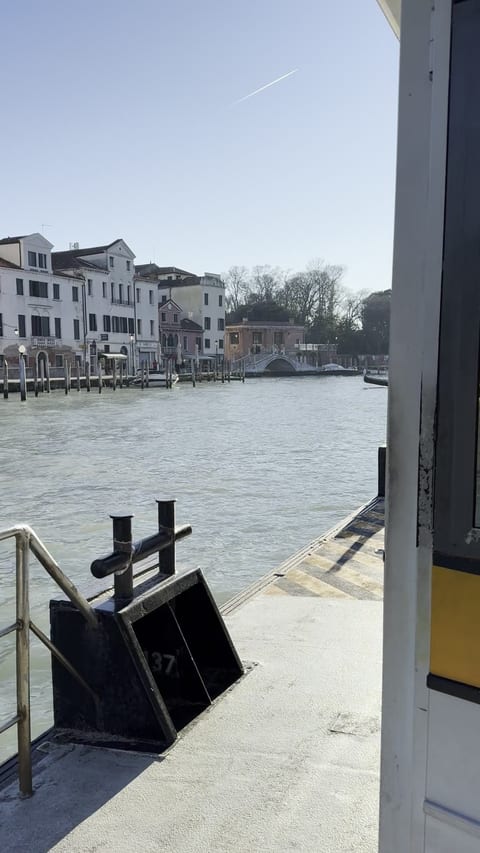
Venice is the one city where transit is also sightseeing, but the vaporetto is still a bus system. Think in stops and corridors, not in "nearest landmark" terms. The walk from the wrong stop can be three bridges with luggage.
The basic tourist math: an ACTV single vaporetto ticket is €9.50 and lasts 75 minutes from validation. The passes are usually the better answer if you are riding more than twice: 24 hours €25, 48 hours €35, 72 hours €45, 7 days €65. Download the AVM Venezia Official App if you are going to buy a pass. Individual rides are expensive enough that you can start talking yourself out of useful hops. Airport boats are a different product. Alilaguna is private and separate, and ACTV time passes do not include the airport water bus.
I also split the route notes into a dedicated Venice Vaporetto transit guide. The short version: the boats can be loud and crowded, but a day or week pass changes the city. It makes Murano, the Lido, and the less-obvious lagoon edges feel like normal parts of Venice instead of special excursions.
The lines I would remember:
Line 1 is the slow Grand Canal ride. It stops everywhere. Great once, annoying with bags.
Line 2 is the faster Grand Canal / Giudecca / Tronchetto workhorse. Use it when the stop lines up.
4.1 / 4.2 and 5.1 / 5.2 are the circular outside routes. Useful for Murano, Fondamente Nove, Castello, Zattere, and avoiding the Grand Canal crush.
Line 12 is the northern lagoon line from Fondamente Nove toward Murano, Burano, Torcello, and the outer islands.
Line 14 is the San Zaccaria / Lido / Punta Sabbioni / Burano side of the lagoon map.
Mostly useful for people staying outside Venice or coming in by car/bus from the north lagoon side
My rule: ride the Grand Canal once for the view, then use the outer routes like a local would. Fondamente Nove, Zattere, San Zaccaria, and Lido S.M.E. are the stops that make Venice feel less like a funnel into San Marco.
Festivals and big annual events
Venice has a long festival calendar, but only a few windows really change the trip: Carnevale, the Biennale opening periods, the Film Festival, Redentore, and acqua alta season.
Event
When
What it changes
Carnevale di Venezia
10 to 12 days before Lent
Masks, balls, San Marco crowds, and very high hotel prices. Book far ahead or avoid the peak weekends
Biennale di Venezia
Art in odd years, architecture in even years
Giardini and Arsenale exhibitions run for months. Opening week is the expensive part
Venice Film Festival
Late August to early September
Lido hotels fill first, then central Venice tightens
Festa del Redentore
Third weekend of July
Pontoon bridge to Redentore and Saturday-night lagoon fireworks. Local and busy
Historical Regatta
First Sunday of September
Grand Canal boat procession and races. Vaporetto traffic changes for the day
Acqua alta season
November to January
High tides can flood low areas for a few hours. Pack waterproof shoes for winter
The crush around Piazza San Marco is exactly the thing every Venice guide tells you to escape, and the easiest escape is a short vaporetto ride.
Murano is the one I would not skip. A short hop on the vaporetto from the main island, and it reads a lot calmer and more relaxed than the rest of the lagoon. The glass workshops are the obvious reason to come, but the canals on Murano without the cruise-day crowd are the bigger payoff.
Murano is the easy Venice pressure release: same lagoon, fewer day-trip bottlenecks, and evenings that feel like the city has exhaled.
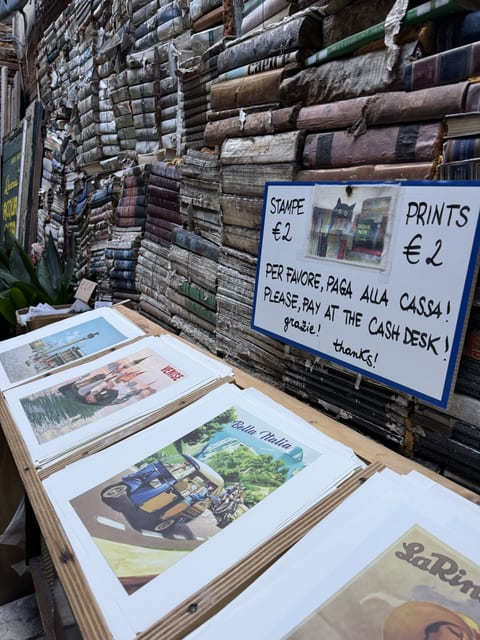
Libreria Acqua Alta is the famous flooded bookshop near Campo Santa Maria Formosa. It has shifted away from being a place you actually browse and toward a one-way walkway of books with a queue at the door, but the cats are still in the trees, and the staircase made of damaged old books is still in the back. A quick stop, not an hour.
Where to eat
Venetian food has its own side inside Italian cooking: cicchetti (the small bar-snack plates eaten standing up), bigoli (the fat hand-rolled pasta), seppie al nero (cuttlefish in its ink), sarde in saor (the sweet-and-sour sardines), the spritz aperitivo (an Italian-Veneto invention). The picks below cover both the bacaro (cicchetti bars) and the sit-down trattorias.
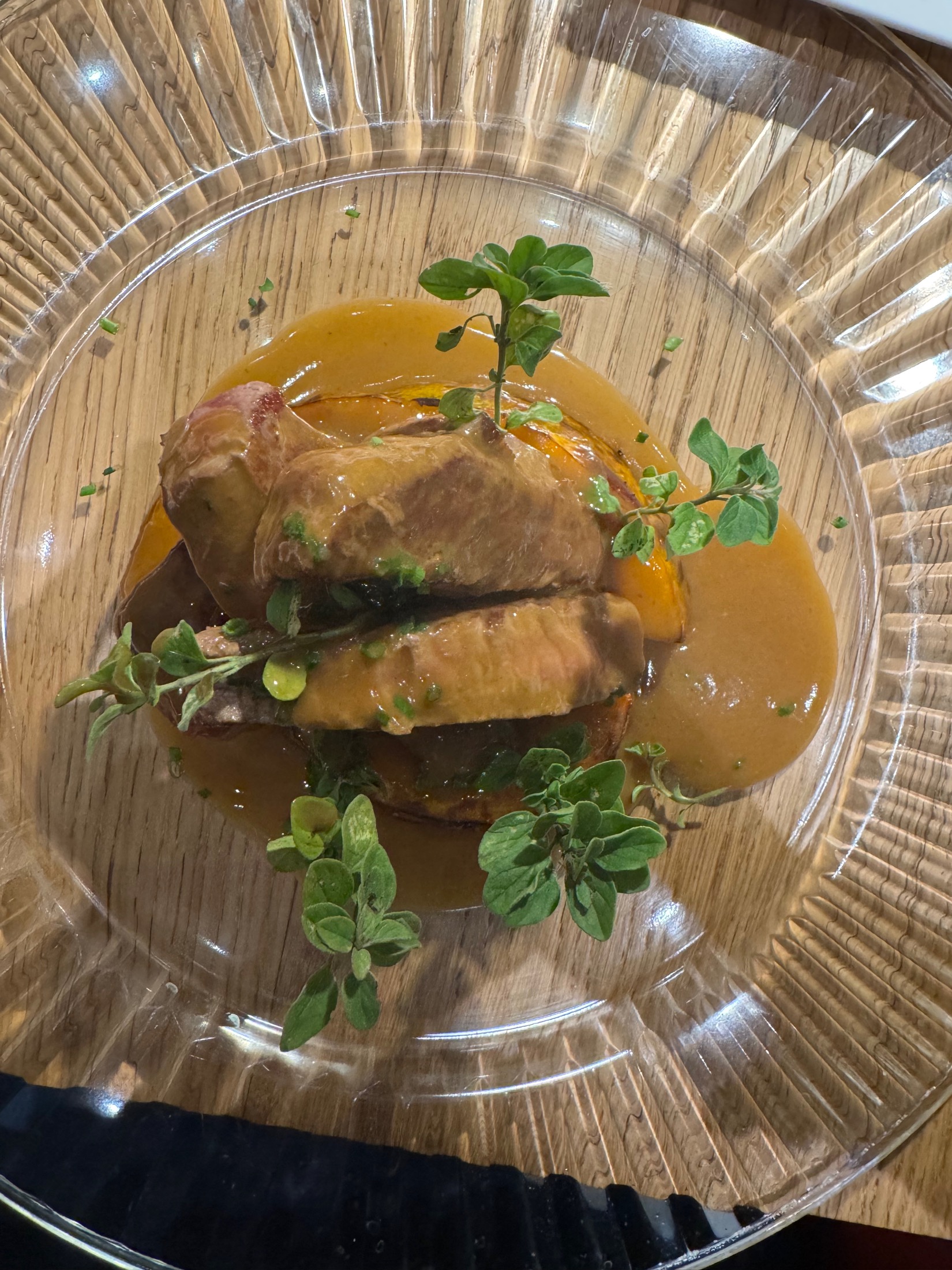
Casa Cappellari is the sort of Venice meal I want near the main drag: quiet enough to breathe, polished enough to feel like dinner, and not trading on canal-view theater.
Food and location are great. Standard Venice tourist-zone billing pattern: every yes is an upcharge (bread, water, etc). Go in knowing how it works and the meal is excellent
 +3
+3 +3
+3 +1
+1 +3
+3 +1
+1

 +1
+1 +4
+4 +1
+1 +4
+4 +1
+1
 +2
+2