Current conditions and the practical reference material that helps turn the saved places into a trip.
The next week in Rome
7-day forecast from Open-Meteo. UV badges flag days when sun protection matters (3 and above is moderate; 8 and above is risk territory for unprotected fair skin within 30 minutes).
Today
Overcast
36° / 25°
UV High
Wed
Overcast
36° / 25°
UV High
Thu
Partly cloudy
36° / 25°
UV High
Fri
Overcast
36° / 24°
UV High
Sat
Fog
35° / 25°
UV High
Sun
Partly cloudy
36° / 23°
UV High
Mon
Fog
37° / 23°
UV High
Climate
Cool and wet season (Sep-Mar)
About 74% of the year's rain falls in these months. Typical highs around 16°C, lows around 8°C.
Warmer dry season (Apr-Aug)
Typical highs around 27°C, lows around 16°C. About 40mm of rain a month.
In August 4
Drag to scrub across the year.
JFMAMJJASOND
Weather
32° / 20°
Typical high / low
1 mm rainfall this month
Daylight
13.9h
06:17 – 20:12local
Holidays coming up
Public holidays from Nager.Date.
Airports
closest CIA · 14 km
Getting around Rome
Public-transit operators within 8 km of the city center. Click through to each operator’s site for routes, fares, and tickets.
Rome is the capital city and most populated comune (municipality) of Italy. It is also the administrative centre of the Lazio region and of the Metropolitan City of Rome. A special comune named Roma Capitale with a population of 2.7 million in an area of 1,287.36 km2 (497.1 mi2), Rome is the third most populous city in the European Union by population within city limits. The Metropolitan City of Rome Capital, with a population of 4.2 million, is the most populous metropolitan city in Italy. Its metropolitan area is the third-most populous within Italy. Rome is located in the central-western portion of the Italian Peninsula, within Lazio (Latium), along the shores of the Tiber Valley. Vatican City is an independent country inside the city boundaries of Rome, the only existing example of a c
The links below support the changing or licensed reference material on this page. Personal notes and ordinary geographic facts are not footnoted individually.
highlowrainfallcomfortable months
Monthly highs, lows, rainfall — long-term averages, NASA POWER.
Rome puts ancient buildings, churches, palaces, apartment blocks, and government offices into the same center. The Colosseum and Forum require some planning, but much of the city is best seen by walking between the Pantheon, Piazza Navona, Trevi Fountain, and smaller churches. Pasta counters, salumerie, and pizza shops occupy the same streets as the monuments. This guide covers airport arrival, local transit, hotels I have stayed in, food, current ticket rules, and common scams.
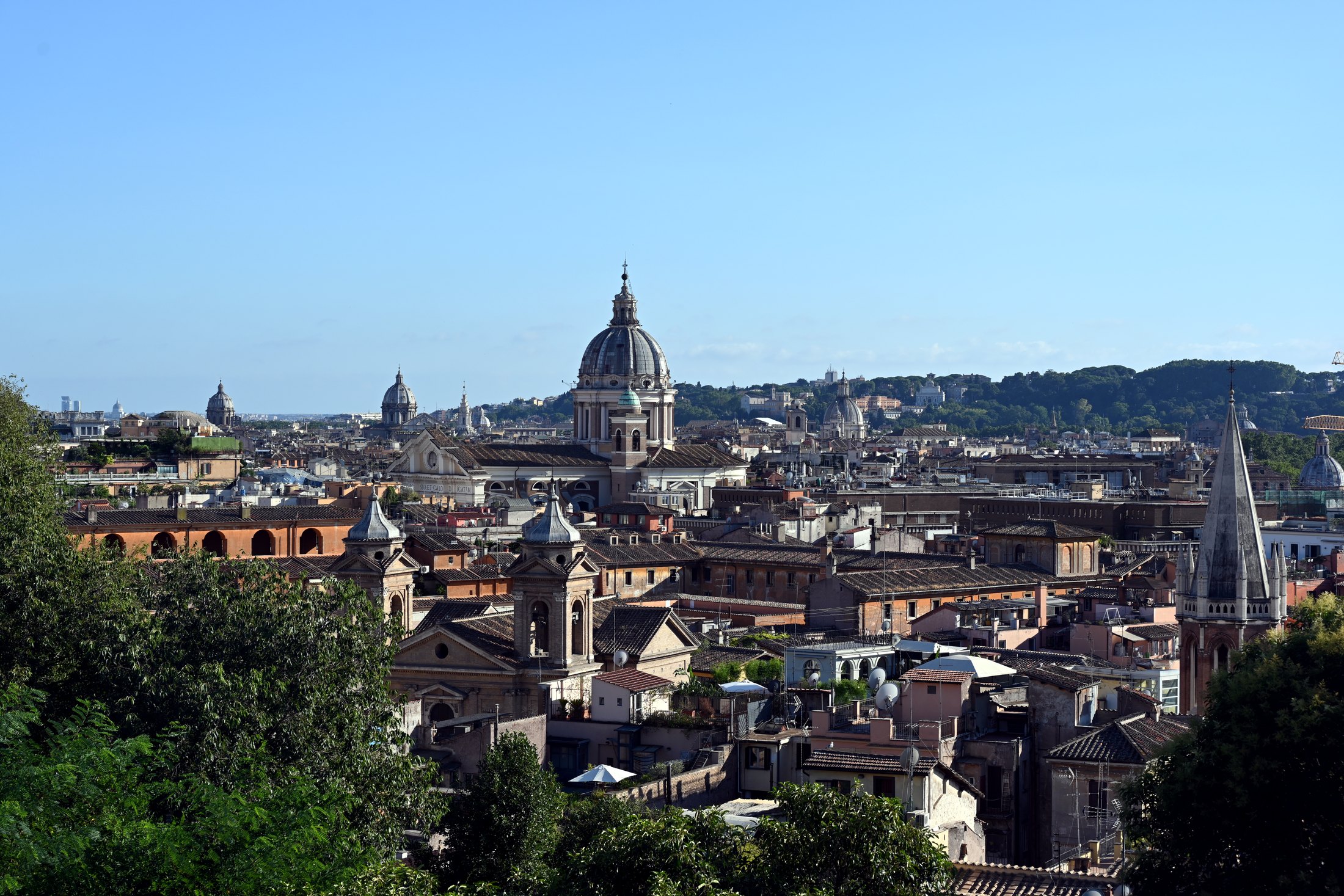
Rome's historic center layers church domes, apartment buildings, archaeological sites, and government buildings into the same skyline.
Rome Leonardo da Vinci Fiumicino (FCO) is southwest of the center. The Leonardo Express runs nonstop to Roma Termini in 32 minutes. It normally leaves every 15 minutes and costs €14.
Mode
Time
Cost
When to use
Leonardo Express
32 min
€14
Nonstop to Termini
FL1 regional train
Varies by stop
Check Trenitalia
Serves Trastevere, Ostiense, and Tiburtina instead of Termini
Licensed taxi
About 40 to 50 min without heavy traffic
€55 fixed fare
Covers addresses inside the Aurelian Walls. Supplements are included
The Rome Metro is useful for moving between walking areas. Line A serves the Vatican, Spagna, and Barberini side of the center. Line B connects Termini, Monti, and Colosseo. Line C meets Line A at San Giovanni and continues through eastern Rome.
ATAC Tap & Go accepts contactless cards and phone wallets on the metro, buses, and trams. A single ride costs €1.50 and remains valid for 100 minutes. Use the same card or device throughout the journey and tap again when changing vehicles.
The main sights fall into separate walking groups. The Colosseum, Forum, Palatine, and Trajan's Forum form the ancient center. The Pantheon, Piazza Navona, and Trevi Fountain fit into another central walk. The Vatican sits across the river and should not be treated as part of either group.
Festivals and big annual events
The Catholic calendar changes hotel demand, street access, and transit around the Vatican. Summer adds outdoor concerts, theater, and cinema.
Event
When
What it changes
Holy Week and Easter
March or April
Vatican services, processions, and heavier demand in Borgo and Prati
Christmas and Epiphany
Late December into early January
Vatican services, the Piazza Navona market, and holiday hotel pricing
Estate Romana
June into September
Outdoor concerts, cinema, and theater in parks, riverbanks, and ruins
Rome Marathon
March
Historic-center road closures on Sunday morning
Natale di Roma
April
Parades and historical reenactments around the Circus Maximus and Forums
Roma Pride
June
A central parade and related events
Papal audiences and major services can change access around St. Peter's Square. Check the Vatican calendar before planning that part of the city.
Where to stay
The Pantheon and Piazza Navona area minimizes transit for the historic center. Monti is convenient for the Colosseum, Forum, and Termini. Prati works for the Vatican, although it adds travel to the ancient center.
An old conference hotel on Via Aurelia Antica. I would only consider it at a very low rate or when points make it free
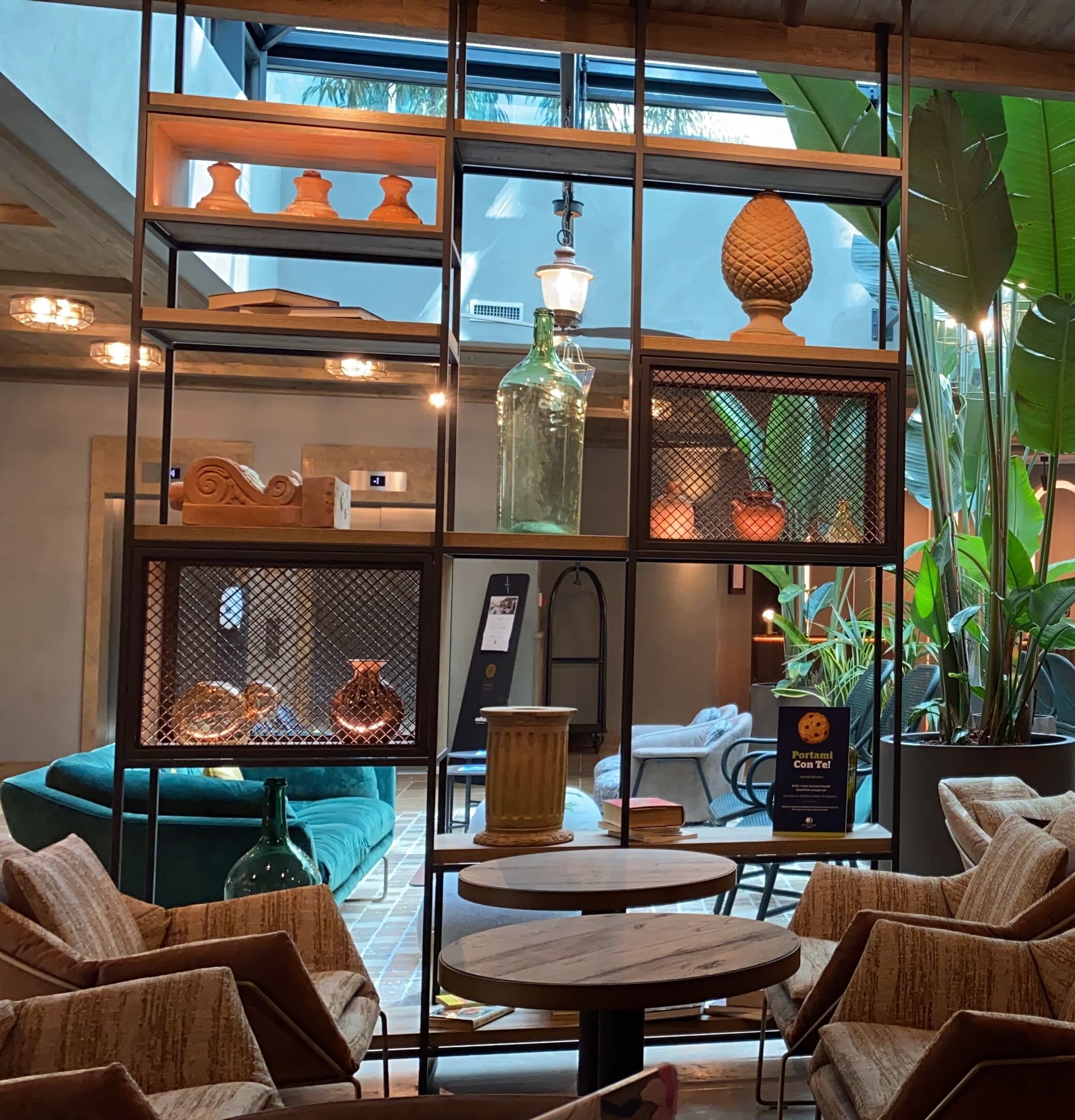
The DoubleTree has a polished interior and a rooftop bar. Surrounding buildings block much of the skyline, but I still liked spending an evening there. Breakfast felt cramped, although the food was good.
The DoubleTree Rome Monti lobby. This is the nicest DoubleTree I have stayed in.
I stayed at the Crowne Plaza twice, most recently around 2022. Both stays were free on points when Rome had few other options, and I regretted the location both times. The carpet, drapes, and wallpaper made it feel like an old conference hotel that had seen better days. Some fifth-floor rooms have since been renovated, but recent guest reports still mention worn common areas. I would confirm the room category before booking.
Where to eat
Rome's four standard pasta dishes are cacio e pepe, carbonara, amatriciana, and gricia. Pizza al taglio, supplì, salumerie, and inexpensive fresh-pasta counters cover the quicker meals between them.
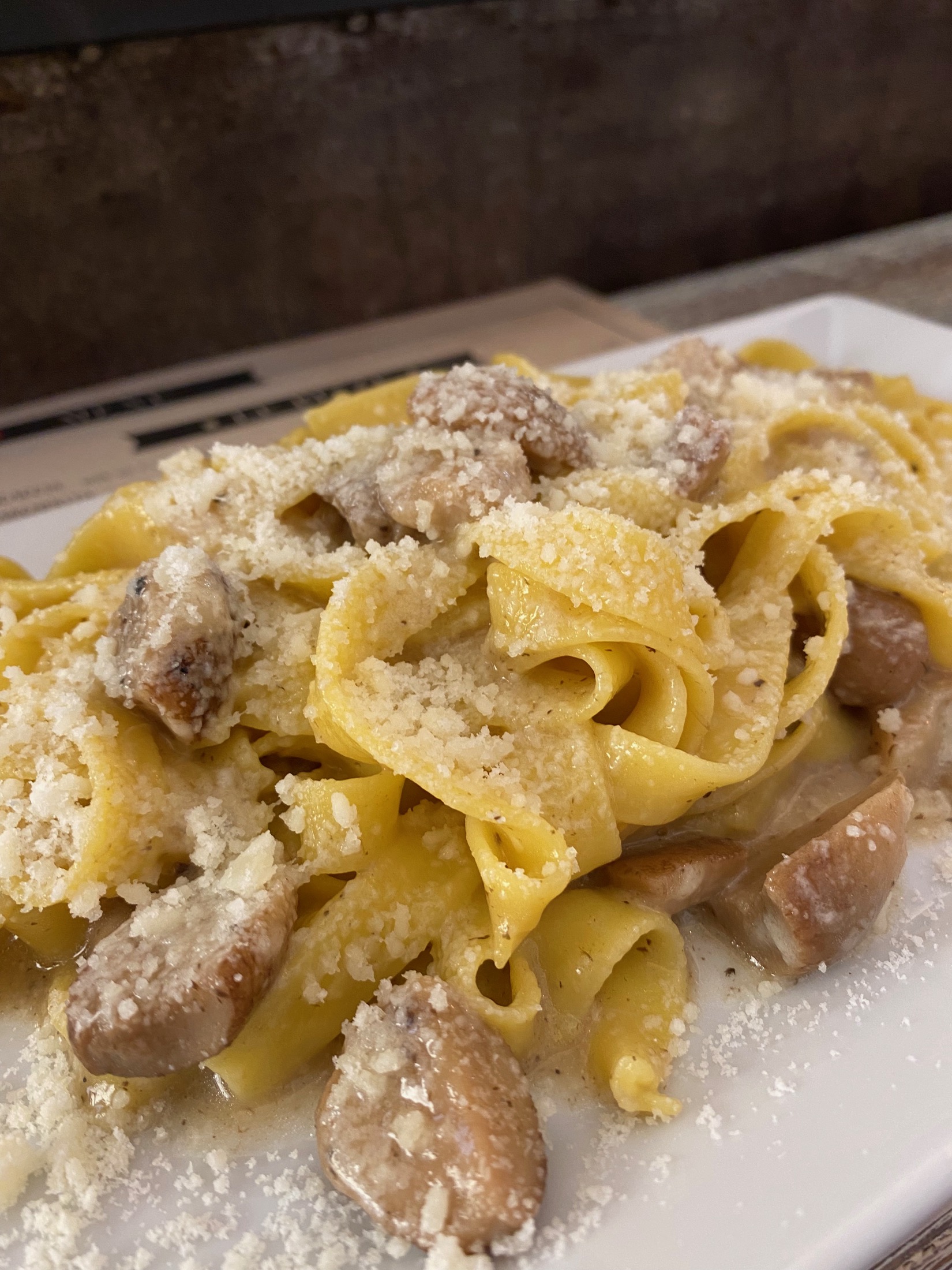
I had fettuccine with mushrooms and truffle cream at Pasta In Corso. It was relatively inexpensive and very good.
I stopped for one tiramisu. It was pretty good and close to Trevi Fountain
Booking the major sights
The Colosseum, Vatican Museums, and Galleria Borghese need advance reservations. The Pantheon sells tickets online and on site. Trevi Fountain uses an open €2 ticket for the controlled basin area rather than timed entry.
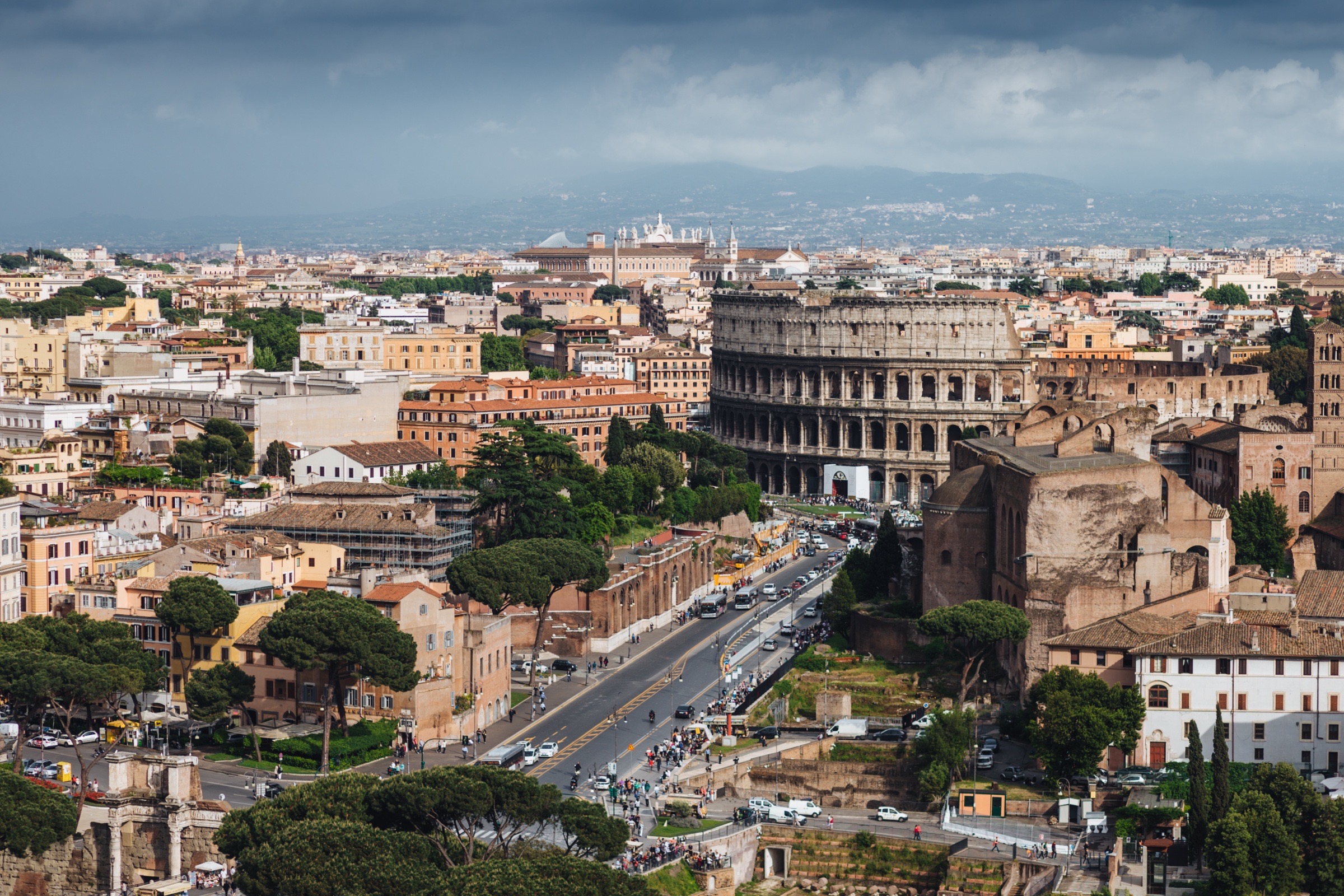
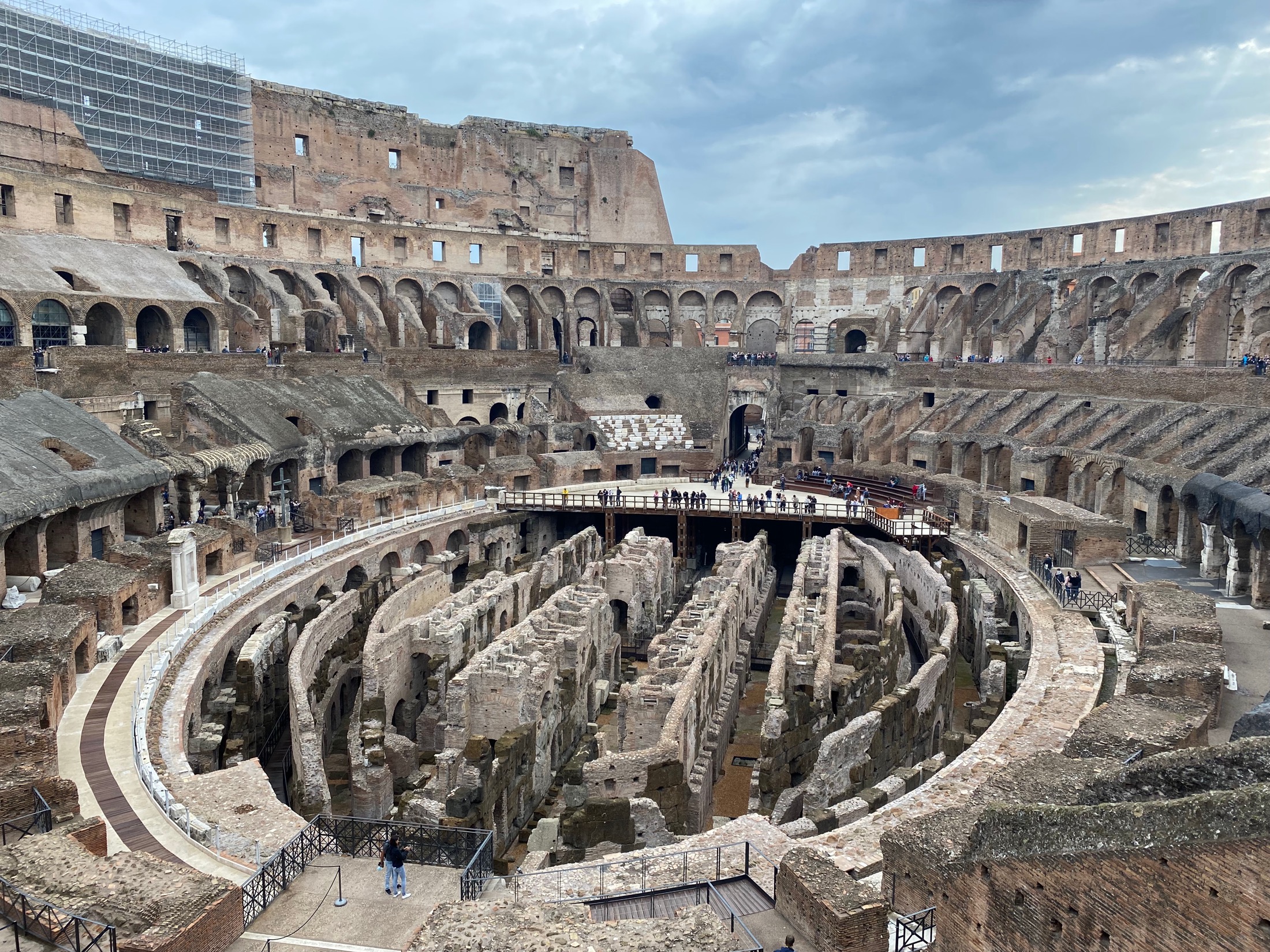
From inside, the Colosseum's long elliptical plan is much clearer than it is from the usual side views.
Sight
What to know
Booking
Colosseum, Forum, and Palatine
The €18 standard ticket includes one timed Colosseum entry and one entry to the Forum and Palatine. Standard Colosseum visits are limited to 75 minutes
The controlled basin area costs €2. It opens at 11:30 on Monday and Friday and 09:00 on other days, with last admission at 21:00. Views from outside remain free
I had always pictured the Colosseum as almost round because I knew it from the usual side views. Going inside changed the perspective. The interior also explains how people occupied the structure after the Roman period, when its passages became housing, workshops, storage, and stables.
The Roman Forum was my favorite place to walk around in Rome. It was surprisingly relaxing to stroll through the ruins without rushing, and there were a lot of cats. The Pantheon was much bigger than I expected. Its scale makes more sense when you stand under the dome.
Trevi Fountain is going to be crowded, much like Disney. I still cannot imagine going to Rome and skipping it. Watch your pockets here because the crowd gives pickpockets plenty of cover. Piazza Navona was simply a really nice place to walk through and look around.
I gave Castel Sant'Angelo three stars. The building's history is more interesting than the museum visit itself, which I found kind of boring.
Common scams to know going in
The densest crowds are around Trevi Fountain, the Vatican Museums, the Colosseum approaches, Metro Line A, and Termini.
Pickpockets at Trevi and on transit. Keep phones and wallets in a closed front pocket or zipped bag. A crowd pressing into a train or toward the fountain gives a second person cover while someone else distracts you.
Friendship bracelets and roses. Someone places an item in your hand or ties it around your wrist, then demands payment. Do not accept it. Keep walking.
Unofficial ticket sellers. Vatican and Colosseum touts use official-looking shirts and sell marked-up or unusable tickets. Buy from the official links above.
Unexpected restaurant charges. Check whether the menu lists a coperto, bread, or service charge before ordering near the major monuments. Read the receipt before paying.
Unlicensed airport rides. Use the official white taxi line. The fixed Fiumicino fare applies to addresses inside the Aurelian Walls.
Quick answers
How do I get from Fiumicino to central Rome?
The Leonardo Express runs nonstop from Fiumicino Airport to Roma Termini in 32 minutes and costs €14. Trains normally leave every 15 minutes. A licensed taxi costs a fixed €55 between Fiumicino and addresses inside the Aurelian Walls.
Which part of Rome works best for a first visit?
The Pantheon and Piazza Navona area is central for walking. Monti is convenient for the Colosseum, Forum, and Termini. Prati works well for the Vatican but requires more travel to the ancient center.
Which Rome sights require advance tickets?
Reserve the Colosseum, Vatican Museums, and Galleria Borghese. The Colosseum releases tickets 30 days ahead. Galleria Borghese requires a reservation for every visitor. The Pantheon sells official tickets online and on site. Trevi Fountain does not use timed tickets.
Is Trevi Fountain free?
The fountain remains visible for free from the square. Tourists and nonresidents pay €2 to enter the controlled area closest to the basin during its operating hours.
 +2
+2 +9
+9 +1
+1 +2
+2
 +1
+1 +2
+2 +8
+8 +7
+7
 +2
+2
 +4
+4 +2
+2
 +2
+2