Istanbul is more city than one trip can hold. Fifteen million people across two continents, layers of Roman, Byzantine, and Ottoman history stacked under a fast modern metropolis, and no single route covers the whole city. It also carries a reputation for being overwhelming that scares first-time travelers off. Some of that is the scale. Some of it is that Turkey is a predominantly Muslim country, and people who have not spent time in one assume the wrong things. My read is that Istanbul is one of the easiest large cities in the world to walk around in, and the call to prayer five times a day is a feature, not a problem, unless your hotel is sitting on top of the loudspeaker.
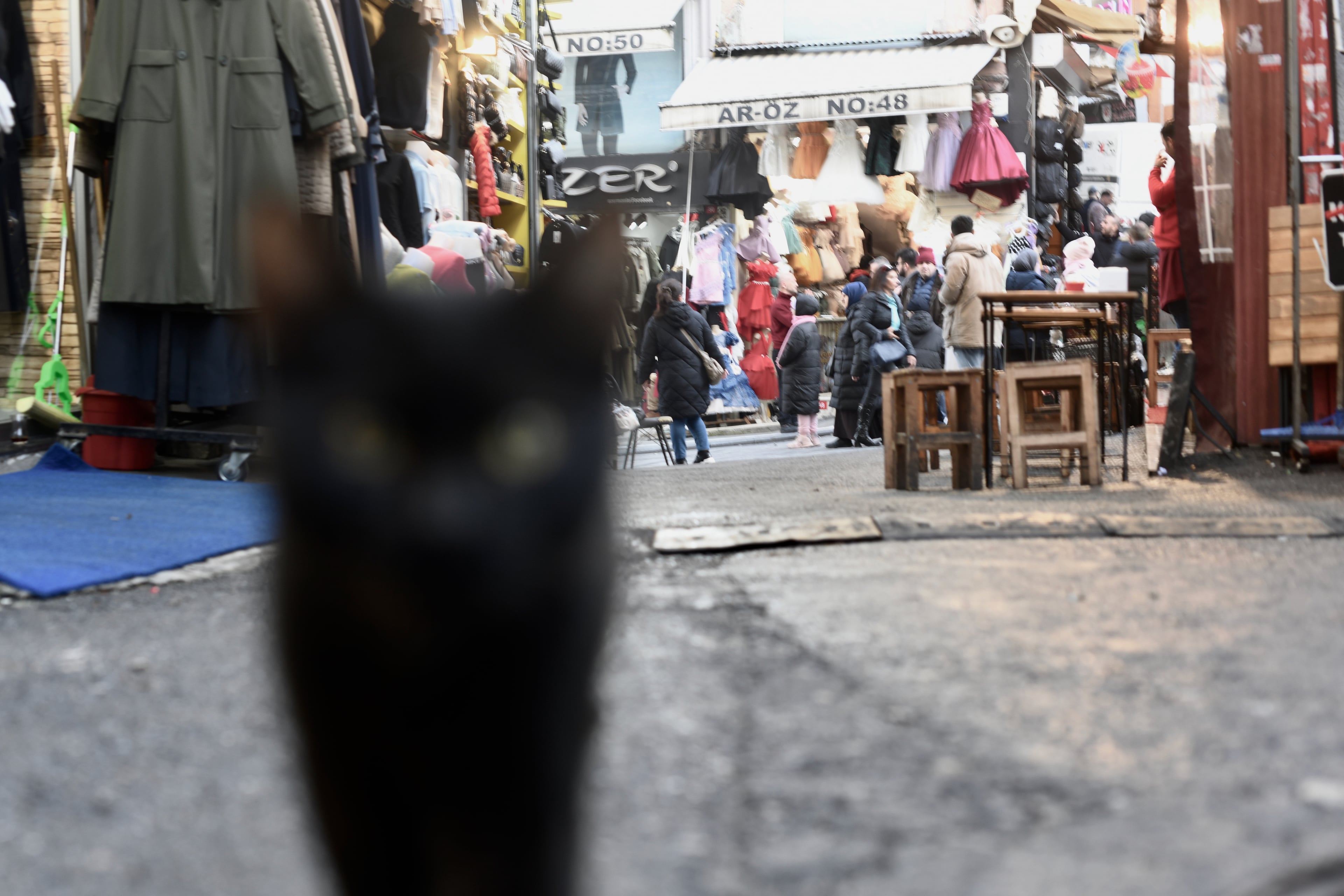
My favorite part of Istanbul is the cats. They are everywhere, they are fed by everyone, and they have been part of the city's social fabric for 2,500 years. Beyond that, here is how to plan a first visit.
Istanbul across two continents
Across a few trips, the old city monuments, Bosphorus ferries, Asian side at Kadıköy, and Beyoğlu worked best as separate geographic blocks.
The Princes' Islands, Bursa, and the smaller neighborhoods of Balat, Kuzguncuk, and Karaköy sit beyond those central blocks and require their own routes.
How do I get in from the airport?
Istanbul has two airports. Istanbul Airport (IST) on the European side is the main international hub, connected by metro and airport buses, roughly an hour to the center. Sabiha Gökçen (SAW) is on the Asian side, used by many budget carriers, and is further out. From either, the metro and bus network or a booked transfer will get you in. In the city itself, the trams, metro, funiculars, and ferries cover most of what you need on a rechargeable Istanbulkart.
Uber and BiTaksi both work at the airport, but the curbside experience can be a sport. The current pattern: a driver accepts the ride, then claims the app is broken and tries to renegotiate cash at two to three times the meter. The fix is to use the designated app pickup zone rather than the taxi line, and if a driver insists you "meet them somewhere" off-curb, cancel and rebook. The airport is large and the five-minute walk to the right zone is the cost of a clean fare. BiTaksi (the local equivalent) is usually faster to match at the airport, though it sometimes defaults the pickup point to Departures instead of Arrivals.
Transit notes
Istanbul Metro is the long-jump layer: M11 for Istanbul Airport, M4 for Sabiha Gökçen, M2 for Taksim/Şişli/Levent, and the other lines for cross-city trips outside the old tourist core. It is useful, but it is not the whole first-visit system.
For the city most travelers actually see first, Istanbul Tram and ferries matter just as much. T1 is the old-city spine for Sultanahmet, Sirkeci, Eminönü, Karaköy, Tophane, and Kabataş. Ferries make the Bosphorus and Kadıköy make sense. Use Istanbulkart or contactless, and do not treat deep-station luggage transfers as frictionless.
Where should I stay?
For a first stay, choose between the old city (Sultanahmet) and the modern center (Beyoğlu, across the Golden Horn).
Sultanahmet puts Hagia Sophia, the Blue Mosque, Topkapı Palace, and the bazaars within walking distance. It is the convenient base for first-time sightseeing, but the area is heavily touristed and quiet after dark, and most blocks have a working mosque within earshot. Beyoğlu, around İstiklal Street and Galata, is the livelier modern base. Stronger for restaurants, bars, and nightlife. The short tram or walk back into the old city makes Beyoğlu the better all-purpose base if you do not need to wake up next to Hagia Sophia.
A practical heads-up. Mosques broadcast the call to prayer five times a day, starting before sunrise. If you sleep light, look at where the property sits on the satellite view before booking. Some hotels are right next to a small neighborhood mosque with its own loudspeaker. Others are a block or two off and you barely hear it. I do not mind the call. Some people do.
| Hotel |
Why it works |
Trade-off |
| InterContinental Istanbul |
Beyoğlu high-floor views across the Bosphorus and short walks to bars and food. IHG Diamond club lounge has two hours of free food and drinks each evening if you have status. View and location alone, probably my pick of the chain hotels. |
Property reads dated, the kind of "old luxury" that some people love and others do not. In-room restaurant prices are high. |
| Crowne Plaza Istanbul - Old City |
The nicer of the IHG pair in Sultanahmet. Closer to the major sights. |
Often two to three times the Holiday Inn rate on the same dates. Worth checking the price gap before booking. |
| Holiday Inn Istanbul - Old City |
The cheaper IHG option in the same neighborhood. The rooftop floors get a view down to the Sea of Marmara. Same brand parent as the Crowne Plaza, so loyalty stays in the system. |
Directly next to a small mosque, so the call to prayer is loud. Further from the major monuments than the Crowne Plaza next door. |
| Moxy Istanbul Taksim |
The most fun chain stay. Sits inside the dense pocket of bars and restaurants off İstiklal Street in Beyoğlu. |
Brand-standard rooms, nothing distinctive. Further from the old city. |
| Airbnb (Beyoğlu, Karaköy, Cihangir) |
Usually the cheapest option in the same neighborhoods, and you wake up in a real apartment block. |
Most Istanbul mid-rise buildings have no elevator. Check the floor number before booking, especially with luggage. |
What to see in the old city
The old city, Sultanahmet, holds the monuments most visitors come for. Hagia Sophia, the Blue Mosque, Topkapı Palace, the Basilica Cistern, and the bazaars sit in the same district but have separate queues and opening patterns.
Hagia Sophia is the oldest. Justinian I commissioned it after the Nika riots burned the previous church to the ground. The architects Anthemius of Tralles and Isidore of Miletus finished it in five years and dedicated the building on December 27, 537. The central dome spans 31 meters across and rises 48.5 meters above the floor, supported by a system of half-domes and pendentives that was structurally new at the time. The first dome collapsed in 558 and was rebuilt taller in 562 by Isidore the Younger, the original architect's nephew. Hagia Sophia was a church for 916 years, then a mosque after 1453, then a museum from 1934, and is now a working mosque again as of 2020.
Across the square stands the Blue Mosque (Sultan Ahmed Mosque), commissioned by Sultan Ahmed I and built between 1609 and 1616 by Sedefkâr Mehmed Aga, a student of the great Ottoman architect Sinan. It was the first mosque in the empire built with six minarets, which caused a minor diplomatic incident with Mecca at the time. The "blue" name comes from the interior: more than 20,000 handmade İznik tiles in tulip patterns line the walls and domes.
Topkapı Palace sits on the seaward end of the old city peninsula. Mehmed II began building it around 1459, six years after he took Constantinople, and the complex served as the seat of the Ottoman Empire for almost four centuries. The site covers around 700,000 square meters and is organized around four courtyards. The major draws inside are the Harem, the Imperial Treasury (with the Topkapı Dagger and the 86-carat Spoonmaker's Diamond), the Sacred Relics chamber, and the immense palace kitchens. The palace became a museum in 1924 on Atatürk's direction.
The Basilica Cistern is what is left of the city's Byzantine waterworks. It sits underground a short walk from Hagia Sophia, with 336 marble columns supporting a vaulted brick ceiling. Two of the columns rest on carved Medusa heads, set sideways for reasons no one is sure of. The cistern is small, dim, and atmospheric. A half-hour visit. Buy the timed ticket online to skip the queue.
The two great covered markets are a short walk apart. The Grand Bazaar has been operating since the 15th century and runs to more than 4,000 shops across 60 covered streets. It is plausibly the oldest continuously running shopping mall in the world. The Spice Bazaar near the Galata Bridge is younger and smaller (17th century) and is the better stop if what you want is food, dried fruits, and Turkish coffee to take home.
Across the Golden Horn, Beyoğlu rises around the medieval Galata Tower. Genoese merchants built it in 1348 as part of the walled colony they ran across the water from Constantinople. The tower is 67 meters tall and the view from the top covers the old city, the Bosphorus, and the Asian side. Buy the timed ticket online.
The Bosphorus and the Asian side
A Bosphorus ferry is the single thing not to skip. The ride is cheap on Istanbulkart, the route runs roughly an hour and a half each way, and the geography of the city only makes sense once you have been on the water.
The Asian side at Kadıköy is the better lunch stop than Istanbul's tourist core. A real working neighborhood with markets, fish restaurants, a strong cafe scene, and roughly a third of the Sultanahmet prices. The ferry from Eminönü or Karaköy runs every twenty minutes.
The cats
My favorite part of Istanbul, in plain English, is the cats. They are everywhere. They sleep on shop counters, ride trams, and own corners of every neighborhood. The 2017 documentary Kedi made the city's cat culture famous to a Western audience, but the cats themselves have been here for 2,500 years. They came in on the ships that built Byzantium in 660 BCE, and they helped the early Ottoman city control rats in its first sewer system. Islamic folklore includes the story of the Prophet cutting his robe sleeve rather than wake a cat sleeping on it. Most cats you meet on the street are owned by no one and fed by everyone. The cats at Massa Bistro sealed the restaurant for me.
Where to eat
Istanbul eats on a deep Turkish range: kebabs and grilled meats, mezze, fresh fish by the water, the simit and börek of the street, and a strong cafe culture. Both the old city and Beyoğlu are dense with options.
| Spot |
What it is |
Notes |
| Massa Bistro |
Sit-down near the Grand Bazaar |
The place to land after a morning of shopping. Sharp service, reasonable prices, the food carries it. Cats. |
| Saat Kule Kafeterya |
A cafe with the view in Beyoğlu |
The view is the reason to come. Prices are in line with a European tourist spot. Food was fine on my visit. |
| Beyoğlu Cafe |
A cafe |
Simple Beyoğlu pause when you are already nearby. |
| The Pub Beyoglu |
A pub |
Easy drinks stop around Beyoğlu when you want the night to stay casual. |
Sources
Hagia Sophia dates, architects, and dome dimensions follow The Met's essay on Hagia Sophia 532–37 and the World History Encyclopedia entry. The Blue Mosque construction dates and architect follow Britannica's biography of Mehmed Ağa and the Wikipedia entry on Sedefkâr Mehmed Agha. Topkapı's construction dates and 1924 museum conversion follow the palace's published timeline. The cats' history follows Amaliah's piece on cats in Istanbul and the NPR coverage of Kedi. Airport taxi scam patterns follow The Istanbul Insider's taxi-scam guide and Istanbul Tour 24.
 +1
+1 +1
+1 +2
+2 +2
+2 +1
+1 +1
+1 +1
+1 +4
+4 +1
+1