Photos from Mexico City
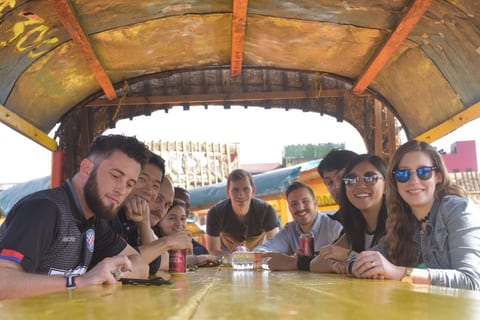
Xochimilco Canals (Trajineras)attraction
Current conditions and the practical reference material that helps turn the saved places into a trip.
7-day forecast from Open-Meteo. UV badges flag days when sun protection matters (3 and above is moderate; 8 and above is risk territory for unprotected fair skin within 30 minutes).
About 75% of the year's rain falls in these months. Typical highs around 21°C, lows around 9°C.
About 25mm of rain a month, against 148mm in the wet season.
Public holidays from Nager.Date.
Public-transit operators within 8 km of the city center. Click through to each operator’s site for routes, fares, and tickets.
Operators and modes are aggregated from individual transit-agency GTFS feeds. Route classifications come from each feed’s route type codes.
Mexico City is the capital and most populous city of Mexico, as well as the most populous city in North America. It is one of the most important cultural and financial centers in the world, and is classified as an Alpha world city according to the Globalization and World Cities Research Network (GaWC) 2024 ranking. Mexico City is located in the Valley of Mexico within the high Mexican central plateau, at an altitude of 2,240 meters. The city has 16 boroughs or demarcaciones territoriales, which are in turn divided into neighborhoods or colonias.
The links below support the changing or licensed reference material on this page. Personal notes and ordinary geographic facts are not footnoted individually.
Monthly highs, lows, rainfall — long-term averages, NASA POWER.
Maps, image licenses, and the full dataset registry are listed in site credits.
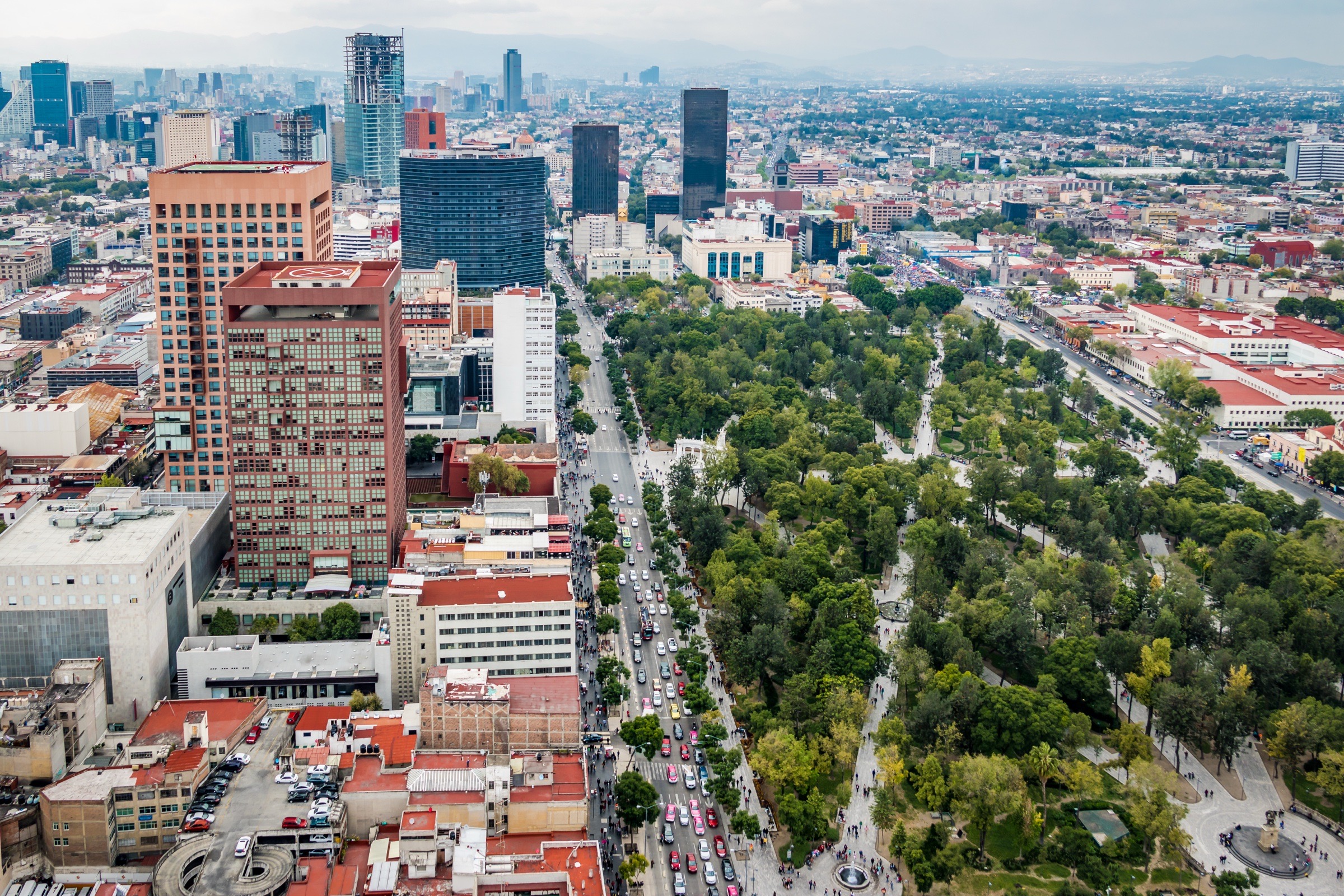
My Mexico City travel guide. Where to stay in Roma and Condesa, the historic center, the museums, the Teotihuacan pyramids, and the food scene.
Mexico City is one of the great food cities on earth, and far easier and more rewarding than its reputation suggests. It is huge, sits at 2,240 meters in a ring of mountains, and works best when nearby neighborhoods are grouped together.
Planning brief
Mexico City is the capital of Mexico, with about 9 million people in the city proper and more than 22 million across the metro area. It sits at 2,240 meters in a high valley ringed by mountains. It is one of the great food cities, and far easier and more rewarding than its reputation suggests. The city is too large to treat as a single sightseeing circuit.
These two leafy, walkable neighborhoods are where most first-time visitors are happiest, full of cafes, restaurants, and parks, and a short ride from the historic center and the museums.
Group the historic center, the big museums, Coyoacán, and the Frida Kahlo house by area. Teotihuacán sits outside the city and needs its own transport plan.
Street tacos, market stalls, century-old cantinas, and a deep modern restaurant scene. Eat widely and cheaply. The best meals here are rarely the priciest.
At 2,240 meters the city sits high enough to slow you down for a day or two. Go easy on arrival, drink water, and ease into the alcohol.
Four or five days is the shape of a first visit. That covers the historic center and the Zócalo, a day for the Anthropology Museum and Chapultepec, a day in Coyoacán for the Frida Kahlo house, a full day out at Teotihuacán, and enough unhurried time to eat properly.
The city is enormous, and trying to cross it constantly will eat the trip. Pick neighborhoods that are close together, use Uber for the longer hops, and accept that a first trip leaves plenty for a second.
Mexico City has two airports, and the first thing to check when you book is which one your flight uses.
Benito Juárez International (AICM) is the main airport, just east of the city center, close in and easy. Buy a ticket for an authorized taxi at the official desk inside the terminal rather than accepting an offer in the hall, or take an Uber, which is reliable here and usually cheaper than the taxi.
Felipe Ángeles International (AIFA) is the newer airport, well north of the city, and the transfer into the center takes over an hour. Some budget and regional flights use it, so do not assume you are landing at the close-in airport.
For a first trip, use Uber for the awkward longer hops and the Mexico City Metro when the line is obvious. The system is huge, cheap, and useful, but the city is so large that the clean answer is usually a mix rather than pretending every trip should be rail.
The Xochimilco transit pattern is Metro to Taxqueña, then the Mexico City Light Rail south toward the canals. Tren Suburbano and El Insurgente are the regional rail layer, useful for specific outer trips rather than the normal Roma-Condesa-Polanco first visit.
For a first visit, base in Roma or Condesa. These two adjoining neighborhoods are leafy, walkable, full of cafes and restaurants, and central enough that the historic core and the museums are a short ride away.
| Area | Why pick it | Trade-off |
|---|---|---|
| Roma | Walkable, full of restaurants and cafes, central, the most natural first-trip base | Popular and rising in price, busy on weekends |
| Condesa | Greener and calmer than Roma, built around two parks, still very walkable | Slightly more residential, fewer big sights nearby |
| Polanco | The upscale district, designer shopping, the Anthropology Museum, the best fine dining | Pricier and more corporate, less street life |
| Centro Histórico | In the middle of the major sights, grand old buildings, the most historic base | Quieter and emptier at night once the day crowds leave |
The atlas does not yet carry hotel pins for Mexico City, so book on the usual sites and read recent reviews for the property.
Mexico City is best understood as a set of distinct neighborhoods rather than one center.
Roma and Condesa are the cafe-and-restaurant heart of a modern visit, side by side and easy to walk between. Polanco is the moneyed district, with Avenida Presidente Masaryk for shopping and a cluster of top restaurants. The Centro Histórico is the old colonial core around the Zócalo, the vast main square, and holds most of the famous monuments.
Coyoacán, in the south, is the cobblestoned former village where Frida Kahlo lived, with a calm plaza, markets, and the Casa Azul. Chapultepec is the giant park on the west side, holding the castle, the Anthropology Museum, and the zoo. Further south, Xochimilco is the network of canals where you ride a painted trajinera boat, a half-day in itself.
The famous list is long. These are the anchors of a first trip.
Mexico City is safe for a normal visit, and the central neighborhoods see millions of visitors a year without trouble. The reputation is worse than the day-to-day reality.
The sensible rules are the ones you would use in any large city. Use Uber or registered taxis rather than hailing a cab on the street. Do not flash a phone, a camera, or jewelry in crowds. Stick to well-traveled streets after dark and stay in the central districts at night. Drink bottled or filtered water. Beyond that, the central areas are walkable, friendly, and easy.
Mexico City is one of the best eating cities in the world, and the range is the point: street tacos, neighborhood markets, century-old cantinas, and a deep modern restaurant scene. The best meals are rarely the most expensive ones. Start with tacos al pastor, the spit-roasted pork that is the city's signature, and work outward.
| Spot | What it is |
|---|---|
| El Tizoncito | A Condesa taquería that claims to have created tacos al pastor |
| El Bajío | Traditional Mexican, strong on regional Veracruz cooking |
| Porfirio's Masaryk | Upscale Mexican on Avenida Masaryk in Polanco |
| Agua & Sal | Seafood and ceviche |
| Entremar | Seafood |
| Batta Sushi | Sushi |
| Bamboo Asian Cuisine | Pan-Asian |
For the single most Mexico City meal on the list, El Tizoncito is the Condesa taquería that traces tacos al pastor to its own kitchen in 1966, which makes it the right first stop for the dish the city is known for.
.svg)