Athens travel guide: the Acropolis ticket, where to eat in Plaka, and the Cape Sounion day trip · Mike Lee
Photos from Athens
Aristotle's Lyceumattraction
+2
Panathenaic Stadiumattraction
+4
Temple of Hephaestusattraction
The Athenian Agoraattraction
+4
Athens National Gardenpark
+6
Mount Lycabettusattraction
Syntagmaattraction
+1
Zappeion Hallattraction
+2
Temple of Olympian Zeusattraction
+1
Grand Hyatt Athenshotel
+2
Atlantikosrestaurant
+12
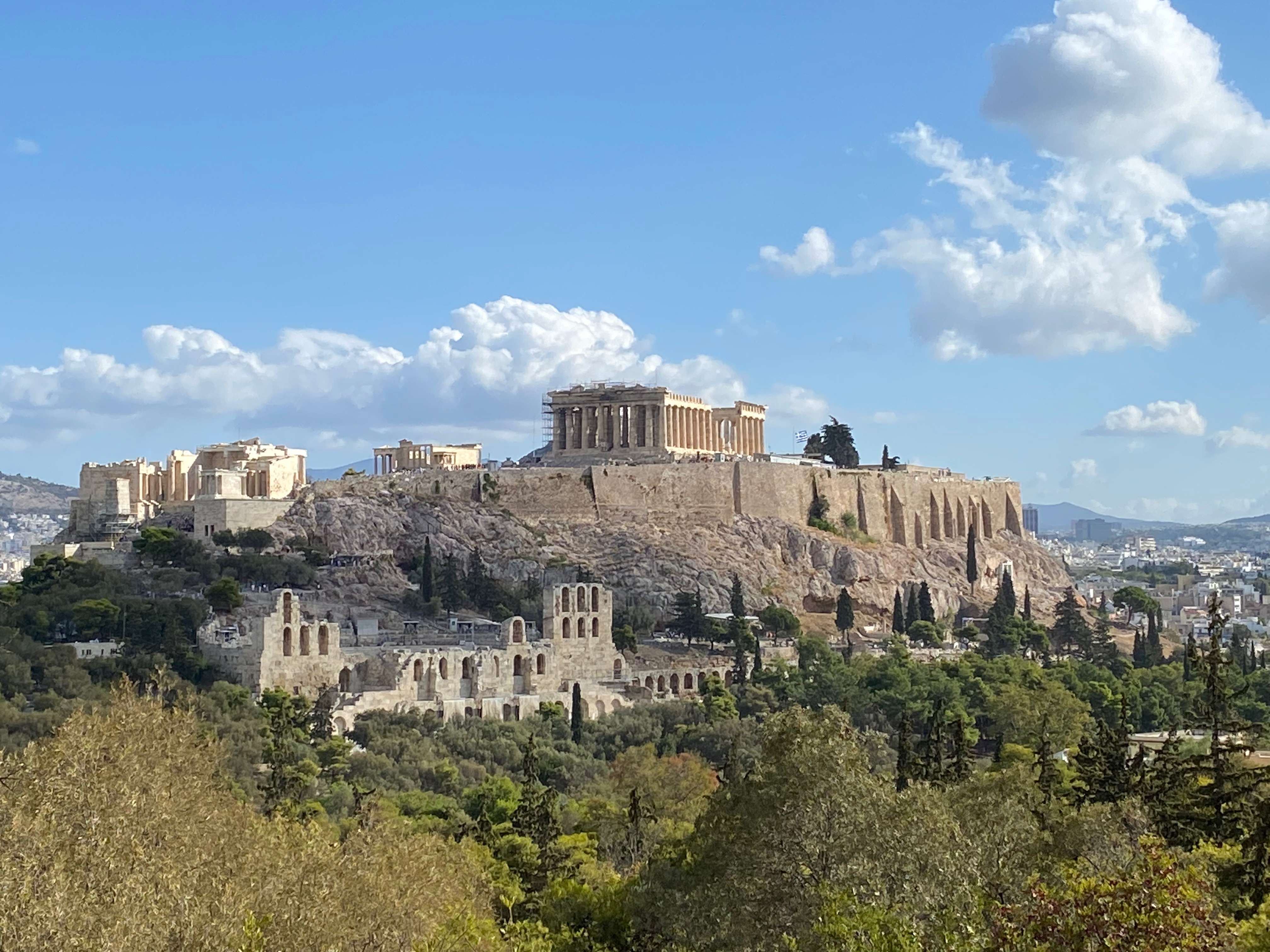
Acropolis of Athensattraction
+13
Parthenonattraction
Erechtheionattraction
Philopappos Hill Viewpointattraction
Kouvelos & Gardenrestaurant
+4
Monastiraki Flea Marketshopping
+1
Hard Rock Cafe Athensrestaurant
+3
Philopappou Hillattraction
Philopappos Monumentattraction
Athens beyond the Acropolis
My Athens travel guide. Booking the Acropolis, Plaka tavernas, the National Archaeological Museum, and Cape Sounion at sunset.
Updated
Jul 23, 2026
Plan Athens
Current conditions and the practical reference material that helps turn the saved places into a trip.
The next week in Athens
7-day forecast from Open-Meteo. UV badges flag days when sun protection matters (3 and above is moderate; 8 and above is risk territory for unprotected fair skin within 30 minutes).
Athens needs three full days if you want the major archaeological sites, both headline museums, and time to walk without turning the trip into a checklist. Two days covers the Acropolis, the Athenian Agora, the Acropolis Museum, and Plaka. A third day gives you the National Archaeological Museum or a trip to Cape Sounion or Aegina. Stay a fourth night if you want to sleep in Delphi rather than spend six hours there and back on a bus.
Planning brief
Planning Athens
Three full days gives you the Acropolis, the main museums, the center, and one trip beyond Athens. With two days, Cape Sounion or Aegina would mean stacking too much into one day. The Acropolis timed entry needs to be booked online. Every other archaeological site now has its own admission.
Book the Acropolis ticket online
The Acropolis itself is €30 in high season (April-October), €15 in low season (November-March). Reserve the timed entry on the official Hellenic Heritage portal before you fly. Every other archaeological site is its own paid ticket. The body has the per-site fees.
Stay walking distance from Monastiraki
Monastiraki, Plaka, and Psyrri keep most of the central sites within walking distance. Many hotels have a rooftop with an Acropolis view, so check the property photos. Grand Hyatt Athens has a large rooftop pool south of the Acropolis, but it is farther from the evening activity around Monastiraki.
Do the Acropolis at 8 a.m. or late afternoon
The midday queue is the standard complaint about Athens. The 8 a.m. opening is cooler and quieter. The late-afternoon window catches the warm light and most tour groups have moved on. Avoid 11 a.m. to 3 p.m. unless the schedule leaves no choice.
Check KTEL before planning Cape Sounion
KTEL Attikis runs the coastal bus from Egyptou Square near Pedion Areos, not on route X80. As of 2026, the return fare is €12.50 in cash. The current schedule works for a daytime visit but leaves Sounion before a summer sunset. Sunset requires a car or private transfer.
Athens International Airport "Eleftherios Venizelos" (ATH) sits about 33 km east of central Athens. Metro M3, the airport express buses, and licensed taxis all run directly into the center.
Mode
Time
Cost
When to use
Metro M3 (blue line)
40 min to Syntagma
€9 single, €16 return
The default. Trains run every 30 minutes from the airport platform, direct to Syntagma Square. The entry point is signed inside the terminal
Express bus
50 to 70 min
€5.50 single, 24-hour service
X95 to Syntagma, X96 to Piraeus (the port for ferries), X93 to Kifisos coach terminal. The X95 runs every 15 to 30 minutes day and night
Taxi from the rank
35 to 50 min
€40 daytime / €55 night (flat rate)
The flat fare is set by law for airport-to-central runs. Confirm the rate with the driver before pulling away. The meter should start at zero
FreeNow / Uber Taxi
35 to 50 min
€40 to €55
Beat is now FreeNow. Both apps dispatch licensed yellow taxis in Athens rather than private rideshare drivers
M3 works well with manageable luggage. For a late arrival, X95 runs through the night to Syntagma. Licensed taxis use a fixed airport-to-center fare, currently €40 during the day and €55 at night. Confirm that fare before the driver leaves the rank.
Transit notes
Athens Metro has three lines. M3 connects the airport with Syntagma and Monastiraki. M1 is the older electric railway to Piraeus and is useful on ferry days. M2 runs north to south through the center.
Use an Ath.ena Ticket or Ath.ena Card from the station machines and tap at the gates. The normal 90-minute ticket is cheap. The airport metro ticket is separate and currently 9 EUR. If you arrive late, the airport buses are cheaper and run through the night.
The system is safe, but pickpockets work the crowded platforms and carriages around Monastiraki and Syntagma. Keep a phone in a zipped pocket and carry a bag in front when the train is full, especially with luggage on the airport and port routes.
Festivals and big annual events
Athens has two calendar checks: Greek Orthodox Easter for closures, and the summer arts festival for evening performances in ancient venues.
Event
When
What it changes
Greek Orthodox Easter
April or May
Restaurants and shops close for several days as locals travel. Saturday midnight services are the main moment
Athens Epidaurus Festival
June through early October
Concerts, opera, and theater at the Odeon of Herodes Atticus and Epidaurus. Book the big nights early
Carnival (Apokries)
February or March
Plaka and Psyrri get street parties, but Patras is the full Greek Carnival version
March 25
March 25
Independence Day parade and national holiday. The Acropolis closes, and individual museum hours vary
August 15
August 15
Hot, quiet, and closed in places as Athenians leave for the islands
Athens Marathon
Mid-November
Road closures and tighter hotels around the Panathenaic Stadium finish
For the city's normal rhythm, avoid Greek Easter itself. For ancient-venue performances, check Athens Epidaurus Festival dates before booking flights.
Where to stay
These three areas keep the Acropolis within walking distance.
Area
Access
At night
Monastiraki / Psyrri
Metro interchange, flea market, and a short walk to Plaka and the Agora sites
Busy and loud on weekends
Plaka
Closest to the north and south approaches to the Acropolis
Quieter than Psyrri, with restaurant prices set for visitors
Calmer, but about 15 minutes on foot from Monastiraki
Many midrange hotels in these areas advertise an Acropolis-view rooftop. Check the property photos because that description can mean anything from an open panorama to a small corner between buildings. Grand Hyatt has the pool and terrace, but it is farther from the restaurants around Monastiraki and Psyrri.
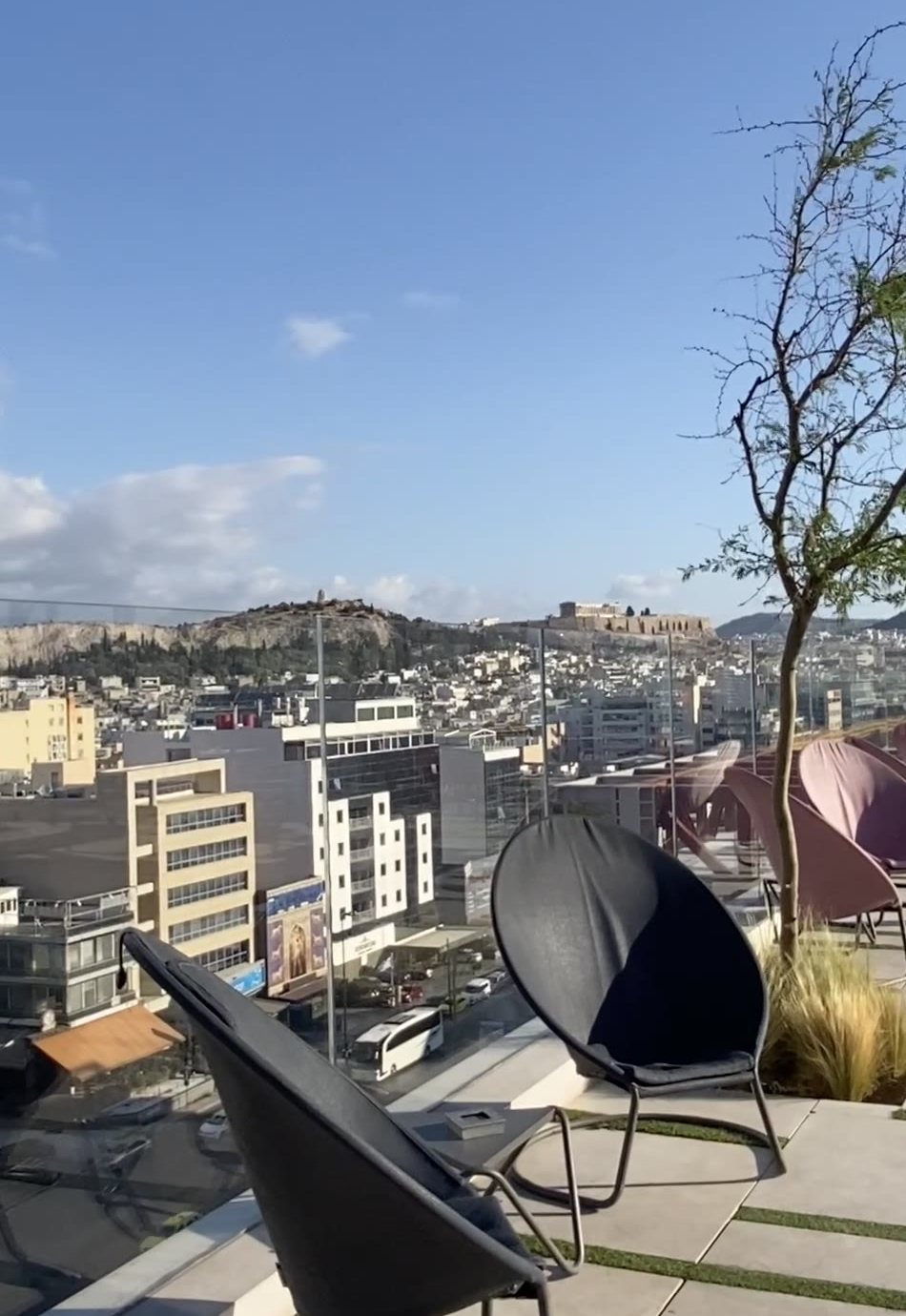
The Grand Hyatt rooftop pool looks directly toward the Acropolis. The hotel sits south of Plaka, so Monastiraki is about 15 minutes away on foot.
The Acropolis and the other archaeological sites
The Greek state's 7-site combination ticket was discontinued on April 1, 2025. There is no longer a government combo pass. The Acropolis requires its own timed entry, and every other archaeological site has separate admission.
The ancient cemetery. Underrated, usually quiet. Closed for works through July 2026
Aristotle's Lyceum
€5
€3
The school Aristotle founded in 335 BC, rediscovered in 1996. The lightest visit of the seven
Reduced fees apply for everyone November through March, plus EU students, holders of European disability cards, and certain other categories year-round.
The Acropolis is the only one with a real queue. Book the timed-entry ticket on the official Hellenic Heritage portal before you go. The prepaid line is much shorter than the door line. The other six rarely need a reservation. Just buy at the gate.
Hadrian's Library, the Roman Agora, the Tower of the Winds, and the Athenian Agora line up west from Monastiraki. That order avoids backtracking. If I were paying for one site beyond the Acropolis, I would choose the Athenian Agora. It has room to walk, an on-site museum, and the Temple of Hephaestus.
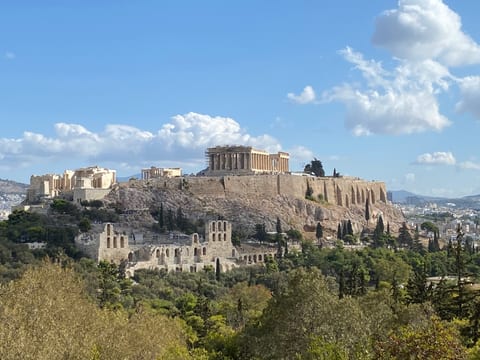
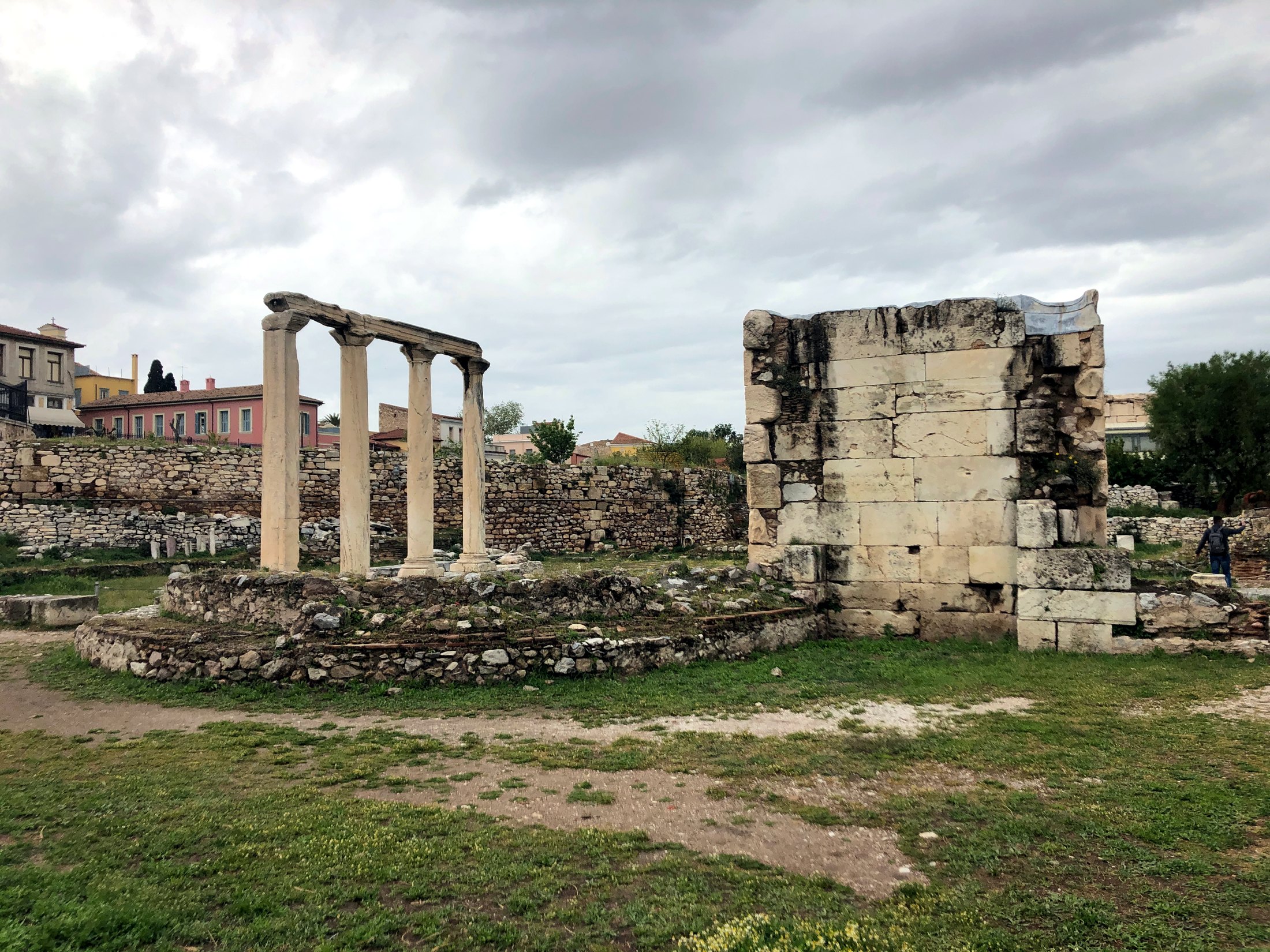
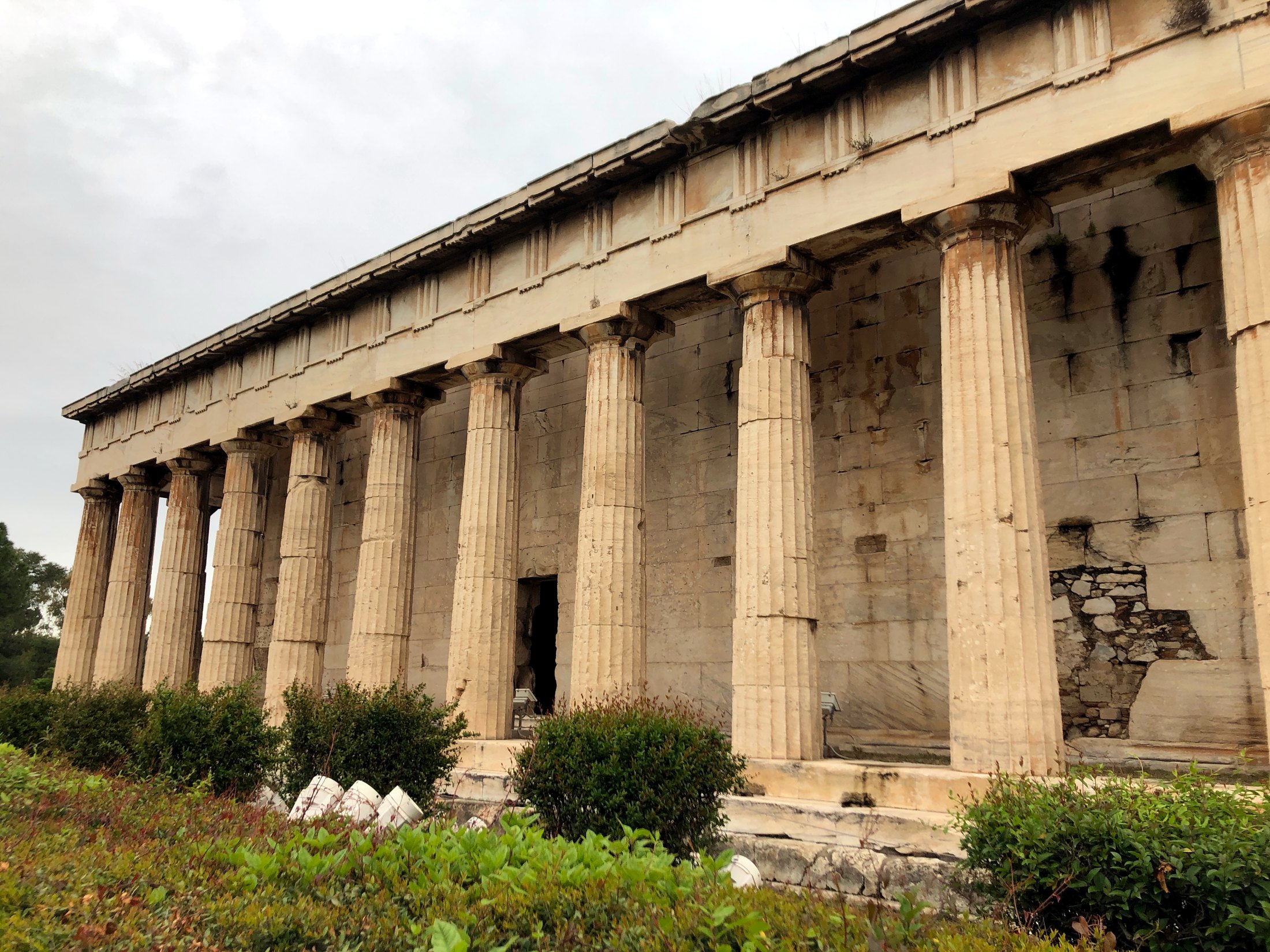
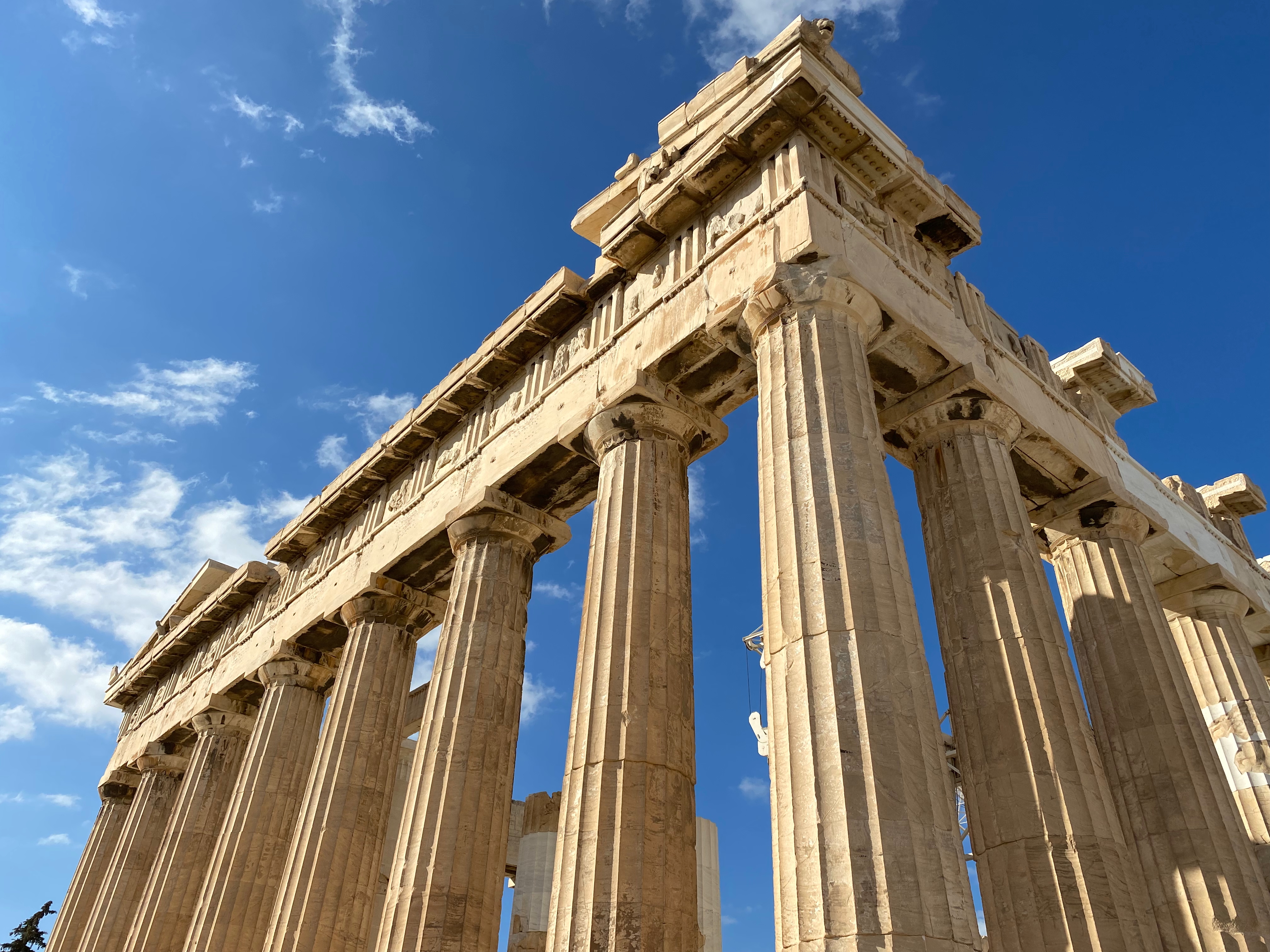
Hadrian's Library sits beside Monastiraki Square. It takes less time than the two Agora sites and fits naturally at the start of the walk west.The Temple of Hephaestus stands above the Athenian Agora and is substantially more intact than the low foundations across the rest of the site.The Acropolis needs a timed slot. I would take the 8 a.m. opening or a late-afternoon entry because the exposed hill is hot and crowded at midday.
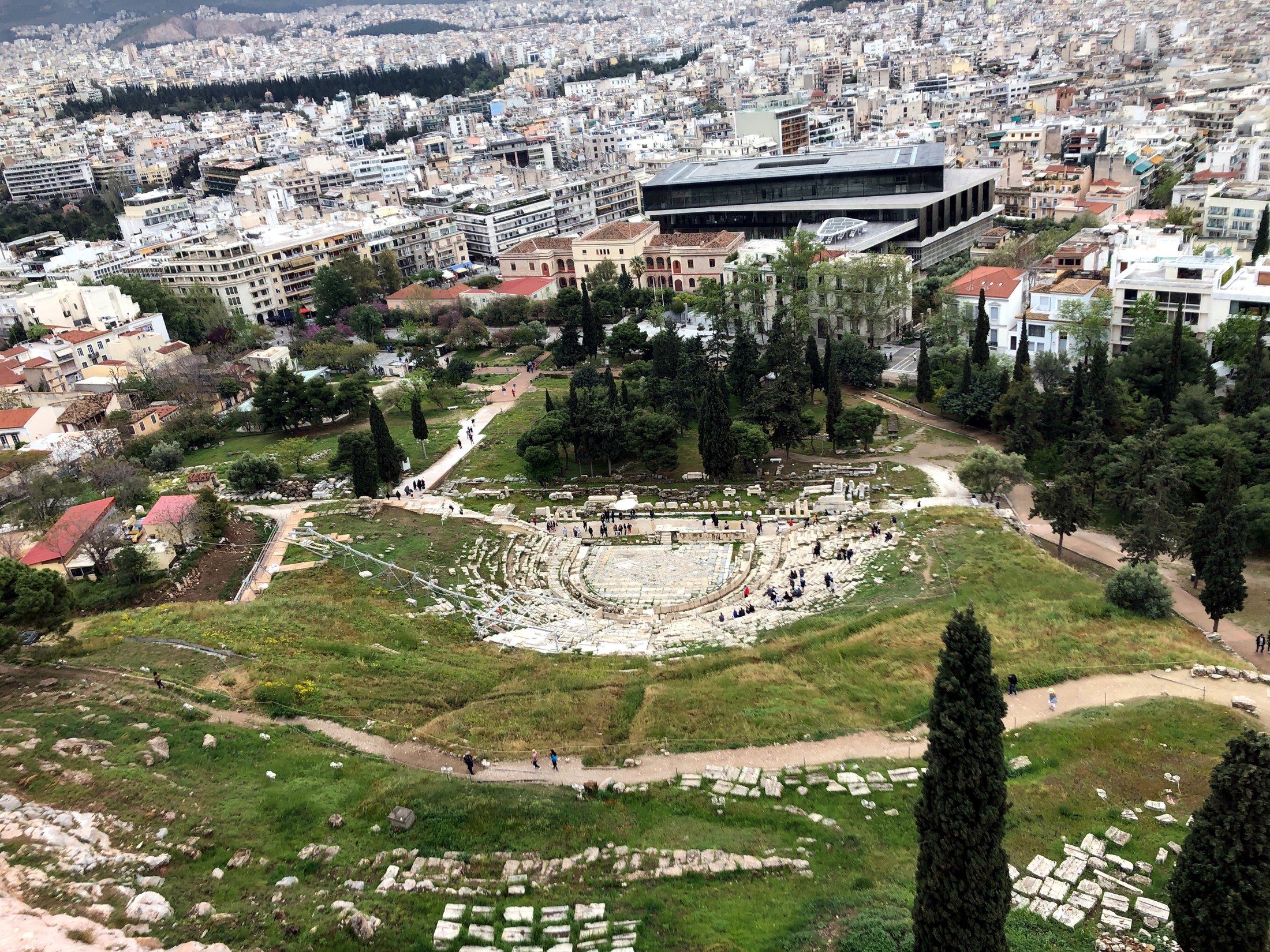
The Theater of Dionysus is on the south slope of the Acropolis and shares its entrance, so the Acropolis ticket gets you in.
The Theater of Dionysus is not a separate errand. Notice it while you are already on the south slope. From above, the whole archaeological layer makes more sense.
The Acropolis Museum is separately ticketed at around €15 in high season and €10 in low season. Verify the current price on the museum website. Its Bernard Tschumi building south of the Acropolis holds the original sculptures removed from the hill. The National Archaeological Museum, €20 as of 2026, sits north of Omonia and needs its own afternoon.
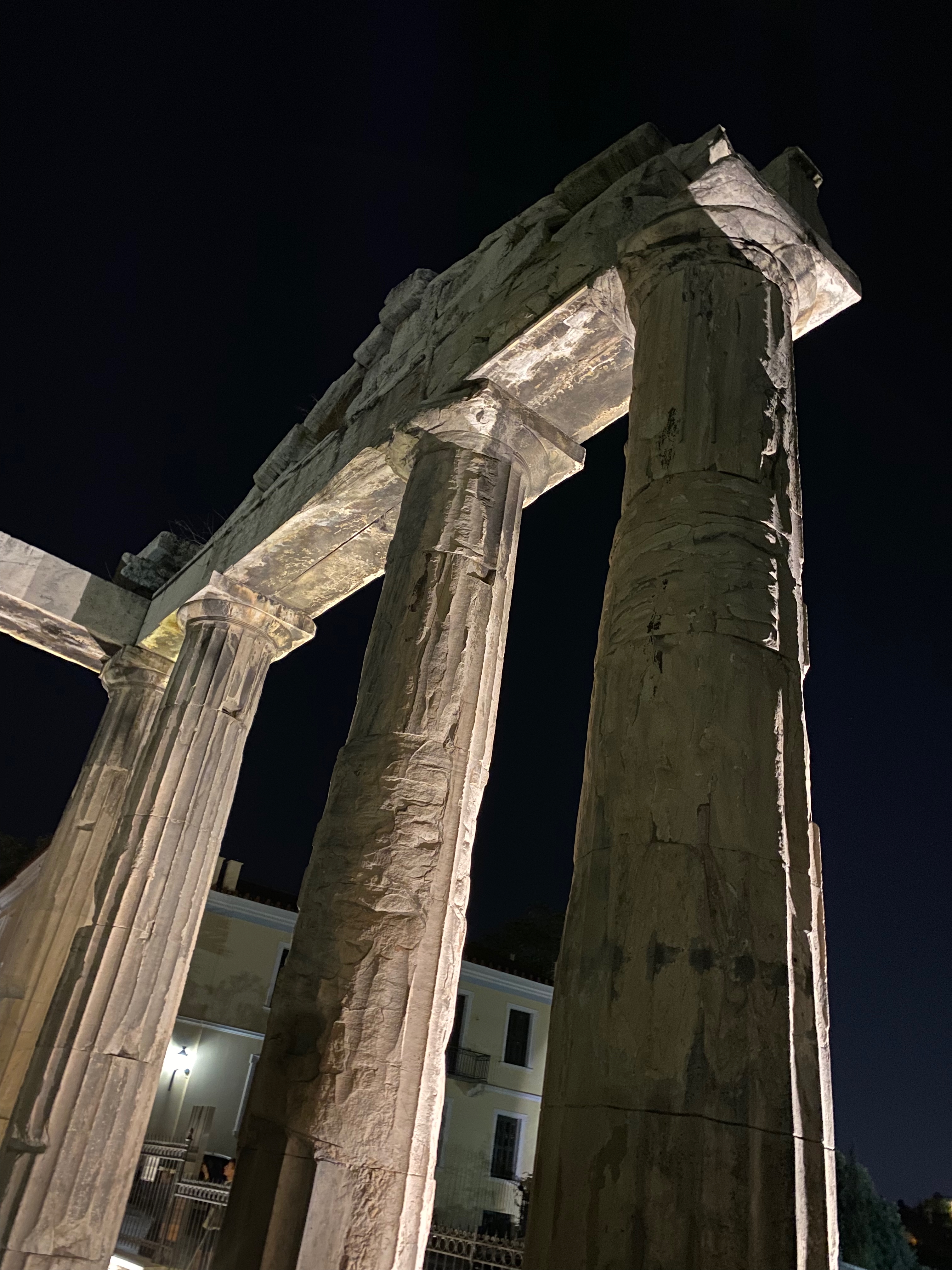
The smaller archaeological sites are not throwaways. The Roman Agora is quick by day, but the columns are often better as an evening walk-by.
Third-party resellers package "skip-the-line + multi-site" bundles for €80 to €100. These are guided tours or audio products, not a replacement for the discontinued government pass. Buying individual admission directly costs less if you do not want the tour.
Plaka and Anafiotika
Anafiotika and Plaka work well as an evening walk after the archaeological sites close. Anafiotika is a small Cycladic-style settlement built into the north slope of the Acropolis and is easy to miss from the streets below. Plaka surrounds it with narrow lanes and tavernas. The Monastiraki Flea Market sits at the bottom of the hill, and the Monastiraki metro archaeology site is visible inside the station without admission.
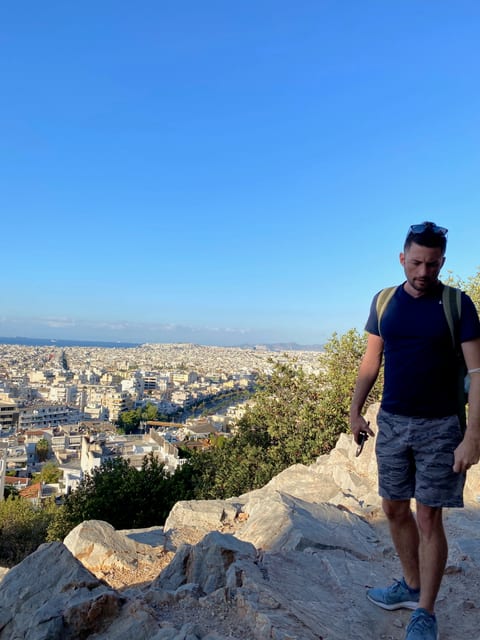
For sunset views without the climb: Philopappos Monument hill is a 20-minute walk up with a clear Parthenon view, no ticket, no queue. Daphne Viewpoint is a quieter alternative. The Lycabettus Funicular takes you to the city's other peak with the Acropolis on the skyline and 360-degree views.
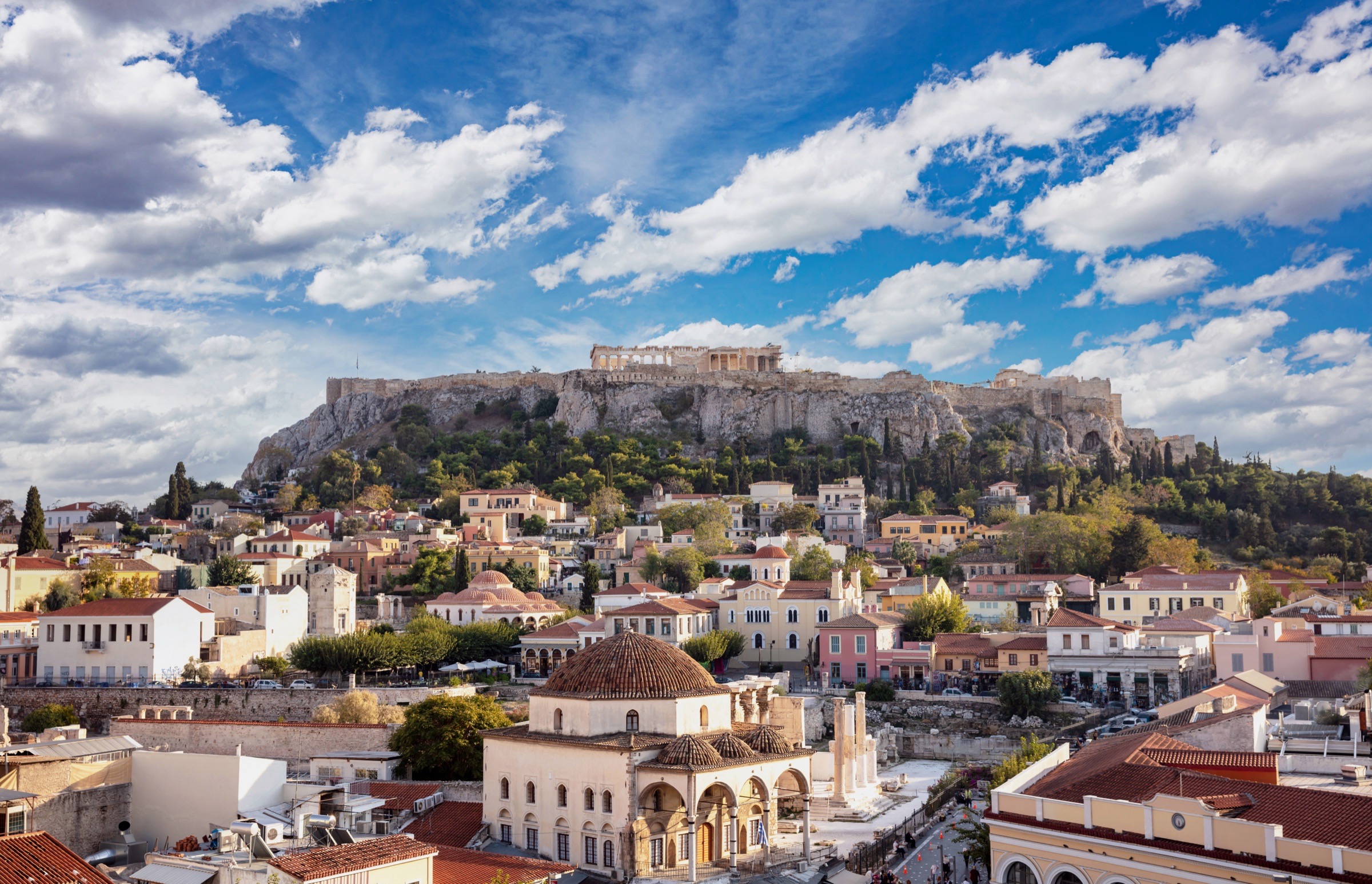
Philopappos Hill gives you enough distance to see the Acropolis as part of the city. The walk up takes about 20 minutes and does not require admission.
Athens is safer than its old reputation. The actual risks cluster on the Syntagma–Monastiraki Metro Line 1 corridor and around the Acropolis entrance.
Pickpockets on Line 1 and at Monastiraki. The morning Acropolis-bound crowd is the busiest pickpocket window in the city. Expect a press in the carriage at Syntagma or Monastiraki, where someone bumps you while a second person takes the phone or the wallet. Phone in a zipped pocket, bag in front, no map-reading in the carriage. The buses on the airport-to-center route run the same pattern.
"Tour guides" at the Acropolis gate. Someone in an official-looking lanyard at the ticket gate offers to walk you in or "show you the best route." They are not site staff. The Acropolis is straightforward to walk on your own with the included audio guide or a Wikipedia tab open. If you want a real guide, book through a registered company before you arrive, not from someone hovering at the gate.
The Plaka bar scam. A friendly stranger (often a Greek-looking man, sometimes a couple) strikes up a conversation in Plaka or Syntagma and suggests a great local bar nearby. The bill at the end runs €200-€500 for a few drinks, and the bouncers make sure you pay. Same playbook as Bangkok / Prague / KL. If a stranger insists on a specific venue, go anywhere else.
Airport taxi overcharging. The Athens airport flat-rate is €40 day, €55 night to anywhere in central Athens (the meter shows nothing). The fare is the fare and is posted on a sign at the airport rank. If the driver wants more, point at the sign. Use Beat or Uber from the app for a clean alternative.
Restaurant bill creep in Plaka. Same pattern as Rome: the bread basket nobody ordered at €5, "sparkling water" at €8, plates priced for tourist-strip rent. Walk one block north of Adrianou Street (the main Plaka pedestrian strip) before sitting down.
The "free" tour pressure tip. The free walking tours that meet at Syntagma run the same close as the Prague version: the guide closes with the "the locals tip €40" line (they don't). €10 to €15 is fair for a good tour. Pay what the tour deserved, walk away.
The metro is safe at every hour. The center is safe at every hour. The scams are an annoyance, not a threat.
Day trips
Trip
Time
Cost
Notes
Cape Sounion (Temple of Poseidon)
Half-day, ~2 hrs each way
€12.50 return in cash on KTEL Attikis, or €120 to €150 private transfer
The bus leaves from Egyptou Square near Pedion Areos. Check the current timetable. The published return leaves before summer sunset
~€20-25 round-trip ferry from Piraeus on the conventional service. More on high-speed
Saronic island, pistachio production, and an easy harbor day. Take the morning ferry from Piraeus Gate E8, arrive at Aegina Port, then use the town for waterfront wandering and Mourtzis pistachio sweets
Delphi
Intercity bus or local lodging
~€17 KTEL bus each way, ~3 hrs
Pythia's oracle, museum, and archaeological site. Check the last return before booking, or use lodging in Delphi or Arachova
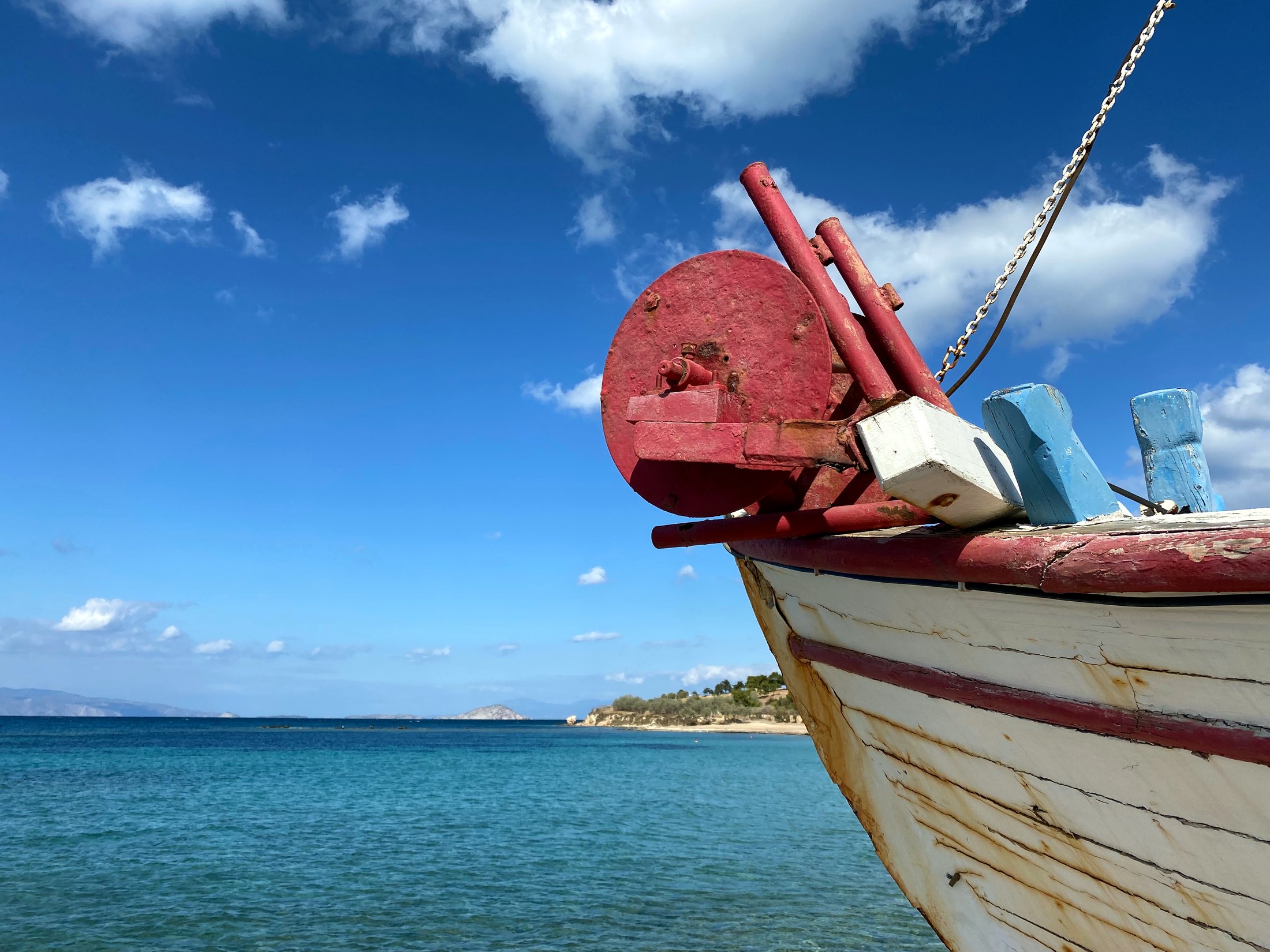
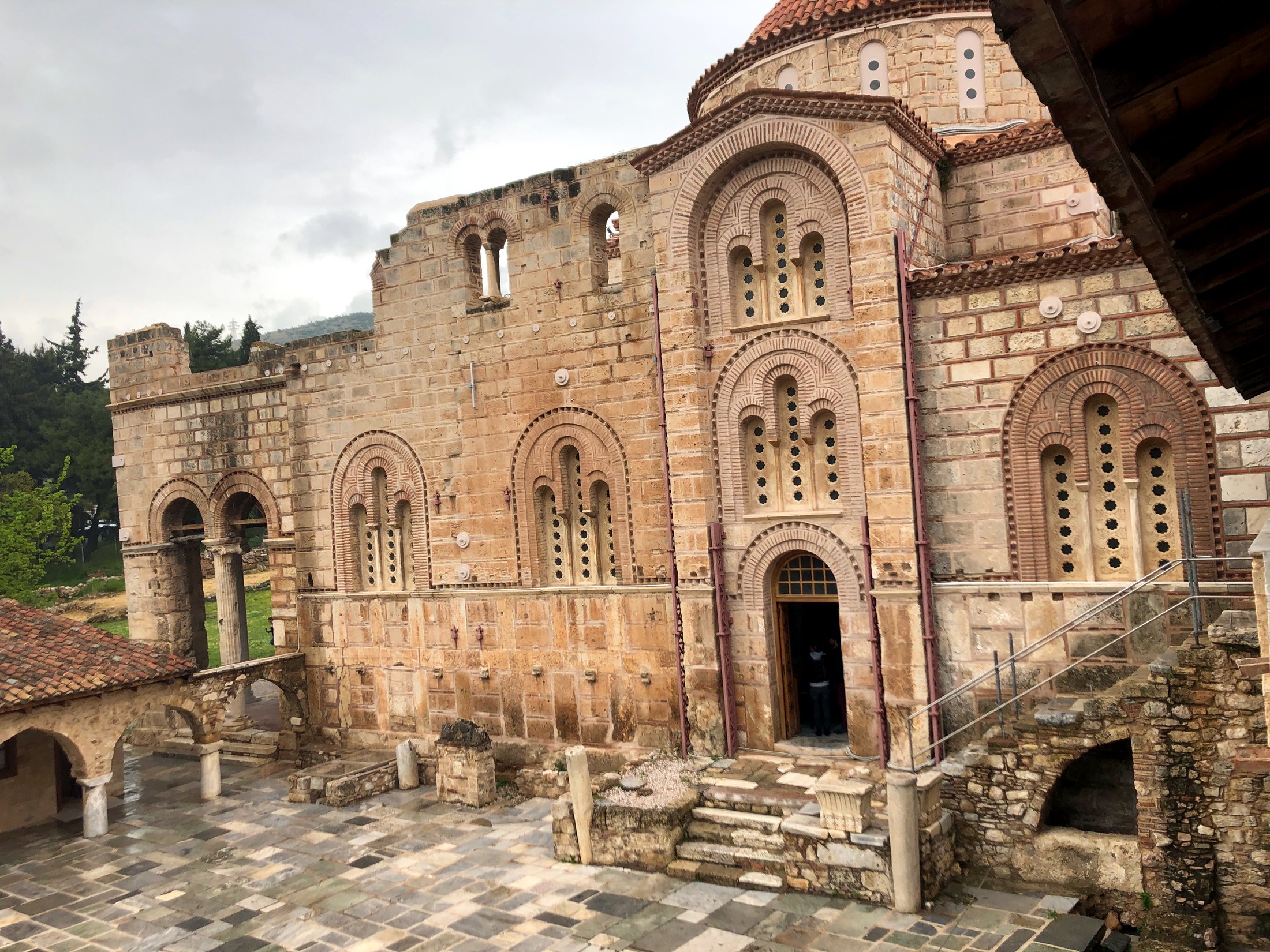
Aegina does not require much planning beyond the ferry. The port is walkable, pistachio shops line the center, and the Temple of Aphaia is the main decision after arrival.Daphni Monastery is a quiet half-day, not a blockbuster. Go for the Byzantine mosaics and the contrast with central Athens, then come back into town.
Quick answers
How much time do I need in Athens?
Three full days gives you time for the Acropolis, the National Archaeological Museum, Plaka, Anafiotika, and either Cape Sounion or Aegina. With only two days, keep both days in central Athens. A fourth night makes a Delphi overnight possible.
What is the deal with the Acropolis ticket?
The old 7-site combo pass was discontinued April 1, 2025. There is no longer a combined ticket. The Acropolis itself is €30 in high season (April-October), €15 in low season (November-March), and the online timed entry is the way to skip the door queue. Every other archaeological site is now its own ticket. Current single-site fees are Ancient Agora €20, Temple of Olympian Zeus €20, Roman Agora €10, Hadrian's Library €10, Kerameikos €10 (closed for works through July 2026), Aristotle's Lyceum €5. Third-party resellers sell bundled day-pass packages, but those are tour products, not the old government combo.
Where should I stay?
Monastiraki, Plaka, and Psyrri keep the central sites and evening restaurants within walking distance. Makrygianni is quieter and close to the south entrance of the Acropolis. Grand Hyatt Athens has the rooftop pool, but Monastiraki is about a 15-minute walk away. Check the rooftop photos before booking because the Acropolis view varies by property.
How do I do the Acropolis without the queue?
The official timed entry needs to be bought online before you arrive. The 8 a.m. opening and late-afternoon slots avoid the worst midday heat. The old government multi-site pass no longer exists. Third-party skip-the-line bundles use the same timed-entry system and add a tour or audio product. The North Slope entrance on the Plaka side is often quieter than the main entrance.
Is the metro safe and useful?
Yes. The Ath.ena ticket is the rechargeable transit card (buy at any station vending machine, load credit, tap at the gate). A single-journey paper ticket is also sold but Ath.ena is the default. The M1, M2, and M3 lines cover most of central Athens including Piraeus port and the airport. Pickpockets are a real issue on the metro and around Monastiraki, especially on the line to the airport. Keep phones in pockets, bags zipped and to the front.
36° / 27°
UV High
Mon
Clear
36° / 26°
UV High
Climate
Cool and wet season (Oct-Mar)
About 76% of the year's rain falls in these months. Typical highs around 16°C, lows around 9°C.
Warmer dry season (Apr-Sep)
Typical highs around 28°C, lows around 18°C. About 20mm of rain a month.
In August 4
Drag to scrub across the year.
JFMAMJJASOND
Weather
32° / 23°
Typical high / low
0 mm rainfall this month
Daylight
13.7h
06:39 – 20:20local
Festivals around this date
Holidays coming up
Public holidays from Nager.Date.
Airports
closest ATH · 20 km
Getting around Athens
Public-transit operators within 8 km of the city center. Click through to each operator’s site for routes, fares, and tickets.
Local transit operators
VectareFlixBus-eu
Operators and modes are aggregated from individual transit-agency GTFS feeds. Route classifications come from each feed’s route type codes.
About Athens
Athens is the capital and largest city of Greece. A significant coastal urban area in the Mediterranean, Athens is also the capital of the Attica region and is the southernmost capital on the European mainland. With its urban area's population numbering over 3.6 million, it is the eighth-largest urban area in the European Union (EU). The Municipality of Athens, which constitutes a small administrative unit of the entire urban area, had a population of 643,452 in 2021, within its official limits, and a land area of 38.96 square kilometres.
The links below support the changing or licensed reference material on this page. Personal notes and ordinary geographic facts are not footnoted individually.

 +2
+2 +4
+4
 +4
+4 +6
+6
 +1
+1 +2
+2 +1
+1 +2
+2 +12
+12 +13
+13

 +4
+4 +1
+1 +3
+3